Last Updated: June 05, 2025
This article is reviewed annually to reflect the latest market regulations and trends.

TL;DR:
- With Bitcoin gains, it’s easy to try,
- But just copying trades can make your wealth fly.
- Wild market swings will test your might,
- So add stable Gold for a future that’s bright.
- For wealth that’s true, a balanced view is your cue.
Disclaimer: The information in this article is for educational purposes only and does not constitute financial, investment, or trading advice. Copy trading carries substantial risks, including the potential loss of your entire invested capital. Past performance of copied traders or strategies is not a reliable indicator of future results. You may be replicating high-risk trades, overleveraged positions, or strategies incompatible with your financial goals. Always conduct independent research into a trader’s historical performance, risk metrics, and strategy before copying them. Never invest funds you cannot afford to lose. Consult a licensed financial advisor to ensure copy trading aligns with your risk tolerance, financial objectives, and regulatory requirements in your jurisdiction. This article does not endorse specific traders, platforms, or strategies, and all trading decisions remain your sole responsibility.

“The most important quality for an investor is temperament, not intellect. You need a temperament that neither derives great pleasure from being with the crowd or against the crowd.” — Warren Buffett
You Can’t Build Wealth by Just Copy Trading Bitcoin
You’ve seen the stories. The screenshots on X (formerly Twitter) and the breathless Reddit posts. Someone turned $1,000 into $10,000 seemingly overnight, all by copy trading Bitcoin. It looks so easy. Find a successful trader, click ‘copy,’ and watch the profits roll in while you sleep.
This is the siren song of the modern gold rush. But what if this shortcut to riches is actually a map leading off a cliff?
The hard truth is that while the allure is powerful, you cannot build sustainable, life-changing wealth by copy trading Bitcoin alone. Relying solely on this high-octane strategy is like trying to build a skyscraper on a foundation of sand. It might look impressive for a moment, but it’s dangerously unprepared for the inevitable storms.
This guide will pull back the curtain on the world of Bitcoin copy trading. We’ll explore its tantalizing potential, expose its brutal risks, and most importantly, give you a battle-tested strategy to blend the explosive power of Bitcoin with the unshakable stability of gold (XAUUSD). It’s time to stop gambling and start building.
What Exactly Is This “Digital Gold” Called Bitcoin?
Before we talk about copying trades, let’s understand the asset itself. Bitcoin is the world’s first decentralized digital currency. It operates on a technology called blockchain, a public ledger that records all transactions. Key features that make it a magnet for investors include its finite supply capped at 21 million coins and its freedom from government and bank control. This has positioned it as a potential hedge against fiat currency devaluation and an asset with mind-boggling growth potential.
And What Is Copy Trading? Your Supposed Shortcut to Riches?
Copy trading is a feature offered by many trading platforms that allows you to automatically replicate the trades of another investor, often referred to as a “signal provider” or “master trader.” When they buy, you buy. When they sell, you sell.
How Can You Take Advantage from It?
The appeal is obvious. Instead of spending years learning technical analysis and market dynamics, you can theoretically piggyback on the expertise of a seasoned pro. You allocate a portion of your funds, choose a trader with a stellar track record, and the platform does the rest. It promises to democratize trading, offering a passive route to potentially high returns in the volatile crypto market.
Is Copy Trading Bitcoin Really Worth It? A Look at Risk vs. Reward
This is the million-dollar question. While Bitcoin’s average annualized return of around 115% dwarfs that of traditional assets, this incredible performance comes with a massive catch: extreme risk.
The Double-Edged Sword: Bitcoin’s Jaw-Dropping Volatility
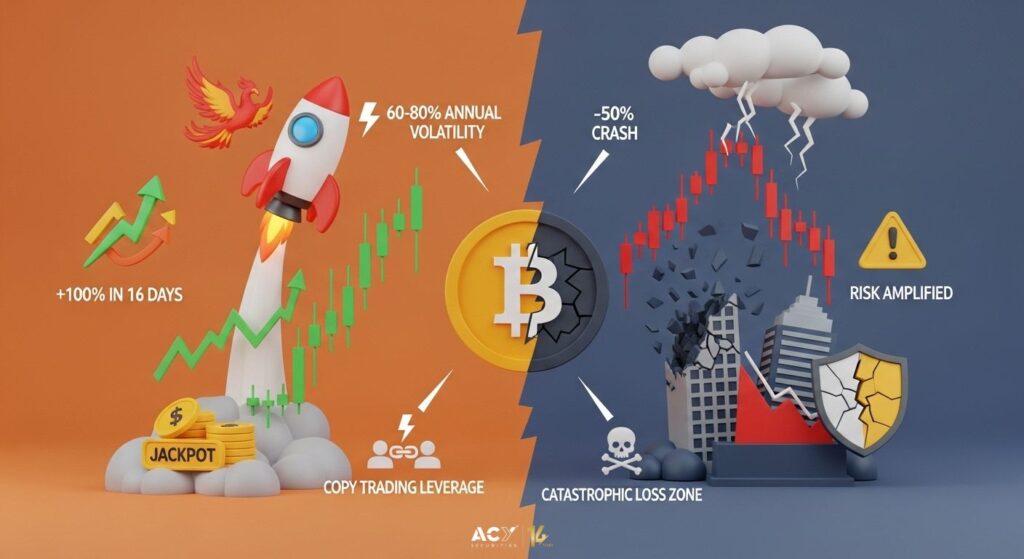
Bitcoin’s volatility isn’t just a talking point; it’s a portfolio-defining feature. With an average annual volatility between 60-80%, it can experience price swings that would be historic for any other asset class. During peak cycles, Bitcoin’s price has been known to double in just 16 days. While this creates opportunities for astronomical gains, it carries an equal and opposite risk of catastrophic losses, sometimes exceeding 30-50% in a short period. Copy trading amplifies this; you’re not just exposed to the market’s volatility, but also to the risk that your chosen trader makes a bad call at the worst possible time.
When the World Sneezes, Does Bitcoin Catch a Cold?
Geopolitical events have a profound and often unpredictable impact on Bitcoin. While it can sometimes act as a safe haven, its performance is inconsistent.
- After the Hamas attack on Israel in October 2023, Bitcoin surged over 60% in 90 days.
- However, during the Russia-Saudi Arabia oil price war in March 2020, it plummeted over 36%.
- In contrast, gold has consistently proven to be a reliable store of value during such turmoil, outperforming Bitcoin in over 61% of medium-term evaluations (90 days) following major geopolitical events.
Copying a trader who is on the wrong side of a sudden geopolitical shift can wipe out your gains instantly.
A Day in the Life of a Bitcoin Copy Trader
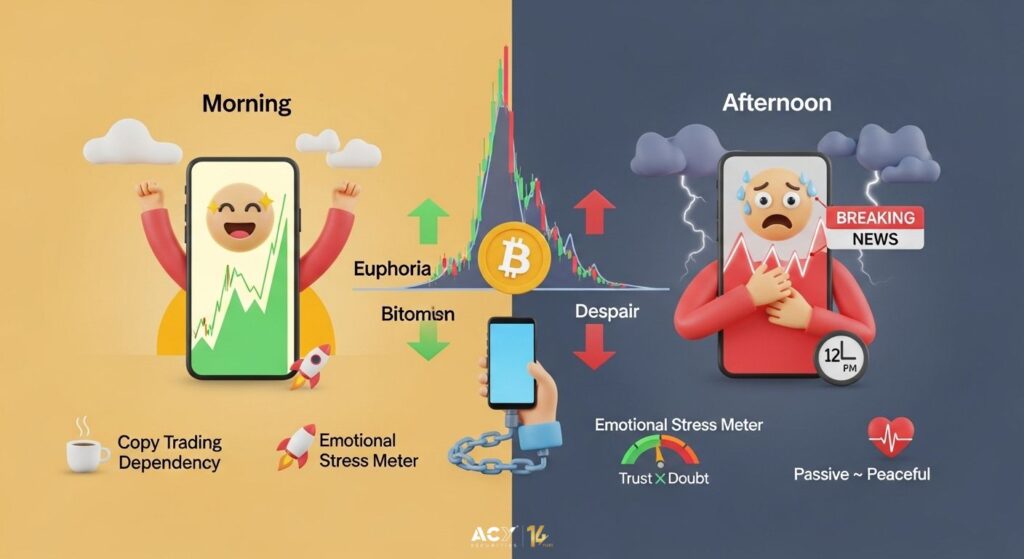
Imagine this: You wake up and check your phone. The trader you’re copying entered a large position overnight. The market is up 15%. You feel like a genius. By lunchtime, news breaks of a regulatory crackdown, and your portfolio is suddenly down 25%. Your heart pounds. Do you stop copying and lock in the loss? Do you trust the “expert” to navigate the storm? This emotional rollercoaster is the unspoken reality of copy trading. The constant monitoring and second-guessing can lead to significant stress and anxiety, eroding the “passive” nature of the investment.
Your $1,000 Gamble: A Tale of Two Possible Futures
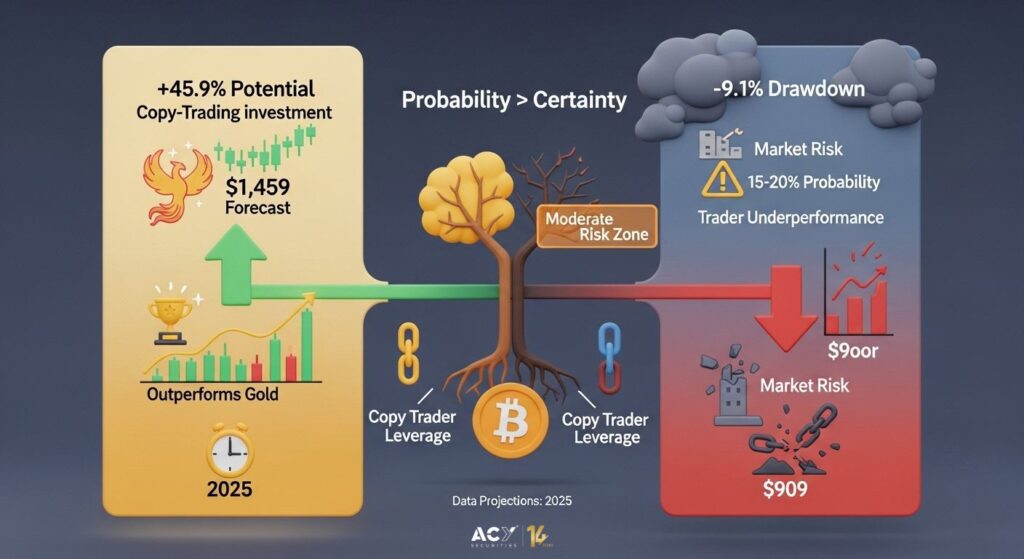
Let’s ground this in reality using data projections. If you invest $1,000 in Bitcoin copy trading now, what could happen?
Based on 2025 price projections, your $1,000 could potentially grow to $1,459 if the market hits its maximum forecast. However, if it falls to its projected minimum, your investment could shrink to $909. While the upside is higher than gold’s, the probability of a significant drawdown (over 10%) is moderate, at around 15-20%. This doesn’t even account for the risk of the trader you’re copying underperforming the market.
How Would Elon Musk Really Think About Copy Trading Bitcoin?

Elon Musk is famous for his belief in “first principles thinking”, the practice of boiling things down to their fundamental truths and reasoning up from there. It’s the polar opposite of copying someone else’s work.
While Musk is a vocal proponent of cryptocurrency, it’s highly unlikely he would endorse blind copy trading. He would argue for understanding the technology, the economic principles of supply and demand, and the asset’s long-term utility. He invested in Bitcoin for Tesla’s balance sheet after, presumably, a deep analysis of its potential as a treasury asset.
Musk wouldn’t ask, “Who is the best trader to copy?” He’d ask, “What are the fundamental properties of this asset, and how does it fit into the global economic machine?” To think like Elon is to do the hard work of analysis, not to outsource your judgment to a stranger on the internet.
10 Sobering Lessons from “The Big Short” for Every Bitcoin Trader
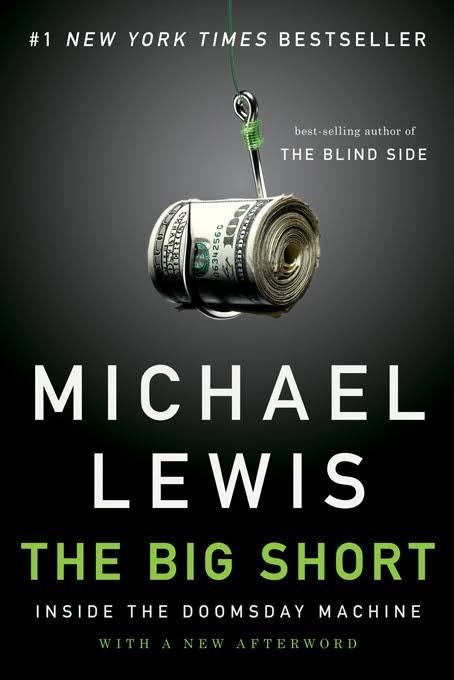
Michael Lewis’s The Big Short is a masterclass in how herd mentality, complexity, and blind faith can lead to financial ruin. Its lessons are chillingly relevant for today’s crypto copy trader.
- Question the “Experts”: The heroes of the book were those who bet against the consensus and the “infallible” rating agencies. Don’t blindly trust that a copy trader’s past performance guarantees future results.
- Understand What You Own: People invested in complex CDOs without a clue what was inside. Do you truly understand the strategies your copied trader is using, or are you just betting on a green arrow?
- Incentives Drive Behavior: The banks in 2008 were incentivized to sell trash assets. What are the incentives of the platform and the trader you’re copying? Are they aligned with your long-term success?
- Herd Mentality is Dangerous: Everyone believed the housing market could never go down. Today, many believe Bitcoin can only go up. History shows that when everyone is on the same side of the trade, it’s often the most dangerous place to be.
- Look for the Red Flags: The signs of the housing crash were there for those willing to look. Are you ignoring the red flags of crypto volatility and speculation in pursuit of quick gains?
- Complexity Hides Risk: Wall Street used complexity to hide the risk in subprime mortgages. The crypto world is filled with complex derivatives and trading bots. If you can’t explain it simply, you probably shouldn’t be invested in it.
- Short-Term Greed Leads to Long-Term Pain: The pursuit of immediate bonuses led to the collapse of giant firms. Chasing short-term crypto gains through copy trading can inflict permanent damage on your long-term wealth.
- True Conviction Requires Independent Research: The investors who profited did their own painstaking research. They didn’t copy a newsletter; they sifted through data themselves.
- The System Can Remain Irrational Longer Than You Can Remain Solvent: Even when you’re right, the market’s irrationality can wipe you out if your timing is off. Copy trading exposes you fully to this market whimsy.
- There’s Always a Reckoning: Bubbles always pop. The key to surviving is not being over-leveraged in the most speculative assets when they do.
The 3-Step Plan to Copy Trading
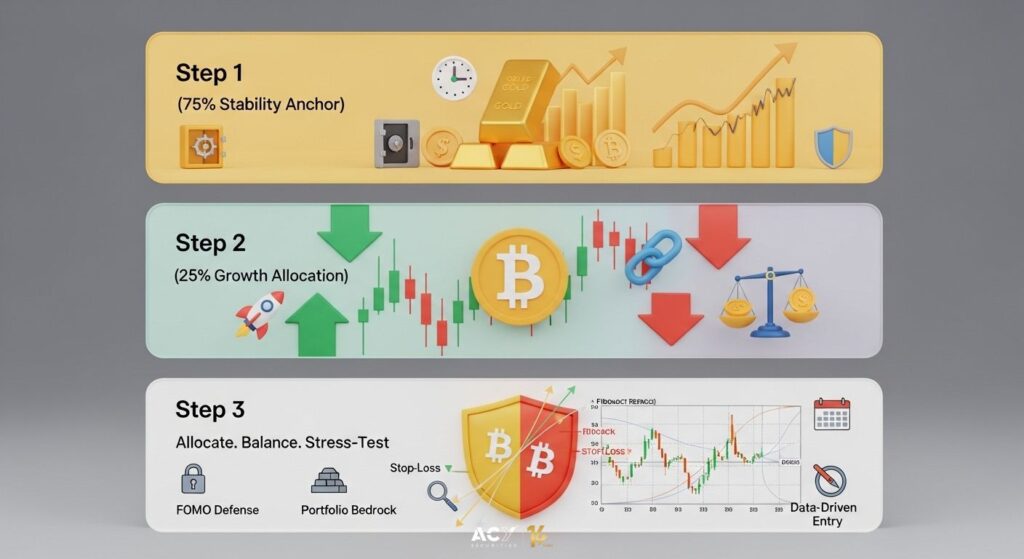
So, if copy trading Bitcoin alone is a fool’s errand, what’s the solution? It’s not about abandoning Bitcoin entirely. It’s about being smarter. It’s about building a resilient portfolio that can withstand shocks while still capturing growth. This requires balancing Bitcoin’s speculative power with the proven stability of an asset like gold (XAUUSD).
Here is a 3-step plan to balance your portfolio, informed by professional analysis:
- Step 1: Anchor Your Portfolio with Stability (75% Allocation). For investors who are focused on long-term goals like retirement, allocate the majority of your capital, around 75%, to assets with low correlation to equities, like gold. Gold has historically served as a powerful hedge against inflation and economic downturns, rising an average of 23.5% during past recessions. This portion of your portfolio is your bedrock.
- Step 2: Capture Growth with Calculated Risk (25% Allocation). Allocate the remaining 25% to high-risk, high-growth assets like Bitcoin to leverage its potential for outsized returns. This allocation allows you to participate in cycles like the post-halving bull runs that have historically driven significant price appreciation, without risking your entire nest egg. You can use copy trading for a small fraction of this allocation, treating it as an experiment rather than a core strategy.
- Step 3: Stress-Test and Define Your Entry Points. Don’t just allocate and pray. Use technical analysis to define strategic entry points. For Bitcoin, consider entering positions during pullbacks to established support zones, such as the $80,000–$85,000 range. For gold, look to buy during dips to key support levels like $3,200–$3,250, where buying pressure typically emerges. This disciplined approach, validated by market data from May 2025, prevents you from buying at market peaks fueled by FOMO.
The Final Word: Move Beyond Copying and Start Owning Your Future
The dream of effortless wealth is seductive, but it’s ultimately a fantasy. Copy trading Bitcoin can be a thrilling ride, but it’s too volatile and unpredictable to be the sole engine of your wealth creation.
True financial strength comes from a balanced and deliberate strategy. It comes from understanding the roles different assets play in your portfolio, the explosive growth potential of Bitcoin and the steadfast security of gold. By anchoring your wealth in stability and making calculated forays into high-growth opportunities, you move from being a gambler to being a true investor.
Frequently Asked Questions (FAQ)
1. Is Bitcoin or gold better during an economic downturn?
Historically, gold has demonstrated superior performance and resilience during economic downturns and recessions. It achieved an average absolute return of 23.5% during past recessions, acting as a reliable safe-haven asset. Bitcoin’s performance is more mixed and often depends on broader market sentiment, making it less predictable in a crisis.
2. What are the main drivers for Bitcoin and gold prices?
Gold’s price is primarily driven by geopolitical tensions, inflationary pressures, central bank demand, and its inverse relationship with the U.S. dollar. Bitcoin’s price is heavily influenced by institutional adoption (like the approval of spot ETFs), regulatory news, Federal Reserve interest rate policies, and its own cyclical events like the “halving”.
3. What is the Sharpe ratio of Bitcoin compared to gold?
The Sharpe ratio measures risk-adjusted return. Despite its high volatility, Bitcoin has shown a superior Sharpe ratio, consistently exceeding 2 over multi-year periods. Gold’s 5-year Sharpe ratio is approximately 1. This indicates that while Bitcoin is riskier, it has historically provided better returns for the amount of risk taken compared to gold.
4. Can a $1,000 investment in Bitcoin make you rich?
While a $1,000 investment could theoretically grow significantly over a long period if Bitcoin’s high Compound Annual Growth Rate (CAGR) of ~115% continues, it is highly unlikely to make you “rich” on its own. More importantly, the risk of losing a substantial portion of that investment is also very high due to extreme volatility. Building wealth requires a more diversified and substantial investment strategy.
5. How do younger and older investors view Bitcoin and gold differently?
There is a clear generational divide. Younger, tech-savvy investors are often drawn to Bitcoin, valuing its decentralization, technological innovation, and high-growth potential. Older generations and more conservative investors typically favor gold for its long history as a reliable store of value, its stability, and its role in wealth preservation, especially for retirement portfolios.
(Disclaimer: This article is for informational and educational purposes only. It should not be considered financial advice. Always conduct your own research and consult with a qualified financial advisor before making any investment decisions.)
For more detailed insights on developing daily trading routines, risk management, and effective position sizing strategies, explore additional articles on Trading Cup. Our trading experts at ACY and FinLogix are also great resources to guide your journey towards trading excellence.

Discover Our Best Trading Signals
At Tradingcup, you can browse through a selection of signals and review past performance before you decide to copy.
Become A Signal Provider
Share your expertise and become a signal provider so other traders can copy your trades.
Stay tuned to our blog for more trader spotlights and leaderboard updates.
Trading involves risks.
Visit the Tradingcup blog through the link below for more updates: https://www.tradingcup.com/learn
Related Copy Trading blogs:
- Understanding Market Liquidations: Liquidity Sweeps and Runs Explained
- 7 Essential Daily Habits of Successful Traders to Outperform Their Peers
- 10 Strategies You Can Copy off Our Best Copy Traders
- 5 Strategies Every Trader Can Master To Trade Better In A Trading Contest
- 2025 Copy Trading Scams Exposed: How to Spot Fraud
- A Swing Trading Strategy with an 83 Percent Win Rate and Low Drawdowns
- Forex Martingale Strategies Explained, The Good, The Bad and The Ugly
- Pyramiding Trading Tutorial – Pros & Cons & How to Use It