
Last Updated: May 21, 2025
This article is reviewed annually to reflect the latest market regulations and trends.

TL; DR
- Copy Trading Choice: Deciding between a scalping trader (like QuantumFX) and an SMA/RSI pullback trader (like HAN1491) hinges on your risk tolerance, investment goals, and fee sensitivity.
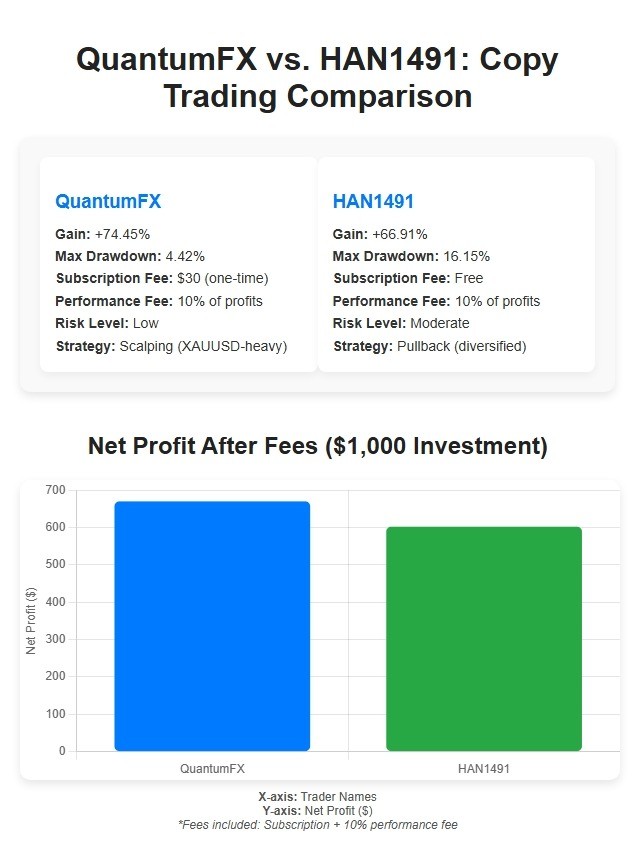
- Performance vs. Fees: QuantumFX showed higher gross and net profits ($670.05 net) but incurred higher total fees ($104.45) due to a $30 subscription. HAN1491 offered lower net profit ($602.19) but significantly lower fees ($66.91) with no subscription.
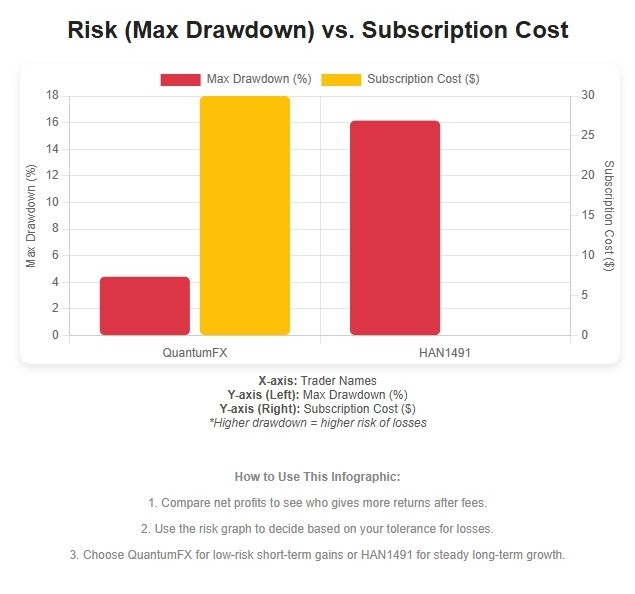
- Risk Profiles: QuantumFX appeals to those seeking short-term gains with low maximum drawdown (MDD), while HAN1491 suits long-term investors preferring steady, lower-cost growth despite potentially deeper drawdowns.
- Legendary Insights: Consider Bill Lipschutz’s likely emphasis on due diligence and understanding strategy, and apply Nicolas Darvas’s principles like trend-following and loss-cutting when selecting a trader to copy.
- Protecting Capital: Ultimately, successful copy trading involves understanding the underlying trading strategies (scalping, SMA, RSI), managing investment fees, and aligning your choice with robust risk management for smarter money protection.
Disclaimer: The information in this article is for educational purposes only and does not constitute financial, investment, or trading advice. Copy trading carries substantial risks, including the potential loss of your entire invested capital. Past performance of copied traders or strategies is not a reliable indicator of future results. You may be replicating high-risk trades, overleveraged positions, or strategies incompatible with your financial goals. Always conduct independent research into a trader’s historical performance, risk metrics, and strategy before copying them. Never invest funds you cannot afford to lose. Consult a licensed financial advisor to ensure copy trading aligns with your risk tolerance, financial objectives, and regulatory requirements in your jurisdiction. This article does not endorse specific traders, platforms, or strategies, and all trading decisions remain your sole responsibility.

“The investor’s chief problem – and even his worst enemy – is likely to be himself.” – Benjamin Graham
Who Should You Copy Trade in 2025?: Scalping Trader vs. SMA/RSI Pullback Trader – A Deep Dive for Smarter Investing

The financial markets are undeniable, promising growth and opportunity. Yet, navigating its complexities can be daunting, especially for those short on time or deep trading expertise. Enter copy trading: a revolutionary approach allowing you to mirror the trades of experienced professionals. But this convenience brings a crucial question: who should you copy? The hyper-active scalping trader chasing fleeting profits, or the methodical SMA/RSI pullback trader playing the longer game?
This isn’t just about picking a winner; it’s about aligning a trading style with your financial goals, risk tolerance, and ultimately, achieving smarter protection of your money. Today, we’ll dissect two distinct trader archetypes, using a real-world comparison of “QuantumFX” (our scalper example) and “Pull-Back Strategy (HAN1491)” (our SMA/RSI pullback example). We’ll explore insights from trading giants like Bill Lipschutz, glean wisdom from Nicolas Darvas’s timeless system, and demystify technical terms like Scalping, SMA (Simple Moving Average), and RSI (Relative Strength Index).
By the end of this guide, you’ll be equipped to make a more informed decision, turning copy trading from a leap of faith into a calculated step towards your investment objectives.
What Exactly is Copy Trading, and Why Is Everyone Talking About It?
Before we dive into the “who,” let’s briefly touch upon the “what.” Copy trading platforms enable you to automatically replicate the trading positions opened and managed by another selected trader. When they trade, your account trades. It’s a hands-off way to potentially tap into the expertise of others. The appeal is obvious:
- Accessibility: Opens up complex markets to beginners.
- Time-Saving: Eliminates the need for constant market monitoring.
- Learning Opportunity: Allows observation of professional strategies in real-time.
However, this ease of access also necessitates thorough due diligence. Not all traders are created equal, and not all strategies suit every investor.
Understanding the Contenders: Scalping vs. Pullback Strategies
1. What is Scalping? The Art of the Micro-Profit
Scalping is a high-intensity trading style that aims to profit from tiny price changes. Scalpers execute a large number of trades throughout the day, holding positions for mere seconds or minutes. Their goal is to accumulate small, frequent wins that add up over time.
- How it works: Scalpers often use high leverage and look for highly liquid markets to ensure they can enter and exit trades quickly at desired prices. They rely heavily on real-time analysis, Level 2 quotes (market depth), and order flow.
- Think of it like this: A scalper is like a hummingbird, darting in and out for tiny sips of nectar, hundreds of times a day.
- Key Characteristics:
- Very short holding periods.
- High volume of trades.
- Small profit targets per trade.
- Requires intense focus and quick decision-making.
- Susceptible to slippage and spread costs.
- Very short holding periods.
According to TradingCup insights on XAUUSD (Gold) scalping, successful scalping involves identifying short-term trends, using tight stop-losses, and often focusing on specific market sessions when volatility and liquidity are favorable. Strategies might involve trading breakouts from tight ranges or fading minor overextensions. For copy traders, this means the chosen scalper must be exceptionally skilled in execution and cost management.
2. What is an SMA/RSI Pullback Strategy? Riding the Trend Waves
Pullback trading is a strategy that involves waiting for a temporary dip or “pullback” in the price of an asset during an established uptrend (or a temporary rally in a downtrend) before entering a trade in the direction of the main trend. This strategy often employs technical indicators like Simple Moving Averages (SMA) and the Relative Strength Index (RSI) to identify optimal entry points.
- What is a Simple Moving Average (SMA)? An SMA calculates the average price of an asset over a specific number of periods. For example, a 50-day SMA shows the average closing price over the last 50 days.
- ACY explains that SMAs are crucial for identifying trend direction. A rising SMA suggests an uptrend, while a falling SMA indicates a downtrend. Traders also use SMA crossovers (e.g., a shorter-term SMA crossing above a longer-term SMA) as buy or sell signals. Longer SMAs provide support/resistance levels in trending markets.
- ACY explains that SMAs are crucial for identifying trend direction. A rising SMA suggests an uptrend, while a falling SMA indicates a downtrend. Traders also use SMA crossovers (e.g., a shorter-term SMA crossing above a longer-term SMA) as buy or sell signals. Longer SMAs provide support/resistance levels in trending markets.
- What is the Relative Strength Index (RSI)? The RSI is a momentum oscillator that measures the speed and change of price movements. It ranges from 0 to 100.
- ACY guide on mastering the RSI highlights its use in identifying overbought and oversold conditions. Traditionally, an RSI above 70 suggests an asset is overbought (and may be due for a pullback), while an RSI below 30 suggests it’s oversold (and may be due for a bounce). Divergence between price action and RSI can also signal potential trend reversals.
- ACY guide on mastering the RSI highlights its use in identifying overbought and oversold conditions. Traditionally, an RSI above 70 suggests an asset is overbought (and may be due for a pullback), while an RSI below 30 suggests it’s oversold (and may be due for a bounce). Divergence between price action and RSI can also signal potential trend reversals.
- How Can You Use SMA and RSI Together (Popular Ways Traders Use It)? The combination of SMA and RSI is potent for pullback traders:
- Trend Confirmation (SMA): Traders first identify the overall trend using one or more SMAs (e.g., price consistently above the 50-day or 200-day SMA for an uptrend).Entry Point Identification (RSI & SMA Support): During an uptrend, they wait for the price to pull back to a key SMA level (which might act as dynamic support). Simultaneously, they look for the RSI to dip into oversold territory (e.g., below 30 or 40, depending on the asset’s typical behavior) or show bullish divergence, indicating waning selling momentum.Exit Strategy: Stop-losses are often placed below the key SMA or recent swing low, and profit targets might be set at previous highs or based on a risk-reward ratio.
- Think of it like this: A pullback trader is like a surfer waiting for the wave to slightly recede (pullback) before paddling hard to catch the main surge (trend).
Trader Comparison: QuantumFX (Scalper) vs. Pull-Back Strategy HAN1491 (SMA/RSI)
1. QuantumFX
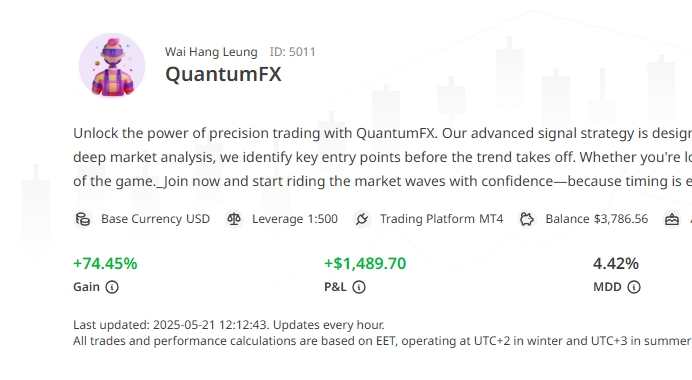
Key Metrics:
- Subscription Fee: $30 (one-time).
- Performance Fee: 10% of profits.
- All-Time Gain: +74.45%.
Hypothetical $1,000 Investment
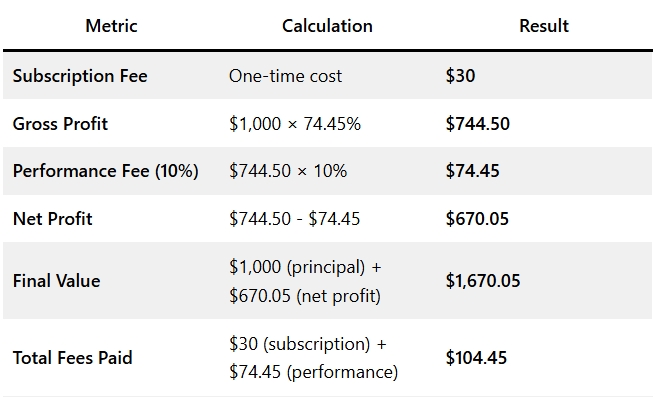
Cost Breakdown:
- Subscription Fee : $30 upfront cost (non-recurring).
- Performance Fee : 10% of profits ($74.45).
- Total Cost : $104.45 (10.45% of initial $1,000 investment).
2. Pull-Back Strategy (HAN1491)
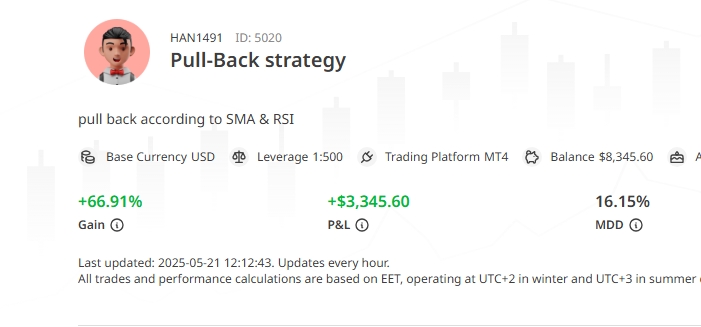
Key Metrics :
- Subscription Fee : Free.
- Performance Fee : 10% of profits.
- All-Time Gain : +66.91%.
Hypothetical $1,000 Investment:
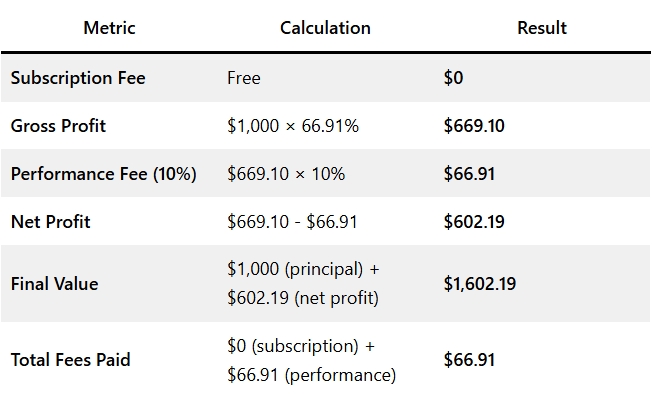
Cost Breakdown
- Subscription Fee : $0.
- Performance Fee : 10% of profits ($66.91).
- Total Cost : $66.91 (6.69% of initial $1,000 investment).
Comparison Table: $1,000 Investment After Fees
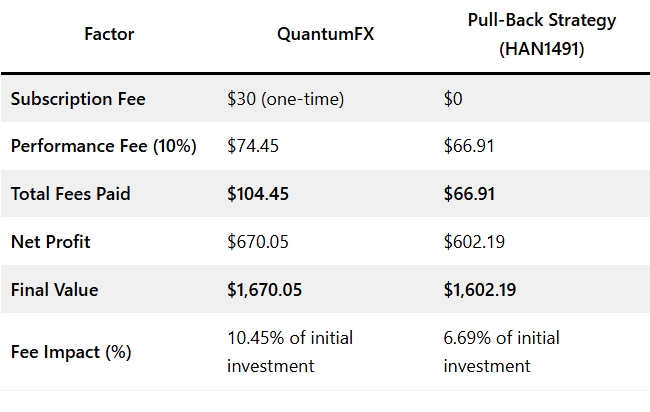
Key Takeaways:
- QuantumFX :
- Pros : Higher net returns ($1,670 vs. $1,602) due to faster growth.
- Cons : $30 subscription fee + 10% performance fee = $104.45 total cost (10.45% of investment).
- Best For : Investors prioritizing short-term gains and confident in QuantumFX’s strategy despite higher fees.
- Pros : Higher net returns ($1,670 vs. $1,602) due to faster growth.
- Pull-Back Strategy (HAN1491) :
- Pros : No subscription fee , lower total costs ($66.91), and proven 8-month track record.
- Cons : Slightly lower net returns ($1,602 vs. $1,670) and deeper drawdowns (16.15%).
- Best For : Long-term investors seeking steady growth with lower upfront costs.
- Pros : No subscription fee , lower total costs ($66.91), and proven 8-month track record.
Final Note on Fees :
- QuantumFX’s $30 subscription fee significantly increases its total cost (10.45% of investment), making it less attractive compared to HAN1491’s free subscription and lower fees.
- Despite higher gross profits, QuantumFX’s net returns are only $67.86 higher than HAN1491’s after accounting for fees.
- Risk-Adjusted Returns :
- QuantumFX’s low MDD (4.42%) justifies its higher fees for risk-averse traders.
- HAN1491’s diversification and proven consistency make it a safer long-term bet despite slower recent growth.
- QuantumFX’s low MDD (4.42%) justifies its higher fees for risk-averse traders.
Action :
- For short-term gains : Allocate to QuantumFX only if you’re comfortable paying the $30 fee and believe in its rapid growth.
- For balanced, low-cost growth : Choose HAN1491 with no subscription fee and steady returns.
Why Scalping and SMA/RSI Strategies Are Still Widely Preferred
Despite the rise of AI trading and complex algorithms, these “classic” approaches remain popular for several reasons:
- Scalping:
- Clear Opportunities: Exploits natural market volatility.
- Reduced Overnight Risk: Positions are typically closed by day’s end.
- High Engagement: Suits traders who thrive on constant action.
- Clear Opportunities: Exploits natural market volatility.
- SMA/RSI Pullback:
- Trend Alignment: Aims to trade with the dominant market force, improving odds.
- Defined Entry/Exit Points: Indicators provide relatively clear signals.
- Psychologically Sound: Buying on dips can feel less risky than chasing highs.
- Adaptability: Can be applied across various timeframes and markets.
- Trend Alignment: Aims to trade with the dominant market force, improving odds.
For copy traders, the persistence of these strategies means a larger pool of experienced traders to choose from and more historical data to analyze their performance.
Benefits of Copy Trading: The Scalper vs. The Pullback Strategist
Copying a Top Scalping Trader (like QuantumFX):
- Potential for Rapid Compounding: Many small wins can, in theory, grow an account quickly.
- Active Trading: You’ll see frequent activity, which can feel more engaging.
- Lower Exposure per Trade: Each individual trade risks a small portion of capital.
- Ideal if: You have a higher risk tolerance for the strategy itself (despite potentially low MDD per trader), are comfortable with high volume, and prioritize speed of potential returns.
Copying a Top SMA/RSI Pullback Trader (like HAN1491):
- Potential for Steady Growth: Aims to capture larger chunks of market moves.
- Less “Noise”: Fewer trades mean less constant monitoring of your copy trading account (though diligence is always key).
- Trend-Based: Can be very effective in trending markets.
- Ideal if: You prefer a more “set and observe” approach, are focused on long-term consistency, and are comfortable with potentially larger drawdowns during adverse market conditions.
The Bill Lipschutz Perspective: How Would a Trading Titan View This Choice?

Bill Lipschutz, a legend in Forex trading, is known for his rigorous approach to risk management, his ability to structure trades with asymmetric risk/reward, and his deep understanding of market fundamentals. While he doesn’t explicitly discuss “copy trading” modern retail platforms, we can infer his thinking:
- Due Diligence is Paramount: Lipschutz would likely emphasize that simply looking at past returns is insufficient. He’d want to understand how those returns were generated.
- For a scalper (QuantumFX): Is the low MDD a result of skill, or just a short track record in favorable conditions? How do they manage transaction costs, which are critical for scalpers? Is their success replicable?
- For a pullback trader (HAN1491): What are their criteria for defining a trend? How do they manage trades when a pullback turns into a reversal? Is the 16.15% drawdown acceptable and well-managed?
- For a scalper (QuantumFX): Is the low MDD a result of skill, or just a short track record in favorable conditions? How do they manage transaction costs, which are critical for scalpers? Is their success replicable?
- Understand the Risk: Lipschutz famously said, “If most traders would learn to sit on their hands 50 percent of the time, they would make a lot more money.”
- He’d scrutinize the scalper’s high activity. Is every trade truly a high-probability setup, or is there an element of overtrading?
- He’d analyze the pullback trader’s drawdown risk. Is it within acceptable limits for the potential reward?
- He’d scrutinize the scalper’s high activity. Is every trade truly a high-probability setup, or is there an element of overtrading?
- Focus on Consistency & Process, Not Just Outcome: A few winning trades don’t make a strategy. Lipschutz would value a trader with a clear, repeatable process.
- The pullback trader’s “proven 8-month track record” and “diversification” might appeal if the process behind it is sound.
- The scalper’s “rapid growth” needs to be sustainable.
- The pullback trader’s “proven 8-month track record” and “diversification” might appeal if the process behind it is sound.
- Fee Impact: As a professional who understands operational costs, Lipschutz would undoubtedly factor in fees. The 10.45% fee impact of QuantumFX versus 6.69% for HAN1491 is significant and would not be overlooked. He’d assess if the higher potential return justifies the higher cost.
Lipschutz’s likely stance on copy trading either type? He would advise extreme caution and a deep dive into the individual trader’s methodology, risk controls, and long-term consistency, rather than just the label “scalper” or “pullback.” He’d likely lean towards strategies that offer clear, justifiable risk-reward profiles, regardless of their classification. He might view a well-managed pullback strategy as easier to understand and verify its risk parameters for a copier, compared to a “black box” scalping system.
10 Lessons from “The Darvas System for Over-the-Counter Profits” by Nicolas Darvas Applied to Copy Trading
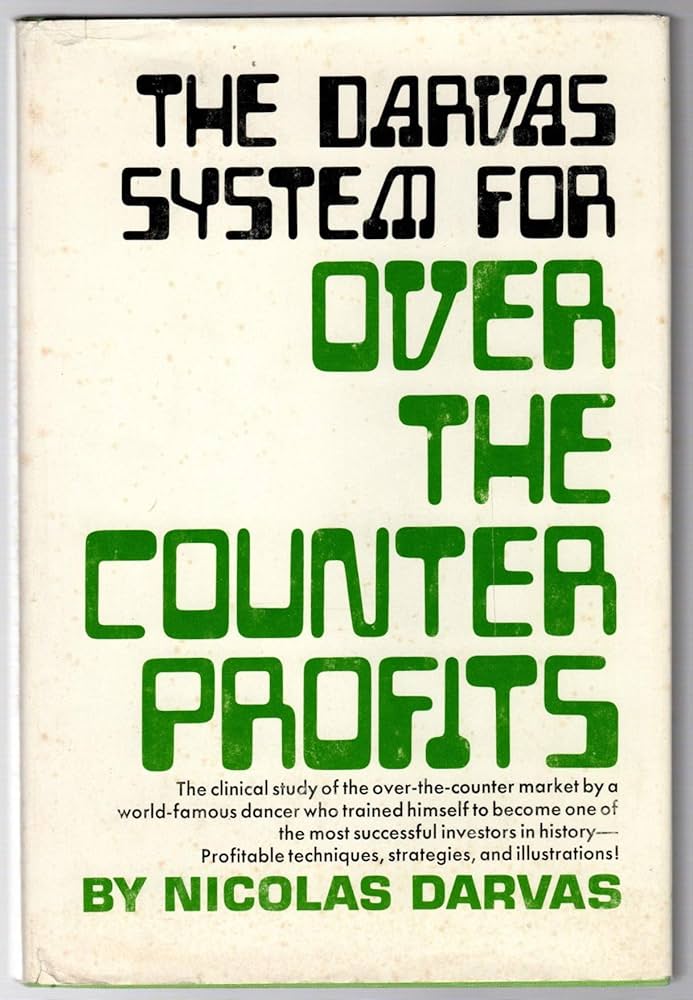
Nicolas Darvas was a dancer who famously made millions in the stock market using his “Box Theory.” While his focus was on stocks and a unique technical system, his principles offer timeless wisdom for any investor, including those choosing a copy trader:
- Buy Rising Stocks (or Strategies): Darvas only bought stocks making new highs.
- Application: Choose copy traders with a consistent, upward-trending equity curve. QuantumFX’s +74.45% all-time gain and HAN1491’s +66.91% are good starting points.
- Application: Choose copy traders with a consistent, upward-trending equity curve. QuantumFX’s +74.45% all-time gain and HAN1491’s +66.91% are good starting points.
- Use Stop-Loss Orders Religiously: Darvas was militant about cutting losses.
- Application: Ensure the trader you copy has a clear stop-loss strategy. Ask about their maximum drawdown (MDD). QuantumFX’s low MDD (4.42%) is a plus. HAN1491’s 16.15% MDD needs careful consideration.
- Application: Ensure the trader you copy has a clear stop-loss strategy. Ask about their maximum drawdown (MDD). QuantumFX’s low MDD (4.42%) is a plus. HAN1491’s 16.15% MDD needs careful consideration.
- Don’t Listen to Tips or Rumors: Darvas relied on his system.
- Application: Don’t choose a copy trader based on hype. Do your own research into their stated strategy (scalping, SMA/RSI) and performance metrics.
- Application: Don’t choose a copy trader based on hype. Do your own research into their stated strategy (scalping, SMA/RSI) and performance metrics.
- Trade Only a Few Stocks (or Traders) at a Time: Darvas focused his capital.
- Application: Don’t over-diversify by copying too many traders, especially when starting. Focus on quality over quantity.
- Application: Don’t over-diversify by copying too many traders, especially when starting. Focus on quality over quantity.
- Let Your Profits Run: Once in a strong trend, Darvas held on.
- Application: If you’ve chosen a good pullback trader (like HAN1491, designed for steady growth ), give their strategy time to work. Don’t panic-exit during minor dips if they are within the trader’s expected drawdown.
- Application: If you’ve chosen a good pullback trader (like HAN1491, designed for steady growth ), give their strategy time to work. Don’t panic-exit during minor dips if they are within the trader’s expected drawdown.
- Keep a Trading Diary: Darvas meticulously recorded his trades and reasoning.
- Application: While you’re not trading, keep notes on why you chose a particular trader, their performance, and your own emotional reactions to their P&L swings. This helps refine your selection process.
- Application: While you’re not trading, keep notes on why you chose a particular trader, their performance, and your own emotional reactions to their P&L swings. This helps refine your selection process.
- Stay Away from Cheap Stocks (or Unproven Traders): Darvas preferred quality.
- Application: A “free” subscription like HAN1491’s is attractive, but ensure the underlying strategy is sound. Don’t just pick the cheapest option; look for proven consistency.
- Application: A “free” subscription like HAN1491’s is attractive, but ensure the underlying strategy is sound. Don’t just pick the cheapest option; look for proven consistency.
- Patience is a Virtue: Darvas often waited for the perfect setup.
- Application: Don’t jump from trader to trader impatiently. Give your chosen trader a fair chance to perform according to their strategy. This is especially true for longer-term strategies like pullback trading.
- Application: Don’t jump from trader to trader impatiently. Give your chosen trader a fair chance to perform according to their strategy. This is especially true for longer-term strategies like pullback trading.
- Understand the Business (or Strategy): Darvas researched the companies he invested in.
- Application: Understand the basics of scalping or SMA/RSI pullback trading. Knowing how your chosen trader should be performing helps you assess if they are sticking to their mandate.
- Application: Understand the basics of scalping or SMA/RSI pullback trading. Knowing how your chosen trader should be performing helps you assess if they are sticking to their mandate.
- Ignore the General Market if Your System Says So: Darvas focused on individual stock action.
- Application: While market conditions matter, trust the system of a proven trader you’re copying. If their strategy is designed for specific conditions and they are adhering to it, don’t get swayed by broader market fear or greed unless it fundamentally impacts their strategy’s viability.
- Application: While market conditions matter, trust the system of a proven trader you’re copying. If their strategy is designed for specific conditions and they are adhering to it, don’t get swayed by broader market fear or greed unless it fundamentally impacts their strategy’s viability.
Market Sentiment and Social Media Reaction: What’s the Buzz?
A quick pulse check on platforms like Reddit (e.g., r/forex, r/copytrading), trading forums, and social media reveals ongoing debates:
- Scalping: Often viewed with a mix of awe and skepticism. Success stories exist, but many warn of the high risk, the impact of broker spreads/commissions, and the difficulty in finding genuinely skilled scalpers to copy. The phrase “easy to blow an account” is common. There’s a sentiment that true scalping skill is rare and hard to automate or copy perfectly due to latency and execution variables.
- SMA/RSI Pullback: Generally seen as a more “sensible” or “stable” approach for retail traders. Discussions often revolve around the best SMA lengths, RSI settings, and combining them with other confluences like support/resistance or chart patterns. There’s a broader understanding and acceptance of this method, though debates about its effectiveness in ranging vs. trending markets persist.
- Copy Trading Platforms: Users often share experiences with different platforms, highlighting transparency of trader statistics, fee structures, and withdrawal processes. Frustration with misleading performance stats or traders suddenly changing their strategy is a recurring theme, underscoring the need for continuous monitoring.
The overall sentiment is one of cautious optimism for copy trading, with a strong emphasis on due diligence, risk management, and understanding that no trader wins 100% of the time. The appeal of HAN1491’s free subscription and lower overall fees often resonates with cost-conscious beginners, while QuantumFX’s higher gains might attract those willing to pay more for potentially faster results, provided the risk is understood
Your Guide to Copy Trading on TradingCup and Beyond
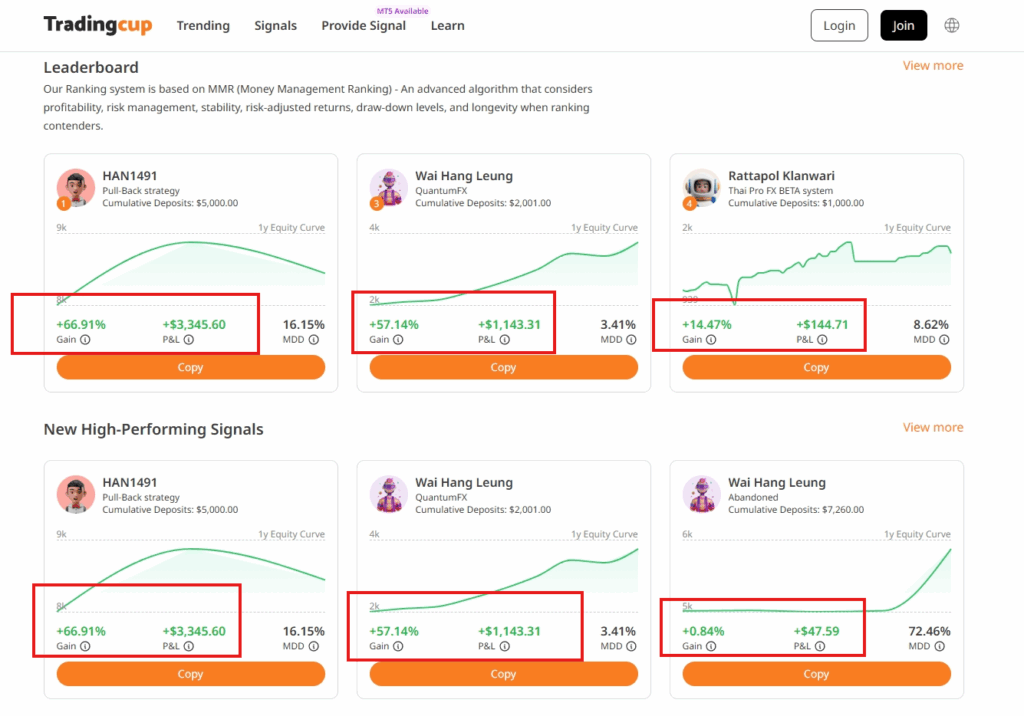
The following sections align with key aspects of a successful copy trading journey, with specific reference to resources you can find on TradingCup:
1. Who to Copy and How to Read Trader Performance
Selecting the right traders is arguably the most critical step.
- For detailed guidance, visit: TradingCup: Who to Copy & How to Read Trader’s Performance
- Key Metrics to Analyze:
- Return on Investment (ROI): Consistent profitability over a significant period (e.g., >12 months).
- Maximum Drawdown: The largest peak-to-trough decline a trader has experienced. Lower is generally better.
- Risk Score: Many platforms provide a risk rating. Understand how it’s calculated.
- Win Rate: Percentage of profitable trades.
- Trading History & Duration: Longer track records provide more data.
- Number of Copiers & Assets Under Management: Can indicate trust, but shouldn’t be the sole factor.
- Trading Strategy: Understand their approach (e.g., scalping, swing trading, asset classes traded). Does it align with your risk appetite?
- Transparency & Communication: Do they explain their trades or market views?
- Return on Investment (ROI): Consistent profitability over a significant period (e.g., >12 months).
2. When to Switch Traders
Sticking with a trader through thick and thin isn’t always the best strategy.
- Learn more at: TradingCup: When to Switch Traders in Copy Trading
- Consider Switching If:
- Consistent Underperformance: A prolonged losing streak that deviates significantly from their historical performance.
- Change in Trading Strategy: The trader deviates from the strategy you initially signed up for.
- Increased Risk-Taking: They start taking significantly larger risks.
- Your Goals Change: Your own investment objectives or risk tolerance evolve.
- Loss of Confidence: You no longer feel comfortable with their approach.
- Regularly review, as suggested by monthly performance reviews.
- Consistent Underperformance: A prolonged losing streak that deviates significantly from their historical performance.
3. Know When to Stop: Secure Profits and Sidestep Greed
Emotional discipline is vital.
- Set Clear Profit Targets: Decide beforehand what level of profit you’d be satisfied with for a given period or trade.
- Avoid Greed: The desire for “just a little more” can lead to giving back profits or incurring losses.
- Have an Exit Strategy: This applies not just to individual trades but to your overall copy trading allocation if your goals are met or if risks become too high.
4. How to Avoid Scams
The popularity of copy trading unfortunately attracts scammers.
- For insights on specific XAUUSD/Gold Telegram risks, see: TradingCup: XAUUSD Gold Signals Telegram Risks & Costs
- General Tips to Avoid Scams:
- Use Reputable & Regulated Platforms: Check the platform’s credentials.
- Beware of “Too Good to Be True” Promises: Guaranteed high returns with no risk are a major red flag.
- Unverified Trader Histories: Scrutinize trader profiles for authenticity.
- Pressure to Invest More: Be wary of anyone pressuring you to deposit more funds quickly.
- Lack of Transparency: Vague strategies or hidden fees are concerning.
- Do Your Own Research: Don’t rely solely on testimonials or social media hype.
- Use Reputable & Regulated Platforms: Check the platform’s credentials.
5. Calculating Profit/Loss & Adjusting Risk
Understanding your potential outcomes and managing risk effectively is fundamental.
- Explore these TradingCup resources:
- Key Concepts:
- Profit/Loss Calculation: Understand how profits and losses are determined based on trade size, pip movement (for forex), and price changes.
- Minimum Balance: Be aware of the minimum capital requirements for copying a trader or using a platform.
- Multiplier/Ratio: This setting determines how your trade size scales in relation to the master trader’s. A higher multiplier increases potential profit AND loss.
- Stop-Loss Orders: Set these to automatically close a position if it reaches a certain loss level.
- Risk per Trade: Decide what percentage of your copy trading capital you’re willing to risk on any single trader’s activity.
- Profit/Loss Calculation: Understand how profits and losses are determined based on trade size, pip movement (for forex), and price changes.
6. How TradingCup Ranks Traders
Platforms use various methodologies to rank traders to help users make informed choices.
- Discover TradingCup’s approach: TradingCup: How Best Traders are Ranked
- Common Ranking Factors Often Include:
- Profitability (ROI) over various periods.
- Risk Score or level of risk taken.
- Maximum Drawdown.
- Duration of trading activity.
- Number of copiers.
- Consistency.
- Profitability (ROI) over various periods.
7. The Value of Monthly Performance Reviews
Regularly reviewing performance is key to staying on top of your investments.
- Find performance reviews here: TradingCup: Most Profitable Traders & Smart Copy Trading Choices
- Importance:
- Track progress against your goals.
- Identify if a trader’s performance is waning.
- Make informed decisions about continuing to copy, adjusting allocation, or switching traders.
- Track progress against your goals.
The AI Edge: Technology in Copy Trading
Artificial Intelligence (AI) is playing an increasingly significant role in enhancing copy trading platforms:
- Improved Trade Execution: AI can help optimize trade entries and exits.
- Enhanced Risk Management: AI algorithms can analyze trader behavior and market conditions to provide better risk scoring and even automated risk mitigation tools.
- Personalized Recommendations: AI can help match copiers with traders whose styles and risk profiles align with their preferences.
- Sentiment Analysis: AI can gauge market sentiment from news and social media to provide additional trading insights.
The Bottom Line: Smarter Protection of Your Money
Ultimately, successful copy trading, and indeed any investing, is about the smarter protection and growth of your money. This involves:
- Education: Continuously learn about markets, strategies, and risk.
- Thorough Due Diligence: Never skip this step.
- Robust Risk Management: This is your primary defense.
- Diversification: Don’t put all your eggs in one basket.
- Realistic Expectations: Understand the risks involved, especially when aiming for high returns.
- Patience and Discipline: Avoid emotional decisions and stick to your well-researched plan.
Which Path to Choose in Your Copy Trading Journey?
The choice between copying a scalping trader like QuantumFX or an SMA/RSI pullback trader like HAN1491 is not black and white. It’s a nuanced decision that reflects your personal investment philosophy.
- QuantumFX offered higher net returns in the snapshot provided, backed by an impressive all-time gain and a potentially attractive low maximum drawdown. This could appeal to those comfortable with its higher fee structure (10.45% of initial investment) and who prioritize rapid growth, assuming the strategy’s edge persists.
- Pull-Back Strategy (HAN1491) presented a more cost-effective option with no subscription fee and lower total fees (6.69% of initial investment). While its net profit was slightly lower in the comparison, it champions steady, long-term growth and has a proven track record. This aligns well with investors seeking consistent progress with lower upfront costs, though they must be prepared for potentially deeper drawdowns.
The provided analysis leans slightly towards HAN1491 for balanced, low-cost growth, especially given the significant impact of QuantumFX’s subscription fee on its overall cost. However, it also acknowledges that QuantumFX’s low MDD might justify its higher fees for certain risk-averse traders who still want short-term gain potential.
Ultimately, ask yourself:
- Am I aiming for quick sprints or a steady marathon?
- How sensitive am I to fees versus potential gross returns?
- What level of drawdown can I emotionally and financially withstand?
- Am I willing to pay a premium for a strategy that claims lower risk via MDD, even if it’s a more intense, harder-to-verify scalping strategy?
The “best” trader to copy is the one whose methods you understand, whose risk profile aligns with yours, and whose fee structure makes sense for your investment size and goals. Do your homework, analyze the data beyond the surface-level gains, and always prioritize the intelligent protection and growth of your capital.
Ready to explore copy trading further? Start by meticulously researching traders on reputable platforms, paying close attention to their long-term performance, drawdown history, and, crucially, the transparency of their fee structure.
Frequently Asked Questions (FAQs)
Q1: Is copy trading suitable for beginners with no trading experience?
A1: Copy trading can be accessible for beginners as it allows them to mirror experienced traders. However, it’s crucial for beginners to educate themselves on basic trading concepts, risk management, and how to thoroughly vet traders before copying. Simply “following the crowd” without understanding can be risky.
Q2: What are the main differences in risk between copying a scalper and a pullback trader?
A2:
- Scalpers: Risk can come from high transaction costs (spreads/commissions eating profits), slippage during fast market moves, and the potential for many small losses to accumulate if the strategy falters. A low MDD for a specific scalper (like QuantumFX’s 4.42% ) can be deceptive if not sustained over a long period and diverse market conditions.
- Pullback Traders: Risk often involves larger drawdowns if a perceived pullback turns into a full trend reversal (e.g., HAN1491’s 16.15% MDD ). The holding period is longer, meaning capital is exposed for greater durations. The success heavily depends on correctly identifying the underlying trend.
Q3: How important are fees when choosing a trader to copy?
A3: Fees are critically important. As seen with QuantumFX, a $30 subscription fee plus a 10% performance fee resulted in 10.45% of the initial investment going to costs. HAN1491, with no subscription and a 10% performance fee, had a lower cost of 6.69%. High fees require the trader to achieve significantly higher gross returns for you to make a decent net profit. Always factor in all fees – subscription, performance, and any spread/commission markups by the platform.
Q4: Can I lose all my money copy trading?
A4: Yes, it is possible to lose all your invested capital in copy trading, as with any form of trading or investment. This is why choosing reputable traders, understanding their strategies, setting appropriate risk limits on your copy trading account, and only investing what you can afford to lose are paramount.
Q5: How much money do I need to start copy trading?
A5: This varies greatly depending on the copy trading platform and the minimum investment requirements they set. Some platforms allow you to start with as little as $100-$200. However, consider that with smaller amounts, fees can have a proportionally larger impact, and it might be harder to diversify.
Q6: Between QuantumFX and HAN1491 based on the document, which offers better value considering fees and returns?
A6: While QuantumFX showed higher net profit ($670.05 vs $602.19), its total fees were substantially higher ($104.45 vs $66.91) primarily due to the subscription fee. The document suggests HAN1491 offers a more “balanced, low-cost growth” option because its free subscription makes it more attractive from a cost perspective, even if gross profits are slightly less. However, if QuantumFX’s low MDD truly reflects lower risk for short-term gains, some might find its fees justifiable.
Q7: What does “MDD” mean and why is it important for copy trading?
A7: MDD stands for Maximum Drawdown. It represents the largest peak-to-trough decline an investment portfolio has experienced during a specific period. For example, QuantumFX had an MDD of 4.42%, while HAN1491 had an MDD of 16.15%. A lower MDD is generally preferred as it indicates the strategy suffered less severe losses during its worst period. It’s an important measure of historical risk.
For more detailed insights on developing daily trading routines, risk management, and effective position sizing strategies, explore additional articles on Trading Cup. Our trading experts at ACY and FinLogix are also great resources to guide your journey towards trading excellence.

Discover Our Best Trading Signals
At Tradingcup, you can browse through a selection of signals and review past performance before you decide to copy.
Become A Signal Provider
Share your expertise and become a signal provider so other traders can copy your trades.
Stay tuned to our blog for more trader spotlights and leaderboard updates.
Trading involves risks.
Visit the Tradingcup blog through the link below for more updates: https://www.tradingcup.com/learn
Related Copy Trading blogs:
- Understanding Market Liquidations: Liquidity Sweeps and Runs Explained
- 7 Essential Daily Habits of Successful Traders to Outperform Their Peers
- 10 Strategies You Can Copy off Our Best Copy Traders
- 5 Strategies Every Trader Can Master To Trade Better In A Trading Contest
- 2025 Copy Trading Scams Exposed: How to Spot Fraud
- A Swing Trading Strategy with an 83 Percent Win Rate and Low Drawdowns
- Forex Martingale Strategies Explained, The Good, The Bad and The Ugly
- Pyramiding Trading Tutorial – Pros & Cons & How to Use It