
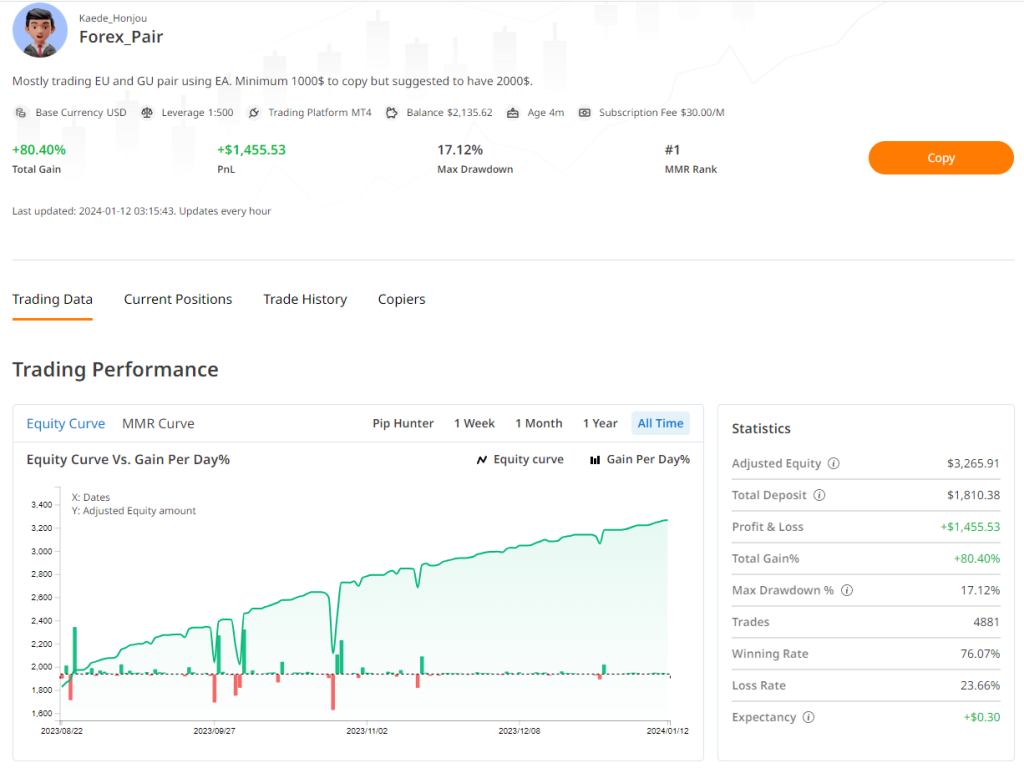
Kaede Honjou‘s exceptional success, with a substantial overall increase surpassing 80.40%, has unquestionably seized my interest. As a result, our primary emphasis today will be on conducting an in-depth evaluation of Kaede’s investment portfolio.
During this scrutiny, we will explore the nuances of the utilized tactics, methods of portfolio distribution, the path of his equity graph, and a range of other significant elements that have played a role in his outstanding gains within a relatively brief span.
Source: Tradingcup
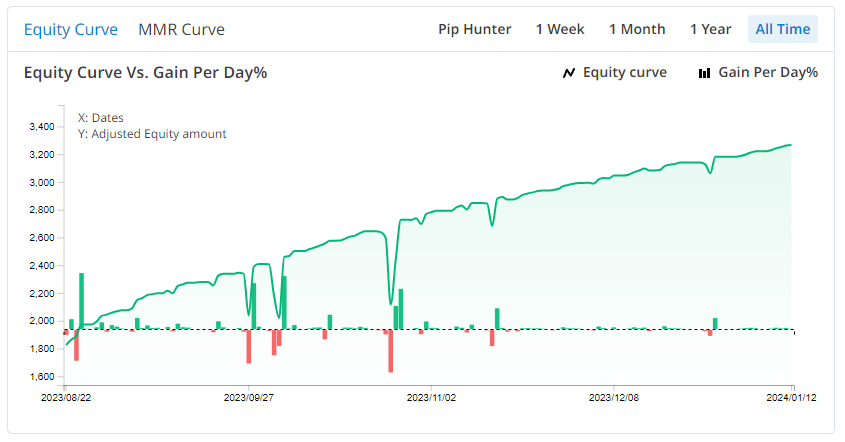
Let’s start to an evaluation of Kaede’s accomplishments, showcasing an impressive demonstration of trading prowess. A careful examination of his equity curve offers a transparent glimpse into his strategic methodology, marked by sustained and measured advancement across a span exceeding four months. This persistent steadiness highlights Kaede’s skill in manoeuvring through the intricacies of the market with grace and accuracy.
Source: Tradingcup
Regrettably, it must be noted that the scope of Kaede’s portfolio allocation exhibits a certain level of limitation, characterized by the concentration of his entire investment portfolio within a singular asset class, namely the forex market. Within this market, his predominant focus is directed towards two specific currency pairs, namely EURUSD and GBPUSD.
This strategic choice of concentrating investments within the forex domain underscores a deliberate yet circumscribed approach to diversification. While the foreign exchange market offers ample opportunities for profit, the inherent risk of concentrating assets within a single class cannot be overlooked. In Kaede’s case, the exclusive emphasis on EURUSD and GBPUSD suggests a tailored strategy, potentially reliant on the dynamics and fluctuations specific to these currency pairs.
An in-depth examination of the implications of such a concentrated portfolio strategy involves considering the potential impact of economic events, geopolitical factors, and market-specific dynamics on these currency pairs. Kaede’s preference for this specialized approach may stem from a deep understanding of the intricacies of these currency markets, or it could reflect a calculated risk-reward assessment based on his analysis of prevailing market conditions.
In conclusion, while Kaede’s portfolio allocation strategy may seem confined, it also raises intriguing questions about the underlying rationale, risk management strategies, and the level of market insight driving this focused investment approach within the forex realm.

Source: Tradingcup
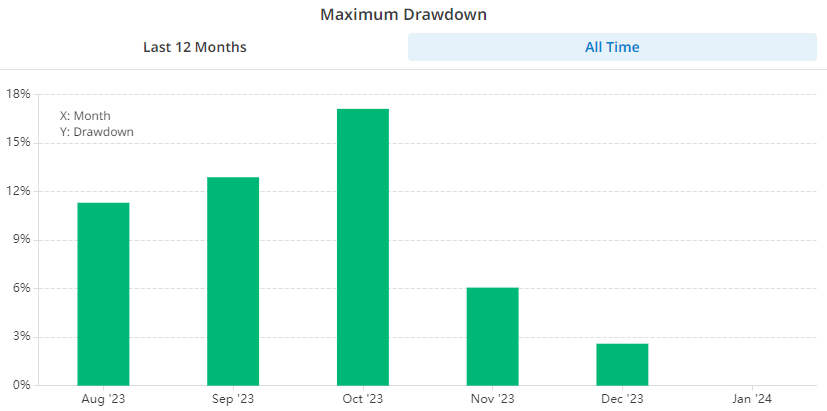
The meticulous risk management strategy employed by Kaede becomes distinctly evident when examining his equity curve. Throughout this analysis, it becomes apparent that intermittent downturns are not merely left to chance; instead, they are adeptly managed through a series of calculated and strategic adjustments.
Kaede’s proficiency in promptly recalibrating his risk exposure serves as a testament to his capacity to navigate the intricacies of trading with a balanced and adaptive approach. This ability to make strategic adjustments in response to market fluctuations reflects a keen awareness of risk factors and a commitment to maintaining a stable and sustainable investment performance.
The pattern observed in the equity curve suggests a deliberate and measured response to market dynamics. Rather than succumbing to abrupt downturns, Kaede appears to implement strategic adjustments, demonstrating an astute understanding of the importance of risk mitigation in preserving overall portfolio performance.
It is worth noting that this calculated approach does not imply an aversion to risk, but rather a nuanced understanding of how to manage and leverage it effectively. The ability to adapt to changing market conditions, coupled with a proactive risk management stance, is a hallmark of Kaede’s trading acumen. This strategic approach not only safeguards against potential losses but also contributes to the overall stability and sustained growth reflected in his equity curve.
In conclusion, we’ve delved into the intricacies of Kaede’s portfolio through a fusion of analysis and sentiment. This blend provides a nuanced perspective on the strategic decisions and risk management prowess demonstrated by Kaede, offering valuable insights for those venturing into the realm of trading.
As you embark on your own trading journey, consider taking a page from Kaede’s playbook and draw inspiration from the meticulous approach he has applied to his investments. The fusion of analytical precision and a thoughtful consideration of market sentiment can be a potent combination for success in the dynamic world of trading.
With this in-depth analysis, we bring our exploration of Kaede’s trading approach to a close. May the insights gained serve as a guiding light for your own trading strategies. To all readers venturing into the markets, I extend my best wishes for successful trading endeavours. For those actively participating in competitions, may luck and success be your constant companions!
Trading involves risk.