Last Updated: February 25, 2026
This article is reviewed annually to reflect the latest market regulations and trends.

TL;DR: (Too long, Didn’t Read)
- Diverse Types Exist: Forex signal providers vary significantly, from manual analysts to automated bots, free community signals to premium paid services, each suiting different trader needs and risk appetites.
- Analysis Methods Differ: Signals stem from technical analysis (charts, patterns), fundamental analysis (economic news), or sentiment analysis (market mood), impacting their style and reliability.
- Due Diligence is Crucial: Choosing a reliable signal provider requires verifying track records (beware of fake claims!), understanding their methodology, checking reviews, and assessing transparency – never blindly trust promises of high profits.
- Scams are Prevalent, Especially on Telegram: Be wary of free Forex signals pushed heavily on platforms like Telegram; many are scams designed to lure you into bad brokers or sell unrealistic dreams. Always verify legitimacy.
- Signals are Tools, Not Guarantees: Even the best Forex signals experience losses. They should supplement, not replace, your own trading knowledge, strategy, and strict risk management for smarter capital protection.
Disclaimer: The information in this article is for educational purposes only and does not constitute financial, investment, or trading advice. Copy trading carries substantial risks, including the potential loss of your entire invested capital. Past performance of copied traders or strategies is not a reliable indicator of future results. You may be replicating high-risk trades, overleveraged positions, or strategies incompatible with your financial goals. Always conduct independent research into a trader’s historical performance, risk metrics, and strategy before copying them. Never invest funds you cannot afford to lose. Consult a licensed financial advisor to ensure copy trading aligns with your risk tolerance, financial objectives, and regulatory requirements in your jurisdiction. This article does not endorse specific traders, platforms, or strategies, and all trading decisions remain your sole responsibility.
“The only true wisdom is in knowing you know nothing. […] The unexamined life is not worth living.” – Socrates
Peter Lynch’s Philosophy: Applying “Invest in What You Know” to Forex Signal Providers

Peter Lynch, the legendary Fidelity Magellan Fund manager, famously advocated for individual investors to leverage their everyday knowledge to uncover winning stocks. While Lynch focused on equities, his principles offer profound insights for evaluating Forex signal providers:
- “Invest in What You Understand”:
Lynch believed in sticking to industries and businesses you can grasp. For Forex traders, this means choosing signal providers whose strategies align with your comprehension. If a provider uses opaque AI models or overly complex jargon, avoid them and stick to methods (technical, fundamental, or sentiment analysis) you can dissect and trust. - “Do Your Homework”:
Lynch’s success stemmed from meticulous research. Apply this to signal providers: Scrutinize their track records, verify third-party performance reports (like Myfxbook), and test their signals in a demo account. Avoid providers unwilling to share historical data. - “The Best Stock Is the One You Already Own”:
Lynch emphasized patience with proven winners. Similarly, once you find a reliable signal provider, give their strategy time to work. Don’t abandon them after short-term losses assess performance over months, not days. - “Avoid the Latest Fad”:
Lynch warned against chasing hot trends. In Forex, this translates to ignoring social media “gurus” hyping “revolutionary” signals. Focus on providers with consistent, boringly reliable results over flashy marketing. - “Know Why You Own It”:
Lynch always understood the thesis behind his investments. For signals, ask: Why does this provider’s strategy work? Does it align with market conditions (e.g., ranging vs. trending)? If the rationale is unclear, walk away. - “All the Math You Need Is in Elementary School”:
Lynch avoided overcomplication. Similarly, the best signals often use straightforward risk-reward ratios (e.g., 1:2) and clear entry/exit rules. Beware providers touting overly complex algorithms without explainable results. - “The Market Is Never Wrong; Opinions Are”:
Lynch respected price action. If a signal provider’s trades consistently fail despite their “brilliant analysis,” the market is telling you something. Adapt instead of doubling down on flawed strategies.
In essence, Lynch’s blend of curiosity, simplicity, and skepticism aligns perfectly with the article’s call for due diligence. Just as he avoided overhyped stocks, Forex traders must avoid overhyped signals.
10 Stoic Lessons from Meditations for Forex Signal Users

Marcus Aurelius’ Meditations, a cornerstone of Stoic philosophy, teaches resilience, discipline, and emotional mastery. Here’s how its wisdom applies to navigating Forex signals:
- “You Have Power Over Your Mind—Not Outside Events”
Lesson: Focus on what you control.
Application: You can’t control signal accuracy, but you control your risk management (position sizing, Stop Losses). Never blame losses on a provider, own your decisions. - “The Obstacle Is the Way”
Lesson: Challenges are opportunities for growth.
Application: Losing trades from signals aren’t failures, they’re chances to refine your vetting process and emotional discipline. - “Waste No More Time Arguing What a Good Trader Should Be. Be One.”
Lesson: Action trumps theory.
Application: Test signals in a demo account instead of endlessly researching. Let results, not promises, guide your choices. - “If You Are Distressed by Anything External, the Pain Is Due to Your Judgment of It”
Lesson: Emotions stem from perception.
Application: A losing signal triggers frustration only if you expect perfection. Accept losses as part of trading. - “Let Your Provider’s Faults Be Their Own”
Lesson: Don’t internalize others’ shortcomings.
Application: If a signal provider underperforms, calmly replace them, no anger, no regret. - “The Best Revenge Is Not to Be Like Your Enemy”
Lesson: Avoid mirroring irrationality.
Application: Scammers push impulsive trades. Stay disciplined and stick to your strategy even when others chase greed. - “Think of Yourself as Dead. You Have Lived Your Life. Now Take What’s Left and Live It Properly.”
Lesson: Prioritize what matters.
Application: Protect your capital fiercely. A blown account from reckless signal-following can’t be undone. - “When You Arise in the Morning, Think of What a Precious Privilege It Is to Be Alive, to Trade”
Lesson: Approach trading with gratitude, not desperation.
Application: Use signals to enhance your edge, not as a lifeline for “quick riches.” - “Confine Yourself to the Present”
Lesson: Focus on the current trade.
Application: Don’t let past signal failures or future anxieties cloud your judgment. Execute each signal dispassionately. - “The Soul Becomes Dyed With the Color of Its Thoughts”
Lesson: Guard your mindset.
Application: Following signals mindlessly breeds dependency. Cultivate a trader’s mindset, analytical, patient, and self-reliant.
Navigating the Maze: A Deep Dive into Forex Signal Provider Types (Updated 2026)

Forex signal provider – often touted as a lighthouse guiding ships through foggy conditions, offering trade suggestions based on analysis. But like any tool, understanding its various forms, strengths, and weaknesses is paramount before relying on it. Especially in 2026, where technology and market dynamics continue to evolve rapidly, choosing the right type of signal provider (or choosing not to use one) is a critical decision for protecting your capital and achieving sustainable trading results.
Many traders, especially beginners, are lured by the promise of easy profits – simply follow the signal and watch the money roll in. However, reality is far more complex. The world of trading signals is diverse, ranging from highly sophisticated analytical services to outright scams preying on the uninformed. This comprehensive guide will dissect the different types of signal providers, equip you with the knowledge to evaluate them critically, and help you make smarter, more educated decisions about integrating them (or not) into your trading journey. Think of this not just as an explanation, but as your map and compass through the often-confusing signal provider landscape.
What Exactly is a Forex Signal Provider? The GPS Analogy
At its core, a Forex signal provider generates and distributes trading suggestions or “signals.” Think of it like a GPS for your trading journey. A typical signal includes:
- Currency Pair: The specific market to trade (e.g., EUR/USD, GBP/JPY).
- Action: Buy (Long) or Sell (Short).
- Entry Price: The recommended price level to initiate the trade.
- Stop Loss (SL): A crucial risk management level; the price at which to exit the trade if it moves against you to limit potential losses.
- Take Profit (TP): The target price level at which to exit the trade if it moves in your favor to secure profits.
These signals aim to simplify the decision-making process, theoretically saving traders time on analysis and identifying potential opportunities they might otherwise miss. But just like a GPS can sometimes lead you down a wrong path or into traffic, not all signal providers are reliable, and blindly following any signal can be disastrous.
The Great Divide: Manual vs. Automated Signal Providers
One of the most fundamental distinctions lies in how signals are generated:
1. Manual Signal Providers: The Human Touch

What they are: These signals are generated by human analysts or teams of experienced traders. They leverage their expertise, intuition, and in-depth market knowledge, combining various analysis techniques. Think of a seasoned portfolio manager making discretionary calls.
Pros:
- Adaptability: Humans can interpret nuanced market conditions, news events, and unforeseen circumstances that rigid algorithms might miss.
- Contextual Understanding: Experienced traders can factor in broader market sentiment and inter-market relationships.
- Potential for Deeper Insight: Often provide rationale or commentary alongside signals, aiding learning.
Cons:
- Emotional Bias: Susceptible to human emotions like fear, greed, or overconfidence, potentially leading to inconsistent decisions.
- Scalability Issues: Limited by human capacity; cannot monitor all markets 24/7 or execute trades instantaneously.
- Time Delays: Signal generation and distribution can be slower than automated systems.
- Dependency on Individual Skill: The quality hinges entirely on the analyst’s expertise and consistency.
2. Automated Signal Providers: The Algorithmic Approach

What they are: These providers use software, algorithms (often called Expert Advisors or EAs in the MetaTrader4 or MetaTrader5 world), or even AI to scan markets, identify patterns based on pre-programmed rules, and generate signals automatically.
Pros:
- Speed & Efficiency: Can analyze vast amounts of data and execute trades almost instantly, crucial in fast-moving markets.
- Emotionless Execution: Operate purely based on logic and rules, eliminating psychological pitfalls.
- 24/7 Operation: Can monitor markets around the clock without fatigue.
- Backtesting Capability: Strategies can often be rigorously tested on historical data (though past performance isn’t a guarantee of future results).
Cons:
- Rigidity: Cannot easily adapt to sudden, unprecedented market events or nuances not coded into the algorithm.
- Over-Optimization Risk: Algorithms might be “curve-fitted” to past data, performing poorly in live, changing market conditions.
- Technical Failures: Dependent on technology; glitches, server issues, or connectivity problems can cause significant issues.
- Lack of Discretion: Cannot apply human judgment or contextual understanding in complex situations.
Free vs. Paid Signal Providers

The cost factor is another major differentiator:
Free Signal Providers: Too Good to Be True?
Where to find them: Often found in Telegram groups, social media channels, forums, or offered by brokers as a perk.
The Catch: Why would someone give away potentially profitable signals for free?
- Lead Generation: Often used to upsell you to a paid “VIP” group with supposedly better signals.
- Broker Affiliation: Providers may receive commissions from brokers when you sign up using their link (creating potential conflicts of interest).
- Building Reputation: Some may offer free signals initially to build a following before launching paid services.
- Often Low Quality: Many free signals lack rigorous analysis, verified track records, or proper risk management parameters. They might be delayed or incomplete.
- Scam Potential: The free arena is rife with scams promising unrealistic returns (more on this later).
Verdict: While occasional valuable insights might be shared freely, treat free signals with extreme skepticism. They can be useful for observing market commentary if you understand the risks, but rarely form a reliable basis for consistent trading.
Paid Signal Providers: Investing in Expertise?
What they are: Services requiring a subscription fee (monthly, quarterly, annually, or lifetime).
The Value Proposition: Theoretically, you’re paying for expertise, robust analysis, timely delivery, dedicated support, and potentially a verified track record.
Key Considerations:
- Cost vs. Return: Does the subscription fee justify the potential profit generated by the signals? Factor this into your profitability calculations. High fees can significantly eat into gains.
- Transparency: Reputable paid providers should be transparent about their methodology, performance history (ideally verified by a third party like Myfxbook or FXBlue), and risk management approach.
- Trial Periods: Look for providers offering free or low-cost trials to evaluate the service before committing.
- No Guarantees: Even paid signals aren’t foolproof. Losses are part of trading. Beware providers promising guaranteed profits or unrealistically high win rates (e.g., 90%+). Consistent 60-70% accuracy with good risk-reward ratios is more realistic, though still hard to achieve.
Verdict: Paid doesn’t automatically mean better or legitimate. Thorough due diligence is non-negotiable. Some excellent providers exist, but many paid services also overpromise and underdeliver.
Under the Hood: Signal Generation by Analysis Method
How does the provider – human or bot – decide when to issue a signal? The analysis method is key:
Technical Analysis Based Signals
- Focus: Studying historical price charts, patterns (like head and shoulders, triangles, flags), and technical indicators (like Moving Averages, RSI, MACD, Fibonacci retracements) to forecast future price movements.
- Premise: Assumes that past price action and patterns tend to repeat and reflect all relevant market information.
- Pros: Objective data points, widely applicable across markets and timeframes, numerous tools available.
- Cons: Can generate false signals (whipsaws) in ranging or volatile markets, interpretation can be subjective, lagging indicators may react too late.
Fundamental Analysis Based Signals
- Focus: Analyzing economic data releases (e.g., interest rates, GDP growth, inflation, employment figures), geopolitical events, central bank policies, and news that affects the intrinsic value of a currency.
- Premise: Assumes that economic health and stability drive currency values in the long run.
- Pros: Provides context for market moves, useful for longer-term position trading, helps understand underlying drivers.
- Cons: Difficult to time market entry/exit precisely based on fundamentals alone, data can be complex and subject to revisions, market reactions can be unpredictable.
Sentiment Analysis-Based Signals
- Focus: Gauging the overall mood or attitude of market participants (fear, greed, optimism, pessimism) towards a particular currency or the market as a whole.
- Tools: Can involve analyzing news headlines, social media trends, trader positioning data (like the Commitment of Traders report or broker-specific sentiment indicators), and volatility indices (like the VIX, though more stock-focused).
- Premise: Extreme sentiment often precedes market reversals (e.g., extreme bullishness can signal a top). Often used as a contrarian indicator.
- Pros: Can provide early warnings of potential turning points, captures psychological market dynamics.
- Cons: Subjective and difficult to quantify accurately, sentiment can remain extreme for extended periods, best used in conjunction with other analysis types.
Many providers use a blend of these methods. Understanding the primary approach helps you align the signal type with your own trading philosophy and preferred timeframe.
Getting the Message: Signal Delivery Methods

How you receive the signal matters for timely execution:
- SMS/Text Message: Direct and fast, but can lack detail.
- Email: Allows for more detailed explanations but might not be instant.
- Telegram/WhatsApp: Very popular, especially for free/community signals. Fast, allows group interaction, but also a hotbed for scams.
- Mobile App Notifications: Dedicated apps can provide instant alerts and potentially integrated analysis tools.
- Platform Integration/Copy Trading: Some signals can be directly integrated into trading platforms (like MT4/MT5 via EAs) or through copy trading platforms (like ZuluTrade, Myfxbook Autotrade), automatically executing the trades in your account. This offers convenience but reduces your direct control and requires absolute trust in the provider.
Choose a method that suits your lifestyle and ensures you can react to signals promptly if manual execution is required.
Time Horizons & Styles: Matching Signals to Your Strategy

Not all signals are created equal in terms of intended duration:
- Scalping Signals: Target very small profits (a few pips) on extremely short timeframes (seconds to minutes). Require fast execution and low spreads.
- Day Trading Signals: Trades opened and closed within the same trading day. Focus on intraday price movements.
- Swing Trading Signals: Trades held for several days to weeks, aiming to capture larger market “swings.”
- Position Trading Signals: Long-term trades held for weeks, months, or even years, often based heavily on fundamental analysis.
Ensure the provider’s trading style and signal frequency align with your own preferences, risk tolerance, and available time commitment. A scalper won’t benefit from weekly swing signals, and vice-versa.
Action Points: Entry vs. Exit Signal Providers
While most providers offer a full package (Entry, SL, TP), some might specialize:
- Entry Signal Providers: Focus primarily on identifying optimal points to enter a trade.
- Exit Signal Providers: Might specialize in managing open trades and identifying optimal exit points (either for profit or loss limitation).
A complete signal usually includes both entry and exit parameters (SL/TP). Relying only on entry signals without a clear exit plan (provided or self-determined) is poor risk management.
Finding Your Niche: Specialized Providers
Some providers focus on specific areas:
- Specific Currency Pairs: E.g., Majors only (EUR/USD, GBP/USD), specific crosses (EUR/GBP), or exotics.
- Specific Assets: Some may offer signals for Gold (XAU/USD), Oil, or Indices alongside Forex.
- Specific Strategies: E.g., News trading signals, specific chart pattern signals, harmonic pattern signals.
If you have a particular area of interest, a specialized provider might offer deeper expertise, but always apply the same rigorous vetting process.
The Crucial Choice: How to Choose the Right Forex Signal Provider in 2026

This is where diligence becomes your shield. Don’t be swayed by flashy marketing or unrealistic promises. Use this checklist:
- Verified Track Record: This is paramount. Insist on long-term performance history (at least 6-12 months, preferably longer) verified by independent third-party platforms like Myfxbook, FXBlue, or MQL5 Signals. Screenshots are easily faked! Look for consistency, realistic drawdown levels, and profitability metrics.
- Transparency & Methodology: Do they clearly explain their trading strategy and analysis methods? Vague or “secret” strategies are red flags.
- Risk Management: Do they provide clear Stop Loss levels for every signal? Do they adhere to sound risk principles (e.g., risking only a small percentage of capital per trade)? Avoid providers with no SLs or excessively large risk per trade.
- Win Rate vs. Risk/Reward: Don’t fixate solely on win rate. A 60% win rate with a 1:2 risk/reward ratio can be profitable, while an 80% win rate with a poor risk/reward might lose money. Understand the relationship. Beware claims of 90%+ win rates – they are almost always inflated or unsustainable.
- Reviews and Reputation: Search for independent reviews on trusted Forex forums (like Forex Factory, BabyPips forums) or review sites. Be wary of overly positive testimonials on the provider’s own website. Check Reddit discussions for candid feedback, but filter out noise.
- Trial Period: Does the provider offer a free or low-cost trial? Use this to assess signal quality, timeliness, and support before committing to a full subscription.
- Cost and Value: Is the subscription fee reasonable given the potential returns and your account size? Factor it into your P/L calculations.
- Customer Support: Is support responsive and helpful? Try contacting them with questions during a trial.
- Delivery Method: Does it align with your ability to receive and act on signals promptly?
Debunking the Myth: The “Best” Signal Provider Doesn’t Exist
Let’s be crystal clear: finding the one ‘best’ signal provider that guarantees profits is a myth. All traders and all signal providers, no matter how skilled or sophisticated, experience losing trades and drawdown periods. Markets change, strategies falter, and unforeseen events occur.
Anyone promising guaranteed profits or a 100% win rate is unequivocally a scammer. Your focus should be on finding a reliable, transparent provider whose methodology aligns with your risk tolerance, and whose performance is verifiable over a significant period. Even then, continuously monitor their performance. Don’t become complacent; always double-check trades if possible and ensure they align with your own market view and risk parameters. Diversification across providers is generally not recommended as it complicates risk management and oversight.
Red Flags & Scams: The Telegram Trap and Other Dangers
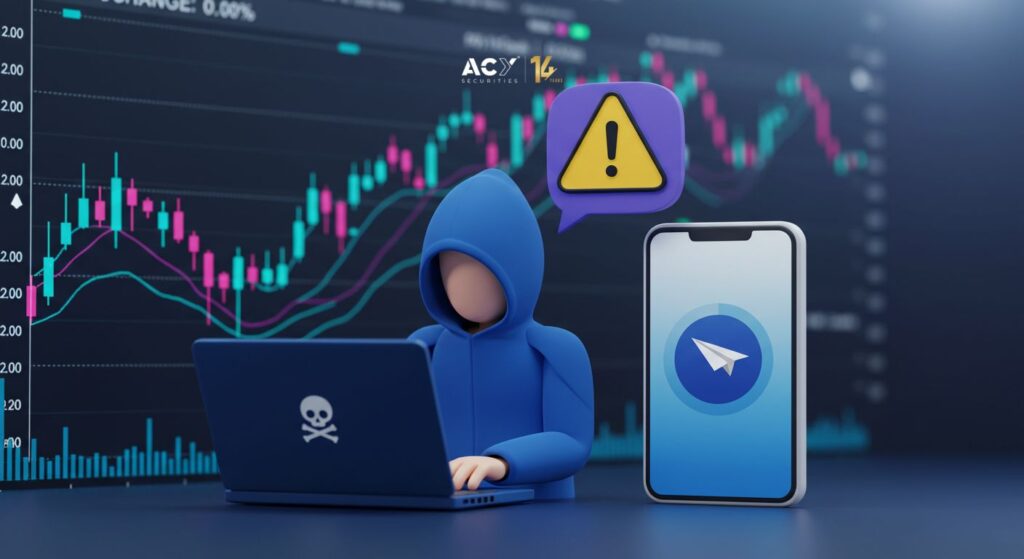
The signal provider space, particularly the free segment, is unfortunately littered with scams. Be extremely cautious of:
- Telegram & Social Media Gurus: While legitimate providers exist, platforms like Telegram are notorious for pump-and-dump schemes, fake signal groups, and marketers pushing affiliate links to unregulated brokers. Flashy lifestyles (rented cars, fake luxury) are often used to lure victims.
- Unrealistic Profit Promises: “Double your account in a week!”, “95% accuracy guaranteed!” – These are giant red flags.
- Lack of Verified Track Records: Relying only on self-reported results or screenshots.
- Pressure to Deposit with Specific Brokers: Often unregulated brokers where the “provider” earns high commissions on your losses.
- Vague or Secret Strategies: Unwillingness to explain how signals are generated.
- No Mention of Risk Management: Signals without Stop Losses are dangerous.
- High Subscription Fees with No Trial/Refund: Especially if combined with other red flags.
- Withdrawal Problems: A common tactic in investment scams (often requiring more deposits for “taxes” or “fees”).
Always conduct thorough due diligence. If it sounds too good to be true, it almost certainly is.
Informed Decisions for Smarter Investing

Forex signal providers offer a potential shortcut, a way to leverage external expertise or automation in the complex currency markets. From manual analysts to automated bots, free tips to premium subscriptions, the types are diverse. However, this landscape is also filled with potential pitfalls, from unreliable performance to outright scams.
The key takeaway is critical evaluation and informed decision-making. Understand the different types, rigorously vet any potential provider using the criteria outlined (especially verified track records and transparency), and be acutely aware of the prevalent scams, particularly in the free/social media space.
Remember the wisdom of Socrates: embrace examination and acknowledge the limits of knowledge. No signal provider holds a magic key. Signals, if used cautiously and intelligently, should be just one component of a well-rounded trading strategy heavily anchored in your own education, analysis, and, above all, disciplined risk management. Your primary goal should always be the smarter protection of your capital. Choose wisely, stay vigilant, and prioritize learning over shortcuts.
Frequently Asked Questions (FAQs) about Forex Signal Providers
Q1: What are Forex signals in simple terms?
A: Forex signals are essentially trade recommendations for the currency market, usually provided by an analyst or an automated system. They typically suggest which currency pair to trade, whether to buy or sell, and at what price levels to enter, take profit, and set a stop loss to manage risk.
Q2: Are Forex signals worth the money?
A: It depends heavily on the provider’s quality, consistency, cost, and your ability to implement the signals effectively. Many free signals are low quality or scams. Reputable paid signals can be profitable if they have a verified positive track record after accounting for subscription fees, but require thorough vetting. Many traders find more long-term value in learning to analyze the markets themselves.
Q3: How much do Forex signal providers typically cost?
A: Costs vary widely. Free signals exist but carry high risks. Paid subscriptions can range from $30-$50 per month on the lower end to several hundred dollars per month for premium or specialized services. Some offer lifetime deals, but be cautious about their long-term viability. Always weigh the cost against the verified potential return and your trading capital.
Q4: Are most Forex signal providers scams?
A: While not all providers are scams, a significant portion, especially those promising unrealistic returns or found freely on social media/Telegram, are fraudulent or simply ineffective. Scams often involve fake track records, pressure to use specific unregulated brokers, or inability to withdraw funds. Extreme caution and due diligence are essential.
Q5: How can I verify if a Forex signal provider is legitimate?
A: Look for long-term (6-12+ months) verified performance on independent platforms like Myfxbook, FXBlue, or MQL5 Signals (not just screenshots). Check for transparency about their trading strategy. Read independent reviews on reputable forums. Assess their risk management practices (do they always use stop losses?). Look for realistic claims – avoid anyone guaranteeing profits or extremely high win rates (90%+). Consider a trial period if offered.
Q6: Can I rely solely on Forex signals to trade?
A: It’s highly discouraged. Relying solely on signals prevents you from developing your own trading skills and understanding market dynamics. It fosters dependency and exposes you fully to the provider’s potential flaws or losing streaks. Signals are best used as a supplementary tool or learning aid within your own broader trading plan and risk management framework.
For more detailed insights on developing daily trading routines, risk management, and effective position sizing strategies, explore additional articles on Trading Cup. Our trading experts at ACY and FinLogix are also great resources to guide your journey towards trading excellence.

Discover Our Best Trading Signals
At Tradingcup, you can browse through a selection of signals and review past performance before you decide to copy.
Become A Signal Provider
Share your expertise and become a signal provider so other traders can copy your trades.
Stay tuned to our blog for more trader spotlights and leaderboard updates.
Trading involves risks.
Visit the Tradingcup blog through the link below for more updates: https://www.tradingcup.com/learnBest blogs top 8 code to use if needed.
Related Copy Trading blogs:
- Understanding Market Liquidations: Liquidity Sweeps and Runs Explained
- 7 Essential Daily Habits of Successful Traders to Outperform Their Peers
- 10 Strategies You Can Copy off Our Best Copy Traders
- 5 Strategies Every Trader Can Master To Trade Better In A Trading Contest
- 2025 Copy Trading Scams Exposed: How to Spot Fraud
- A Swing Trading Strategy with an 83 Percent Win Rate and Low Drawdowns
- Forex Martingale Strategies Explained, The Good, The Bad and The Ugly
- Pyramiding Trading Tutorial – Pros & Cons & How to Use It