Last Updated: July 02, 2025
This article is reviewed annually to reflect the latest market regulations and trends.
Disclaimer: The information in this article is for educational purposes only and does not constitute financial, investment, or trading advice. Copy trading carries substantial risks, including the potential loss of your entire invested capital. Past performance of copied traders or strategies is not a reliable indicator of future results. You may be replicating high-risk trades, overleveraged positions, or strategies incompatible with your financial goals. Always conduct independent research into a trader’s historical performance, risk metrics, and strategy before copying them. Never invest funds you cannot afford to lose. Consult a licensed financial advisor to ensure copy trading aligns with your risk tolerance, financial objectives, and regulatory requirements in your jurisdiction. This article does not endorse specific traders, platforms, or strategies, and all trading decisions remain your sole responsibility.
TL;DR: (Too Long, Didn’t Read)
- Trader Choice is Key, Don’t Just Obey: Scrutinize top gold traders; high gains can hide risky plays.
- Drawdowns Bite, Keep Your Capital Bright: A trader’s Maximum Drawdown (MDD) reveals their true risk; keep it tight.
- Fees Add Up, So Do the Math: High subscription and performance fees can shrink your path.
- Diversify Your Trades, Don’t Put All Eggs in One Basket’s Shades: Spread your investment across multiple traders to cushion the cascade.
- Stay Informed and Engaged, Don’t Be Caged: Continuously monitor and cross-reference with expert analysis to stay ahead of the stage.
“The stock market is a device for transferring money from the impatient to the patient.” – Warren Buffett
Top Gold Traders Review: An In-depth XAUUSD Analysis for June 2025
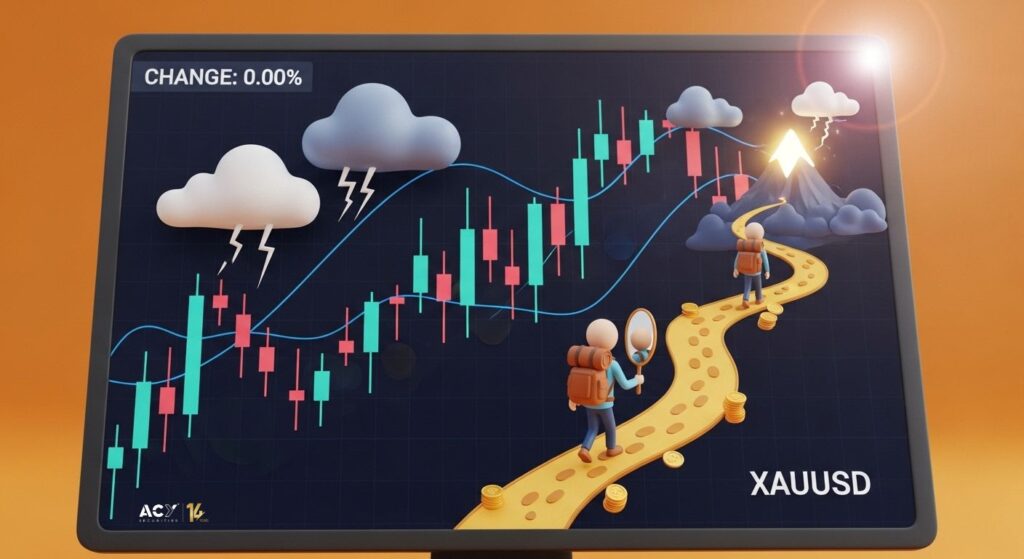
Ever felt like you’re on the outside looking in on the world of investing? You hear about the potential of the forex market, the allure of trading gold (XAUUSD), but the charts, the jargon, the sheer complexity of it all feels like a mountain too high to climb. You have a demanding job, a life to live, and the time to become a trading expert just isn’t there. Then you discover copy trading – a seemingly perfect solution. You can simply mirror the trades of seasoned professionals. But a new question arises, one that carries the weight of your hard-earned money: Should you copy the top gold traders? This guide is here to help you navigate that very question.
What is Gold Copy Trading?
Gold copy trading is a feature offered by brokerage platforms that allows you to automatically replicate the trades of experienced traders who focus on gold (XAUUSD). When they buy or sell, your account does the same in proportion to your investment. It’s a way to participate in the gold market without needing to perform your own analysis, making it an attractive option for beginners.
Is Copy Trading the Perfect Path for a Beginner?
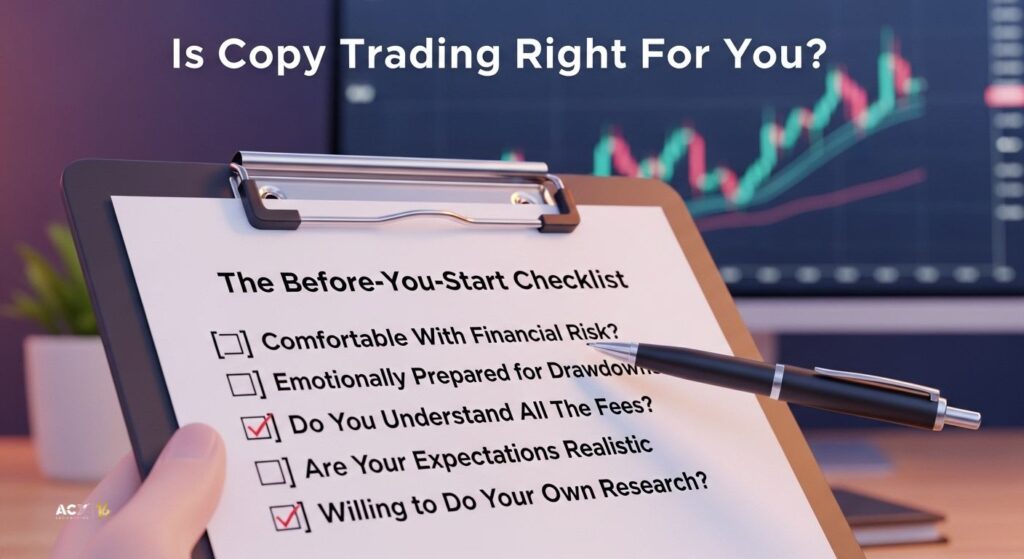
Copy trading isn’t for everyone. Before you jump in, consider this checklist:
- Are you comfortable with risk? All trading involves risk, and past performance is not indicative of future results. Even the best traders have losing streaks.
- Do you have capital you can afford to lose? Never invest money you can’t afford to part with.
- Are you looking for a passive investment? While copy trading is less hands-on, it still requires initial research and ongoing monitoring.
- Do you understand the fee structures? Subscription fees and performance fees can eat into profits.
- Are you patient? Quick riches are rare. Successful trading, even copying, often requires a long-term perspective.
- Are you willing to do your due diligence? Selecting a trader requires careful analysis of their history, strategy, and risk management.
- Do you have realistic expectations? Don’t expect to double your money overnight.
- Are you emotionally prepared for drawdowns? Seeing your account balance dip, even temporarily, can be stressful. Maximum Drawdown (MDD) is a key metric to understand.
If you’ve nodded along to these points with a clear understanding, then XAUUSD copy trading might be a suitable avenue for you to explore.
Unveiling the Top Gold Traders to Copy This Month
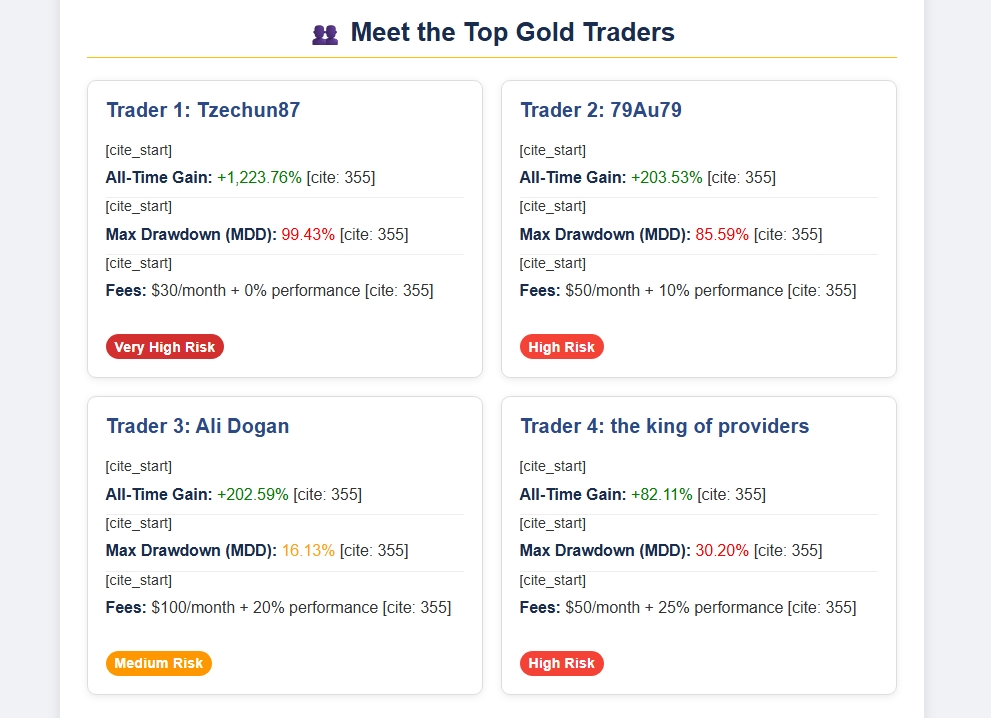
Here’s a detailed look at four popular gold traders, their performance metrics, and what they could mean for your portfolio. The data is based on their performance as of early June 2025.
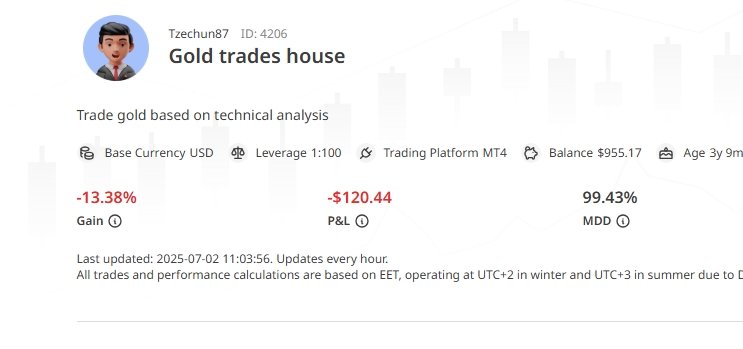
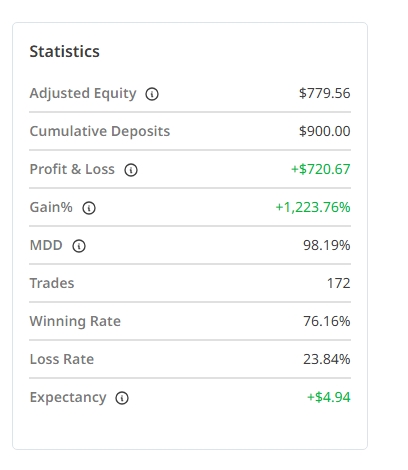
Tzechun87:
A trader with over three and a half years of experience who relies on technical analysis. Gold (XAUUSD) makes up over 90% of their trades.
79Au79:
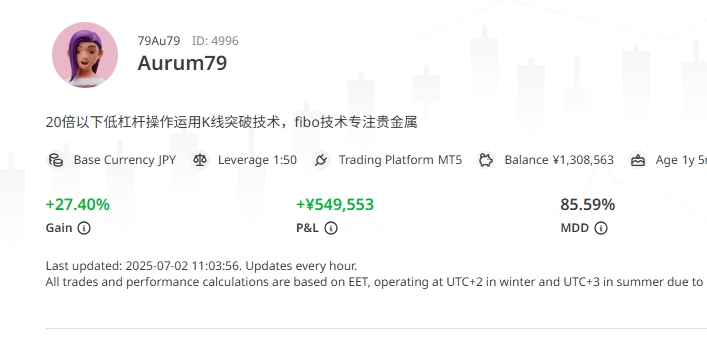
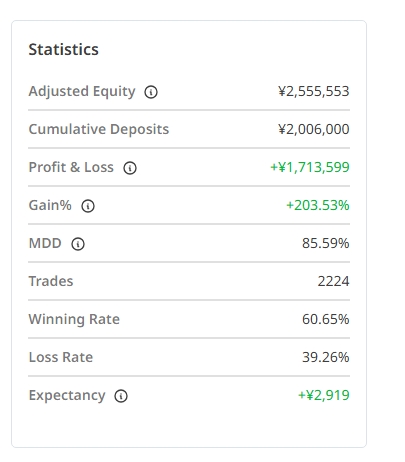
With over a year in the game, this trader uses K-line breakout and Fibonacci techniques, with a strong focus on precious metals. Gold (XAUUSD) constitutes 76.06% of their trading activity.
Ali Dogan:
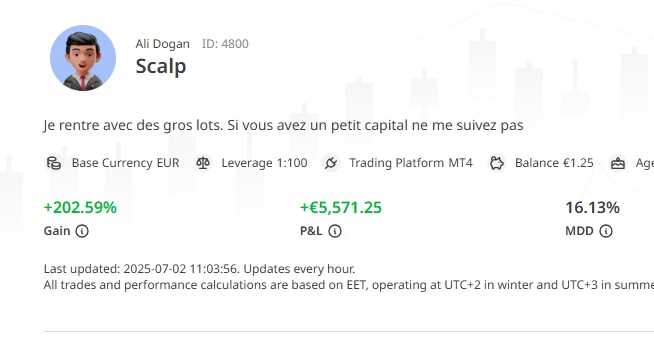
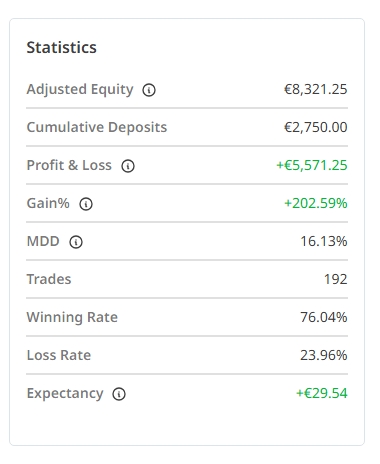
A scalper with six months of trading history who advises that his strategy of using large lots may not be suitable for those with small capital. XAUUSD dominates their portfolio at 95.92%.
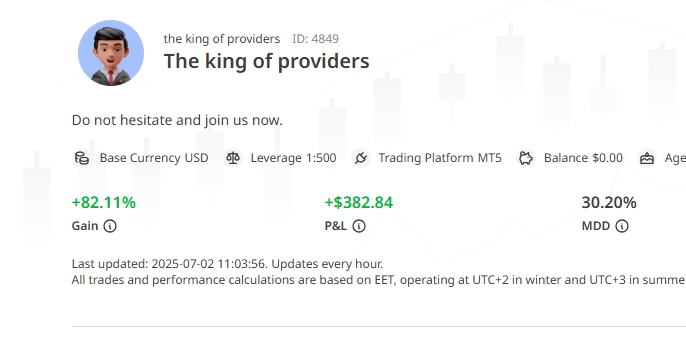
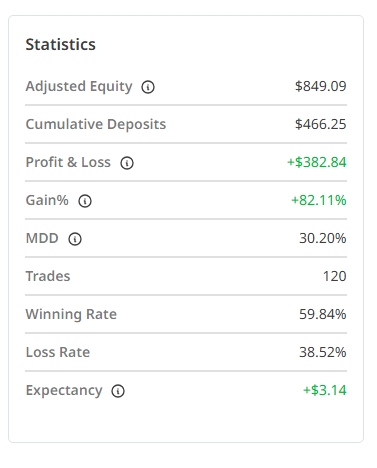
the king of providers:
An experienced trader of over two years who focuses heavily on XAUUSD, which accounts for 98.36% of their trades.
A Comparative Cost-Benefit Analysis: Investing $2,000 in June 2025
Let’s break down what an investment of $2,000 might look like with each of these traders, considering their fees and performance.
| Trader | All-Time Gain | Maximum Drawdown (MDD) | Subscription & Performance Fees | Risk Level |
| Tzechun87 | +1,223.76% | 98.19% | $30/month + 0% | Very High |
| 79Au79 | +203.53% | 85.59% | $50/month + 10% | High |
| Ali Dogan | +202.59% | 16.13% | $100/month + 20% | Medium |
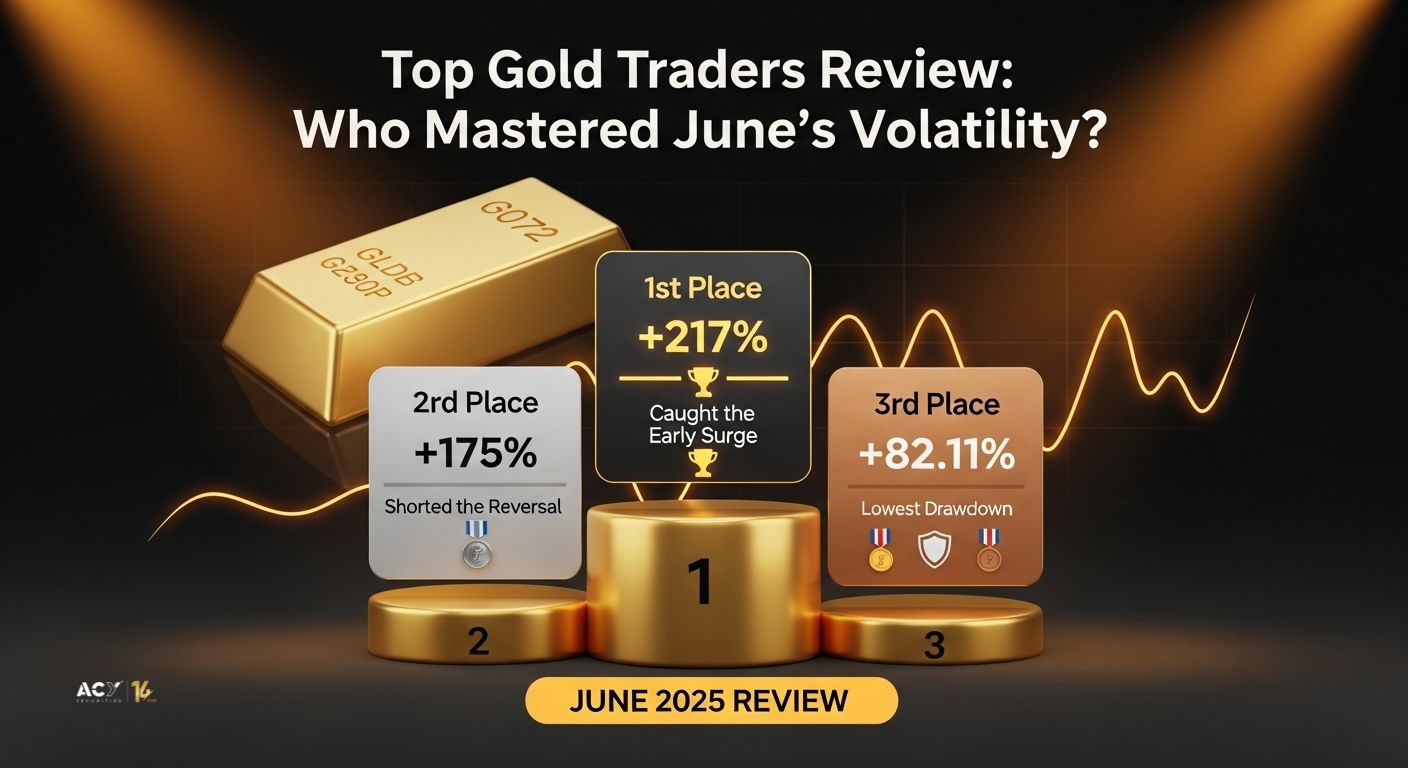
| the king of providers | +82.11% | 30.20% | $50/month + 25% | High |
In-Depth Analysis:
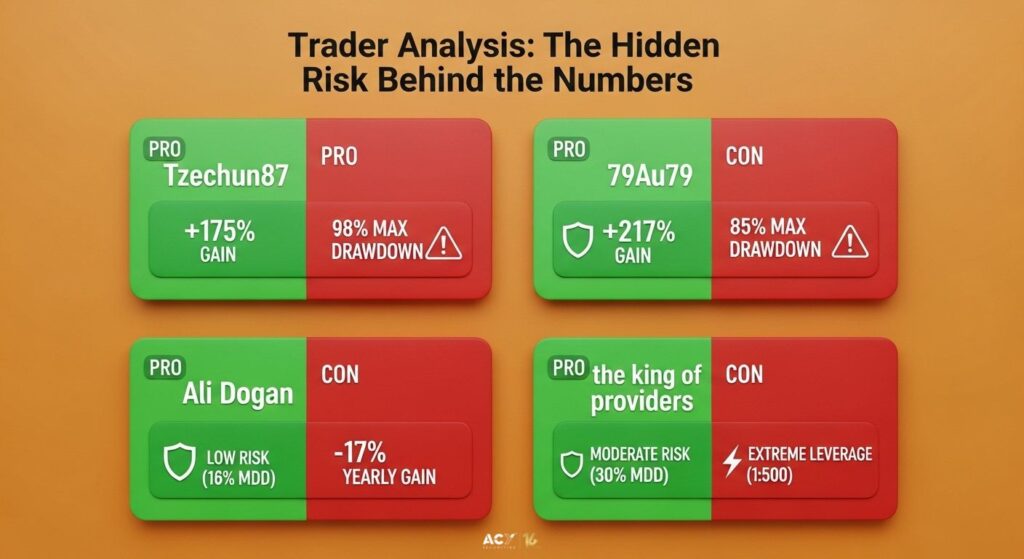
- Tzechun87: While the potential for high returns is evident from the yearly gain of +175.83%, the staggering 98.19% MDD is a major red flag. This indicates a “boom-or-bust” strategy where a total loss of capital is a very real possibility. The $30 monthly fee is low, but the risk is exceptionally high.
- 79Au79: This trader shows a strong yearly gain of +217.73%, but this comes with a high MDD of 85.59%. The dual fee structure of a $50 monthly subscription and a 10% performance fee will also eat into your net profits. Expect significant volatility with this choice.
- Ali Dogan: Ali Dogan presents a much more attractive risk profile with a low MDD of 16.13%. However, a significant concern is the lack of recent trading activity and a negative performance for the year at -17.53%. The fees are also the highest of the group. Better capital preservation is a plus, but the current performance makes this a questionable choice.
- the king of providers: This trader’s high leverage of 1:500 makes them a high-risk option, despite a more moderate MDD of 30.20%. The combination of high leverage and high fees, along with a lack of recent trading, suggests caution.
How Would Warren Buffett Approach Copy Trading Gold?
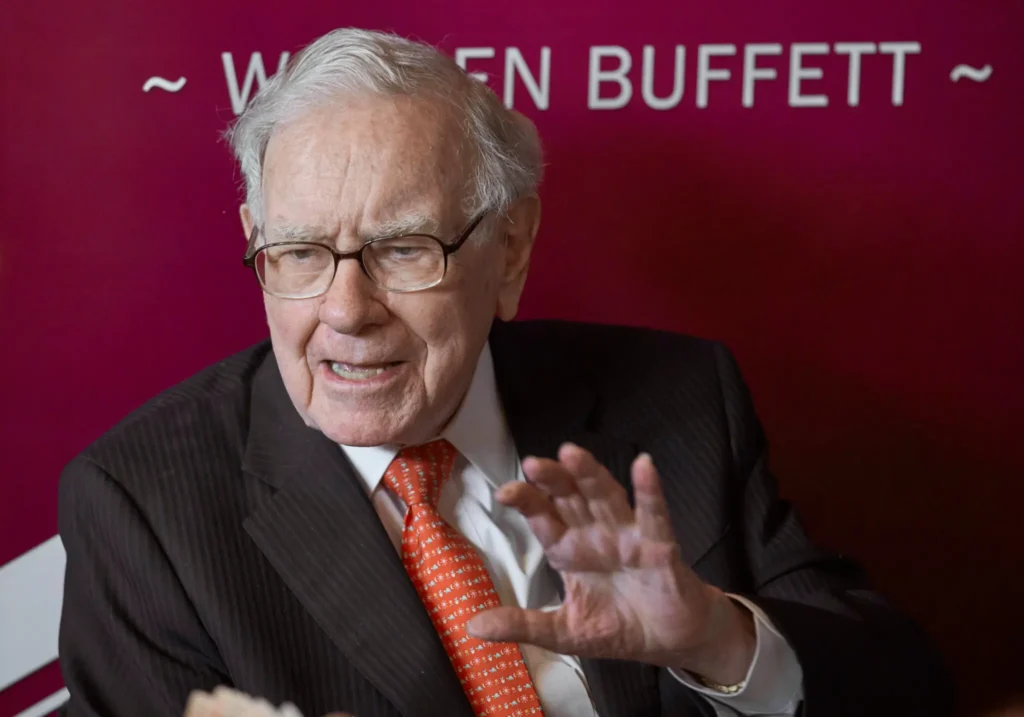
Warren Buffett has famously been skeptical of gold as an investment, stating, “It doesn’t do anything but sit there and look at you.” He prefers investing in productive assets that generate earnings.
If we were to apply his principles to copy trading, Buffett would likely advise extreme caution. He would emphasize understanding the “business” of the trader you are copying. He would look for consistency, a long track record, and a clear, understandable strategy. He would be wary of high fees that erode returns and would likely favor traders with a demonstrated history of prudent risk management over those with meteoric but volatile gains. In short, he would not be swayed by flashy numbers but would dig deep into the fundamentals of the trader’s performance.
10 Lessons from “Trading in the Zone” by Mark Douglas for Copy Traders
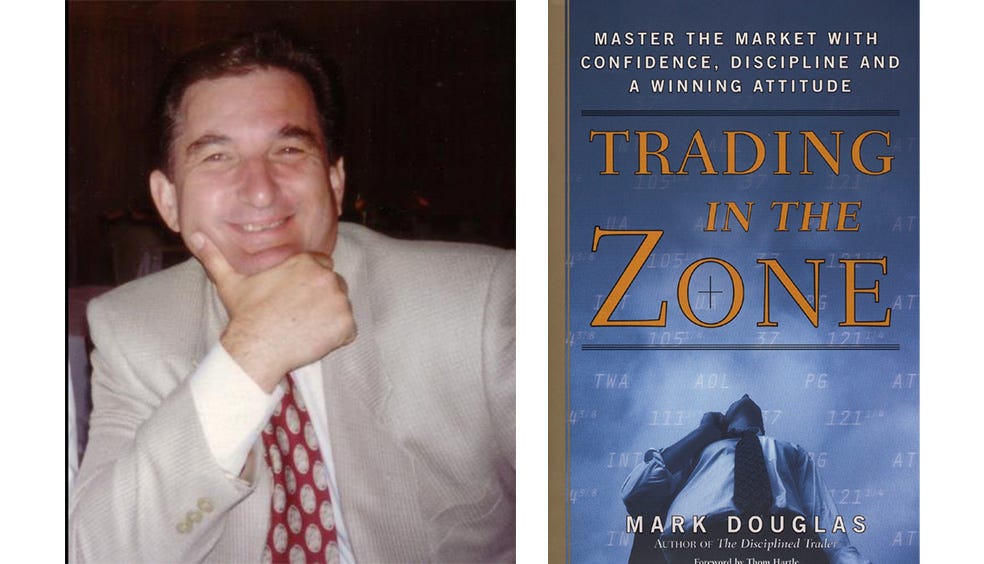
Mark Douglas’s “Trading in the Zone” is a bible for traders looking to master their psychology. Here are 10 lessons from the book, adapted for the copy trader:
- Anything Can Happen: Just because you’re copying a “top” trader doesn’t guarantee success. The market can be unpredictable.
- You Don’t Need to Know What’s Going to Happen Next to Make Money: Trust in your chosen trader’s edge, but also understand that losses are part of the game.
- There is a Random Distribution Between Wins and Losses: Don’t get discouraged by a string of losing trades or overconfident after a series of wins.
- An Edge is Nothing More Than an Indication of a Higher Probability: Your chosen trader’s strategy is about probabilities, not certainties.
- Every Moment in the Market is Unique: Past performance is not indicative of future results.
- The Market is a Reflection of Human Psychology: Greed and fear drive markets, and this applies to the traders you copy as well.
- Your Beliefs About Trading Will Determine Your Results: If you believe copy trading is a get-rich-quick scheme, you are likely to take on too much risk.
- The Best Traders Think Differently from the Rest: They have learned to accept risk and are not afraid of being wrong.
- You Must Learn to Accept the Risk: Before you copy a single trade, know exactly how much you are willing to lose.
- Your Primary Goal Should Be to Preserve Your Capital: This should be your mantra when selecting and monitoring traders.
Did You Know You Can Supercharge Your Gold Copy Trading with AI?

Artificial intelligence is revolutionizing how we analyze data, and the world of trading is no exception. AI-powered tools can analyze vast amounts of historical data to identify patterns and assess the risk profiles of traders with greater accuracy. For those looking to get an edge, exploring platforms that integrate AI into their copy trading offerings can provide a more sophisticated way to filter and select traders.
How to Find Your Own Forex Signals on TradingCup
The goal is not just to follow a list, but to learn how to fish. The TradingCup platform offers several powerful filters to help beginners find traders that match their specific risk tolerance and goals. Understanding these tools is key to becoming an effective manager of traders. Beyond Manual Search Below Are Filtered Lists From TradingCup
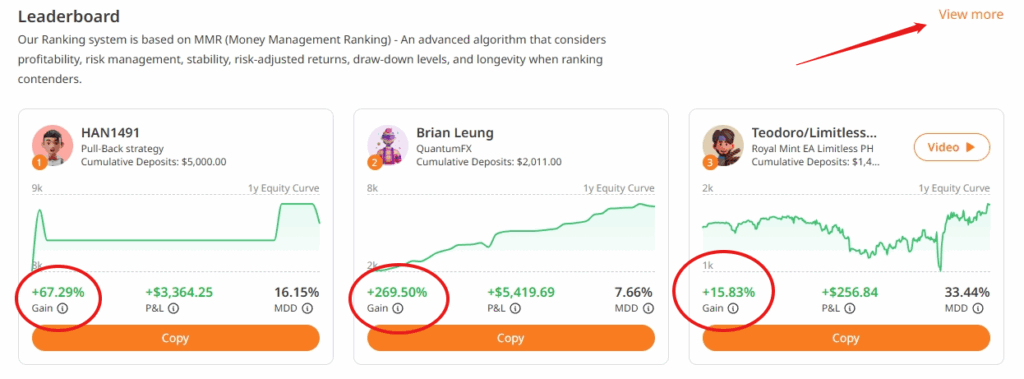
Leaderboard: Based on an MMR (Money Management Ranking) system or similar composite score, ranking traders holistically over their entire history.
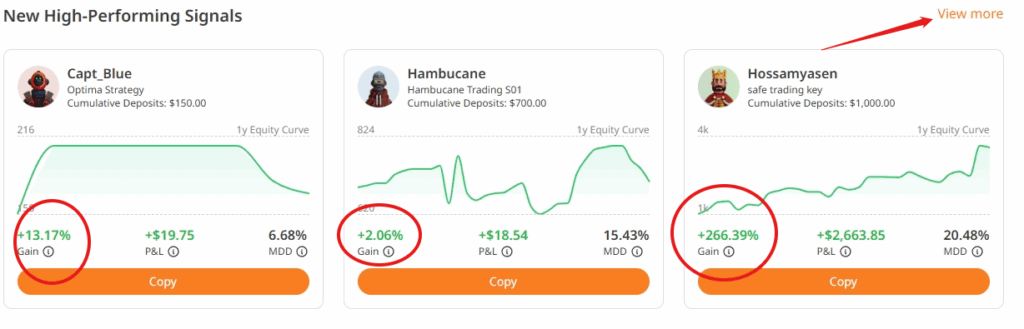
New High-performing Signals: Focuses on newer traders (e.g., < 1 year) showing positive Gain %. Good for finding emerging talent, but requires caution due to shorter track records.
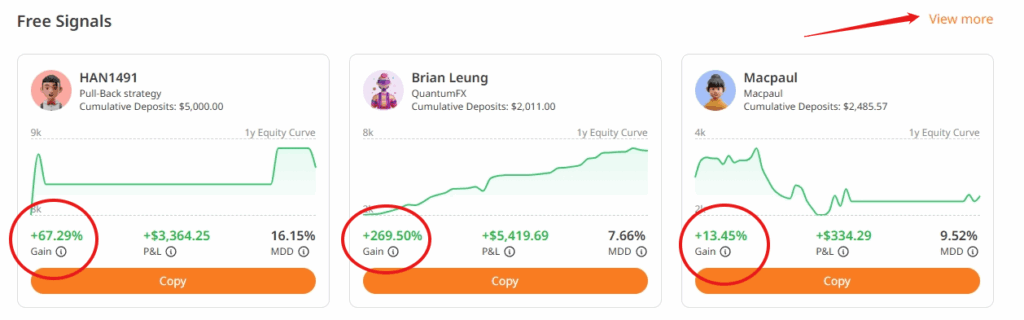
Free Signals: Focuses on traders (e.g., > 1 year) showing positive Gain %. Good for finding Free Signal Providers. A great starting point for beginners to try copy trading without incurring huge costs.
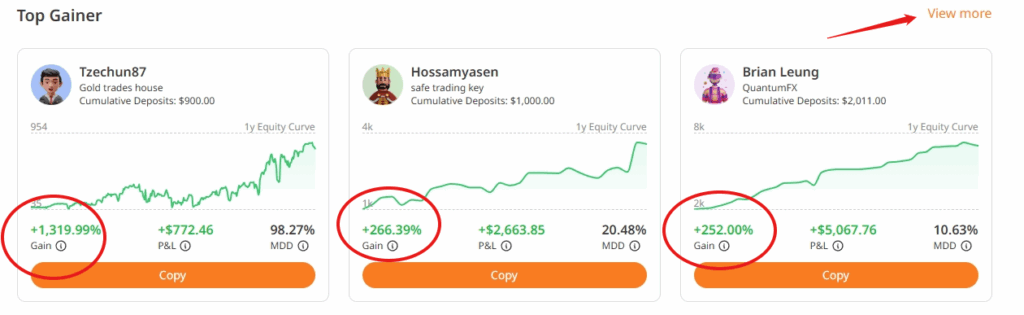
Top Gainer: Purely ranks by Gain % over a period (e.g., 1 year), often filtering for positive gain. Use with caution – high gain can mean high risk. Always check MDD and Sharpe Ratio here. It is tempting to simply sort all traders by the “Top Gainer” filter to see who is making the most money. This is the most direct path to finding traders like Jason Huang. While potentially lucrative, using this filter in isolation is the single most dangerous approach for a beginner. A high gain figure tells you nothing about the risk taken to achieve it.
A professional approach dictates that if you use the “Top Gainer” filter, you must immediately cross-reference the results with other critical risk metrics. The key questions to ask are:
What is the Profit Factor? This is the gross profits divided by the gross losses. A number greater than 1 means the strategy is profitable, but a higher number (e.g., >1.5) indicates more robust profitability.
What is the Maximum Drawdown (MDD)? A gain of 200% is less appealing when paired with an MDD of 50%, which means at one point, the strategy lost half of its value.
What is the Sharpe Ratio? This metric measures risk-adjusted return. A higher Sharpe Ratio (ideally >1.5) indicates the trader is generating better returns for the level of risk they are taking on.
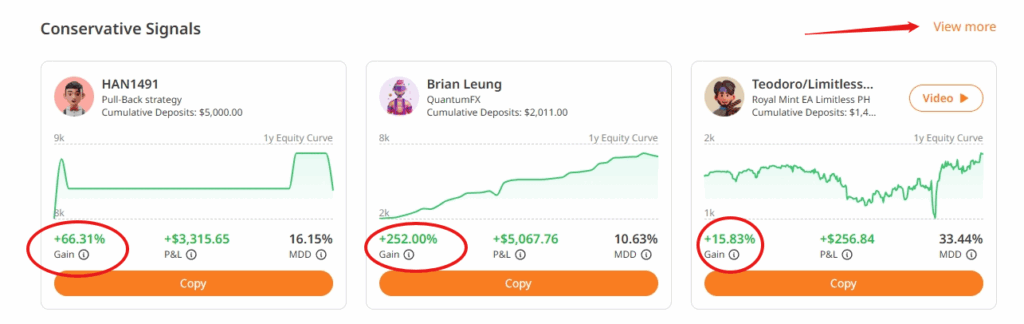
Conservative Signals: Filters for low risk, typically using a Maximum Drawdown threshold (e.g., <= 10% over 1 year) and often ranked by MMR within that subset. Ideal for risk-averse investors.
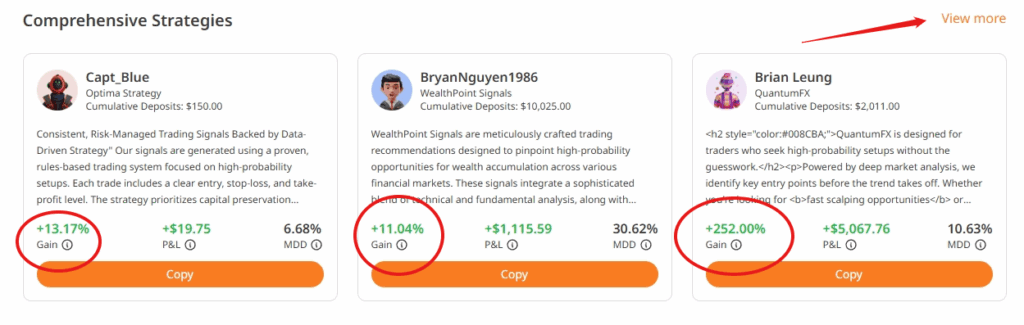
Comprehensive Strategies: Attempts to filter based on the quality and detail of the trader’s strategy description (looking for non-generic, non-volatile approaches like Martingale) combined with positive Gain %.
Why Putting All Your Eggs in One Basket is a Rookie Mistake: The Power of Five
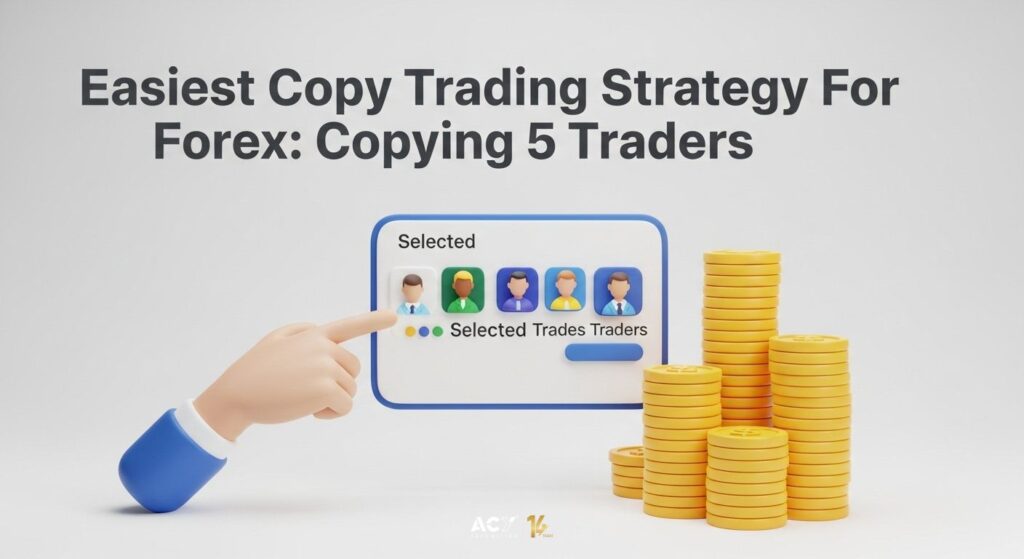
Once you have mastered the art of selecting a single trader, the next level of professional copy trading involves diversification. Relying on a single signal provider, no matter how skilled, exposes you to significant idiosyncratic risk. That trader could fall ill, change their strategy, suffer a psychological breakdown, or simply encounter a market environment that is hostile to their specific approach.
A more resilient approach, as suggested by an article on the TradingCup platform, is to diversify your capital across multiple traders, for example, by copying up to five different providers. The rationale is the same as for a traditional stock portfolio. By combining traders with different styles, you can build a more robust and stable equity curve. For example, you could construct a portfolio that includes:
- One or two conservative traders (low MDD) to act as the stable core.
- Two moderate traders (good MMR, solid long-term gains) as the primary growth engines.
- One specialist trader (e.g., one who only trades Gold or a specific currency pair) to add a non-correlated source of returns.
This diversification smooths out returns and reduces the impact of any single trader having a bad month. It transforms your copy trading from a single bet into a managed portfolio.
Are You Watching Too Much or Not Enough? A Practical Guide to Monitoring Your Portfolio
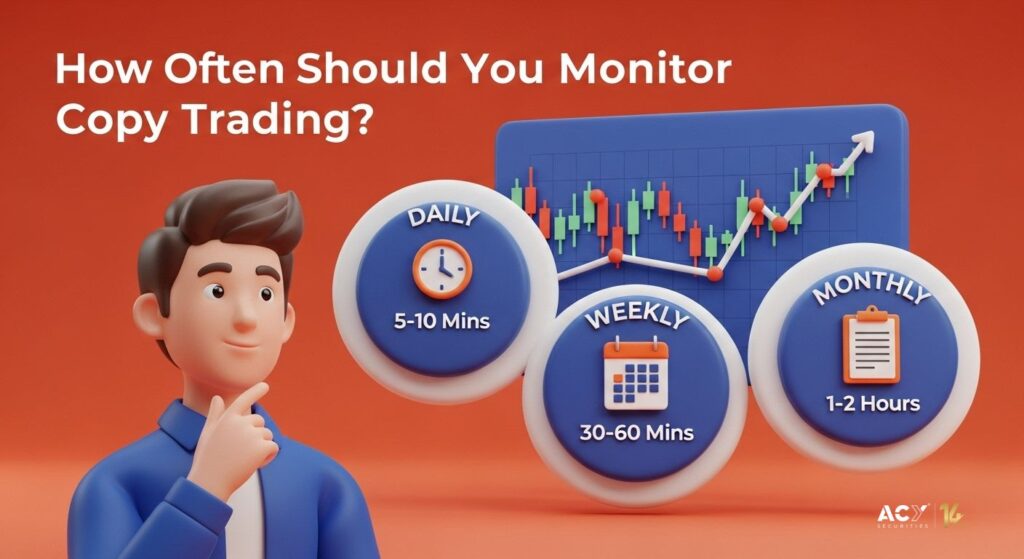
A common question from beginners is, “How often should I check my account?” The answer lies in finding a balance between informed oversight and obsessive monitoring. Watching every tick of the market is counterproductive; it invites emotional decision-making and anxiety. Conversely, a “set and forget” approach is negligent. A professional monitoring schedule might look like this:
- Daily (5 minutes): A quick check to ensure there are no major platform issues or catastrophic events. Look at the overall account balance, not individual trades. The goal is situational awareness, not analysis.
- Weekly (30 minutes): A more in-depth review. Check the performance of each individual trader for the week. Has their risk profile changed? Have they posted any updates or comments about their strategy? This is your primary check-in to ensure things are on track.
- Monthly (1 hour): A full strategic reassessment. Review each trader’s monthly performance against their long-term history and against your other traders. Is their strategy still aligned with your goals? Is it time to reallocate capital, or perhaps switch out an underperforming trader for a new one?
This structured approach, as outlined in guides on the subject , keeps you engaged and in control without succumbing to the emotional rollercoaster of minute-by-minute price movements
Don’t Copy Trade in a Vacuum: How to Leverage Expert Analysis for Free

One of the most powerful yet underutilized risk management tools is the educational ecosystem provided by your broker. Platforms like ACY Securities, which powers TradingCup, offer a wealth of free resources, including market analysis videos, webinars with senior analysts, and community channels on platforms like Discord and Telegram.
This provides a crucial “second opinion” and transforms you from a passive copier into an active, informed investor. Imagine this scenario: you are copying a trader who has taken a large position on the Japanese Yen. The trade immediately goes into a drawdown, and you begin to panic. Your emotional brain tells you to cut your losses and stop copying.
However, before acting, you join a free weekly market webinar hosted by an ACY analyst. In the webinar, the analyst provides a detailed breakdown of the Bank of Japan’s latest policy statement and explains the fundamental reasons why they anticipate Yen weakness in the coming weeks. This piece of expert, external analysis validates the thesis behind your copied trader’s position. It provides you with the context and confidence to stick with the trade, overriding your fear-based impulse. By leveraging these resources, you create a supportive framework that mitigates the fear and isolation that often lead to poor decisions.
Your Education Doesn’t End Here: Essential Next Reads
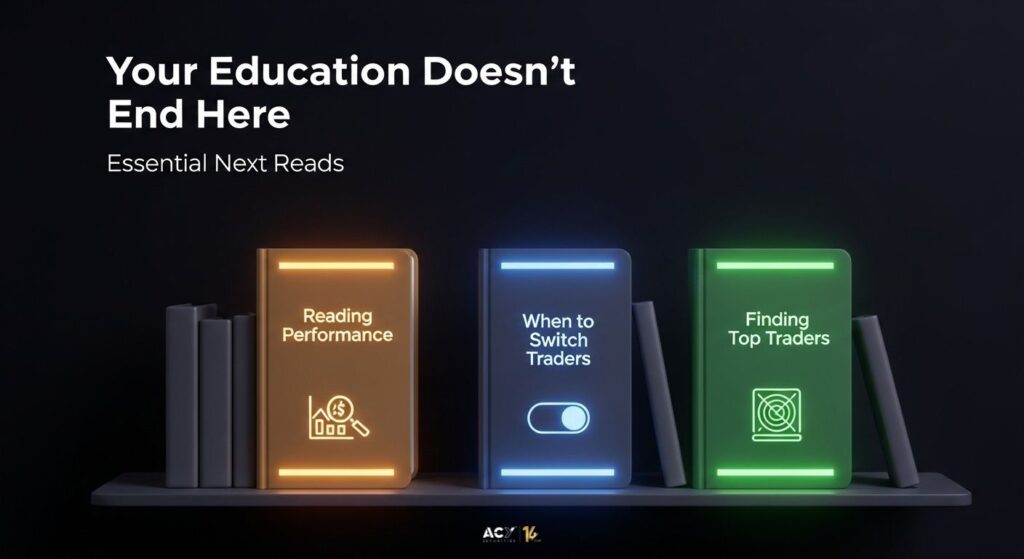
Becoming a professional-level copy trader is a journey of continuous learning. The analysis in this guide has provided a robust foundation, but to deepen your expertise, further reading is essential. The following resources provide critical insights into the nuances of trader selection and management.
- Who to Copy Trade: How to Read a Trader’s Performance Think you’ve found a star trader? Before you commit your capital, you need to learn how to look under the hood. A high profit number can be deceiving. This guide teaches you to read the full spectrum of performance metrics, from drawdown and Sharpe ratio to expectancy and profit factor, like a professional analyst. It will empower you to move beyond simple returns and truly understand a trader’s skill, risk profile, and long-term consistency.
- When to Switch Traders in Copy Trading Loyalty is a virtue in life, but in trading, blind loyalty can be a liability. Every great trader will experience periods of underperformance. The critical challenge is distinguishing between a temporary, acceptable drawdown and a sign that a trader’s strategy is fundamentally broken or no longer suited to the market. This essential read provides a clear, data-driven framework for making that difficult decision, helping you know when to hold ’em and when to fold ’em.
- How to Find Top Traders to Copy Trade A copy trading platform is a sea of potential, but finding the true gems requires a systematic approach, not just luck. Simply picking from the top of the default leaderboard is a novice move. This article dives deep into advanced search, filtering, and discovery techniques. It shows you how to combine different metrics and strategies to systematically uncover the top traders that align perfectly with your specific financial goals and personal risk appetite.
XAUUSD Arena: Comparisons and Considerations

How does XAUUSD copy trading stack up against other approaches or assets?
Is Gold (Copy Trading) Better Than Using Expert Advisors (EAs)?
- Expert Advisors (EAs): Software that automates trading based on pre-set rules.
- Pros: No emotion, can trade 24/7, backtesting possible.
- Cons: Rigid, can’t adapt to unforeseen market conditions, curve-fitting risk, quality varies wildly.
- Pros: No emotion, can trade 24/7, backtesting possible.
- XAUUSD Copy Trading:
- Pros: Human oversight (from the copied trader) who can adapt, potentially more dynamic.
- Cons: Reliant on the human trader’s skill and discipline, who can also make errors or suffer from emotional trading.
- Pros: Human oversight (from the copied trader) who can adapt, potentially more dynamic.
The April-May 2025 analysis highlights the need to interpret dynamic events like “U.S.-China trade truce” or “weak U.S. economic data”. A human trader (whom you copy) might adapt to these nuances better than a rigid EA. However, a poorly chosen human trader is worse than a well-optimized EA.
Explore further: What’s the Best Gold Expert Advisor vs. Copy Trading Top XAUUSD EA Traders?
Is Gold (Copy Trading) Better Than Stocks?
- Stocks: Represent ownership in companies. Potential for dividends and capital appreciation.
- Gold: A commodity, primarily a store of value and hedge. No dividends.
- Performance: They often behave differently. Gold can shine in market downturns when stocks might fall. The surge in gold ETF inflows ($21B in Q1, $11B in April 2025) suggests institutional interest in gold as a hedge.
- Copy Trading Angle: You can copy stock traders too. The choice depends on your investment goals and risk tolerance. Diversifying across asset classes is often wise.
Read more: Gold vs. Stocks: Why Copy Trading XAUUSD Outperforms in Market Downturns
Is Gold (Copy Trading) Better Than Bitcoin?
- Bitcoin: A decentralized digital currency, often called “digital gold.” Highly volatile.
- Gold: Thousands of years of history as a store of value. Less volatile than Bitcoin but still subject to significant swings.
- Correlation: Sometimes they move together, sometimes not. Both can be seen as alternatives to fiat currency.
- Copy Trading: Platforms exist for both. Bitcoin’s volatility makes copy trading potentially riskier if not managed well.
The decision involves your belief in the long-term viability and stability of each asset. The April-May 2025 analysis focuses solely on gold, but the principles of due diligence in copy trading apply to any asset.
Consider the data: XAUUSD vs. Bitcoin: A Decade of Data – Should You Copy Trade?
Crunching the Numbers: Understanding Gold Profit & Loss in Copy Trading
When you copy trade XAUUSD, your profit or loss will depend on:
- The price movement of gold.
- The lot size of the trades being copied (and your settings for replicating them).
- The copied trader’s success.
- Any fees or commissions (platform fees, trader’s profit share).
Example (Simplified):
- You allocate $1000 to copy Trader X.
- Trader X makes a trade that yields a 5% profit on their capital.
- If you’re mirroring their trades proportionally and there are no fees, your $1000 would also see a 5% gain (i.e., $50 profit).
- However, if Trader X has a 20% profit-sharing fee, they would take 20% of your $50 profit ($10), leaving you with $40.
Always understand the fee structure before copying. The provided PDF for April-May 2025 shows significant price swings (e.g., a +$132 surge in one day ), meaning profits (and losses) can accumulate quickly.
Learn about analyzing profits: How to Earn by Copy Trading XAUUSD Gold Traders: Profit Loss Analysis
Advanced Tips for Your XAUUSD Copy Trading Journey
- Can You Time When to Copy Trade Gold? Seasonal Trends & Historical Insights Some analysts point to seasonal patterns in gold prices (e.g., strength around Indian wedding season or year-end). While not a foolproof predictor, being aware of historical tendencies can be another layer in your analysis. The April-May 2025 analysis itself is a form of “timing” by focusing on expected drivers for that specific period. Discover more: When to Copy Trade Gold: Seasonal XAUUSD Trends & Historical Insights
- Are There Free XAUUSD Signals? And Should You Use Them for Copy Trading? Yes, free XAUUSD trading signals exist, often shared via social media, forums, or messaging apps.
- Pros: Free.
- Cons: Quality varies massively. Lack of accountability. Can be scams. Difficult to verify the signaller’s track record. When copy trading, you are essentially paying (often via profit share or spread) for a continuously managed signal service from a specific trader. This usually comes with more transparency and performance history than random free signals.
Compare options: What are Free vs. Paid XAUUSD Gold Signals? Best Free Gold Traders to Copy Trade
Conclusion: Your Journey Starts with a Single, Smart Step

The world of forex and gold trading is filled with opportunity, and copy trading can be a viable entry point for those with limited time and experience. However, as we’ve seen, success is not as simple as just picking the trader with the highest gains. It requires due diligence, a clear understanding of your own risk tolerance, and a commitment to continuous learning. By using the strategies outlined in this guide, you can move beyond the hype and make informed decisions that will set you on a path to a more secure and potentially profitable trading journey.
Frequently Asked Questions (FAQ)
Q: What is the most important metric to look at when choosing a trader?
A: While all-time gain is enticing, the Maximum Drawdown (MDD) is arguably the most crucial metric. It tells you the maximum loss the trader’s account has suffered from a peak to a trough, giving you a clear indication of their risk level.
Q: Can I lose all my money in copy trading?
A: Yes, it is possible to lose your entire investment. This is why it is crucial to understand the risks, choose traders with sound risk management, and only invest what you can afford to lose.
Q: How much money do I need to start copy trading?
A: The minimum investment varies by platform, but it’s possible to start with a few hundred dollars. However, it’s important to have enough capital to diversify across multiple traders to mitigate risk.
Q: Are the fees for copy trading worth it?
A: The fees can be worth it if the trader you are copying generates returns that significantly outweigh the costs. Always factor in both subscription and performance fees when calculating your potential net profit.
Q: Is past performance a guarantee of future results?
A: Absolutely not. Past performance can give you an idea of a trader’s strategy and risk appetite, but it is not a guarantee of future success. The market is constantly changing, and all traders will experience periods of drawdown.
(Disclaimer: This article is for informational and educational purposes only. It should not be considered financial advice. Always conduct your own research and consult with a qualified financial advisor before making any investment decisions.
For more detailed insights on developing daily trading routines, risk management, and effective position sizing strategies, explore additional articles on Trading Cup. Our trading experts at ACY and FinLogix are also great resources to guide your journey towards trading excellence.

Discover Our Best Trading Signals
At Tradingcup, you can browse through a selection of signals and review past performance before you decide to copy.
Become A Signal Provider
Share your expertise and become a signal provider so other traders can copy your trades.
Stay tuned to our blog for more trader spotlights and leaderboard updates.
Trading involves risks.
Visit the Tradingcup blog through the link below for more updates: https://www.tradingcup.com/learn
Related Copy Trading blogs:
- Understanding Market Liquidations: Liquidity Sweeps and Runs Explained
- 7 Essential Daily Habits of Successful Traders to Outperform Their Peers
- 10 Strategies You Can Copy off Our Best Copy Traders
- 5 Strategies Every Trader Can Master To Trade Better In A Trading Contest
- 2025 Copy Trading Scams Exposed: How to Spot Fraud
- A Swing Trading Strategy with an 83 Percent Win Rate and Low Drawdowns
- Forex Martingale Strategies Explained, The Good, The Bad and The Ugly
- Pyramiding Trading Tutorial – Pros & Cons & How to Use It