
Last Updated: February 25, 2026
This article is reviewed annually to reflect the latest market regulations and trends.

Disclaimer: The information in this article is for educational purposes only and does not constitute financial, investment, or trading advice. Copy trading carries substantial risks, including the potential loss of your entire invested capital. Past performance of copied traders or strategies is not a reliable indicator of future results. You may be replicating high-risk trades, overleveraged positions, or strategies incompatible with your financial goals. Always conduct independent research into a trader’s historical performance, risk metrics, and strategy before copying them. Never invest funds you cannot afford to lose. Consult a licensed financial advisor to ensure copy trading aligns with your risk tolerance, financial objectives, and regulatory requirements in your jurisdiction. This article does not endorse specific traders, platforms, or strategies, and all trading decisions remain your sole responsibility.
TL;DR:
- No time to learn the trading game? Let AI-powered copy trade stake your claim.
- For XAUUSD, let smart bots guide, with better risk so you can hide.
- With market news and sentiment read, your trading profits could spread.
- Though disciplined trading may seem a bore, it’s how smart traders build and store.
- Pick the right platform for your gold, a winning strategy to unfold.
“Wealth is the slave of a wise man. The master of a fool.” – Seneca
The Smart Way to Copy Trade Gold (XAUUSD): Leveraging AI for Superior Risk Management in 2026
In today’s fast-paced world, the ambition to build substantial wealth is a common goal, yet it often collides with the stark reality of modern life. Many aspiring investors find themselves at a difficult crossroads, juggling demanding careers, family commitments, and the endless stream of daily responsibilities. The desire to make their capital work for them is strong, but the path to achieving it seems shrouded in complexity and requires a resource they have in short supply: time.
The journey often begins with an exciting discovery. Perhaps it’s the foreign exchange (Forex) market, a global arena operating 24 hours a day, offering seemingly limitless growth opportunities. The initial allure is powerful. However, this excitement can quickly give way to intimidation. The aspiring trader is confronted with a dizzying array of charts, technical indicators, economic calendars, and geopolitical news that can shift market tides in an instant. The learning curve isn’t just steep; it’s a sheer cliff face that demands constant attention.
It’s at this point that many discover a potential solution: copy trading. The concept is elegant in its simplicity, a way to leverage the knowledge and experience of seasoned professionals without having to dedicate one’s own life to mastering the markets. It presents itself as the perfect answer for the time-poor but ambitious individual. Yet, this discovery leads to a new, more critical set of questions. In a world saturated with options, how does one engage in copy trading smartly? How can one confidently copy trade an asset as historically significant and volatile as gold (XAUUSD)? And most importantly, how can the most transformative technology of our era, Artificial Intelligence, be harnessed not just to participate, but to do so with a superior, more intelligent approach to managing risk? This updated 2026 perspective is designed to answer precisely these questions.
First, What Exactly is Copy Trading in Forex?
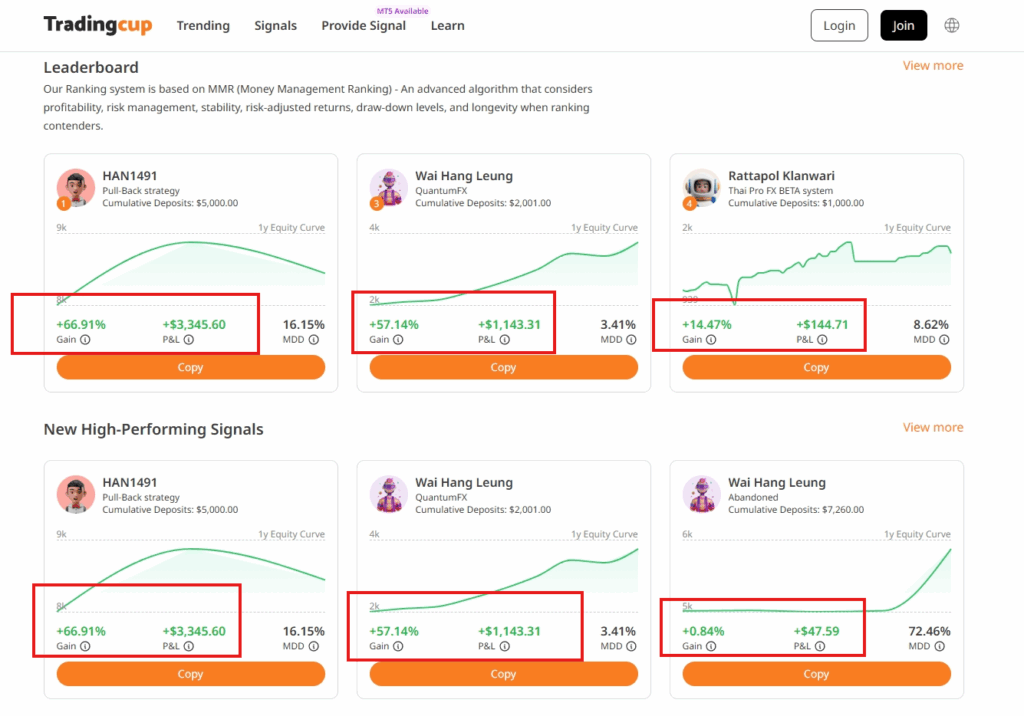
At its core, copy trading is a sophisticated form of social trading that allows investors to automate their trading activity by linking their account to that of a professional trader, often called a signal provider or lead trader. When the lead trader executes a trade, whether buying or selling a currency pair, the same trade is automatically replicated in the copier’s account in real-time, proportional to the capital allocated.
The mechanism is straightforward. An investor browses a platform, analyzes the performance metrics of various experienced traders (such as historical returns, risk score, and strategy description), and selects one or more to copy. They then decide how much of their portfolio to allocate to mirroring that trader’s actions. From that point on, the process is automated. This hands-off approach to trade execution is a primary appeal for beginners or those with limited time, as it removes the need for constant market monitoring and manual order placement. However, it is crucial to understand that while the execution is automated, the initial due diligence and ongoing performance monitoring remain the investor’s responsibility. For those looking to build a solid foundation, a detailed guide on how to start copy trading forex from scratch is an invaluable resource.
And Why is Everyone Talking About Gold (XAUUSD)?
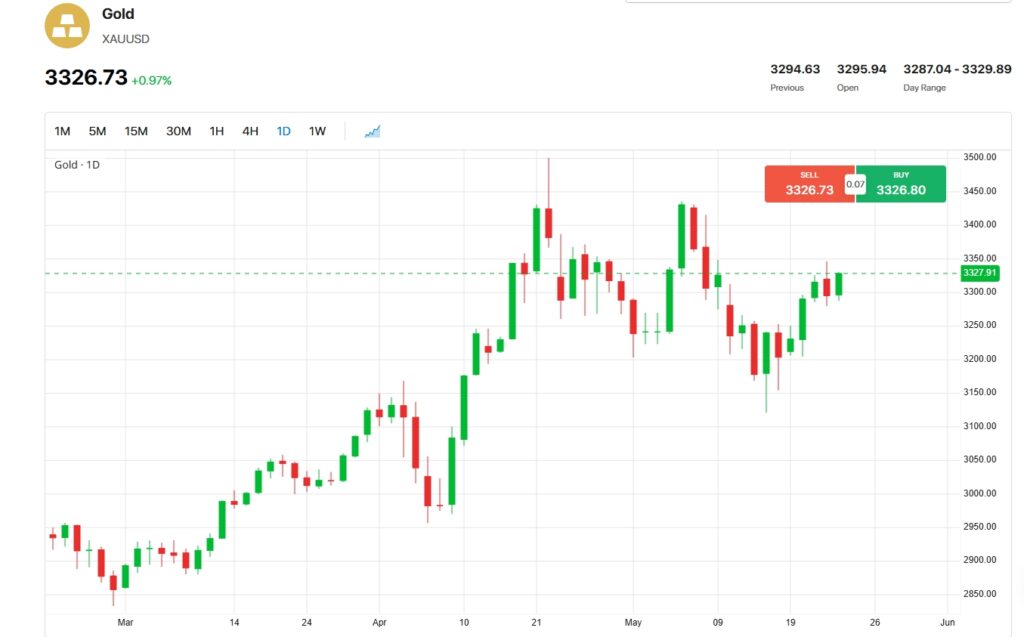
The ticker XAUUSD represents the market price of one troy ounce of gold (XAU) quoted in United States dollars (USD). It is one of the most widely traded and analyzed instruments in the financial world. Gold’s enduring appeal transcends centuries, rooted in its historical role as the ultimate store of value and a “safe-haven” asset.
During periods of economic instability, rising inflation, or geopolitical turmoil, investors flock to gold. Unlike fiat currencies, which can be devalued by government policies and money printing, gold is a finite physical asset with no counterparty risk, meaning its value is not dependent on another party’s solvency. Its price is influenced by a confluence of powerful factors, including the strength of the US dollar (a weaker dollar typically makes gold cheaper for holders of other currencies, increasing demand), inflation rates, central bank monetary policies, and global risk sentiment. Understanding these drivers is fundamental to appreciating why gold is a cornerstone of many sophisticated investment portfolios.
So, What Happens When You Combine Them? The World of XAUUSD Copy Trading
XAUUSD copy trading is the synthesis of these two powerful concepts. It provides a direct pathway for individuals to participate in the gold market by mirroring the strategies of traders who specialize in this unique asset. This approach democratizes access, allowing a novice to benefit from the expertise of a professional who has spent years, if not decades, mastering the nuances of the gold market, from analyzing macroeconomic data to interpreting complex chart patterns.
For a beginner, the appeal is undeniable. It lowers the barrier to entry, offering a way to gain exposure to gold’s potential without first needing to become an expert in geology, central banking, and international relations. It transforms a complex and often intimidating market into an accessible opportunity. For anyone new to this specific niche, a Gold copy trading for newbie guide can provide the essential knowledge needed to navigate this space with confidence.
What Does a Professional Trader’s Day Even Look Like?
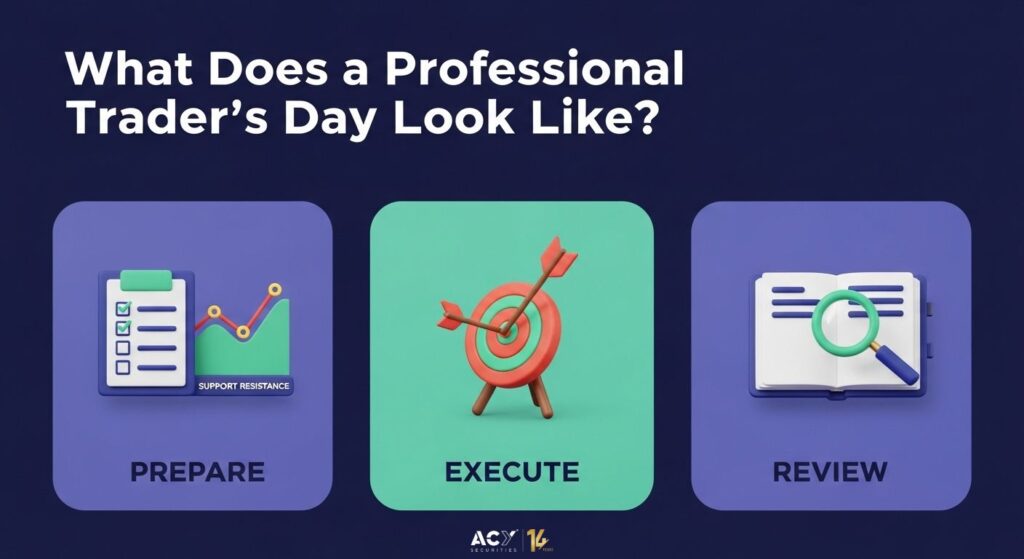
To truly grasp the value proposition of copy trading, it is essential to understand the immense discipline and effort that professional manual trading demands. The fantasy of trading often involves high-stakes thrills and quick profits, but the reality for a successful day trader is a structured, rigorous, and often repetitive routine. This process highlights the very problem that copy trading is designed to solve.
A typical day for a professional Forex day trader, as outlined in educational resources for 2026, is a masterclass in discipline :
- Pre-Market Preparation (30-60 minutes): The day begins not with trading, but with meticulous preparation. This involves checking the economic calendar for high-impact news releases, identifying key technical levels of support and resistance on the charts, reviewing overarching market sentiment, and setting alerts for potential trade setups.
- Focused Trading Session (1-4 hours): This is the execution phase, characterized by intense focus and unwavering discipline. The trader only takes high-probability setups that align with their pre-defined strategy. Every trade has a pre-calculated stop-loss to manage risk. The mantra is quality over quantity, avoiding the temptation to overtrade.
- Post-Trading Review (15-30 minutes): Once the trading session is over, the work continues. Every trade is logged in a detailed journal, noting the entry, exit, profit or loss, and the rationale behind the decision. The trader analyzes mistakes, identifies missed opportunities, and reflects on whether their plan was followed without emotional interference.
This highly structured process reveals a crucial truth: the life of a profitable trader is not about constant excitement; it is about the consistent application of a well-defined process. This introduces the concept that successful trading is often “boring” because it prioritizes discipline over dopamine. The value of copy trading, therefore, extends beyond simply mirroring trades. It is about outsourcing this entire demanding, professional-grade routine. The copier is not just leveraging a trader’s skill, but also their time, their discipline, and their unwavering commitment to a process that most people simply do not have the capacity to maintain.
How is Artificial Intelligence Redefining Gold Trading in 2026?
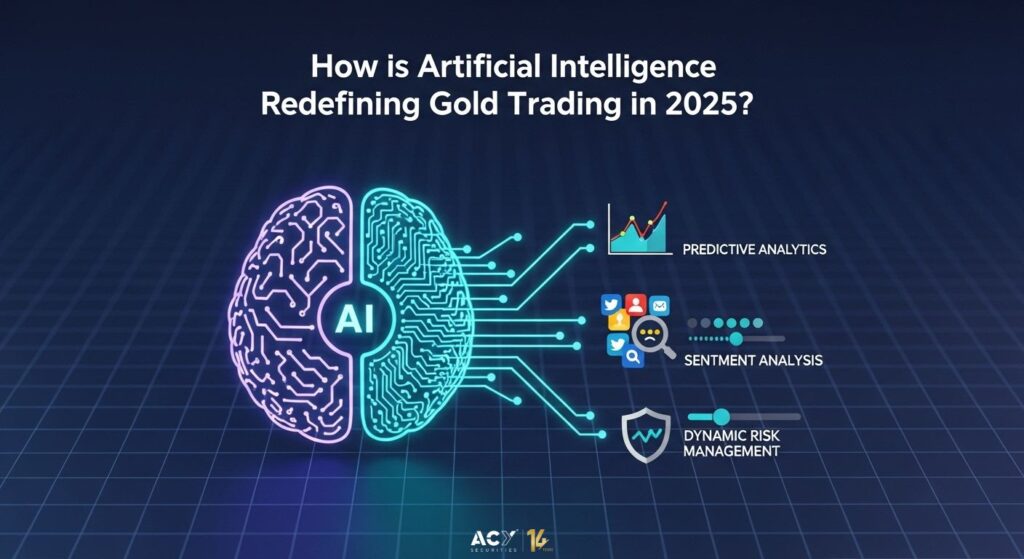
The integration of Artificial Intelligence into financial markets represents a paradigm shift, moving far beyond the simple, rule-based automation of early Expert Advisors (EAs). In 2026, AI is evolving into a dynamic, cognitive partner for traders, offering an analytical depth and speed that is fundamentally unattainable for the human mind alone. This revolution is built on several core capabilities that are reshaping how assets like gold are traded.
Key AI capabilities transforming gold trading include :
- Predictive Analytics: Machine learning (ML) and deep learning models can sift through petabytes of historical price data, identifying subtle patterns, correlations, and predictive signals that are invisible to the human eye. These algorithms learn and adapt, constantly refining their models to forecast potential future price movements with increasing accuracy.
- Sentiment Analysis: This is one of AI’s most powerful applications in finance. Using Natural Language Processing (NLP), AI systems can scan and interpret millions of data points from unstructured sources, news articles, central bank statements, social media platforms like Twitter (X) and Reddit, and research reports. The AI quantifies the collective mood of the market, assigning a sentiment score (e.g., bullish, bearish, neutral) that acts as a powerful, real-time indicator of the “fear and greed” that so often drives price action.
- Dynamic Risk Management: This is where AI provides its most significant leap in sophistication. Instead of relying on static stop-loss orders, an AI can implement dynamic risk controls. It can adjust stop-loss levels and position sizes in real-time based on live market volatility, correlation between assets, and incoming sentiment data, providing a far more robust and adaptive layer of capital protection.
The grassroots excitement around this technology is palpable. On forums like Reddit, a vibrant community of developers and traders shares their experiences building custom trading bots using advanced AI tools like Claude AI and Google Gemini. While they discuss challenges like the difficulty of backtesting strategies that rely on historical sentiment data and the ever-present risk of overfitting a model to past data, their work underscores a critical point: AI is no longer a theoretical concept in trading. It is a practical, accessible tool being actively deployed to gain a competitive edge.
Can AI Predict Gold’s Next Move? A Look at Market Sentiment
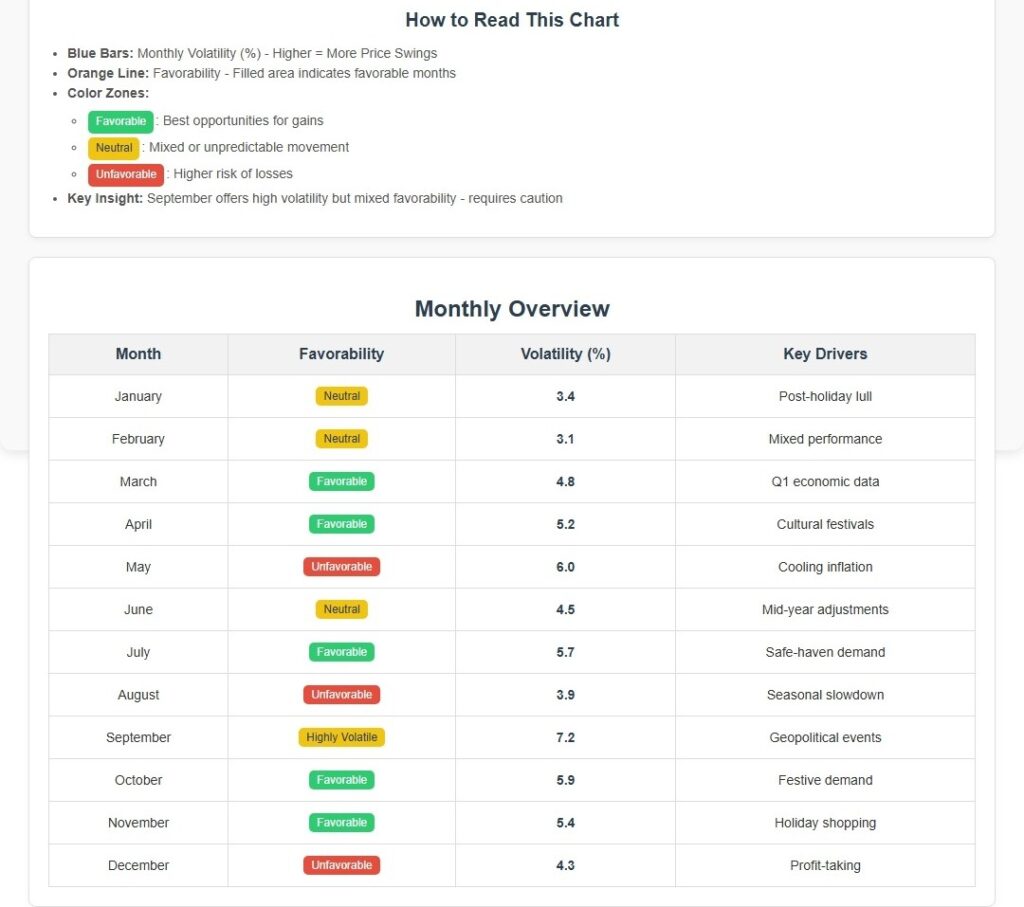
While no system can predict the future with absolute certainty, the evidence supporting AI’s ability to enhance trading decisions is compelling. The true power of AI in trading lies not in a crystal ball, but in its capacity for superior data processing and probability assessment.
Empirical studies have shown that AI-driven systems can enhance threat detection accuracy in risk management by an average of 10% over traditional methods. Furthermore, academic and market research has repeatedly validated the use of social media sentiment as a potent trading indicator. Analysis of Twitter data, for instance, has shown that incorporating sentiment can significantly improve the performance of market prediction models, with some studies identifying strategies that generated annual returns between 11-15%.
This technological edge is translating into tangible results. Users on copy trading platforms that leverage these technologies report consistent profitability, with some citing steady monthly returns in the range of 2% to 5%. Specific success stories document traders achieving profits of over $2,000 in a single week through strategic, AI-assisted copy trading.
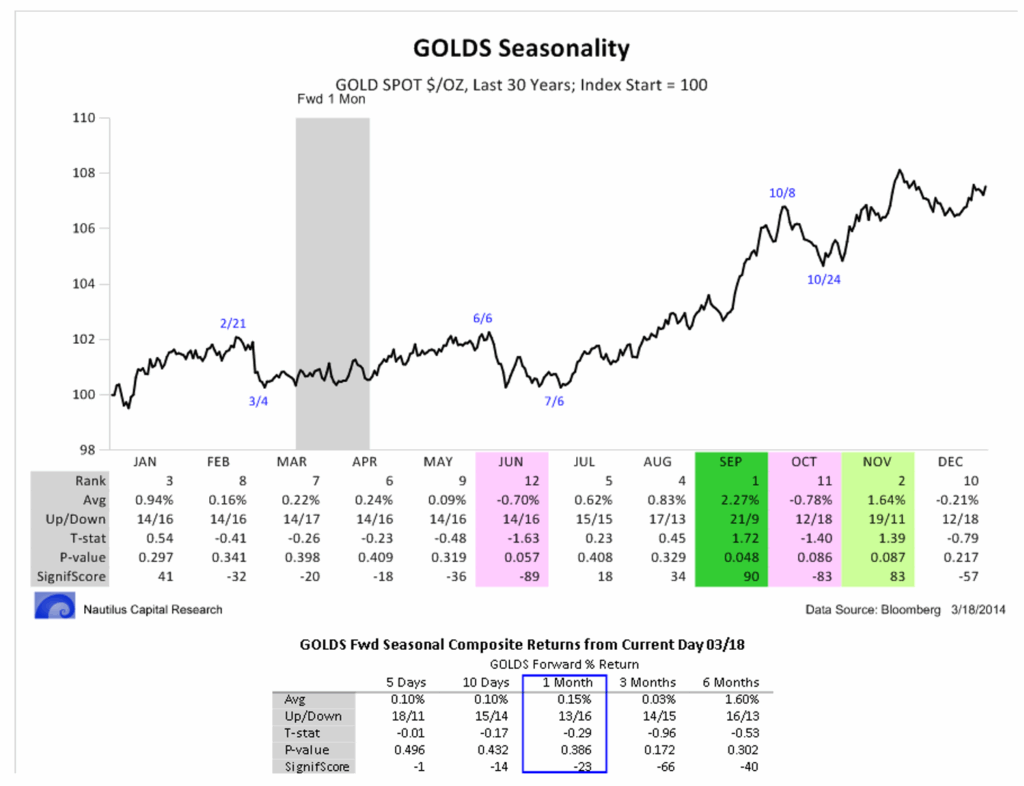
The fundamental advantage AI offers is its ability to process and quantify vast amounts of unstructured data. For centuries, human traders have relied on structured data points, price, volume, economic figures. The “art” of trading involved intuitively interpreting the narrative and emotional context surrounding this data. AI transforms this art into a science. It can read and understand the sentiment of a thousand news articles in the time it takes a human to read one headline. It quantifies the market’s emotional state, providing a complete, multi-layered view of market dynamics. An AI-assisted trader, therefore, isn’t just operating faster; they are operating with a more complete map of the territory, trading not just the numbers, but the story driving them.
How Would Elon Musk Think About Copy Trading Gold with AI?

This section presents a thought experiment. It does not suggest an endorsement from Elon Musk, but rather applies his famously effective mental models to the challenge of evaluating and implementing AI in trading. By thinking from first principles, as Musk so often does, investors can cut through the hype and develop a more robust framework for their decisions.
A powerful tool for this is Musk’s 5-step engineering algorithm, which can be adapted into a “mental algorithm” for assessing any complex system, including an AI trading strategy :
- Question the Requirements: The first step is to challenge every assumption. “Why do I need this specific AI tool? Is its primary purpose to generate alpha, to manage risk, or simply to save time? Who or what convinced me that this strategy is viable? Is the requirement coming from a sound analysis or from marketing hype?” This forces a critical examination of the tool’s true purpose, moving beyond blind acceptance.
- Delete the Part or Process: The goal here is radical simplification. “What inefficient, manual, or emotionally-driven processes can this AI system completely eliminate from my investment workflow? Can it remove the need for me to manually scan news, or does it prevent me from making fear-based exits?” The aim is to identify and delete friction and human error.
- Simplify and Optimize: This step follows deletion. “Does this AI tool make my overall decision-making process simpler, or does it just introduce another layer of complexity I have to manage? How does it simplify the difficult task of dynamic risk management?” A common mistake is to optimize a process that should have been deleted in the first place. A good AI tool should reduce cognitive load, not add to it.
- Accelerate Cycle Time: Speed is a competitive advantage. “How does the AI’s ability to analyze data and execute trades in milliseconds provide an edge that a human trader simply cannot match?” This recognizes the value of computational speed in capturing fleeting market opportunities.
- Automate: This is the final and most crucial step in Musk’s process. He has openly admitted that one of his biggest mistakes was trying to automate everything too early. Automation should only come after the requirements have been questioned, unnecessary parts have been deleted, and the core process has been simplified. For the AI copy trader, this means one should not blindly turn on a bot. One must first understand the strategy, the risks, and the purpose before handing over control.
This framework aligns perfectly with Musk’s broader, seemingly paradoxical philosophy on Artificial Intelligence. He has famously warned that AI poses a fundamental risk to civilization, comparing it to “summoning the demon”. Yet, he is simultaneously investing billions into his own AI ventures like xAI, creating a direct competitor to OpenAI.
This is not a contradiction; it is a profound understanding of leverage. Musk views AI as perhaps the most powerful leverage tool humanity has ever created. Leverage can be used to build empires or to cause catastrophic destruction. His calls for regulatory oversight are a macro-level expression of this understanding. For an individual investor, the lesson is direct and powerful: an AI trading bot is a high-leverage tool. Deployed without personal “regulatory oversight”, meaning rigorous due diligence, strict risk management, and a clear understanding of its limitations, it can amplify mistakes and lead to ruin. Deployed wisely, as part of a sound and well-understood strategy, it can amplify success.
This perspective is more relevant than ever, with Musk’s platform, X (formerly Twitter), poised to integrate financial services, including in-app trading. The future he envisions is one where social platforms, financial transactions, and AI-driven analysis converge. The ability to critically assess and intelligently leverage AI in trading is not just an advantage; it is becoming an essential skill for the modern investor.
Beyond the Chart: 10 Lessons from “The New Case for Gold”

Before one can intelligently trade or invest in an asset, one must understand its fundamental nature. For gold, there are few modern guides as clear and provocative as James Rickards’ The New Case for Gold. While the book does not discuss AI or copy trading, its core arguments provide the essential “Why” behind holding gold. Understanding these principles elevates the act of XAUUSD copy trading from a simple short-term speculation to a strategic component of long-term wealth preservation. The insights from Rickards’ work help connect the alarming macroeconomic picture to the practical micro-actions of an individual investor. Many retail traders focus on short-term chart patterns on 15-minute or 1-hour timeframes, oblivious to the larger forces at play. Rickards’ analysis provides that crucial context, giving a more profound and compelling reason to engage with gold.
Here are 10 foundational lessons from the book, distilled from comprehensive analysis of its arguments :
- Gold is True Money, Not Just a Commodity. Rickards argues that all fiat currency is, in essence, a derivative of gold. Gold is the only financial asset that is not simultaneously someone else’s liability. It is the ultimate, risk-free, tier-one asset that has been a store of value for millennia.
- The Fiat Currency System is Inherently Unstable. The current global monetary system is based on a single point of failure: confidence. With governments worldwide burdened by unprecedented levels of debt and engaging in continuous money printing, Rickards contends that a collapse of confidence in paper money is a matter of “when,” not “if”.
- Gold is Your Financial Insurance Policy. The primary purpose of owning gold is not to get rich quick, but to preserve wealth against a systemic financial crisis. It is an insurance policy against the failure of the monetary system itself.
- Gold Performs Well in BOTH Inflation and Deflation. This is one of gold’s most unique and valuable properties. In inflation, it preserves purchasing power as the value of paper money declines. In deflation, the real value of gold increases as the prices of other goods and services fall. This makes it a uniquely robust hedge for any economic environment.
- Physical Gold Has No Counterparty Risk. A dollar in a bank account is technically an unsecured liability of that bank. In a crisis, that deposit is at risk. Physical gold, held in your possession or in a non-bank depository, is yours alone. It is not dependent on the solvency or promises of any other entity.
- Central Banks’ Actions Speak Louder Than Their Words. While public officials and mainstream economists often dismiss gold as a “barbarous relic,” the world’s central banks, particularly those in China and Russia, are accumulating physical gold at a historic pace. Their actions reveal a clear preparation for a future where gold plays a more central role.
- There IS Enough Gold for a Gold Standard. A common argument against gold is that there isn’t enough of it to support global commerce. Rickards refutes this as a fallacy. The issue is not the quantity of gold, but its price. A much higher gold price would be required to properly back the existing money supply without causing deflation, implying a significantly higher potential valuation for the metal.
- The Next Financial Crisis Will Be Different. Rickards warns that governments may resort to different tools in the next crisis. Instead of just “bail-outs” (using taxpayer money), they may implement “bail-ins,” where uninsured depositors’ funds are used to recapitalize failing banks, as seen in Cyprus. They may also freeze markets entirely, making access to physical assets held outside the traditional system paramount.
- Beware the Difference Between Paper Gold and Real Gold. A significant portion of the gold market consists of “paper gold”, futures contracts, unallocated accounts, and ETFs. Rickards argues that these instruments are often used to manipulate and suppress the price of gold and that the amount of paper claims may far exceed the physical metal available to back them.
- A Prudent Allocation is Key. Based on his analysis, Rickards suggests that a 10% allocation of one’s investable assets into physical gold is a prudent and responsible measure to insure a portfolio against the extreme risks present in the modern financial system.
If It’s So Smart, What Are the Risks of AI Copy Trading Gold?
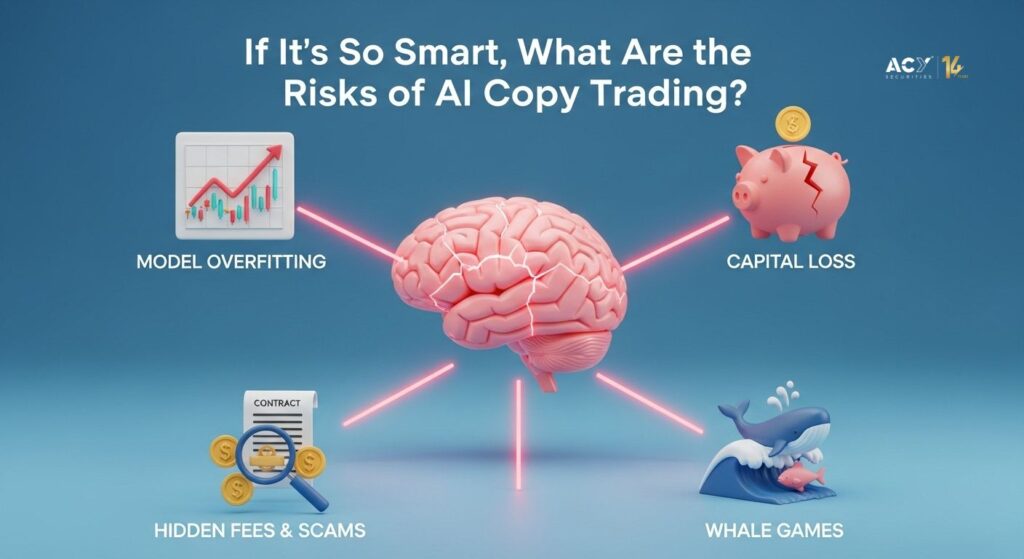
A clear-eyed assessment of any investment strategy requires a transparent acknowledgment of its risks. While AI-powered copy trading offers a compelling vision of the future, it is not a risk-free endeavor. Building trust with investors means openly discussing the potential downsides, which fall into several key categories.
- Technical and Operational Risks: Over-reliance on automation can stunt an investor’s own learning and development. More critically, technology can fail. System downtime, platform glitches, or internet connectivity issues can occur at the worst possible moments. One of the most insidious technical risks is model overfitting, where an AI strategy performs brilliantly on historical backtests but fails spectacularly in the unpredictable environment of live trading because it was too closely tuned to past noise rather than a genuine market edge.
- Market and Financial Risks: This is the most fundamental risk. An investor can lose some or all of their invested capital. The ubiquitous disclaimer, “past performance is not a reliable indicator of future results,” must be taken as gospel. The trader being copied, despite their track record, is still human and can suffer a string of losses or an emotional breakdown. An investor might also be copying a strategy that is far too aggressive or overleveraged for their personal risk tolerance.
- Platform and Regulatory Risks: The platform itself can introduce risk. Hidden costs, commissions, and performance fees can eat into profitability. Worse, the space is populated by some unregulated brokers and outright scam platforms that offer unrealistic promises and can disappear with client funds.
- Expert Warnings and Cautions: Seasoned market participants warn that large traders, or “whales,” are often aware they are being copied. In some scenarios, they may use this follower liquidity to their advantage, essentially using the copy traders as exit liquidity for their own large positions.
Why is Successful Gold Copy Trading So… Boring?
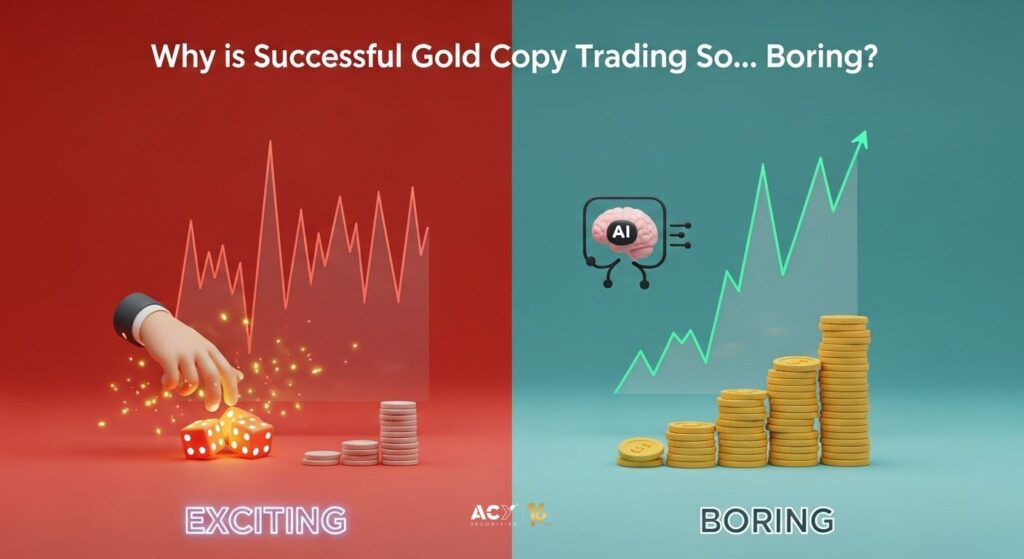
There is a profound and counterintuitive truth at the heart of long-term trading success: profitable trading is boring. The excitement that many beginners seek, the adrenaline rush of high-stakes bets and dramatic price swings, is the hallmark of gambling, not professional investing.
Successful trading, whether performed manually or through an automated system, is the disciplined, consistent, and repetitive execution of a strategy with a proven statistical edge. It is a process, not a party. It involves long periods of waiting for the right setup, followed by precise execution and unemotional risk management. The thrill is intentionally engineered out of the process, because emotions like fear, greed, and hope are the primary drivers of poor decision-making. A Reddit thread on algorithmic trading captures this sentiment perfectly, with a developer noting their “most boring strategy” over a long timeframe was also their best performing, even though it felt “frustrating” and like they were “missing a lot of opportunities”.
This is precisely why AI is such a powerful tool for achieving this “boring” path to profitability. An AI system is the ultimate disciplined trader. It has no ego to bruise after a loss, no greed that pushes it to over-leverage a winning streak, and no fear that causes it to exit a valid trade prematurely. It simply executes its pre-programmed, data-driven plan with relentless consistency, 24/7. It embodies the unemotional discipline that human traders spend their entire careers trying to master. By embracing this methodical approach, investors can better understand why the path to profit in copy trading is often wonderfully boring.
What Are the Best Practices for AI-Powered XAUUSD Copy Trading?
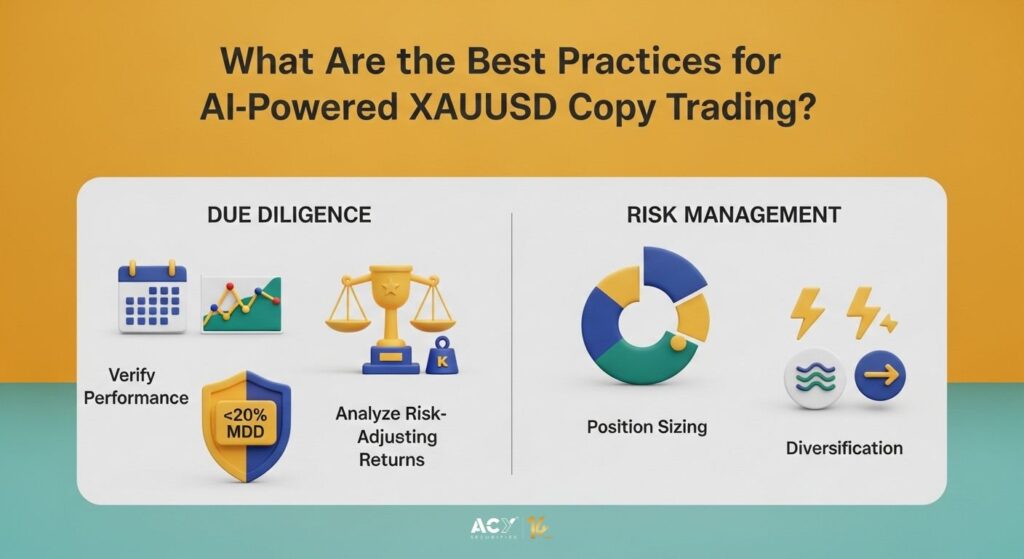
Navigating this promising but complex landscape requires a clear, actionable framework. Success in AI-powered copy trading is not accidental; it is the result of a deliberate process centered on due diligence and rigorous risk management.
Due Diligence is Non-Negotiable:
- Verify Trader Performance: Do not be swayed by recent high returns. A trader’s track record must be analyzed across various market conditions (bull, bear, and sideways markets) to assess their adaptability and consistency.
- Analyze Risk-Adjusted Returns: Look beyond the raw profit percentage. Use metrics like the Sharpe and Sortino ratios to understand if the returns were generated through skill or simply by taking on excessive risk.
- Monitor Risk Metrics: Pay close attention to the trader’s maximum drawdown, which represents the largest peak-to-trough decline their account has experienced. Experts recommend avoiding strategies with a historical drawdown exceeding 15-20%. Also, ensure their use of leverage aligns with your personal risk tolerance.
Risk Management is Paramount:
- Position Sizing: A cardinal rule is to never allocate too much capital to a single strategy or trader. A common guideline is to limit any individual copy trading allocation to no more than 5-10% of the total investment portfolio.
- Diversification: Do not put all your eggs in one basket. Diversify across multiple strategy providers who employ different methodologies (e.g., trend-following, scalping, swing trading) to reduce single-trader dependency and smooth out portfolio returns.
Platform Selection: The Critical Decision
The choice of platform is one of the most critical decisions an investor will make. The platform is the gateway to the market, the provider of tools, and the curator of talent. While many platforms offer copy trading, they are not created equal.
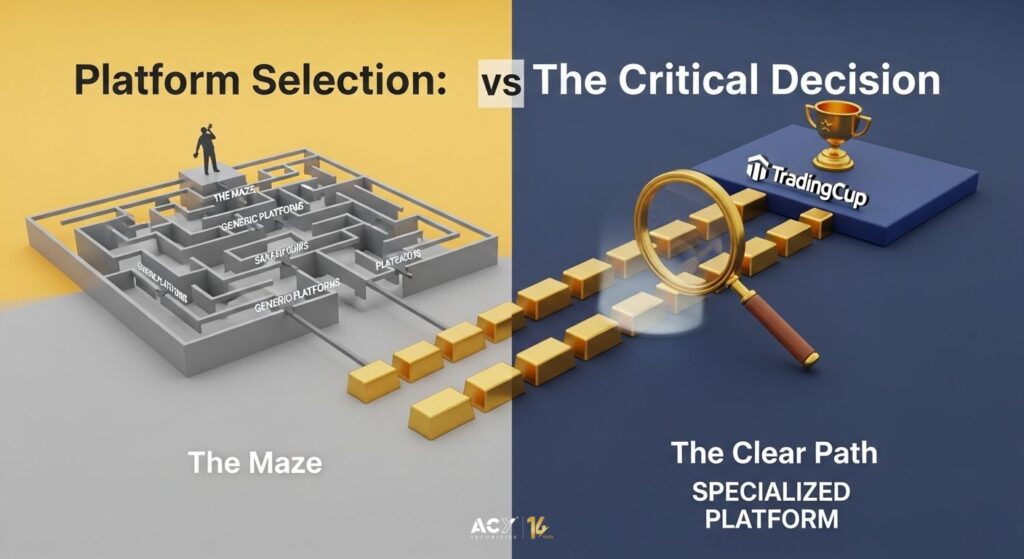
The primary challenge for any copy trader is answering the question: “Who should I copy?” This is the single biggest point of friction and risk. A superior platform is one that helps the user solve this problem effectively.
| Platform | Key AI/Risk Tools | Trader Vetting Process | Fee Structure | Best For… |
| eToro | Social sentiment indicators, CopyPortfolios (themed bundles) | Public profiles with risk scores and stats, relies on user-led discovery | Spreads, withdrawal fees | Beginners seeking a broad social trading experience across many asset classes. |
| AvaTrade | Basic risk management tools (stop-loss, take-profit) | Access to third-party copy trading platforms like DupliTrade and ZuluTrade | Spreads, profit sharing on some platforms | Traders wanting access to multiple copy trading platforms through a single broker. |
| Pepperstone | Standard MT4/MT5 EAs and indicators | Integration with third-party social trading platforms, user-led discovery | Spreads, potential third-party fees | Users who want to integrate copy trading with a traditional, low-spread MetaTrader environment. |
| Tradingcup | Advanced AI-driven analytics, dynamic risk controls | Unique Monthly Top Gold Trader Review & Analysis | Transparent profit-sharing model | Traders seeking curated, pre-vetted gold specialists with a focus on performance and transparency. |
As the analysis shows, while several platforms offer access to copy trading, they often place the entire burden of due diligence on the user. For an investor specifically focused on trading gold, a platform that specializes in this area and actively curates and analyzes its top talent offers a significant advantage.
Tradingcup’s unique process of providing a monthly review of the top gold traders directly addresses the most difficult part of the copy trading journey. It shifts the platform’s role from a passive facilitator to an active partner in the investor’s decision-making process, doing the heavy lifting of identifying and vetting high-quality gold trading specialists. This commitment to transparency and curation makes it a standout choice for those serious about a smarter approach to XAUUSD copy trading.
Your First Steps: How to Start Your AI Copy Trading Journey
The path from being an overwhelmed beginner to an empowered, strategic investor is a clear one. It involves a series of deliberate steps:
- Educate Yourself: Begin by understanding the fundamentals. Learn about the nature of gold as an asset and the mechanics of copy trading.
- Choose a High-Quality Platform: Select a regulated broker with a strong reputation, advanced tools, and a transparent fee structure. Prioritize platforms that assist in the trader selection process.
- Start with a Demo Account: Before risking real capital, use a demo account to familiarize yourself with the platform’s interface, understand how trades are copied, and observe the performance of potential traders without financial risk.
- Perform Rigorous Due Diligence: Apply the best practices outlined above. Analyze the long-term performance, risk metrics, and strategy of any trader before you decide to copy them.
- Start Small, Manage Risk, and Think Long-Term: When you are ready to invest real capital, start with a small allocation. Implement strict risk management rules and view your copy trading activity not as a lottery ticket, but as a long-term component of your overall wealth-building strategy.
Ready to take the next step in your investment journey? Explore the top-performing gold traders on Tradingcup today and see how AI-powered insights can make a difference.
Frequently Asked Questions (FAQ)
Is AI trading for gold profitable?
Profitability in AI-powered gold trading is possible but never guaranteed. Success hinges on the quality of the AI strategy, robust risk management, and the chosen trading platform. While some user testimonials report steady returns, often in the range of 2-5% per month, it is critical to understand that these results are not typical for everyone. AI can significantly enhance decision-making by processing vast amounts of data far faster than a human can, but it does not eliminate the inherent risks of trading or the possibility of financial loss.
Can you lose money with AI copy trading?
Yes, absolutely. It is crucial to recognize that AI copy trading carries substantial financial risk, including the potential loss of one’s entire invested capital. When copy trading, an investor is replicating the trades of another individual who, despite their experience or the AI tools they use, can make mistakes or endure a losing streak. Furthermore, an AI model that performed well on historical data can fail in live market conditions due to unforeseen events or model overfitting. Always remember the fundamental principle of investing: past performance is never a guarantee of future results.
What is the best AI bot for XAUUSD?
There is no single “best” AI bot for trading XAUUSD, as the effectiveness of a bot is entirely dependent on the underlying strategy it executes and the market conditions it is designed for. A more effective approach is to focus on selecting a high-quality copy trading platform that provides access to multiple, thoroughly vetted traders and strategies. The ideal platform offers transparent performance metrics, sophisticated risk management tools, and a clear process for curating and highlighting top-performing traders, particularly those who specialize in gold. The quality of the trader and their strategy is ultimately more important than the specific bot they use.
How much does an AI trading bot cost?
The cost of using an AI trading bot varies significantly. Some platforms offer access to trading bots as part of a monthly subscription service, with prices commonly ranging from $49 to over $100 per month. Standalone Expert Advisors (EAs) for platforms like MetaTrader can be purchased for a one-time fee, which can range from a few hundred to several thousand dollars. On many copy trading platforms, the cost is integrated into the fee structure, typically as a performance fee or profit-sharing arrangement where the platform and the lead trader receive a percentage of the profits generated in the copier’s account.
Is using AI for Forex trading legal?
Yes, in most major international jurisdictions, including the United States, the use of Artificial Intelligence, trading bots, and Expert Advisors (EAs) for trading in the Forex and other financial markets is legal. However, it is imperative that traders operate through a regulated brokerage firm to ensure investor protection and compliance with financial laws. It is also important to note that some proprietary trading firms may have their own specific rules that restrict or prohibit the use of third-party or automated trading tools, so one should always read and understand the terms and conditions of any platform or program. Sources used in the report
(Disclaimer: This article is for informational and educational purposes only. It should not be considered financial advice. Always conduct your own research and consult with a qualified financial advisor before making any investment decisions.)
For more detailed insights on developing daily trading routines, risk management, and effective position sizing strategies, explore additional articles on Trading Cup. Our trading experts at ACY and FinLogix are also great resources to guide your journey towards trading excellence.

Discover Our Best Trading Signals
At Tradingcup, you can browse through a selection of signals and review past performance before you decide to copy.
Become A Signal Provider
Share your expertise and become a signal provider so other traders can copy your trades.
Stay tuned to our blog for more trader spotlights and leaderboard updates.
Trading involves risks.
Visit the Tradingcup blog through the link below for more updates: https://www.tradingcup.com/learn
Related Copy Trading blogs:
- Understanding Market Liquidations: Liquidity Sweeps and Runs Explained
- 7 Essential Daily Habits of Successful Traders to Outperform Their Peers
- 10 Strategies You Can Copy off Our Best Copy Traders
- 5 Strategies Every Trader Can Master To Trade Better In A Trading Contest
- 2025 Copy Trading Scams Exposed: How to Spot Fraud
- A Swing Trading Strategy with an 83 Percent Win Rate and Low Drawdowns
- Forex Martingale Strategies Explained, The Good, The Bad and The Ugly
- Pyramiding Trading Tutorial – Pros & Cons & How to Use It