
Today, we set out on an intriguing journey into the heart of Sergen‘s low volume scalping strategy, casting a spotlight on his remarkable skill in risk management and his strategic exposure diversification within the realm of the USD. What has undoubtedly caught my attention is the astounding achievement of a 92.36% gain in under 5 months, all stemming from an initial deposit of €11,500.
At the core of Sergen’s triumph is his adept handling of risk, a skill that can be likened to the artistry of a conductor skilfully orchestrating a symphony. The symphony, in this case, is a balanced portfolio that thrives amidst the dynamic fluctuations of the market. This calculated approach not only safeguards investments but also exemplifies the strategic mindset that underpins his journey.
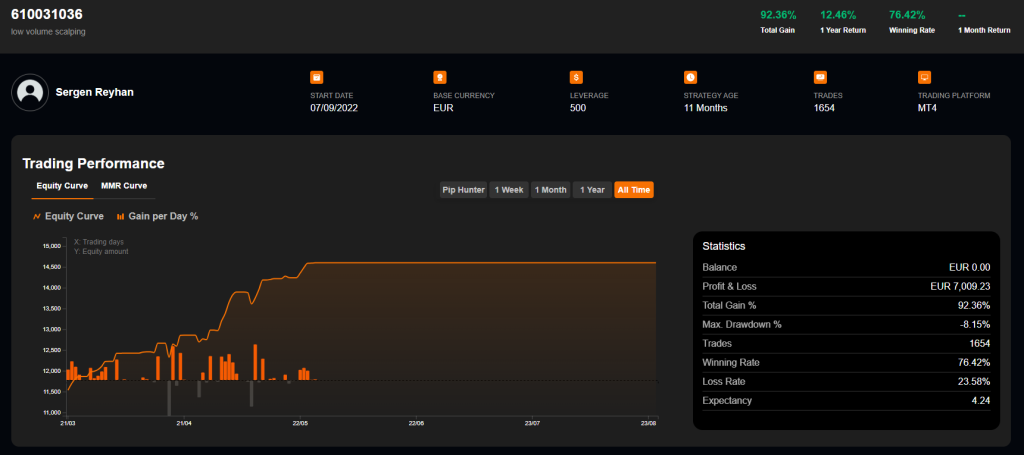
Let’s delve into Sergen’s trading strategy – an intricately structured yet systematically executed approach that he adeptly employs to achieve remarkable success. Sergen’s methodology revolves around a fusion of pivotal elements: namely, tick volume analysis harmonized with support and resistance levels plotted on the price chart. Upon reviewing his trading history, it becomes evident that a substantial portion of his trades occurs within very short timeframes, a hallmark of his scalping strategy. This strategy appears to centre around chart intervals ranging from 1 to 5 minutes.
For those unacquainted with the intricacies of trading, especially the concept of scalping, let’s briefly illuminate this technique. Scalping distinguishes itself as a unique trading style finely calibrated to exploit minor price oscillations. Its core principle involves swiftly capitalizing on these fluctuations through rapid cycles of buying and selling, often transpiring in intervals as brief as 30 seconds. The essence of scalping compels a trader to uphold a robust exit strategy, as even a solitary substantial loss possesses the potential to erode the cumulative gains meticulously accrued through numerous incremental trades.
For individuals intrigued by the concept of scalping, a word of advice: embarking on this trading style warrants comprehensive preparation. It necessitates a systematic understanding of the market dynamics and the cultivation of a well-structured approach. This caution is well-founded as scalping, while potentially rewarding, inherently carries heightened risks that demand a judicious and informed approach.
Picture this strategy as a two-pronged approach, with each prong contributing to the overall success:
1. Tick Volume: first, what is a tick volume?
In the forex market, “tick volume” refers to the number of price changes that occur for a given currency pair within a specific time frame. Essentially, it measures the frequency at which prices move up or down. This concept is slightly different from traditional volume measures you might encounter in other markets like stocks, in the forex market, tick volume isn’t a measure of the actual traded volume in the same way it is in centralized markets like stocks. This is due to the decentralized nature of the forex market, where there isn’t a central exchange, and all trading activity isn’t consolidated into a single source.
Imagine you’re watching a price chart of a currency pair, such as EUR/USD, and you see the prices changing. Each time the price moves, whether it’s an increase or decrease, it’s counted as a tick. So, tick volume is a tally of these price movements.
Now, why does tick volume matter? It can provide insights into the market’s activity and the strength of a price movement. Higher tick volume during a price change suggests greater participation and interest from traders, indicating a potentially more significant price trend. On the other hand, lower tick volume might suggest a lack of enthusiasm or uncertainty among traders.
In Sergen’s trading strategy, he pays close attention to tick volume along with support and resistance levels. This combination allows him to gauge not only the direction in which prices are moving but also the conviction behind those movements. By integrating tick volume analysis, Sergen gains a deeper understanding of market sentiment and can make more informed decisions about his trades.
That’s how a tick volume looks like on forex market;

Source: MetaTrader 4
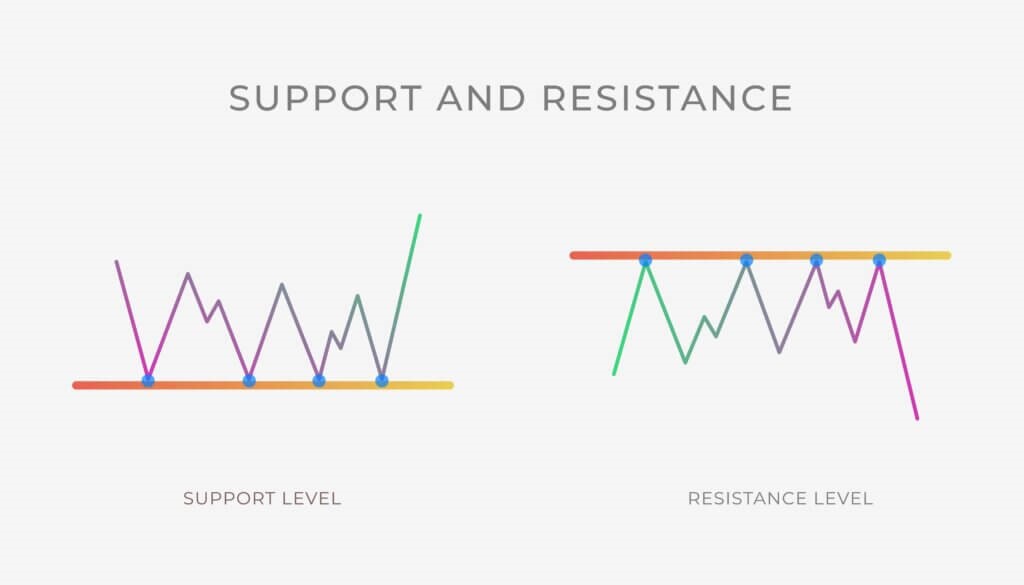
2. Support & Resistance: Employing support and resistance levels is a highly effective technique for pinpointing optimal entry and exit points in the market. This methodology has a rich historical background, dating back to the earliest days of market trading, such as the historic rice market in Japan.
Support and resistance levels act as key markers on a price chart, indicating levels were buying and selling activities have historically taken place. “Support” denotes price levels where demand for an asset tends to be strong, preventing prices from falling further.
Source: Rakuten
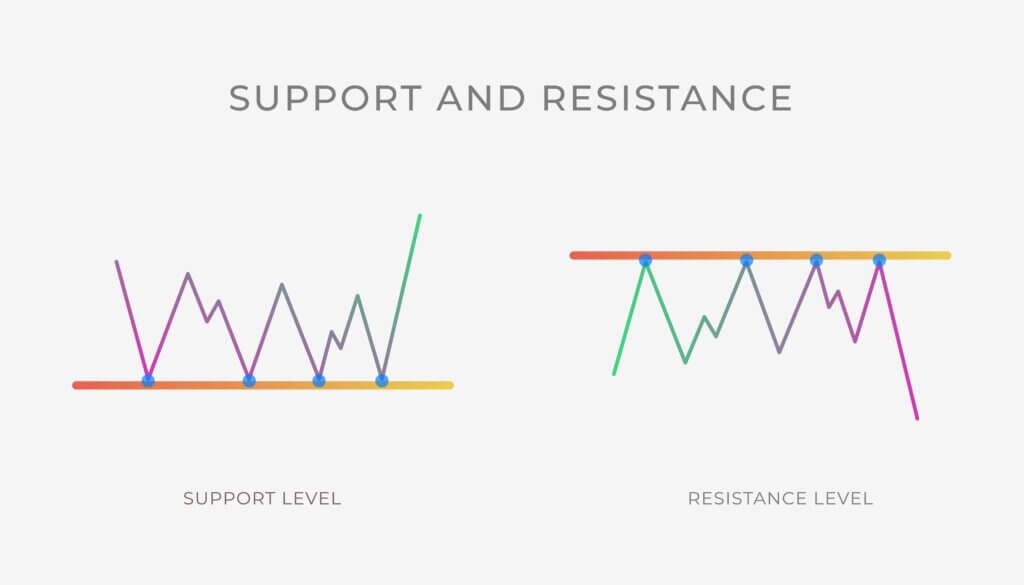
“Resistance,” on the other hand, represents price levels where selling pressure historically arises, preventing prices from rising further.
Source: Rakuten
This concept is akin to recognizing zones of psychological significance in the market, areas where traders tend to act decisively based on historical patterns. When these support and resistance levels are identified, they offer valuable insights into the ebb and flow of market sentiment. Traders like Sergen utilize these levels as navigational aids, helping them identify potential points of market reversal, breakout, or consolidation.
The enduring popularity of this approach underscores its efficacy. By identifying where market participants are historically inclined to engage, traders gain a distinct advantage in determining favourable entry and exit points. It’s a strategic tool that has withstood the test of time, offering traders a reliable means to interpret market dynamics and make informed decisions.
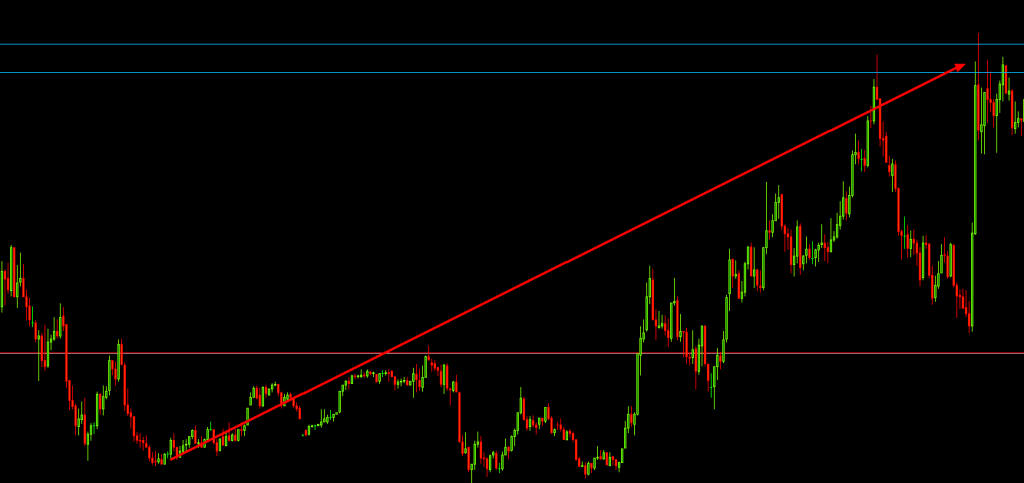
Let’s delve into a recent real-world market scenario observed in Sergen’s trading history, focusing on the EUR/USD currency pair. This scenario provides a vivid illustration of Sergen’s strategy in practical application.
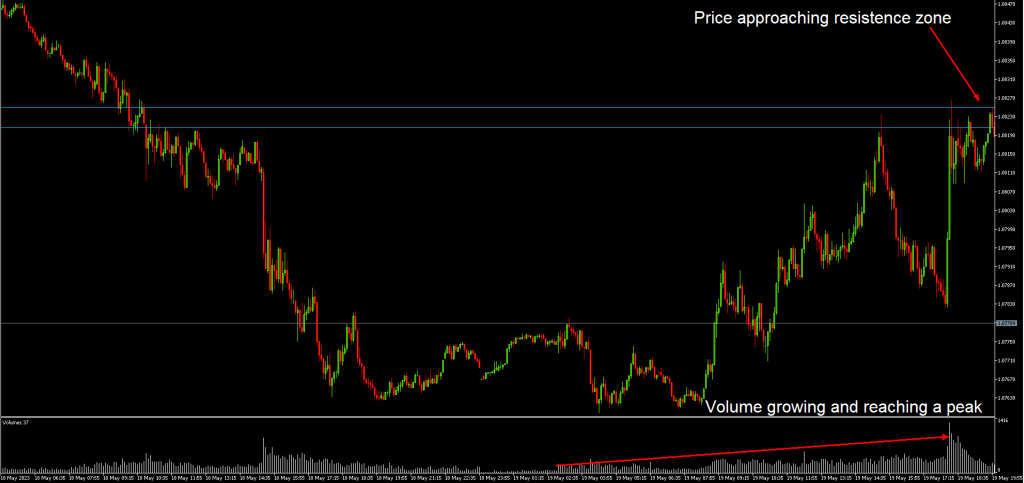
The narrative begins with the market exhibiting movement that aligns with the trajectory of a pre-established resistance area. This resistance area had been identified and formulated several days prior to the unfolding events.
In essence, the market’s price action was gravitating towards a level on the chart that had historically demonstrated a propensity to cap upward price movements. This resistance area, representing a region where selling interest had previously materialized, holds significance as a potential turning point in the price trajectory. Traders, including Sergen, often pay close attention to these levels, as they can offer valuable insights into the behaviour of market participants and potential future price dynamics.
Source: MetaTrader 5
As the scenario unfolds, Sergen’s strategic approach comes into play, aligning with his methodology that combines tick volume analysis with support and resistance considerations. This dynamic interplay of factors sets the stage for an intriguing sequence of events that further illuminates the effectiveness of Sergen’s trading strategy.
Source: MetaTrader 5
Having patiently awaited the price’s approach to the established resistance area, Sergen enters a critical phase of his strategy. With the market now confronting this historical barrier, he undertakes two pivotal tasks.
Sergen’s first task involves vigilant monitoring of the trading volume. Recognizing that he intends to capitalize on a potential reversal of the prior market movement, he readies himself for a contrarian approach. In this instance, Sergen positions himself for a short or selling position. This strategic manoeuvre hinges on the principle that a resistance level often triggers a shift in market sentiment, leading to downward price movement.
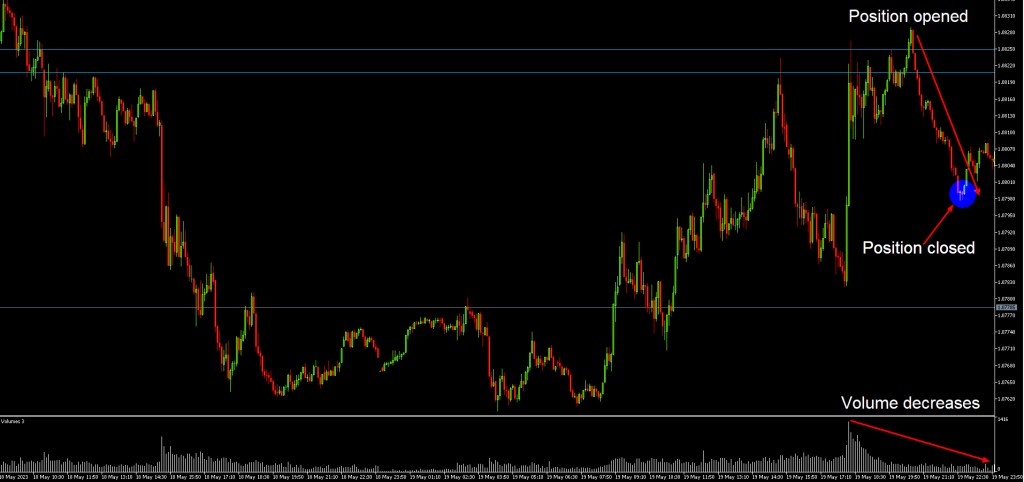
In tandem with this, Sergen’s second task involves exercising patience once again. While his position is set, he refrains from hasty actions. Instead, he remains watchful for a reduction in trading volume. This decrease in volume signifies a potential transition from heightened selling pressure to a more stabilized market environment. Sergen interprets this as a cue to contemplate closing his position, aiming to capture the price movement he had anticipated.
This two-pronged approach underscores Sergen’s strategic finesse. By keenly integrating volume analysis and aligning it with support and resistance dynamics, he navigates the market with a well-defined plan. This careful orchestration demonstrates Sergen’s proficiency in capitalizing on market reversals and his mastery of timing entries and exits for optimum gain.
Source: MetaTrader 5
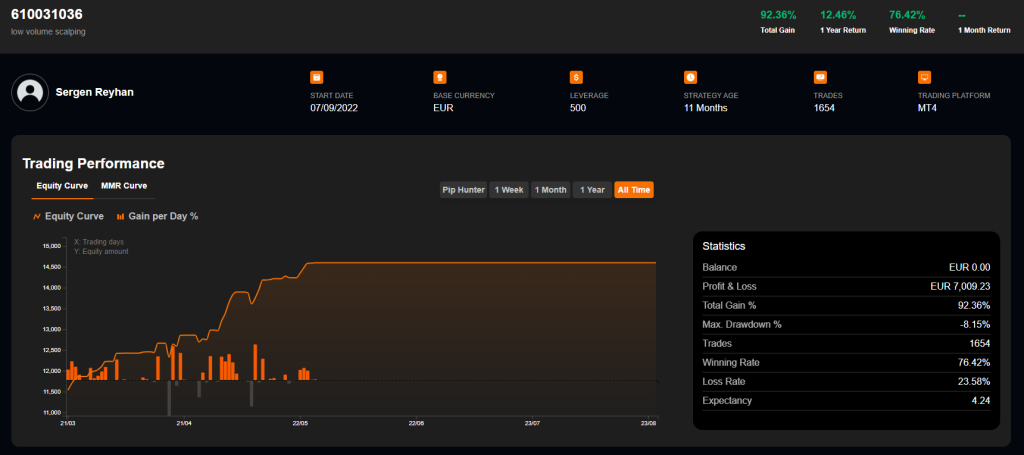
Shifting our focus to an analysis of Sergen’s performance reveals a truly exceptional showcase of trading expertise. A meticulous examination of his equity curve unveils a profound insight into his strategic prowess, exemplified by a pattern of steady and controlled growth that extends over a span of more than five months. This sustained and consistent trajectory serves as a vivid testament to Sergen’s adeptness in the realm of trading.
The remarkable stability observed in Sergen’s equity curve underlines his remarkable skill in deftly manoeuvring through the intricacies of the market. This extended period of controlled growth underscores his ability to maintain a composed and precise approach even in the face of market fluctuations. Sergen’s performance, as reflected in this equity curve, encapsulates the very essence of a seasoned trader who understands not only the dynamics of the market but also the art of prudent risk management and calculated decision-making.
Sergen’s Equity Curve
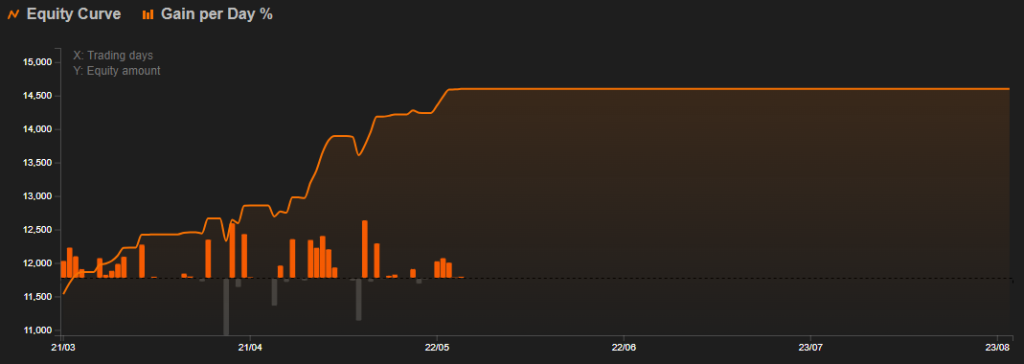
Undoubtedly, this portfolio stands out as a finely managed endeavour. Upon careful examination, the equity curve paints a vivid picture of disciplined management, characterized by its unwavering stability and consistent upward trajectory. Notably, this achievement owes much to Sergen’s scalping strategy, which equips him with the agility to swiftly enter and exit the market.
The effectiveness of scalping becomes evident in the portfolio’s minimal drawdown, a testament to Sergen’s capacity to react promptly to market shifts and limit potential losses. This trading approach, tailored for rapid decision-making, aligns seamlessly with Sergen’s astute risk management, thus fostering an environment of controlled growth.
An interesting observation unfolds as we assess the daily gains. From the inception of the portfolio, a pattern of remarkable consistency emerges. Sergen initiated his journey with several notably profitable days, establishing a robust foundation. Subsequently, it appears he leveraged these initial gains to potentially amplify his exposure, thereby generating augmented profits. This calculated approach is emblematic of a trader who adeptly employs gains as a strategic resource, enabling an iterative process of growth and enhanced profitability.
In essence, Sergen’s portfolio reflects a masterful orchestration of skill and strategy. The seamless integration of his scalping approach, prudent risk management, and strategic deployment of gains forms a harmonious symphony that underscores his prowess in the realm of trading.
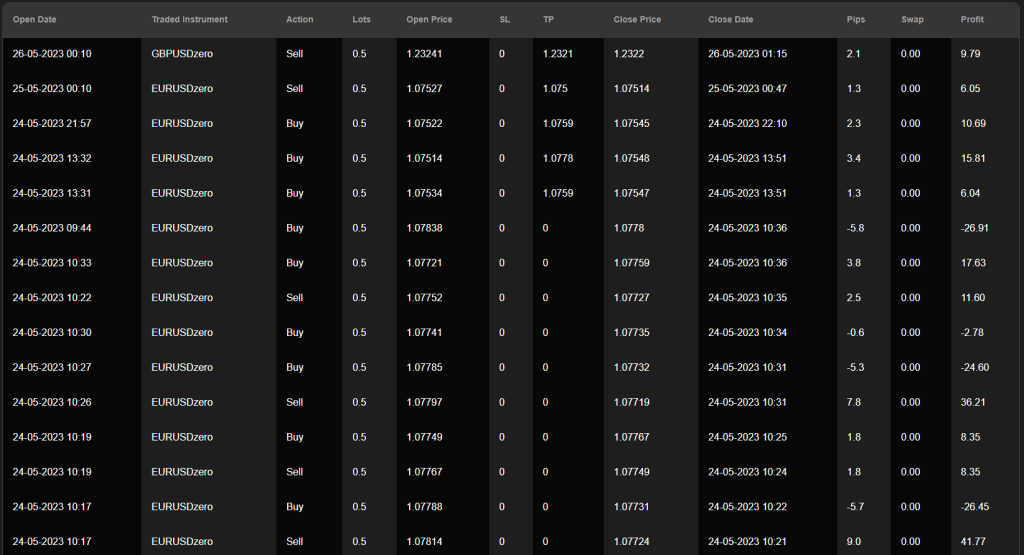
Times when Sergen had drawdown
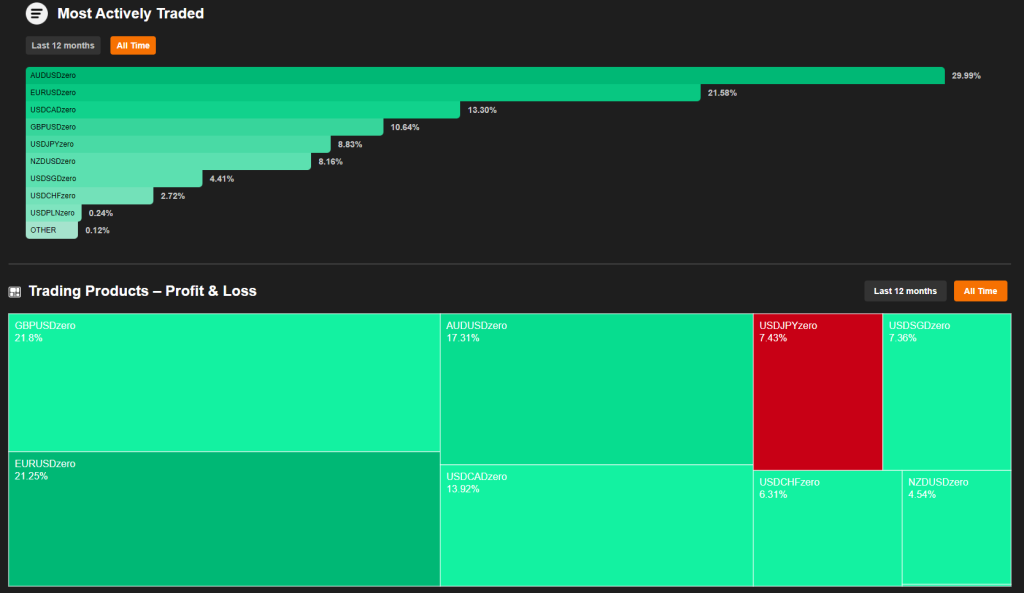
Sergen’s portfolio dynamics are truly remarkable, particularly his adept focus on trading USD pairs. This strategic approach centres on exclusively trading major currencies that include the US dollar in their composition, such as GBP/USD, USD/JPY, and USD/CAD. The underlying reasoning behind this approach suggests a profound understanding of fundamental market dynamics and a nuanced perspective on the US dollar’s behaviour.
It’s apparent that Sergen’s trading decisions are guided not only by technical analysis but also by a comprehensive grasp of global economic factors that influence currency movements. This fundamental outlook likely plays a pivotal role in shaping his convictions and trade setups, aligning them with his overarching strategy.
An insightful glimpse into Sergen’s portfolio allocation reveals his strategic allocation of resources. Notably, he assigns 29.99% of his portfolio to AUD/USD and 21.58% to EUR/USD. These allocations are purposefully directed towards “zero pairs,” as indicated, an innovative strategy designed to capitalize on trading with minimized spreads. This astute move reflects Sergen’s shrewdness in optimizing his strategy to maximize returns by reducing transaction costs.
Sergen’s calculated approach, combining a keen understanding of market fundamentals, selective currency pair preferences, and a strategic allocation strategy, all contribute to his portfolio’s remarkable performance. This holistic and meticulously crafted methodology exemplifies a trader who has honed the art of trading to a sophisticated and highly effective level.
Sergen’s Allocation
And thus, Sergen’s trading strategy comes into full view—a harmonious blend of meticulous analysis and astute sentiment interpretation. As you set forth on your own trading path, consider drawing inspiration from the pages of Sergen’s approach. May his insights serve as a guiding light as you navigate the intricacies of the market.
To all who embark on this trading journey, I extend my sincerest wishes for prosperous endeavours. And for those actively engaging in the competition, may luck and success be your faithful companions. As you explore the ever-evolving landscape of trading, may your strategies be well-informed, your decisions well-timed, and your outcomes consistently rewarding.
If you are a trader or a fund manager, showcase your trading skills by joining the Trading Cup 2023 competition!
Trading involves risk.