
“Opportunities don’t happen. You create them.” – Chris Grosser
Success in trading isn’t about waiting for the perfect moment, it’s about creating it through strategy and skill. Our proven methods have delivered consistent results, as evidenced by winning copy trading analyses across multiple markets. 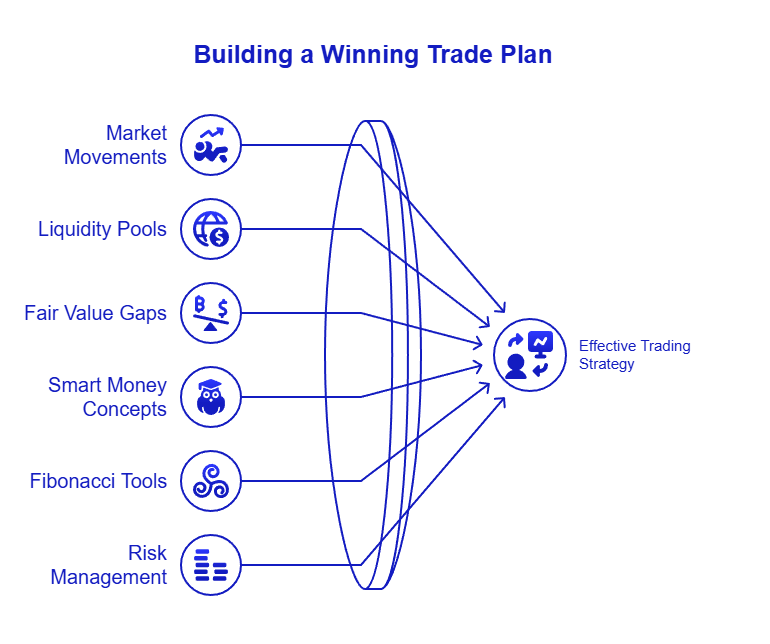
Introduction
Trading is a continuous learning journey, not a one-size-fits-all formula. There’s no absolute right or wrong only what works for you, refined through experience and discipline.
This article dives into actionable methods for identifying low-risk, high-reward trading opportunities in the crypto, forex, and gold markets. Whether you’re a scalper chasing quick wins, a day trader riding intraday waves, a swing trader targeting multi-day moves, or a position trader playing the long game, these strategies apply to you.
We’ll break down how market movements, driven by liquidity and fair value, create tradable opportunities. You’ll get a step-by-step roadmap for spotting and executing trades, backed by real-world examples and expert analysis.
Expect to walk away with practical tools to enhance your trading edge, manage risk effectively, and boost your profitability. Let’s get started.
Table of Contents
- Introduction
- Understanding Market Movements
- Key Methodologies for Identifying Opportunities
- Step-by-Step Framework for Spotting Opportunities
- Trade Examples and Analysis
- Mastering Exit Strategies
- Conclusion
- FAQs
Actionable Insights You’ll Gain
Here’s what you’ll take away from this article:
- How to decode market movements using liquidity and fair value principles.
- Techniques to pinpoint liquidity pools and fair value gaps for high-probability trades.
- A clear process to map key levels with Smart Money Concepts and Fibonacci tools.
- Steps to build a trade plan with solid risk management and defined entry/exit points.
- Exit strategies to lock in profits and minimise losses.
These insights are practical, adaptable, and designed to elevate your trading game. Let’s dive into the details.
Understanding Market Movements
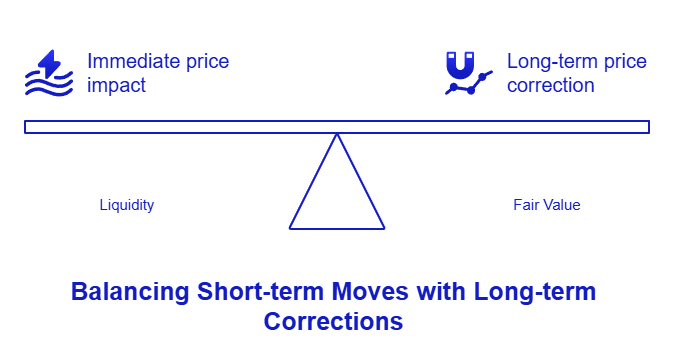
Markets don’t move randomly, they’re driven by forces you can learn to read. Whether you’re scalping crypto, day trading forex, or holding gold positions, understanding these drivers is non-negotiable. Two stand out: liquidity and fair value (rebalancing).
- Liquidity: This is the lifeblood of price action. It’s the presence of buyers and sellers, concentrated in pools like stop losses, take profits, or pending orders. When price hits these pools, it can trigger sharp moves, think breakouts or reversals. Scalpers might chase short-term liquidity grabs, while swing traders target bigger pools at key levels.
- Fair Value (Rebalancing): Markets aim for a “fair” price, rebalancing when they overshoot. This creates fair value gaps (FVGs) price zones skipped during rapid moves. These gaps often pull price back like a magnet, offering predictable opportunities.
Mastering these concepts lets you anticipate trends, spot reversals, and exploit price gaps. It’s the foundation of every trade setup we’ll cover.
Key Methodologies for Identifying Opportunities
To catch low-risk, high-reward trades, focus on two core methodologies: seeking liquidity and offering fair value/rebalancing. 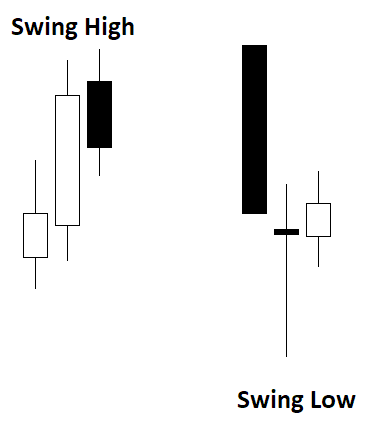
Seeking Liquidity
Liquidity pools are clusters of orders longs, shorts, take profits, or stops that drive price when tapped. They often form at swing points (highs and lows), where price reverses or accelerates. For example:
- A cluster of stop losses above a resistance level can spark a breakout as price sweeps them.
- Take profit orders below support can trigger a bounce as they’re filled.
Spotting these pools lets you position ahead of big moves, keeping risk tight and rewards high.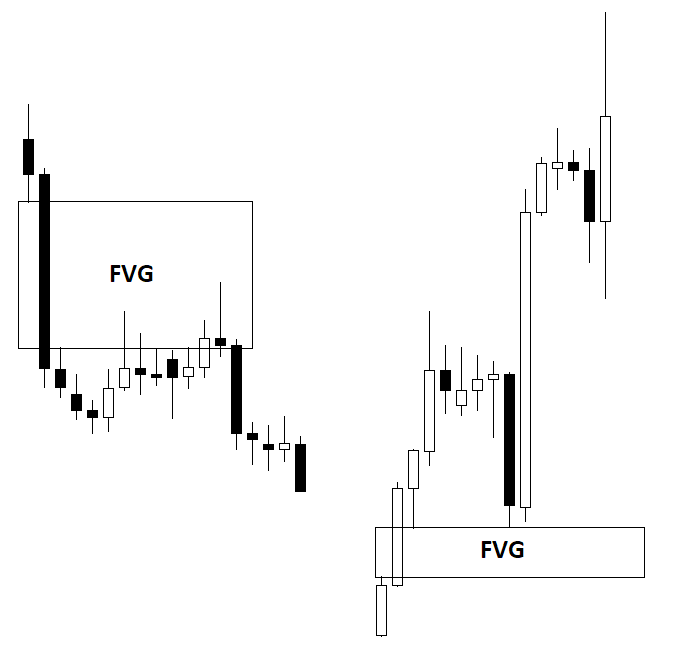
Offering Fair Value/Rebalancing
Fair value gaps (FVGs) emerge when price jumps impulsively, leaving an imbalance. Markets tend to revisit these gaps to rebalance, creating high-probability setups. For instance:
- An upward gap might pull price back down to fill it before continuing.
- A downward gap could signal a rally as buyers step in.
By aligning liquidity pools with FVGs, you stack the odds in your favor. Let’s turn this into a repeatable process.
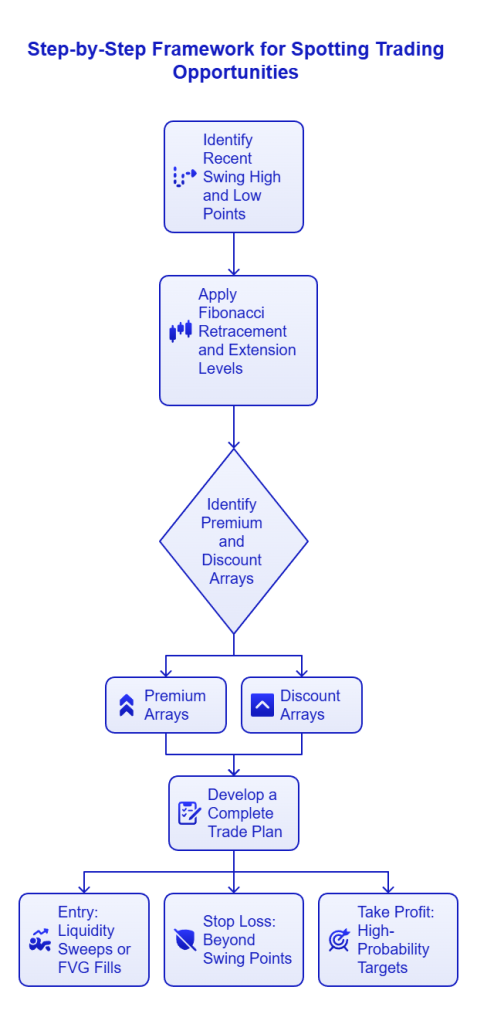
Step-by-Step Framework for Spotting Opportunities
Here’s a clear, actionable framework to identify low-risk, high-reward trades:
1. Identify Recent Swing High and Low Points
Use Smart Money Concepts (SMC) to find where price has reversed or liquidity has been taken. These are your anchor points—think of them as magnets for price action.
2. Apply Fibonacci Retracement and Extension Levels
Overlay Fibonacci tools to map support and resistance. Key levels like 0.382, 0.618, or 1.618 often align with reversals or targets, giving you precise zones to watch.
3. Identify Premium and Discount Arrays
- Premium Arrays: Where price is “expensive” great for selling or shorting.
- Discount Arrays: Where price is “cheap” ideal for buying or going long.
These zones help you enter at value and exit at extremes.
4. Develop a Complete Trade Plan
Tie it together with:
- Entry: Triggered by liquidity sweeps or FVG fills.
- Stop Loss: Set beyond swing points or key levels to cap risk.
- Take Profit: Aimed at high-probability targets (e.g., next liquidity pool or FVG), ensuring a risk-to-reward ratio of 1:3 or better.
Trade Examples and Analysis
Let’s see this framework in action with real-world trades. Each example includes entry, stop loss, take profit, risk-to-reward, and key takeaways.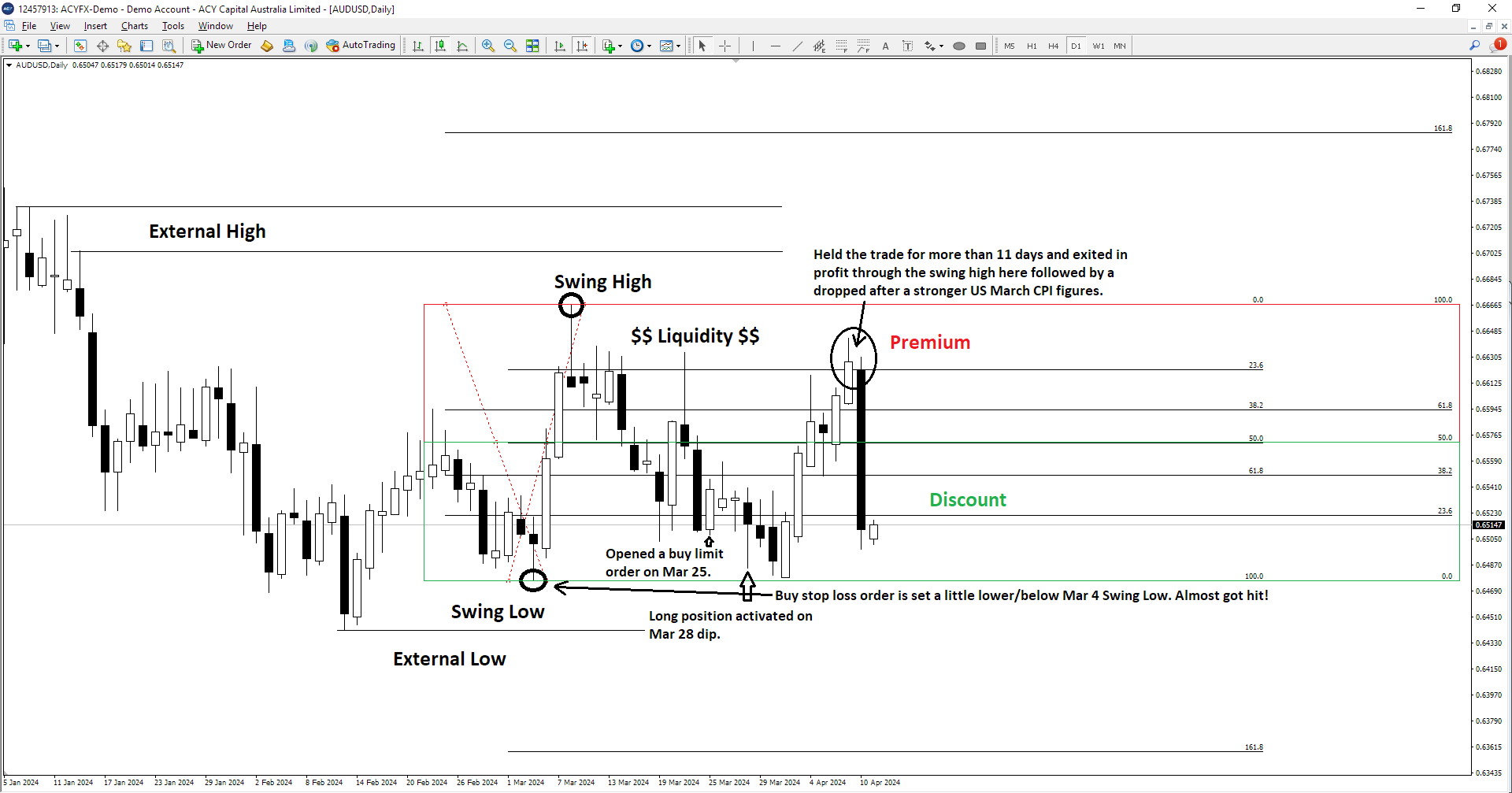
AUDUSD (Forex)
- Entry: Bought at a discount array near a swing low, confirmed by SMC.
- Stop Loss: Below the low, risking 20 pips.
- Take Profit: At a premium array (Fibonacci 1.618), netting 100 pips.
- Risk-to-Reward: 1:5
- Takeaway: Liquidity at the low fueled a strong rally, proving the discount entry’s edge.
Full details: Finlogix’s AUDUSD Analysis.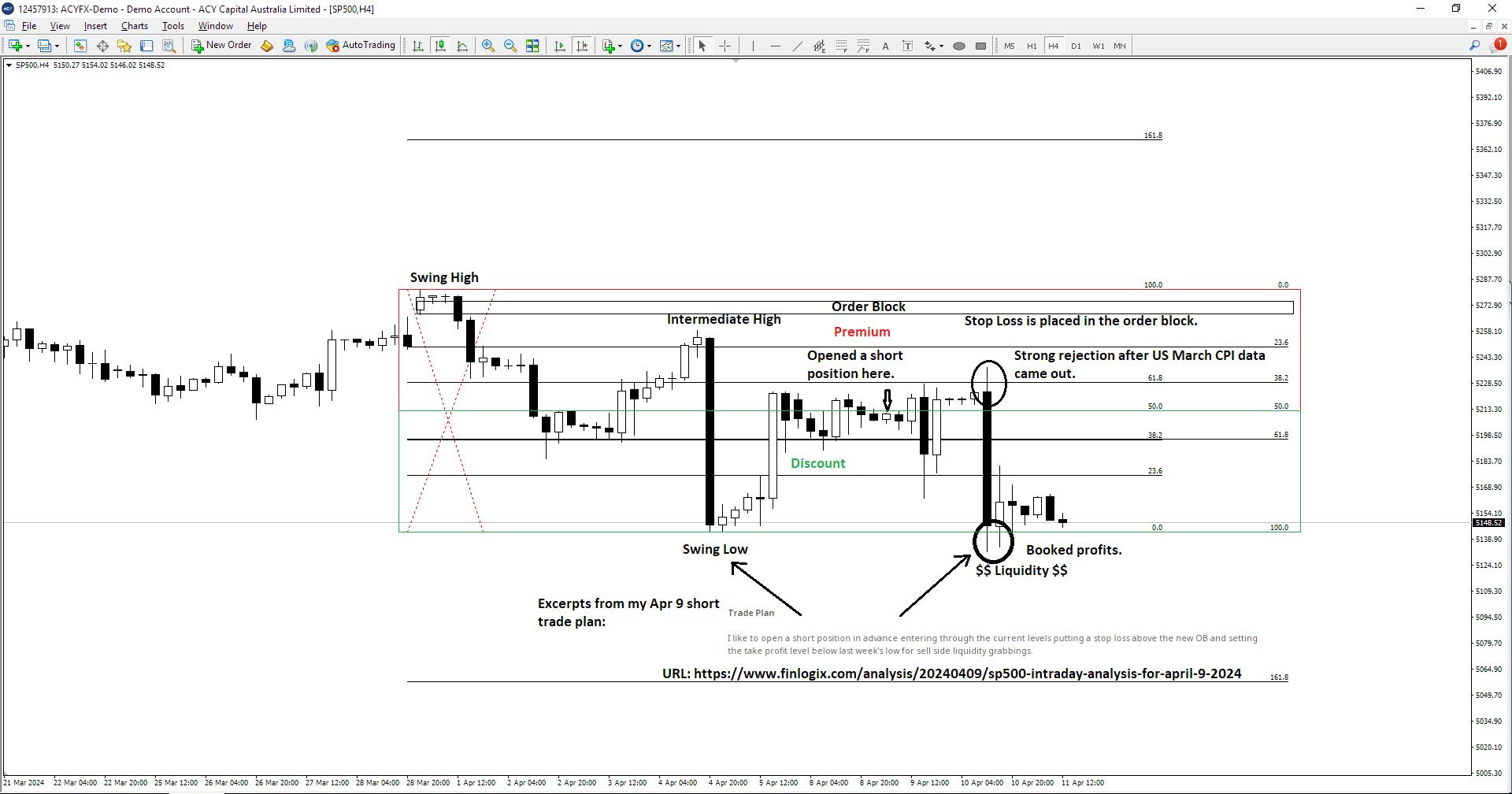
S&P500 (Index)
- Entry: Sold below a swing high liquidity pool.
- Stop Loss: Above the high, risking 10 points.
- Take Profit: Trailing stop captured 40 points.
- Risk-to-Reward: 1:4
- Takeaway: Liquidity sweeps can signal reversals—flexible exits maximise gains.
See more: Finlogix’s S&P500 Analysis.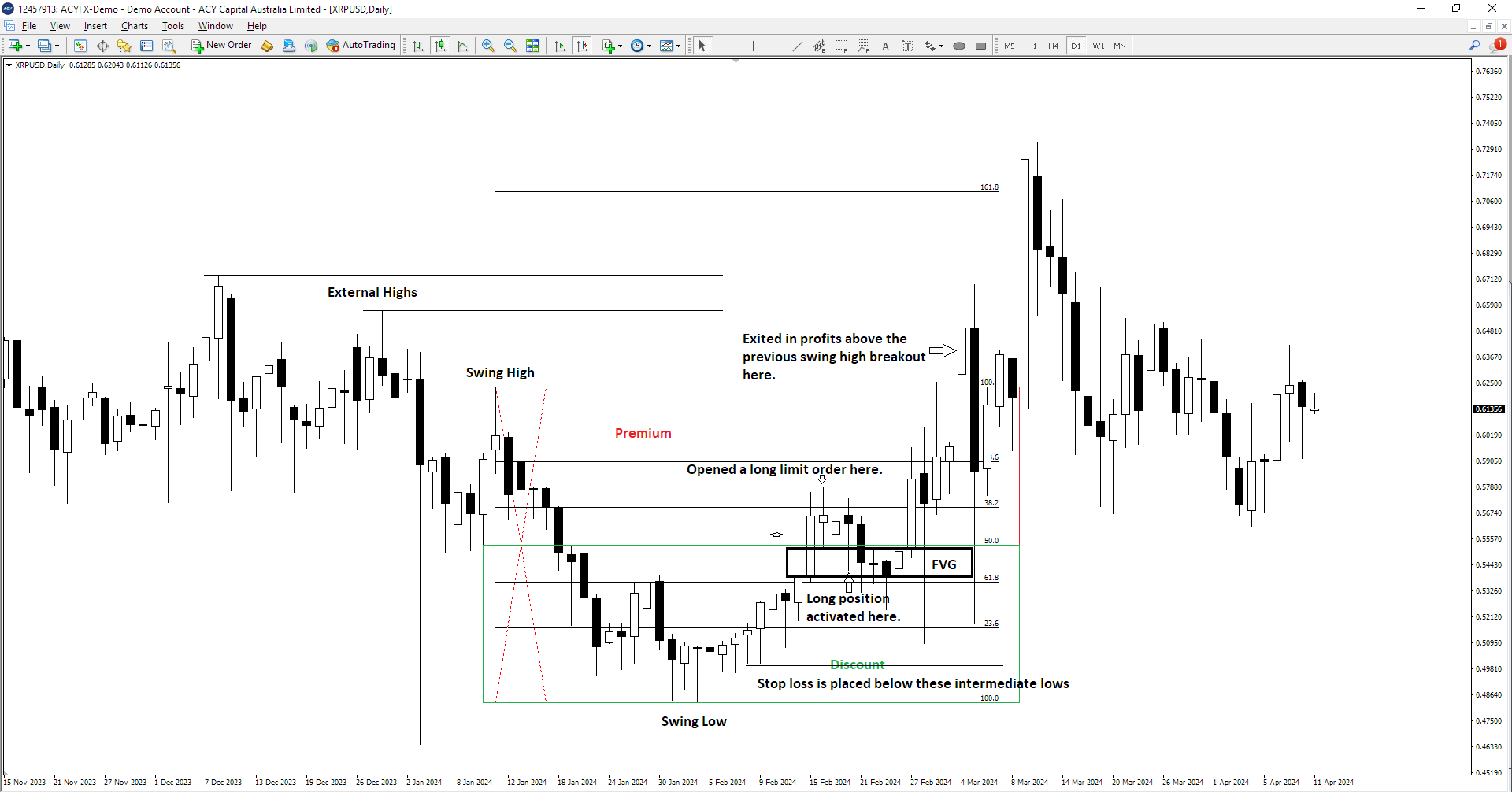
XRP (Crypto)
- Entry: Bought at an FVG during consolidation.
- Stop Loss: Below the gap, risking 2%.
- Take Profit: At the next liquidity pool, gaining 6%.
- Risk-to-Reward: 1:3
- Takeaway: FVGs offer low-risk entries when price rebalances.
Read the analysis: Finlogix’s XRP Analysis.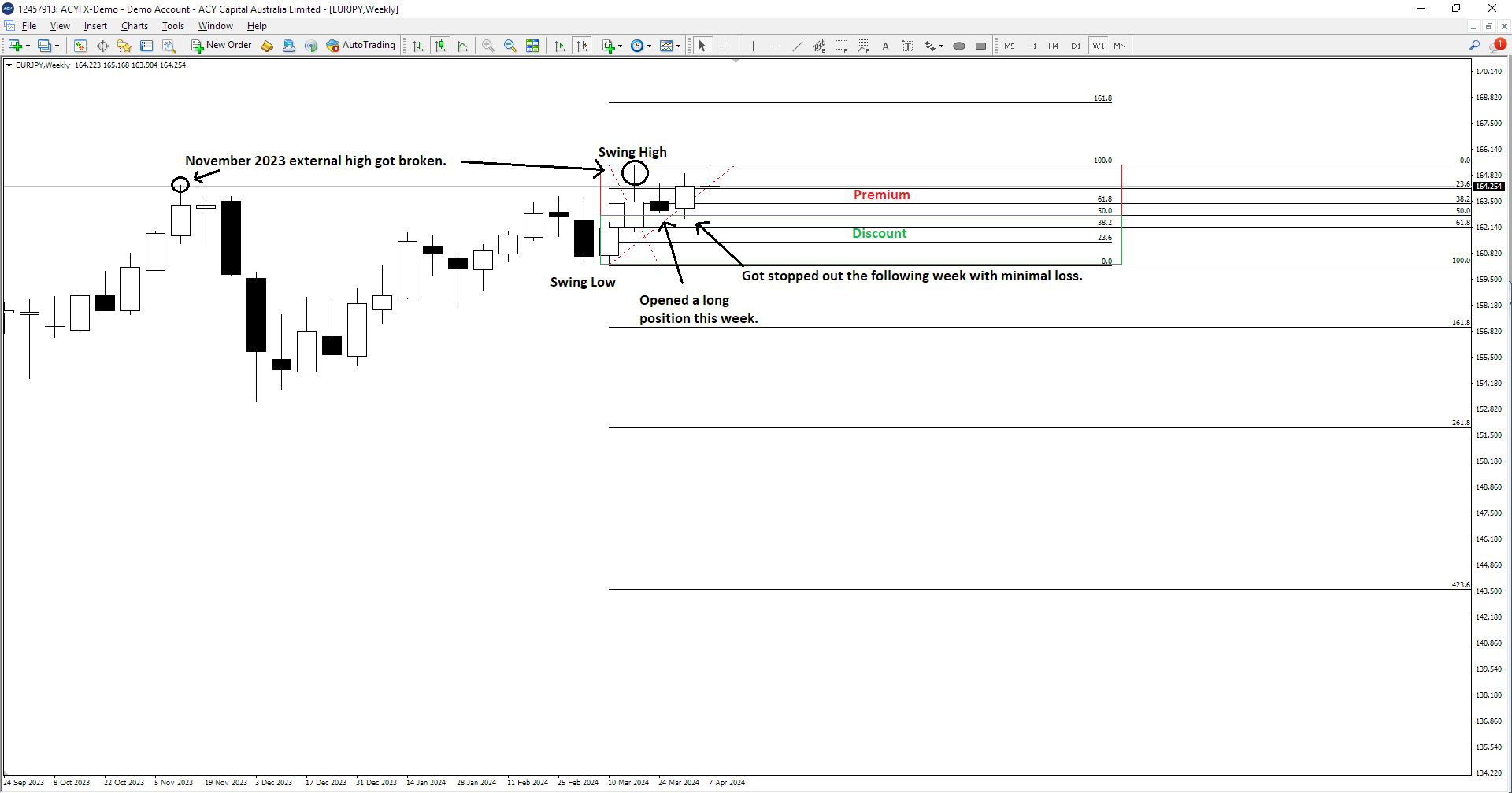
EURJPY (Forex)
- Entry: Sold at a premium array after a liquidity sweep.
- Stop Loss: Above the high, risking 30 pips.
- Take Profit: At the next FVG, gaining 75 pips.
- Risk-to-Reward: 1:2.5
- Takeaway: Liquidity-driven fakeouts set up high-probability shorts.
Details here: Finlogix’s EURJPY Analysis. 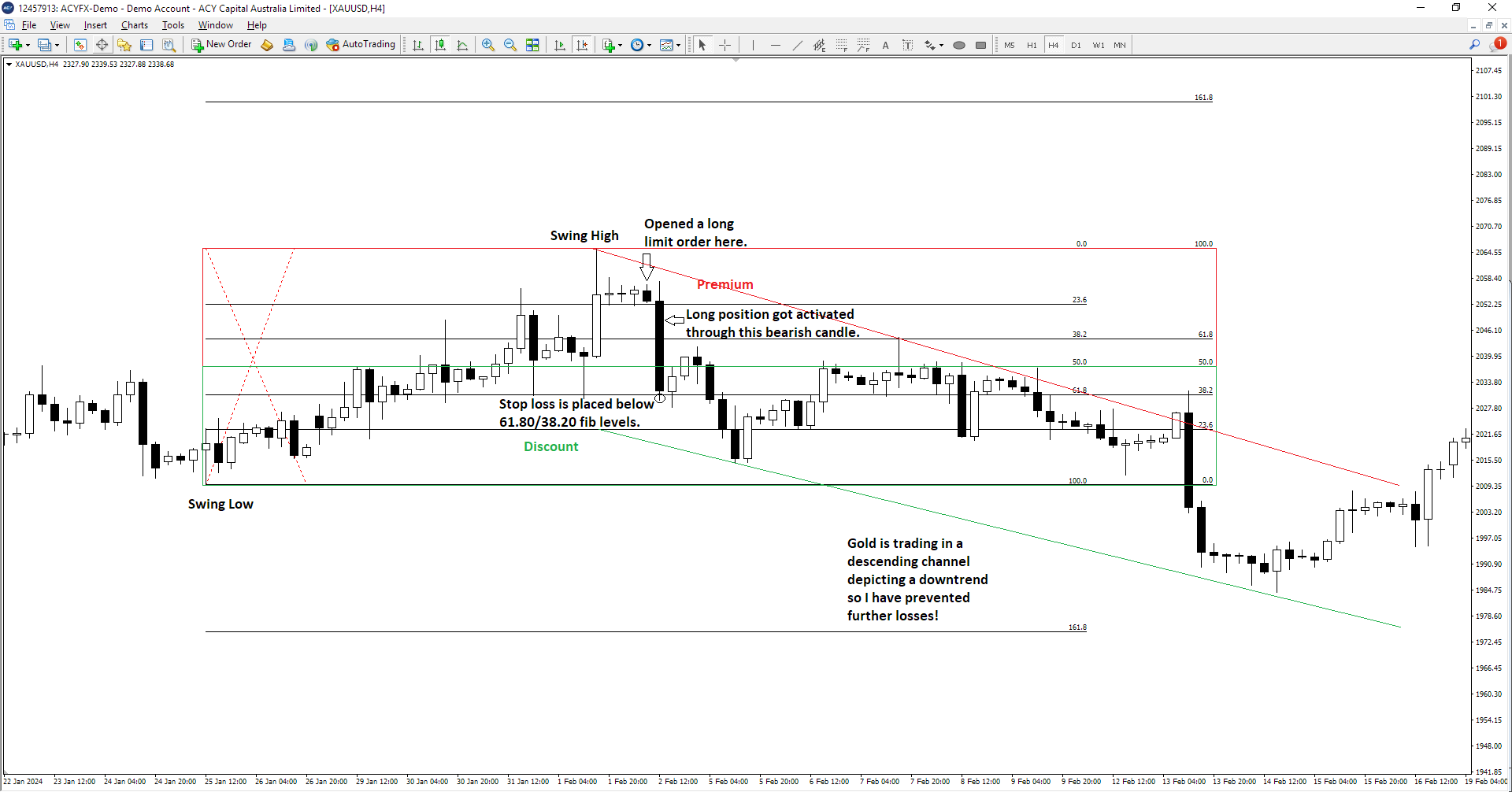
Gold (Commodity)
- Entry: Bought at a discount array near a Fibonacci 0.618 level.
- Stop Loss: Below the low, risking $10/oz.
- Take Profit: At a liquidity pool, gaining $40/oz.
- Risk-to-Reward: 1:4
- Takeaway: Gold’s volatility pairs well with this structured approach.
Full breakdown: Finlogix’s Gold Analysis.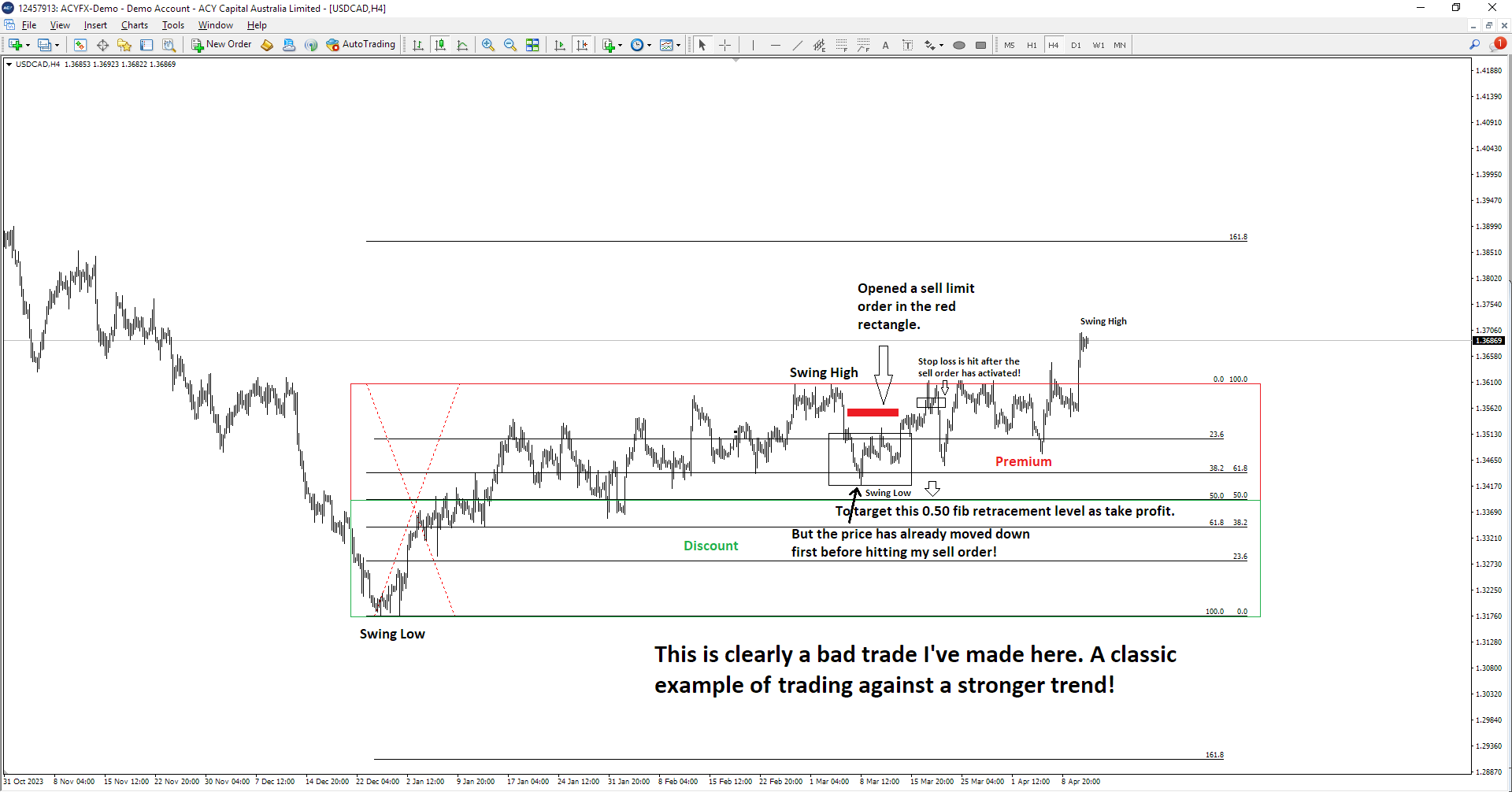
USDCAD (Forex)
- Entry: Sold at a premium array post-failed breakout.
- Stop Loss: Above the breakout, risking 25 pips.
- Take Profit: At the next FVG, gaining 75 pips.
- Risk-to-Reward: 1:3
- Takeaway: False moves often trap liquidity—perfect for contrarian plays.
More info: Finlogix’s USDCAD Analysis.
These trades show the framework’s versatility across markets.
Mastering Exit Strategies
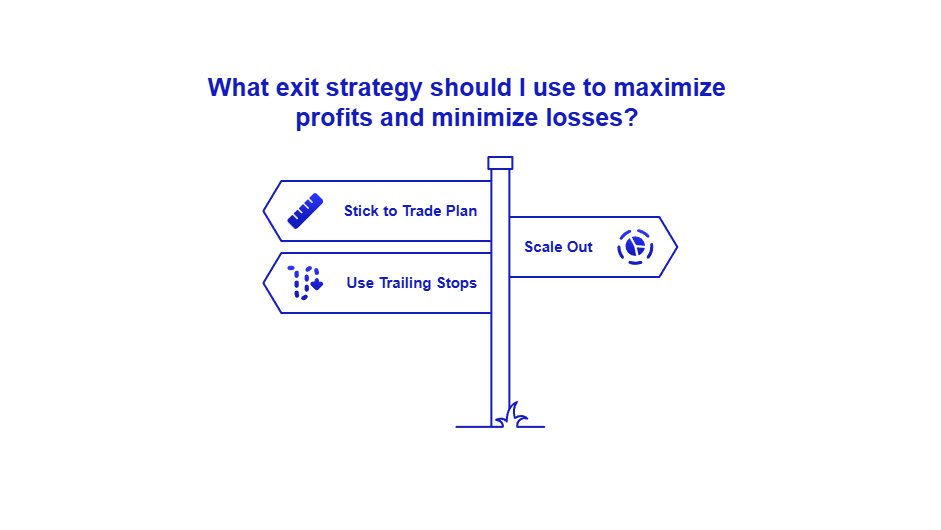
A great entry is only half the battle, your exit strategy seals the deal. It’s about securing profits and cutting losses with precision. Here are three proven methods:
1. Stick to the Trade Plan
Exit at your pre-set take profit levels. Discipline trumps emotion every time.
2. Scale Out
Close part of your position (e.g., 50%) at the first target, then trail the rest. This locks in gains while chasing bigger moves.
3. Use Trailing Stops
Let profits run by adjusting your stop as price moves in your favor. Ideal for trends, learn more at ACY’s Trailing Stop Guide. Your choice depends on market conditions and your risk appetite.
Conclusion
Catching low-risk, high-reward trading opportunities starts with understanding market drivers, liquidity and fair value. The framework we’ve outlined, spotting swing points, using Fibonacci, targeting premium/discount zones, and planning trades gives you a repeatable edge. Real-world examples like AUDUSD, S&P500, and Gold prove it works across crypto, forex, and commodities.
Key takeaways:
- Backtest relentlessly: Validate your system before risking capital.
- Manage risk: Keep losses small, let winners run.
- Refine constantly: Adapt as markets evolve.
This isn’t a rigid rulebook, it’s a flexible toolkit. Test it on a demo account via ACY’s Platform and make it yours.
Ready To Level Up?
Join Trading Cup for exclusive tools, insights, and community support. Dive deeper with Finlogix’s resources or trade with precision at ACY.
See why traders trust us, check our Trustpilot reviews.
FAQs
How do I determine the best time to enter a trade?
Enter when your analysis aligns with think liquidity sweeps, FVG fills, or key level tests backed by a strong risk-to-reward setup.
What are the key indicators of a high-probability trading opportunity?
Look for liquidity and fair value convergence, technical confirmation (e.g., Fibonacci), and a risk-to-reward ratio of 1:3 or better.
For more detailed insights on developing daily trading routines, risk management, and effective strategy refinement, explore additional articles on Trading Cup. External experts at ACY and FinLogix are also great resources to guide your journey towards trading excellence.

Discover Our Best Trading Signals
At Tradingcup, you can browse through a selection of signals and review past performance before you decide to copy.
Share your expertise and become a signal provider so other traders can copy your trades.
Stay tuned to our blog for more trader spotlights and leaderboard updates.
Trading involves risks.
Visit the Tradingcup blog through the link below for more updates:
https://www.tradingcup.com/learn