Last Updated: June 23, 2025
This article is reviewed annually to reflect the latest market regulations and trends.
Disclaimer: The information in this article is for educational purposes only and does not constitute financial, investment, or trading advice. Copy trading carries substantial risks, including the potential loss of your entire invested capital. Past performance of copied traders or strategies is not a reliable indicator of future results. You may be replicating high-risk trades, overleveraged positions, or strategies incompatible with your financial goals. Always conduct independent research into a trader’s historical performance, risk metrics, and strategy before copying them. Never invest funds you cannot afford to lose. Consult a licensed financial advisor to ensure copy trading aligns with your risk tolerance, financial objectives, and regulatory requirements in your jurisdiction. This article does not endorse specific traders, platforms, or strategies, and all trading decisions remain your sole responsibility.
TL; DR:
- To start your journey right, first learn the trading light.
- Check your trades for minutes a day, to keep the big losses at bay.
- A weekly review of stats and trends, on this your portfolio depends.
- With a monthly deep dive, you’ll help your investments thrive.
- Trade with your head, not with dread, and your account will stay in the black, not red.
“Wealth consists not in having great possessions, but in having few wants.” – Epictetus
Part 1: The Copy Trading Crossroads: Your Journey Begins Here
Are You Trading Your Time for a Shortcut That Doesn’t Exist?
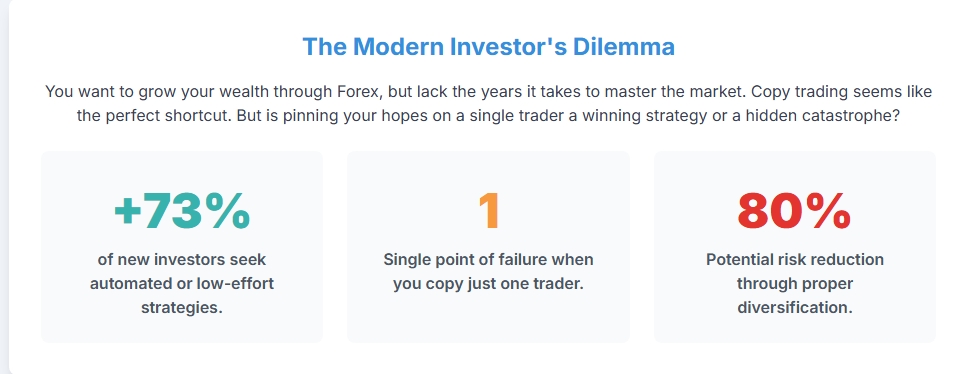
You’re ambitious. You want your money to work for you. But between your career, your family, and your life, who has the time to learn the labyrinthine world of candlestick charts, economic indicators, and geopolitical analysis? It’s a full-time job in itself.
So, you discover the Foreign Exchange (Forex) market, the largest and most liquid financial market in the world. The potential is exhilarating, but the complexity is daunting. Then, you find it: copy trading. It seems like the perfect solution, a way to leverage the expertise of seasoned professionals without dedicating years to mastering the craft yourself. You can simply mirror the moves of a successful trader and share in the profits.
This leads directly to the pivotal question that brought you here: You’ve found a promising trader to copy. You’ve linked your account. Now what? Do you check it every five minutes, consumed by every price fluctuation? Or do you check it once a month, hoping for the best? How often should you really monitor your copied trader to protect your capital and make smarter decisions?
So, What Exactly is Copy Trading in the Forex Market?
At its core, copy trading is a portfolio management strategy where your account automatically replicates, or “copies,” the trades executed by another, more experienced trader. This individual is often called a “signal provider” or “master trader.” When they open a trade on a currency pair like EUR/USD or a commodity like Gold (XAUUSD), your account opens the same trade proportionally to your investment. When they close it, yours closes too.
The appeal is undeniable. It provides a way for beginners to participate in complex financial markets by leveraging the time commitment and potential expertise of someone who has already navigated the steep learning curve. Platforms like Trading Cup facilitate this process, making it accessible to a wide audience. However, this convenience does not eliminate your responsibility. To learn more about the foundational steps, you can start your copy trading journey from scratch.
And What Are These “Forex Signal Providers” I Keep Hearing About?
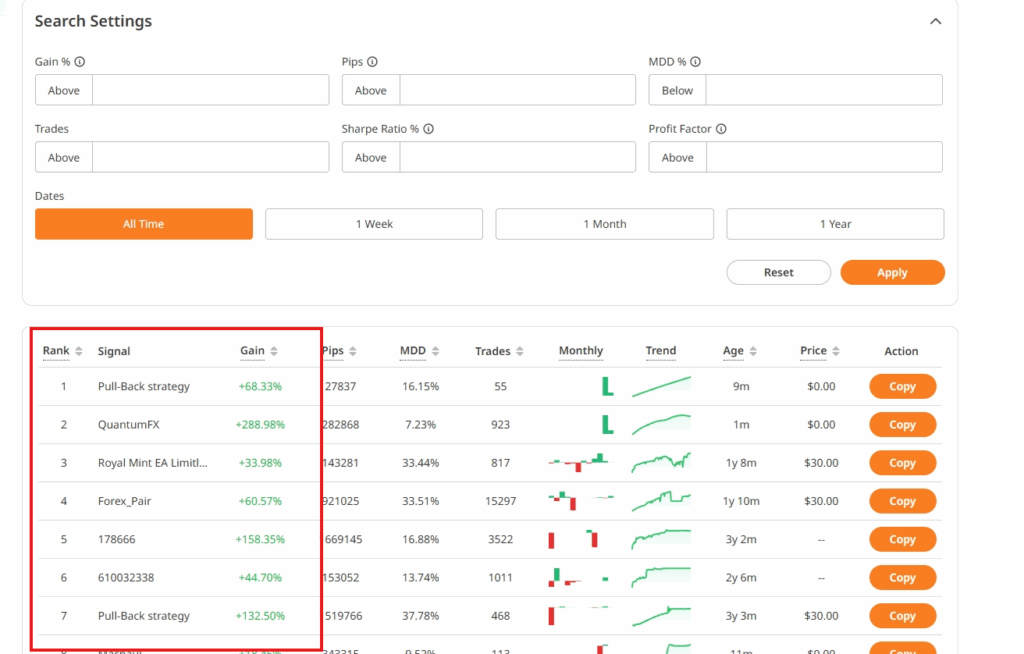
It’s important to distinguish between the act of copy trading and the source of the trades. A Forex signal provider is the person, team of analysts, or even an automated system (like a trading bot or Expert Advisor) that generates trade recommendations. These signals, which typically include the asset to trade, an entry price, a stop-loss, and a take-profit level, are what you are copying.
Signal providers make their expertise available for several reasons. For followers, it saves countless hours of market analysis. For the providers themselves, it creates additional streams of income through subscription fees (a fixed monthly cost) and/or performance fees (a percentage of the profits they generate for their copiers). Understanding this commercial relationship is vital; you are not just following a hobbyist, you are engaging in a business transaction where their performance directly impacts both their reputation and their wallet.
Why Has the Forex Market Captured Everyone’s Attention?

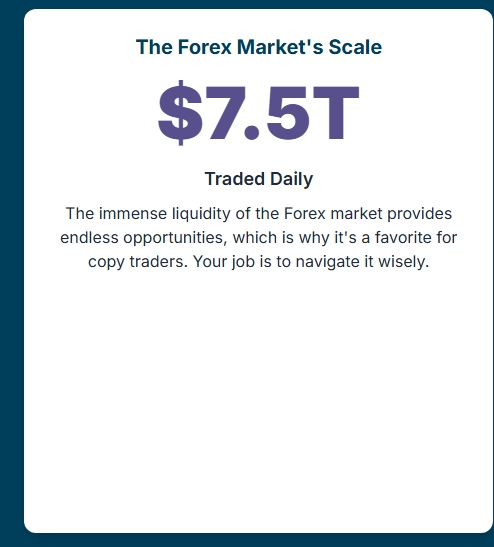
The Forex market’s immense popularity stems from a unique combination of factors that make it attractive to traders of all levels.
- Unmatched Liquidity: With a daily trading volume exceeding $7.5 trillion, it is the most liquid market in the world. This means you can typically enter and exit trades instantly at stable prices.
- 24/5 Accessibility: The market operates around the clock, five days a week, moving from financial centers in Sydney to Tokyo, London, and New York. This flexibility allows you to trade at your convenience, regardless of your time zone.
- Low Capital Requirements: Unlike stocks or futures, Forex trading can be started with a relatively small amount of initial capital. This is largely due to the availability of leverage, which allows traders to control larger positions with a smaller deposit.
- Variety and Volatility: With dozens of currency pairs to trade, from majors like EUR/USD to exotics, there are always opportunities. The inherent volatility of these pairs, driven by economic news and geopolitical events, creates the potential for significant profit (and, conversely, risk).
Is Copy Trading Truly a Beginner’s Best Friend?
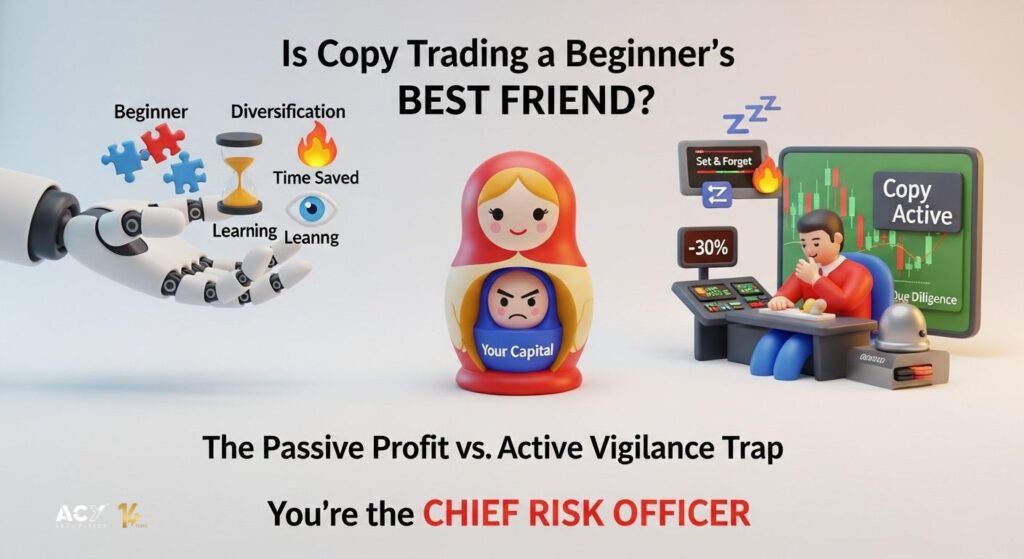
For many newcomers, copy trading is an invaluable tool. It dramatically reduces the learning curve, saves an immense amount of time, and provides instant portfolio diversification by allowing you to follow multiple traders with different strategies. It offers a way to learn by observing the decisions of experienced market participants in a real-world environment.
However, this is where a critical distinction must be made. The very features that make copy trading so appealing, its ease of use and the promise of “passive” returns, can create a dangerous mindset. Many beginners fall into the “set-it-and-forget-it” trap, believing their work is done after they’ve picked a trader. This is the single most common and costly mistake. While the execution of trades is automated, the oversight of your investment must be a deliberate, active process. You are still the chief risk officer of your own capital. Relying blindly on another trader without performing your own due diligence and ongoing monitoring is not a strategy; it’s a gamble.
Part 2: The Art of Vigilance: A Framework for Smart Monitoring
Why is “Set It and Forget It” the Most Dangerous Myth in Copy Trading?
The idea of truly passive income from copy trading is a seductive marketing narrative, but it’s a myth that can lead to significant financial loss. While you are outsourcing the trade analysis and execution, you can never outsource the responsibility for your capital. Vigilant, structured monitoring is non-negotiable for several critical reasons.
- The Four Horsemen of Unmonitored Accounts:
- Strategy Drift: The trader you chose for their conservative, low-risk approach might, over time, become more aggressive to chase higher returns. Without monitoring, you may find your portfolio exposed to a level of risk you never agreed to.
- Changing Market Conditions: A strategy that excelled during a period of low volatility might crumble during a major economic event. Gold’s behavior, for example, can shift dramatically based on inflation data or geopolitical tension. Monitoring helps you see if your chosen trader is adapting to new market realities.
- No Trader is Infallible: Past performance is not a guarantee of future results. Even the most seasoned professional traders have losing streaks and make mistakes. A stellar 12-month record can be followed by a disastrous quarter.
- Ultimate Capital Protection: At the end of the day, it is your money on the line. Monitoring is the most fundamental component of risk management. It ensures you remain in control and comfortable with the performance and risk exposure of your investment.
- Strategy Drift: The trader you chose for their conservative, low-risk approach might, over time, become more aggressive to chase higher returns. Without monitoring, you may find your portfolio exposed to a level of risk you never agreed to.
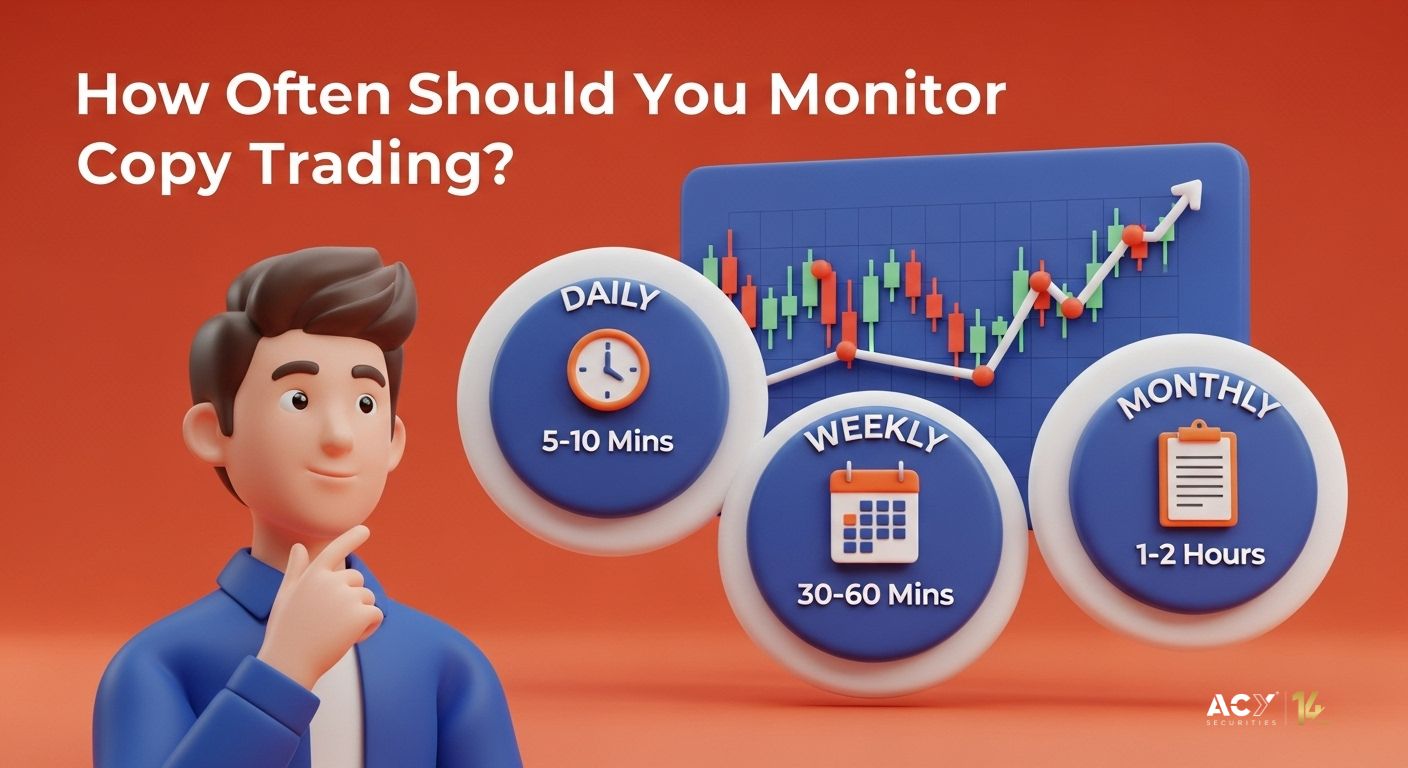
What is the Optimal Monitoring Cadence? Your Daily, Weekly, and Monthly Plan
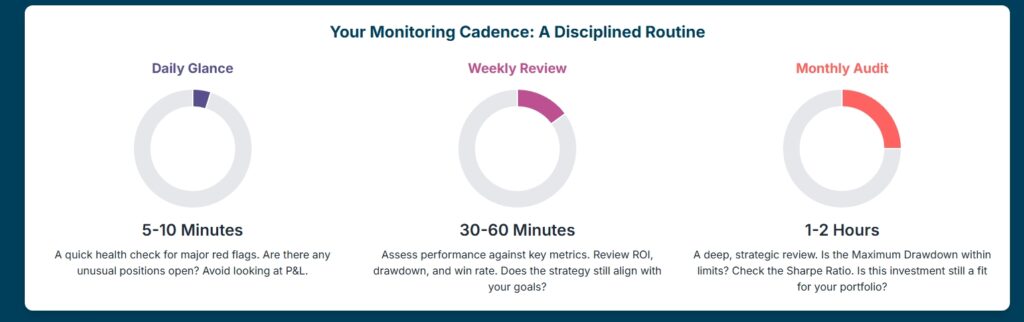
The goal of monitoring is not to become a screen-obsessed neurotic, reacting to every minor price movement. The goal is to establish a professional, disciplined routine that keeps you informed without causing emotional distress. This cadence can be broken down into three logical timeframes.
The 5-10 Minute Daily Glance
- Purpose: This is a quick health check, not a profit-and-loss (P&L) obsession. Its sole purpose is to spot any immediate, glaring red flags.
- Checklist:
- Open Positions: Take a quick look at the trades that are currently open. Are there any unusually large or unexpected positions that deviate wildly from the trader’s typical behavior?
- Major News Check: Is there a major economic announcement scheduled for today (e.g., an interest rate decision or inflation report) that could drastically impact an open position?
- What to Avoid: Constantly checking your P&L. Watching your balance fluctuate every few minutes is the fastest way to trigger emotional reactions like fear or greed, leading to poor decisions.
- Open Positions: Take a quick look at the trades that are currently open. Are there any unusually large or unexpected positions that deviate wildly from the trader’s typical behavior?
The 30-60 Minute Weekly Review
- Purpose: To step back from the daily noise and assess the trader’s performance and continued alignment with your goals.
- Checklist:
- Review Key Metrics: Check the Return on Investment (ROI) for the week. Have there been any new, significant drawdowns? How does the current drawdown compare to the trader’s historical maximum? What was the win/loss ratio for the week?
- Trading Frequency: Was the number of trades taken this week consistent with their historical average, or was there a sudden spike or drop-off?
- Equity Curve: Look at the chart of their account growth. Is it still trending in the expected direction, or are you seeing worrying dips?
- Communications: Have there been any announcements from the platform or communications from the trader you are copying?
- Alignment Check: Ask yourself the most important question: “Based on this week’s performance and activity, does this trader’s approach still align with my personal risk tolerance and financial goals?”
- Review Key Metrics: Check the Return on Investment (ROI) for the week. Have there been any new, significant drawdowns? How does the current drawdown compare to the trader’s historical maximum? What was the win/loss ratio for the week?
The 1-2 Hour Monthly Audit
- Purpose: This is a deep, strategic review of your investment. You are acting as a portfolio manager assessing a key asset.
- Checklist:
- Deep Dive Performance: Calculate the monthly ROI and compare it to previous months. Review the consistency of returns. Has the Maximum Drawdown (MDD) for the month remained within acceptable limits? If possible, check their updated Sharpe Ratio.
- Long-Term Strategy Check: Is the trader still adhering to their stated strategy? Are there any subtle but persistent shifts in their behavior over the last month?
- Compare with Alternatives (Cautiously): Briefly review the performance of other traders you may have shortlisted initially. Be careful not to fall into a “grass is greener” mindset and switch traders impulsively, but it’s wise to stay aware of the landscape.
- Overall Portfolio Fit: How is this copy trading investment performing as part of your broader financial strategy? Is it fulfilling the role you intended for it?
- Deep Dive Performance: Calculate the monthly ROI and compare it to previous months. Review the consistency of returns. Has the Maximum Drawdown (MDD) for the month remained within acceptable limits? If possible, check their updated Sharpe Ratio.
What Key Metrics Should You Actually Be Looking At?
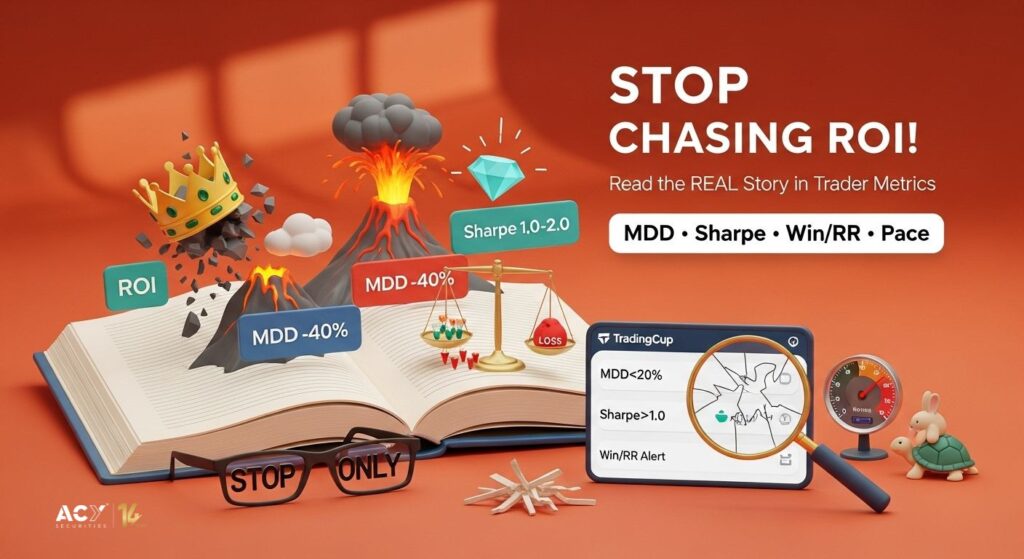
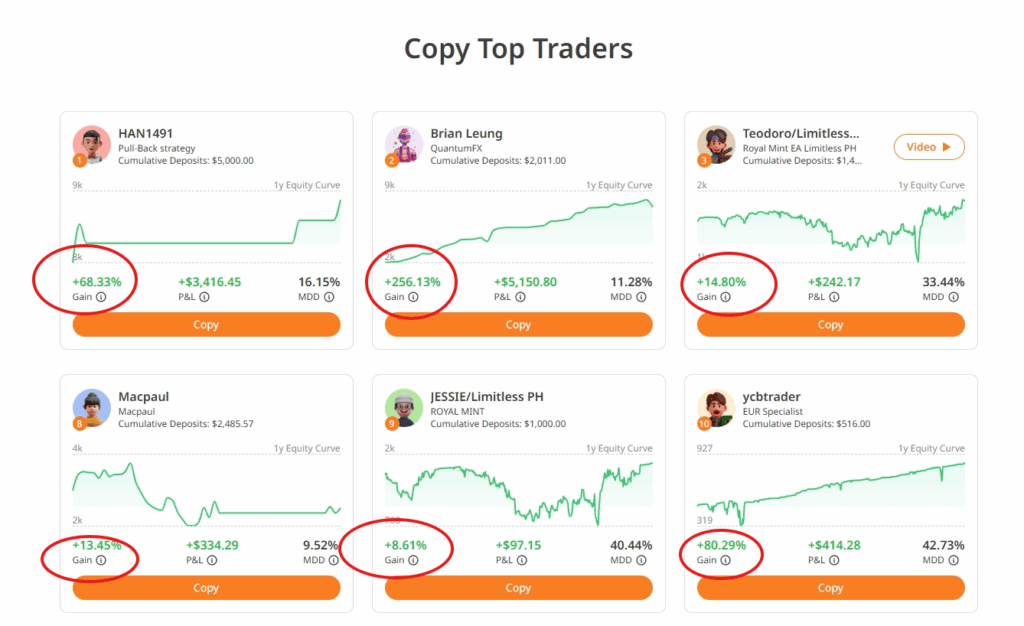
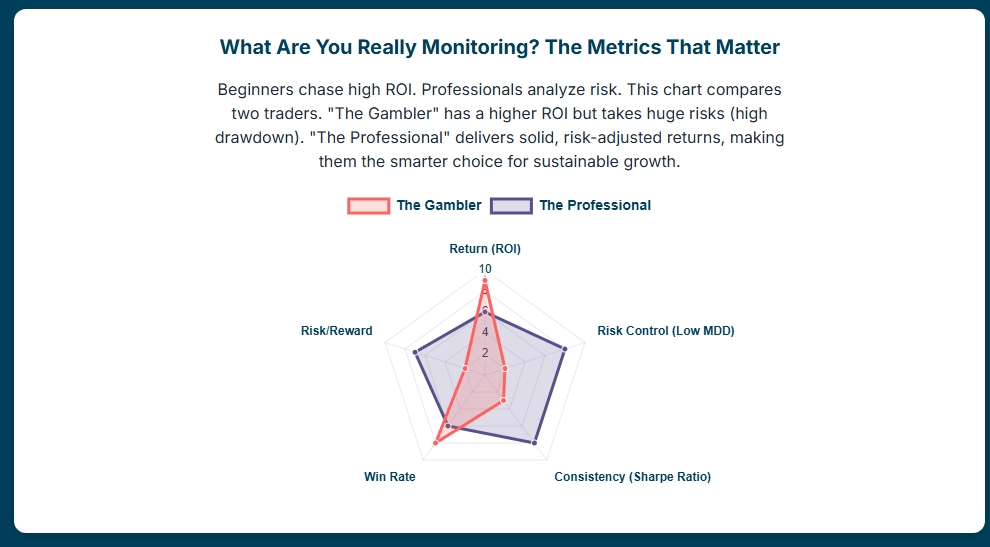
Most beginners make the mistake of focusing solely on the “Total Profit” or “ROI” figure. This is a vanity metric that tells you nothing about the journey taken to achieve it. A 100% return is meaningless if it came with a 90% drawdown that would have wiped out most investors. To truly understand a trader’s skill and risk profile, you must look under the hood at the metrics that matter. Think of these metrics as telling the story of the trader’s discipline and strategy. To get a full picture, it’s essential to learn how to read a trader’s performance data correctly.
- The Story Told by the Numbers:
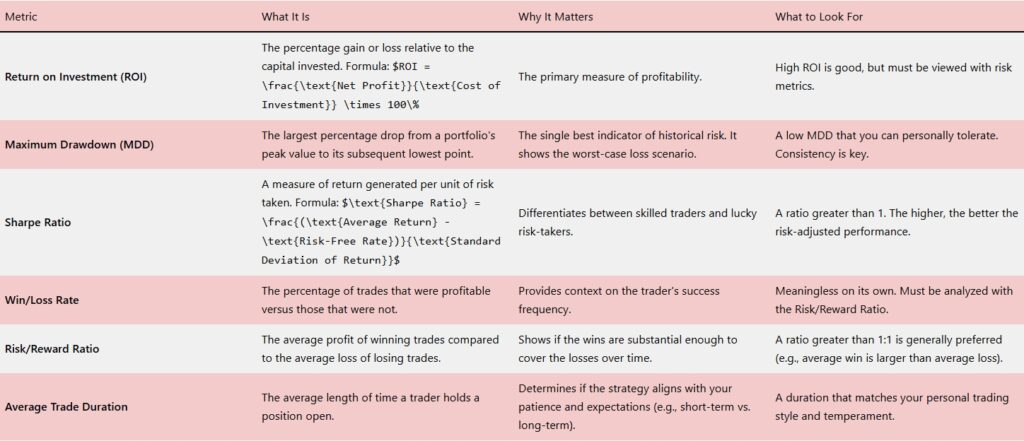
- Return on Investment (ROI): This is the headline of the story. It grabs your attention and tells you the ultimate outcome. But a headline alone doesn’t tell you if the story is a comedy, a drama, or a horror film.
- Maximum Drawdown (MDD): This is the story’s most terrifying chapter. MDD represents the largest peak-to-trough drop the trader’s account has ever experienced. It is arguably the single most important risk metric because it answers the question: “What is the most pain this strategy has inflicted in the past, and could I emotionally and financially survive it?” A low MDD is a hallmark of excellent risk control.
- Sharpe Ratio: This is the professional critic’s review of the story. It measures risk-adjusted return. A high Sharpe Ratio (typically above 1 is good, above 2 is very good) suggests the trader is generating high returns through skill, not just by taking on reckless amounts of risk. It helps you compare two traders with similar ROIs but different risk profiles.
- Win Rate & Risk/Reward Ratio: This is the character development. A high win rate (e.g., 90%) seems great, but if the average winning trade is $10 and the average losing trade is $100, that one loss will wipe out nine wins. This trader is a ticking time bomb. You need to see a healthy relationship between how often they win and the size of their wins versus their losses.
- Average Trade Duration & Frequency: This reveals the pacing of the story. Is the trader a scalper, opening and closing many trades within minutes? Or are they a swing trader, holding positions for days or weeks? Their rhythm must align with your own patience and temperament.
- Return on Investment (ROI): This is the headline of the story. It grabs your attention and tells you the ultimate outcome. But a headline alone doesn’t tell you if the story is a comedy, a drama, or a horror film.
To make this easier, here is a quick reference guide.
How Can Tools Help You Monitor Without Becoming a Screen Slave?
The goal is to work smarter, not harder. Modern copy trading platforms are designed with tools to help you automate your oversight, freeing you from the need for constant manual checks. The most powerful of these are automated alerts. For instance, you can set an alert to notify you if your account’s drawdown reaches a certain percentage (e.g., 10%) or if a trader’s overall drawdown approaches their historical MDD. This allows you to go about your day with peace of mind, knowing the system is watching for your pre-defined danger zones.
Effectively using these features is key. You can learn more about how to track copy trading performance and discover every tool you need to avoid copy trading mistakes to build a robust monitoring system.
Part 3: The Investor’s Mind: Adopting Elite Frameworks for Smarter Decisions
How Would Warren Buffett Monitor His Copy Trades?
While the Oracle of Omaha isn’t known for day trading Forex, his investment philosophy offers a profound and powerful framework for monitoring a copied trader. The common takeaway is to “invest for the long term,” but the deeper, more actionable insight is to stop thinking of yourself as copying trades and start thinking of yourself as investing in a business, with the trader’s strategy being that business.
This mental shift changes everything. Here’s how the Buffett approach applies:
- Due Diligence is Your Foundation (Researching the Business): Buffett is famous for his meticulous research into the fundamentals of a company before investing a single dollar. Your initial, deep analysis of a trader’s long-term metrics (MDD, Sharpe Ratio, consistency, strategy) is your due diligence. You are not just picking a name from a leaderboard; you are evaluating the viability and soundness of their “business model”.
- Stay Within Your Circle of Competence (Understanding the Business): Buffett famously avoids investing in businesses he doesn’t understand. While you don’t need to be a Forex expert, you absolutely must understand the basic principles of the trader’s strategy. Are they a trend-follower who buys into strength? A value investor who looks for oversold conditions? A scalper who thrives on tiny, frequent movements? Understanding their approach prevents you from panicking when their strategy behaves exactly as it should (e.g., a trend-follower holding through a minor pullback).
- Adopt a Long Holding Period (Owning the Business): Buffett’s favorite holding period is “forever”. For a copy trader, this translates to giving a well-researched trader the time and space to execute their strategy. It means avoiding knee-jerk reactions to a single losing day or week, which Buffett might call the market’s short-term “voting machine.” You’ve bought into their business for its long-term potential, or its “weighing machine” value.
- Conduct Periodic Reviews, Not Constant Scrutiny (Checking on the Business): Buffett does not watch the daily stock ticker. He periodically reviews the fundamental performance of his companies to ensure they are still sound investments. Your weekly and monthly monitoring sessions are your “quarterly earnings calls” with your chosen trader. You are not worried about the daily stock price (P&L); you are assessing if the business fundamentals (their core metrics like MDD, risk management, and strategy adherence) remain intact.
What Can “Trading in the Zone” Teach You About Watching Others Trade?
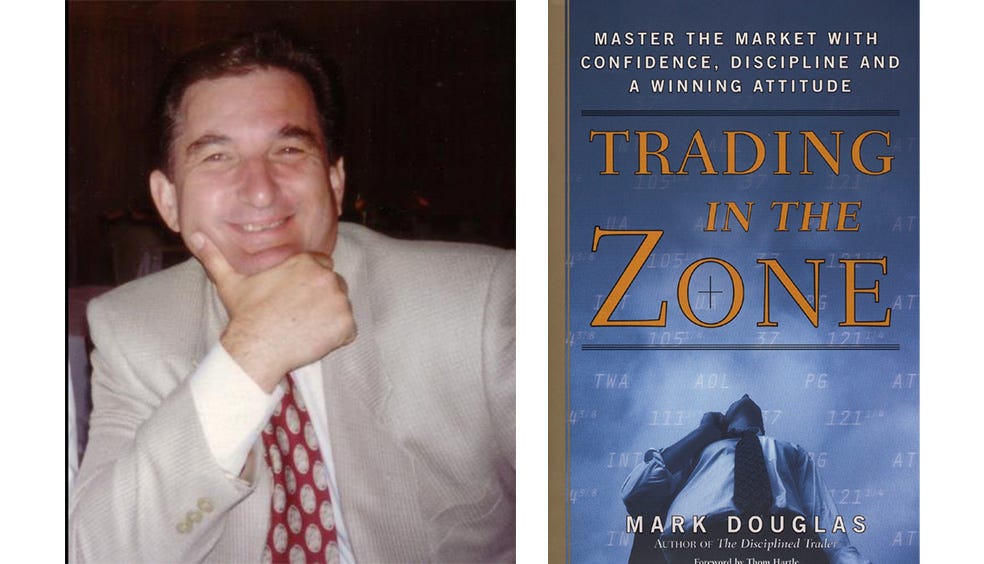
Mark Douglas’s legendary book, Trading in the Zone, is considered the bible of trading psychology. While written for active traders, its lessons are incredibly relevant to the emotional and psychological challenges of monitoring someone else’s trades. You may not be clicking the buttons, but you are riding the same emotional rollercoaster.
Here is how to apply a trader’s mindset to a copier’s reality:
- “Anything Can Happen”: Douglas’s first rule is to accept that any single trade can be a loser, regardless of how good the setup looks. For a copier, this means internalizing that even the best trader you follow will have losing trades. Your job during monitoring is not to be shocked by a loss, but to note it and move on, focusing on the larger pattern.
- “Think in Probabilities”: A successful trader knows they are not predicting the future; they are executing a strategy that has a positive statistical edge over a large number of trades. Your role as a monitor is to assess if the trader’s performance continues to align with the probabilities suggested by their historical data (their win rate, MDD, Sharpe ratio, etc.). You are a statistician, not a fortune teller.
- “There is a Random Distribution Between Wins and Losses”: A string of five losses does not automatically mean a trader’s strategy is broken, just as a string of five wins doesn’t mean they’ll never lose again. During your weekly and monthly reviews, your task is to determine if a recent losing streak is a normal part of their “random distribution” or if it has breached their historical drawdown limits, indicating a more serious problem.
- “The Market is Neutral”: The market does not know or care about you or the trader you are copying. It is not “out to get you”. The fear you feel during a drawdown is an internal reaction. A disciplined, scheduled monitoring process helps you remain objective and view market movements as neutral data points rather than personal attacks.
- “An Edge is an Indication of a Higher Probability”: You chose to copy a trader because their history demonstrated a statistical edge. Your ongoing monitoring is the process of confirming that this edge remains present in their trading. If their metrics begin to degrade consistently, it may be a sign their edge is disappearing.
How Can a Disciplined Routine Help You Trade Without Emotion?
The Stoic philosopher Epictetus taught, “You have power over your mind, not outside events. Realize this, and you will find strength”. This ancient wisdom is the key to managing the emotional turbulence of copy trading. Fear and greed are the twin enemies of any investor, and they are triggered by uncertainty and a lack of control.
A structured monitoring schedule is your greatest weapon against these emotions. By creating a routine, a daily glance, a weekly review, a monthly audit, you replace impulsive, emotional reactions with a calm, logical process. You are no longer reacting to the chaotic noise of the market; you are systematically collecting objective data. This data empowers you to make rational decisions based on facts, not feelings. This is precisely how you can keep emotions from taking over your copy trading journey.
Why Should Successful Copy Trading Feel… Boring?

This might be the most counterintuitive yet profound truth in copy trading. In a world of exciting market swings and thrilling assets like Gold, the goal should not be excitement. Successful, sustainable copy trading should feel somewhat boring.
- Predictability is Beautiful: A “boring” trader is one whose equity curve is a gentle, steady upslope, not a heart-pounding rollercoaster. Their returns are consistent and predictable, even if they aren’t spectacular on any given day.
- Discipline Over Drama: Exciting traders often take huge, impulsive risks that create drama but ultimately lead to ruin. A boring trader sticks to their plan with relentless discipline.
- Reduced Emotional Toll: A boring trader doesn’t cause sleepless nights or anxiety-fueled days. Your monitoring simply becomes a process of confirming that their steady, drama-free approach continues. If your copy trading experience feels like a constant adrenaline rush, you are likely with the wrong trader or have exposed yourself to far too much risk. The truth is, copy trading top performers should be boring if you’re doing it right.
Part 4: The Decisive Moment: Checklists, Triggers, and Final Thoughts
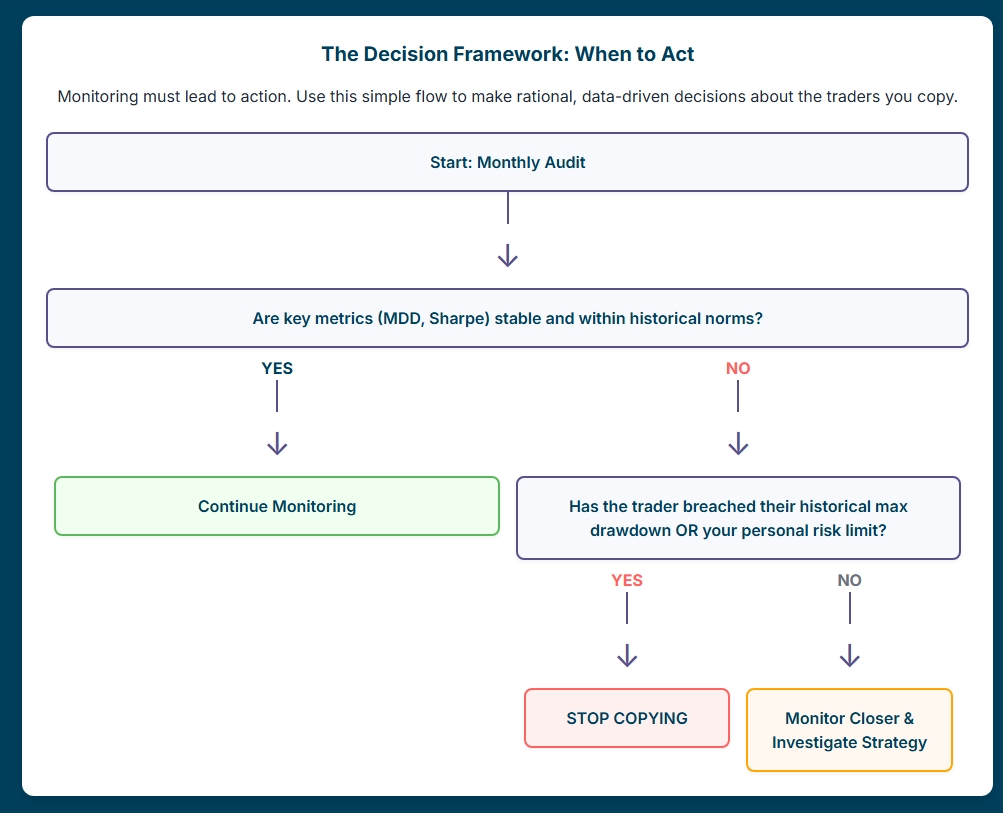
When is it Time to Break Up With Your Trader?
Monitoring is meaningless if it doesn’t lead to decisive action. Knowing when to stop copying a trader is just as important as knowing who to start copying. This decision should not be based on a whim or a single bad day. It should be triggered by the violation of clear, pre-defined rules.
- The Unmistakable Red Flags:
- Breach of Your Personal Risk Limits: This is the most important trigger. If a trader’s drawdown exceeds their historical MDD, that’s a concern. But more importantly, if their drawdown exceeds the maximum amount of capital you are personally willing to lose, it is time to stop copying, regardless of whether it’s “normal” for them. Your financial well-being comes first.
- Consistent Underperformance: This isn’t about one bad week. This is a sustained period (e.g., a full month or a quarter) where the trader is performing significantly worse than their own historical benchmarks. If their risk-adjusted returns have plummeted, it’s a sign that something is fundamentally wrong.
- Clear Strategy Deviation: During your reviews, you notice a fundamental change in their behavior. Perhaps a conservative, long-term trader suddenly starts scalping with high leverage, or their trade frequency doubles without explanation. This “strategy drift” is a major red flag that the “business” you invested in has changed its model without your consent.
- Breach of Your Personal Risk Limits: This is the most important trigger. If a trader’s drawdown exceeds their historical MDD, that’s a concern. But more importantly, if their drawdown exceeds the maximum amount of capital you are personally willing to lose, it is time to stop copying, regardless of whether it’s “normal” for them. Your financial well-being comes first.
Making this decision can be tough, but having a clear plan for when to switch traders is a crucial part of a mature investment strategy.
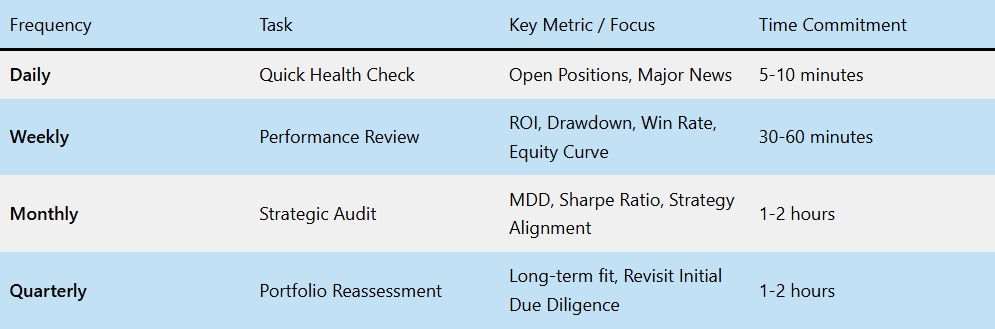
Your Ultimate Monitoring Checklist: A Practical Framework
To consolidate this entire process, here is a practical checklist you can use to structure your monitoring activities. This framework transforms abstract concepts into a concrete, actionable plan.
Conclusion: From Copycat to Disciplined Portfolio Manager
You likely came here asking a simple question: “How often should I check my account?” You are leaving with something far more valuable: a complete mental model for transforming yourself from a passive copycat into a disciplined portfolio manager.
Copy trading is not a lottery ticket; it is a sophisticated investment tool. The technology automates the execution, but it does not abdicate you of your role as the strategist. You, armed with a structured monitoring plan, an understanding of key metrics, and the emotional resilience taught by the masters, are the one in control.
Your journey to smarter investing doesn’t require you to become a full-time trader. It requires you to adopt a professional mindset. By implementing this framework, you shift your focus from the emotional highs and lows of daily profits to the objective, long-term health of your investment.
Ready to transform your copy trading from a gamble into a strategy? Start by implementing the 5-minute daily check-in tomorrow. Make your trading a little more “boring”, and a lot more successful.
Frequently Asked Questions
Can you lose all your money in copy trading?
Yes, it is absolutely possible to lose your entire investment in copy trading. This can happen if you copy a very high-risk trader, fail to set proper risk management controls like stop-losses on your account, or neglect to monitor your portfolio and let losses accumulate unchecked. This is why active monitoring and risk management are not optional, they are essential to protecting your capital.
What is a good monthly return for copy trading?
There is no single “good” monthly return, as it is always relative to the risk taken. A 20% monthly return achieved with a 50% maximum drawdown is far riskier and less desirable for most investors than a 5% monthly return achieved with a 5% maximum drawdown. Instead of chasing a specific percentage, focus on finding traders with strong risk-adjusted returns, indicated by a high Sharpe Ratio and a low, consistent MDD.
How do I choose a Forex trader to copy?
Look beyond the headline ROI. A robust selection process involves:
- Analyzing a long-term track record of at least 6-12 months.
- Prioritizing traders with a low Maximum Drawdown (MDD) that you can personally tolerate.
- Looking for a high Sharpe Ratio (ideally greater than 1).
- Ensuring they have a smooth, consistent equity curve, not an erratic one.
- Verifying that their trading style (e.g., scalping, swing trading) and risk level align with your own goals and patience.
Is copy trading really passive income?
No. While it is significantly less time-consuming than manual trading, it is not a source of passive income in the “set-it-and-forget-it” sense. It is an active investment strategy that requires disciplined oversight. Regular monitoring, periodic reviews, and making informed decisions about when to start or stop copying a trader are all active tasks required for success. Believing it is purely passive is one of the most common and costly mistakes beginners make.
What’s the difference between mirror trading and copy trading?
The terms are often used interchangeably today. Historically, “mirror trading” was an earlier form where an investor would replicate an entire trading strategy’s signals automatically. Modern “copy trading” is generally more flexible, allowing you to follow a specific trader rather than just a strategy, and often gives you more granular control over risk parameters like the size of each copied trade and individual stop-loss settings.
How many traders should I copy to be diversified?
There is no magic number, but a widely accepted best practice is to diversify by copying at least three to five traders. Crucially, these traders should employ different strategies (e.g., one trend-follower, one range trader, one scalper) and ideally trade different asset classes. This diversification spreads your risk, ensuring that a losing streak from a single trader does not have a devastating impact on your overall portfolio. Putting all your capital behind one trader is a high-risk strategy that should be avoided.
(Disclaimer: This article is for informational and educational purposes only. It should not be considered financial advice. Always conduct your own research and consult with a qualified financial advisor before making any investment decisions.)
For more detailed insights on developing daily trading routines, risk management, and effective position sizing strategies, explore additional articles on Trading Cup. Our trading experts at ACY and FinLogix are also great resources to guide your journey towards trading excellence.

Discover Our Best Trading Signals
At Tradingcup, you can browse through a selection of signals and review past performance before you decide to copy.
Become A Signal Provider
Share your expertise and become a signal provider so other traders can copy your trades.
Stay tuned to our blog for more trader spotlights and leaderboard updates.
Trading involves risks.
Visit the Tradingcup blog through the link below for more updates: https://www.tradingcup.com/learn
Related Copy Trading blogs:
- Understanding Market Liquidations: Liquidity Sweeps and Runs Explained
- 7 Essential Daily Habits of Successful Traders to Outperform Their Peers
- 10 Strategies You Can Copy off Our Best Copy Traders
- 5 Strategies Every Trader Can Master To Trade Better In A Trading Contest
- 2025 Copy Trading Scams Exposed: How to Spot Fraud
- A Swing Trading Strategy with an 83 Percent Win Rate and Low Drawdowns
- Forex Martingale Strategies Explained, The Good, The Bad and The Ugly
- Pyramiding Trading Tutorial – Pros & Cons & How to Use It