

“Gold is the money of kings; silver is the money of gentlemen; barter is the money of peasants; but debt is the money of slaves.” – Norm Franz
Gold has long been a cornerstone of financial markets, valued for its intrinsic worth, liquidity, and ability to hedge against economic uncertainty.
As one of the most traded assets in the world, Gold’s volatility and trending nature make it a favorite among professional traders, including top performers in competitions like the Trading Cup.
This article provides a practical framework for trading Gold in trending markets using a simple moving average strategy. Designed for adaptability, this strategy serves as a foundation for traders to build upon and refine.
Table of Contents
- Why Trade Gold? The Case for the Precious Metal
- The Simple Gold Trading Strategy
- The Three Moving Averages
- The Qualifying Gate
- Building a Solid Exit Strategy
- Avoiding Whipsaw Trades
- Real-World Examples
- Backtesting & Money Management
- Conclusion
- FAQs
Why Trade Gold? The Case for the Precious Metal
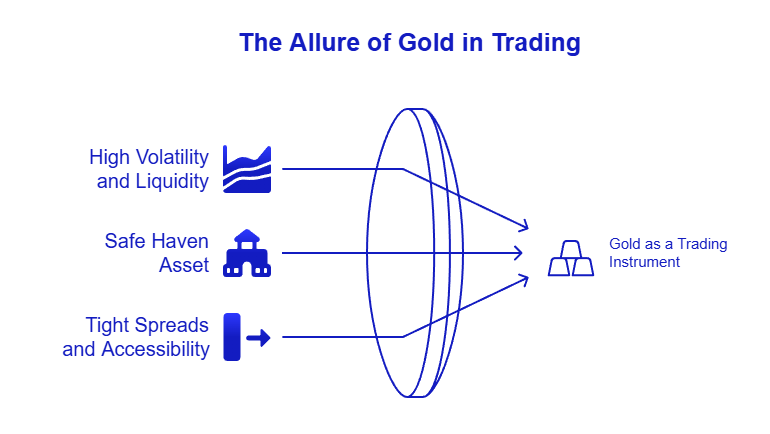
Gold’s popularity as a trading instrument stems from several key factors:
High Volatility and Liquidity: Gold prices are highly responsive to global events, such as geopolitical tensions or economic crises. For instance, during the lockdown period, Gold saw dramatic price swings, creating numerous trading opportunities.
Safe Haven Asset: In times of market uncertainty, investors flock to Gold as a hedge against inflation and currency devaluation.
Tight Spreads and Accessibility: With its deep liquidity, Gold offers tight spreads, making it an efficient asset to trade.
Gold’s dynamic nature has made it a focal point in copy trading like the Trading Cup, where traders frequently achieve remarkable returns by leveraging trending markets. For more insights into trading strategies employed by top performers, visit TradingCup.com.
The Simple Gold Trading Strategy
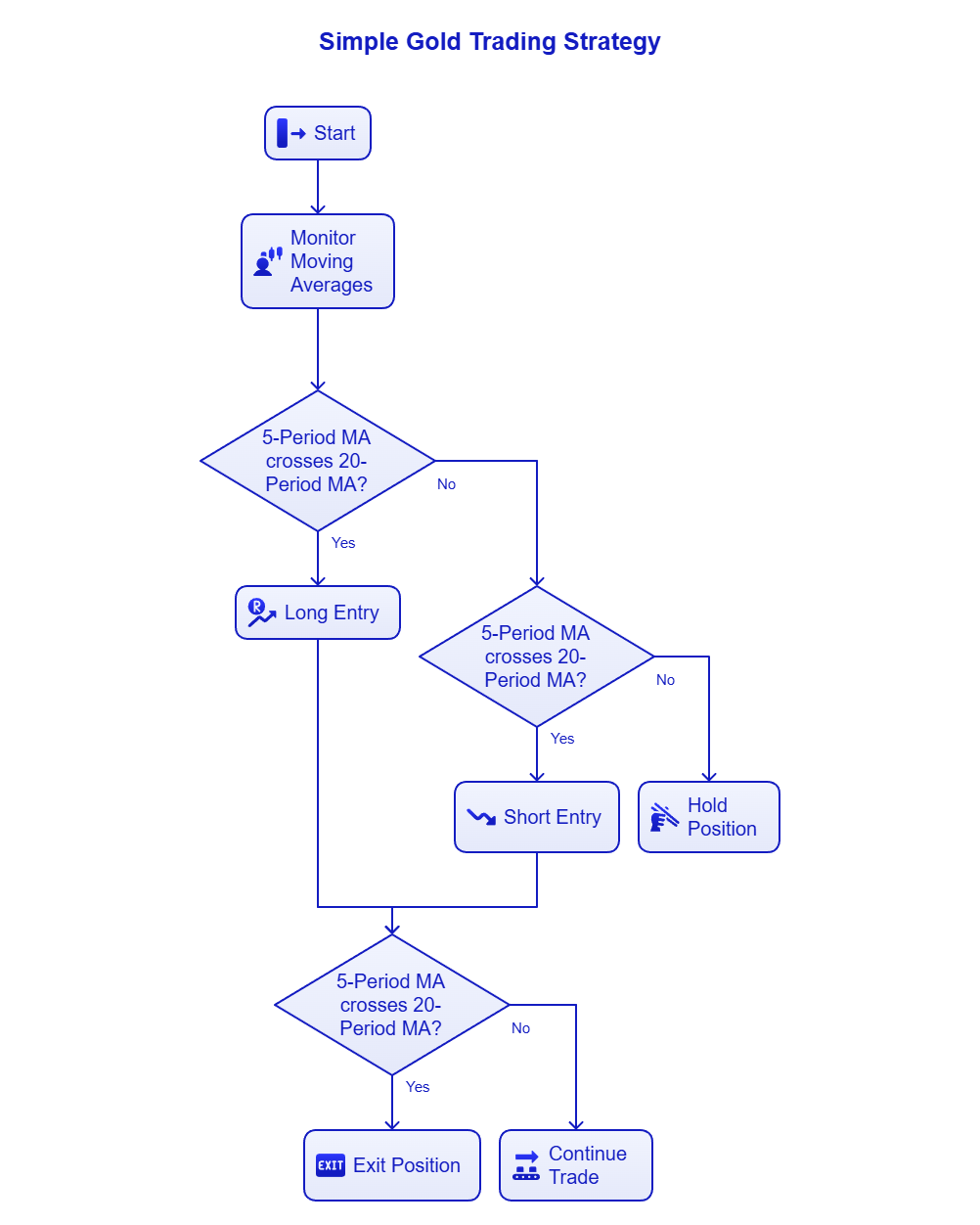
This strategy revolves around three moving averages (MAs): 5-period, 20-period, and 50-period MAs. These indicators help identify trends and generate entry/exit signals while filtering out low-quality trades.
The Three Moving Averages
5-Period MA (Fast): Tracks short-term price momentum.
20-Period MA (Medium): Captures intermediate trends.
50-Period MA (Slow): Serves as a long-term trend filter.
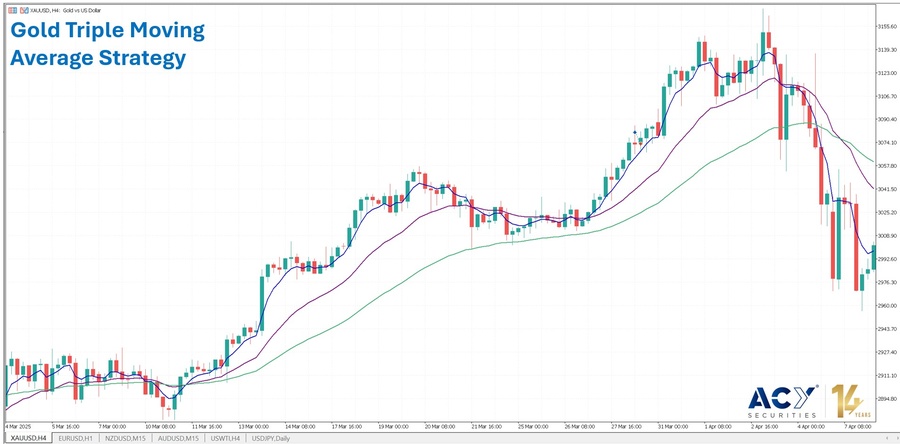
The strategy uses a moving average crossover system:
A long entry is triggered when the 5-period MA crosses above the 20-period MA.
A short entry occurs when the 5-period MA crosses below the 20-period MA.
Exit signals are generated when this crossover reverses.
The Qualifying Gate
The 50-period MA acts as a trend filter, ensuring trades align with the prevailing trend:
Enter long trades only when the price is above the 50-period MA and it is sloping upward.
Enter short trades only when the price is below the 50-period MA and it is sloping downward.
This filter helps avoid whipsaw trades during sideways markets, improving overall trade quality.
For more details on moving average strategies and their applications in forex and commodities trading, explore educational resources on ACY.com.
Building a Solid Exit Strategy
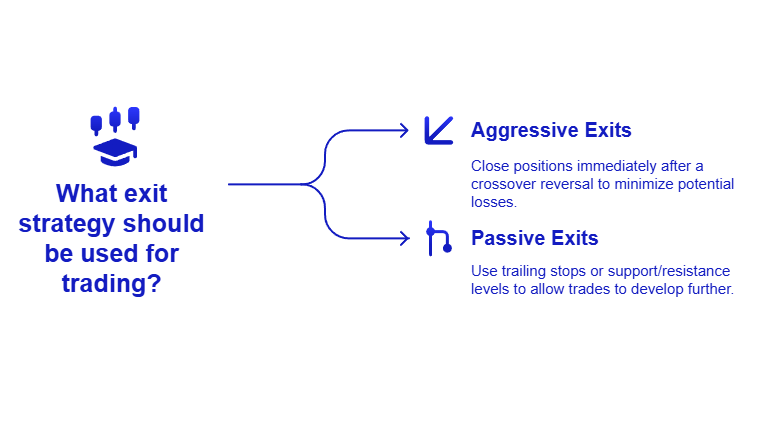
Exiting trades effectively is just as important as entering them. Since moving averages are lagging indicators, consider these exit methods:
Aggressive Exits: Close positions immediately after a crossover reversal.
Passive Exits: Use trailing stops or support/resistance levels to allow trades more room to develop.
For example:
If you enter long at $1,850 per ounce based on a crossover signal and prices rise to $1,900 before reversing, an aggressive exit locks in profits at $1,900.
A passive exit might hold until $1,920 if supported by broader market trends.
Learn more about exit strategies tailored for Gold trading and you’ll also find advanced tools for analyzing market trends.
Avoiding Whipsaw Trades
Whipsaw trades where prices oscillate without clear direction—are common in choppy markets. Using the 50-period MA as a qualifying gate reduces this risk:
Trades are only executed when they align with a clear trend direction.
This approach ensures you avoid unnecessary losses caused by volatile price movements that lack follow-through.
Consider combining this strategy with candlestick patterns or other indicators to minimize risks in volatile conditions. Visit this article for examples of how top traders integrate multiple tools into their strategies.
Real-World Examples
Winning Trade Example
Gold prices are trending upward above the 50-period MA.
The 5-period MA crosses above the 20-period MA at $1,850 per ounce.
You enter long at $1,850 with a stop-loss at $1,830.
Prices rise to $1,900 before reversing; you exit for a $50 profit per ounce.
Losing Trade Example
Gold prices are below the 50-period MA but begin consolidating.
The 5-period MA crosses above the 20-period MA at $1,800 per ounce.
You enter long at $1,800 but are stopped out at $1,780 due to lack of follow-through.
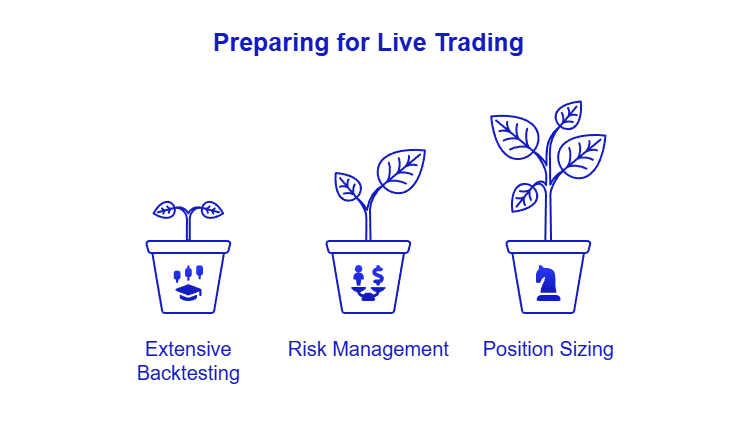
Backtesting & Money Management
Before implementing this strategy in live markets:
Conduct extensive backtesting with at least 200 completed trades across different market conditions.
Apply robust money management principles:
Risk no more than 1–2% of your total capital per trade.
Use position sizing techniques like pyramiding to scale into winning trades.
Backtesting not only validates your strategy but also helps identify areas for improvement. For demo account and tools that simplify backtesting and risk management analysis, visit ACY.com.
Conclusion
This simple Gold trading strategy framework combines moving averages with trend filtering to create an adaptable system for trending markets. Its simplicity makes it ideal for beginners while offering flexibility for experienced traders to refine further.
Key Takeaways:
Use three moving averages (5-, 20-, and 50-period) for trend identification and trade signals.
Apply the 50-period MA as a qualifying gate to filter out low-quality trades.
Backtest extensively and adopt sound money management practices.
Start testing this strategy on a demo account today!
FAQs
Q: What timeframes work best for this strategy?
A: This framework works well on hourly or daily charts where trends are more defined.
Q: How can I reduce risk further?
A: Combine this strategy with additional confirmation tools like RSI or MACD indicators to validate trade signals.
For more detailed insights on developing daily trading routines, risk management, and effective strategy refinement, explore additional articles on Trading Cup. External experts at ACY and FinLogix are also great resources to guide your journey towards trading excellence.
Discover Profitable Signals
At Tradingcup, you can browse through a selection of signals and review past performance before you decide to copy.
Share your expertise and become a signal provider so other traders can copy your trades.
Stay tuned to our blog for more trader spotlights and leaderboard updates.
Trading involves risks.
Visit the Tradingcup blog through the link below for more updates:
https://www.tradingcup.com/learn
Related Copy Trading blogs:
- Mastering High Win Rate Trading Strategy: 644 Trades and a 97% Gain
- Understanding Market Liquidations: Liquidity Sweeps and Runs Explained
- 7 Essential Daily Habits of Successful Traders to Outperform Their Peers
- 10 Strategies You Can Copy off Our Best Copy Traders
- 5 Strategies Every Trader Can Master To Trade Better In A Trading Contest
- 2025 Copy Trading Scams Exposed: How to Spot Fraud
- A Swing Trading Strategy with an 83 Percent Win Rate and Low Drawdowns
- Forex Martingale Strategies Explained, The Good, The Bad and The Ugly
- Pyramiding Trading Tutorial – Pros & Cons & How to Use It