Last Updated: May 30, 2025
This article is reviewed annually to reflect the latest market regulations and trends.
TL;DR
- To win the trading race and keep a steady pace
- Use tools to find your solid base.
- With Sharpe Ratio, risks you’ll trace,
- And check a trader’s stats and space.
- With data’s help, you’ll leave no case to chance or hasty chase.
Disclaimer: The information in this article is for educational purposes only and does not constitute financial, investment, or trading advice. Copy trading carries substantial risks, including the potential loss of your entire invested capital. Past performance of copied traders or strategies is not a reliable indicator of future results. You may be replicating high-risk trades, overleveraged positions, or strategies incompatible with your financial goals. Always conduct independent research into a trader’s historical performance, risk metrics, and strategy before copying them. Never invest funds you cannot afford to lose. Consult a licensed financial advisor to ensure copy trading aligns with your risk tolerance, financial objectives, and regulatory requirements in your jurisdiction. This article does not endorse specific traders, platforms, or strategies, and all trading decisions remain your sole responsibility.
“The chief task in life is simply this: to identify and separate matters so that I can say clearly to myself which are externals not under my control, and which have to do with the choices I actually control. Where then do I look for good and evil? Not to uncontrollable externals, but within myself to the choices that are my own.” – Epictetus
Avoid Copy Trading Mistakes
Copy trading presents a tantalizing promise: the ability to mirror the success of seasoned traders with just a few clicks. It’s billed as a shortcut to profitability, a way to democratize access to financial markets for everyone. Yet, for many, this promise quickly sours into a costly lesson. The path of a copy trader is littered with hidden pitfalls, from psychological biases to misleading platform designs that prey on our most human impulses.
Studies and historical data from the past decade paint a clear picture: many retail traders, despite the accessibility of these platforms, fall into predictable traps. They blindly follow popular figures, neglect basic risk management, and make emotionally charged decisions, leading to significant losses.
But what if you could navigate this landscape differently? What if you had a toolkit designed not just to help you trade, but to help you think and decide more effectively? This isn’t about finding a magic “buy” button. It’s about cultivating a disciplined, analytical approach that separates skilled strategy from sheer luck and protects your capital from avoidable errors. This is your comprehensive guide to the essential tools and mindset shifts required to transform from a hopeful follower into a savvy, data-driven investor.
What Exactly is Copy Trading?
Copy trading is a portfolio management strategy where you link a portion of your funds to an experienced trader’s account. When they execute a trade (buy, sell, or hold), your account automatically replicates that same action in real-time and in proportion to the amount you’ve allocated. It’s a feature offered by many online brokers and specialized social trading platforms.
The core appeal is its simplicity. You don’t need to spend years learning complex market analysis. Instead, you leverage the expertise of others. However, this very simplicity is a double-edged sword, as it can foster a dangerous sense of complacency.
Is Copy Trading Perfect For Beginners?
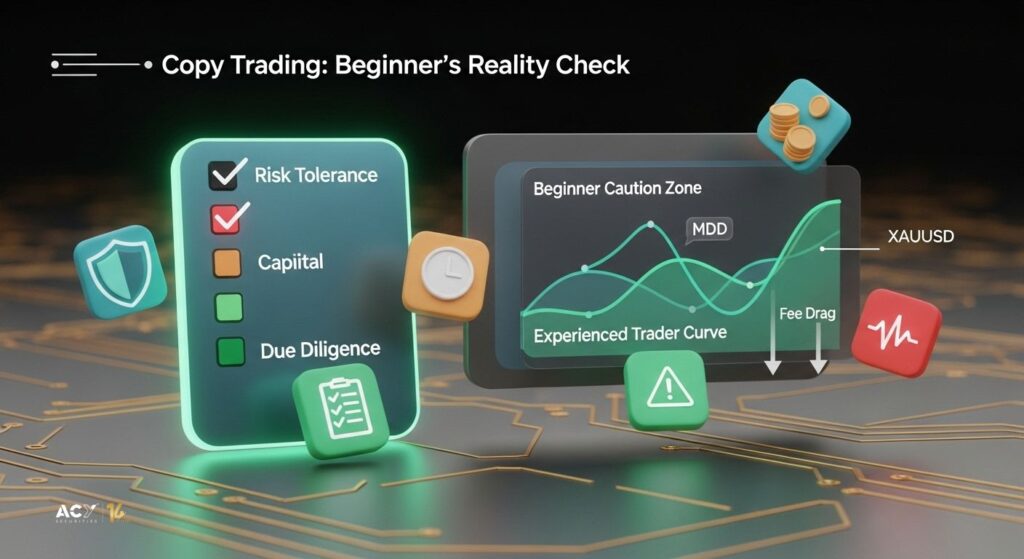
Copy trading isn’t for everyone. Before you jump in, consider this checklist (inspired by guidance from platforms like TradingCup):
- Are you comfortable with risk? All trading involves risk, and past performance is not indicative of future results. Even the best traders have losing streaks.
- Do you have capital you can afford to lose? Never invest money you can’t afford to part with.
- Are you looking for a passive investment? While copy trading is less hands-on, it still requires initial research and ongoing monitoring.
- Do you understand the fee structures? Subscription fees and performance fees can eat into profits.
- Are you patient? Quick riches are rare. Successful trading, even copying, often requires a long-term perspective.
- Are you willing to do your due diligence? Selecting a trader requires careful analysis of their history, strategy, and risk management.
- Do you have realistic expectations? Don’t expect to double your money overnight.
- Are you emotionally prepared for drawdowns? Seeing your account balance dip, even temporarily, can be stressful. Maximum Drawdown (MDD) is a key metric to understand.
If you’ve nodded along to these points with a clear understanding, then XAUUSD copy trading might be a suitable avenue for you to explore.
Why Are Tools So Crucial for Avoiding Copy Trading Mistakes?
Would you build a house without a hammer and saw? Would a surgeon operate without a scalpel? Of course not. Tools are instruments of precision that remove guesswork and enforce discipline. In copy trading, where your own money is on theline, relying on gut feelings or surface-level information is a recipe for disaster.
The data is unequivocal: psychological biases are the primary drivers of poor outcomes in copy trading.
- Herding and Social Proof: Platforms are often designed with leaderboards that amplify the popularity of certain traders, explaining up to 76.7% of their following. This creates a powerful urge to “follow the crowd” without independent analysis.
- Overconfidence and Greed: Seeing a trader’s high ROI can lead to overconfidence, causing you to skip crucial risk management steps like setting a stop-loss or allocating too much capital to a single person.
- Fear and Impatience (FOMO): The fear of missing out (FOMO), often amplified by social media, can lead to impulsive decisions, such as copying a trader at the peak of their performance or jumping ship after a minor downturn.
Tools are your defense against these biases. They force you to be objective. They replace emotional reactions with data-driven evaluations, helping you see past the hype and assess the true quality and risk of a strategy.
Your Essential Toolkit for Smarter Copy Trading
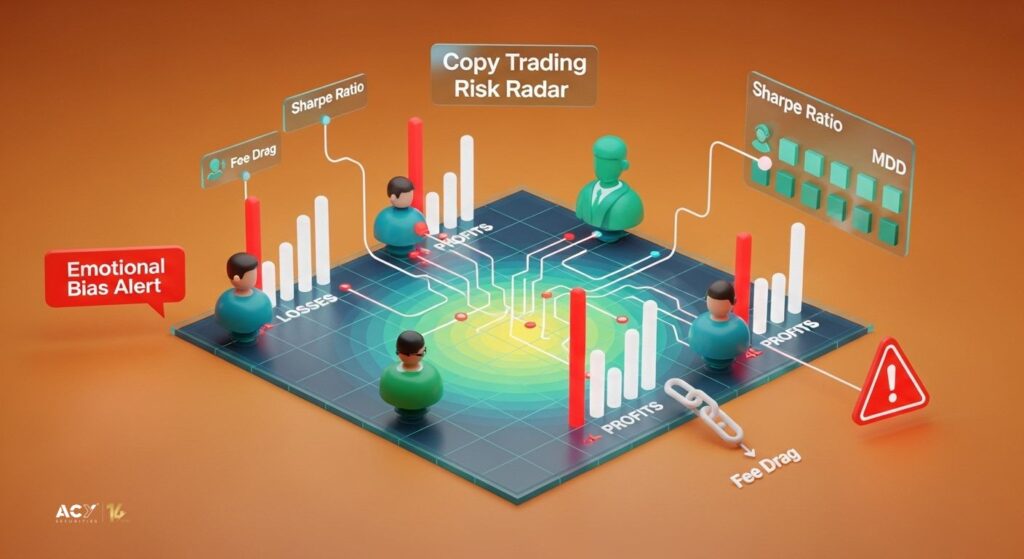
Here are the specific tools and concepts you must master to navigate the copy trading world successfully.
1. The Litmus Test: Understanding the Sharpe Ratio
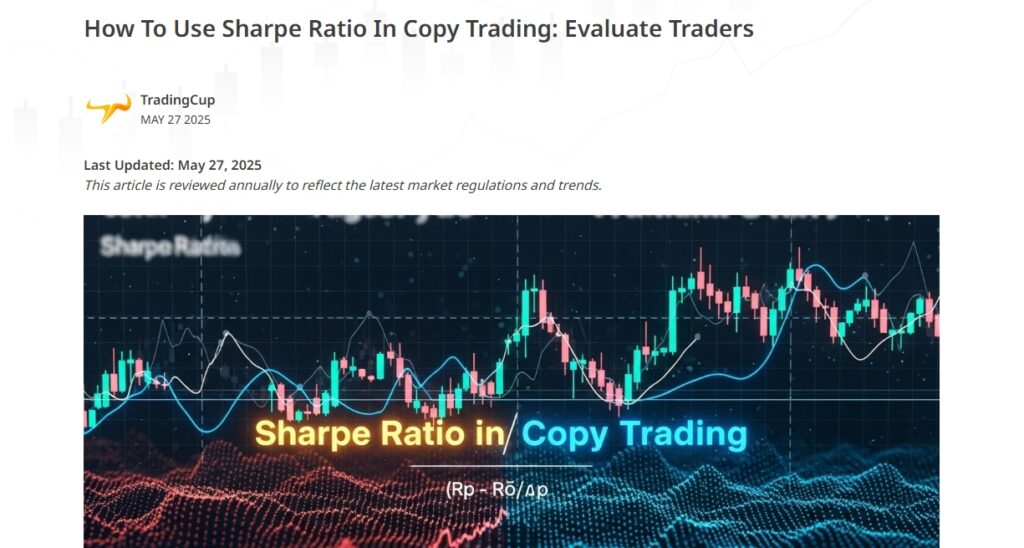
What if you could measure how much return a trader generates for every unit of risk they take? That’s precisely what the Sharpe Ratio does. It’s one of the most critical metrics for evaluating a trader because it contextualizes their performance. A high return is meaningless if it came with a stomach-churning amount of volatility and risk.
How it works: The Sharpe Ratio is calculated by taking the trader’s average return, subtracting the risk-free rate (like the return on a government bond), and dividing that by the standard deviation of their returns (a measure of volatility).
How to use it:
- A higher Sharpe Ratio (generally above 1.0) is better. It suggests a trader is efficient at generating returns without taking on excessive risk.
- A low or negative Sharpe Ratio indicates a poor risk-adjusted performance.
- Compare the Sharpe Ratios of different traders. A trader with a 50% annual return and a Sharpe Ratio of 0.8 is likely taking on far more risk than a trader with a 30% return and a Sharpe Ratio of 1.5. The second trader is the more skilled risk manager.
2. Beyond ROI: How to Master Platform Filters
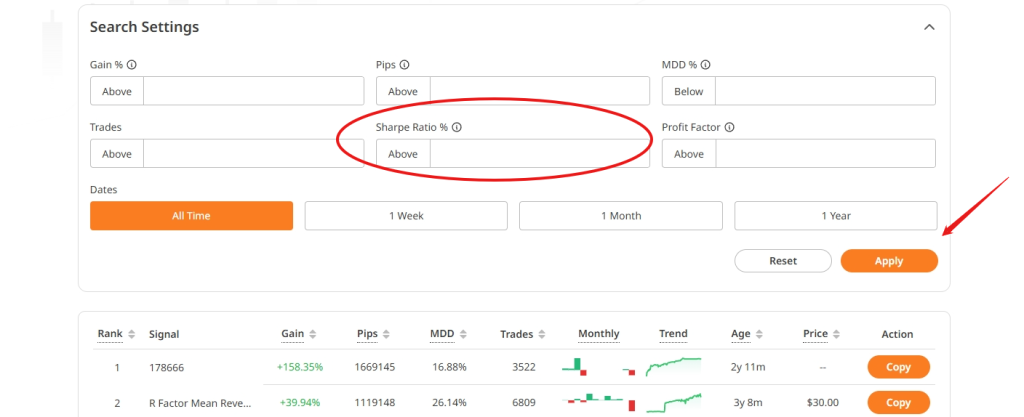
Every reputable copy trading platform provides a set of filters to help you sift through traders. Your ability to use these filters effectively is what separates you from those who just click on the first face on the leaderboard.
Go beyond the default “Most Popular” or “Highest ROI” sort functions. Create a filtering model based on what really matters for long-term, sustainable growth:
- Maximum Drawdown (MDD): This is arguably the most important risk metric. It shows the largest peak-to-trough drop a trader’s portfolio has experienced. A high MDD is a massive red flag, indicating they may not use stop-losses or manage risk well.
- Win Rate: The percentage of trades that are closed with a profit.
- Average P/L (Profit and Loss): This shows the average profit or loss per trade. Compare this to their win rate. A trader with a 90% win rate sounds great, but if their average loss is ten times their average win, they are on a fast track to ruin.
- Trading History: Look for traders with at least 6-12 months of consistent history. Short-term profitability can be pure luck.
- Assets Traded: Ensure their traded assets (e.g., volatile crypto vs. stable forex pairs) align with your own knowledge and risk appetite.
3. Choosing Your Arena: How to Compare Copy Trading Platforms
Not all platforms are created equal. Some are designed to encourage high-volume, risky trading through manipulative “gamified” features, while others prioritize transparency and risk management tools.
When evaluating a platform like TradingCup, or comparing it to alternatives like eToro or ZuluTrade, consider these factors:
- Transparency of Fees: Are there hidden costs like withdrawal fees, inactivity fees, or spread markups that will eat into your returns? Obscured fees are a common issue.
- Quality of Trader Metrics: Does the platform provide all the deep-dive metrics discussed above (MDD, Sharpe Ratio, etc.)? Or does it only show vanity metrics like ROI and number of followers?
- Risk Management Tools for Copiers: Can you set your own stop-loss for the entire copy relationship? Can you customize the copy multiplier? Can you pause the copy without closing all trades? Robust user-side controls are essential.
- Regulatory Compliance: Is the platform regulated by a reputable financial authority? This provides a layer of investor protection against fraud.
- Ranking Algorithm: How does the platform rank its top traders? A platform like TradingCup, for example, uses a sophisticated system that should be understood by its users. Is it based purely on profit, or does it incorporate risk management metrics?
4. Reading the Economic Weather: Using Finlogix for Market Sentiment
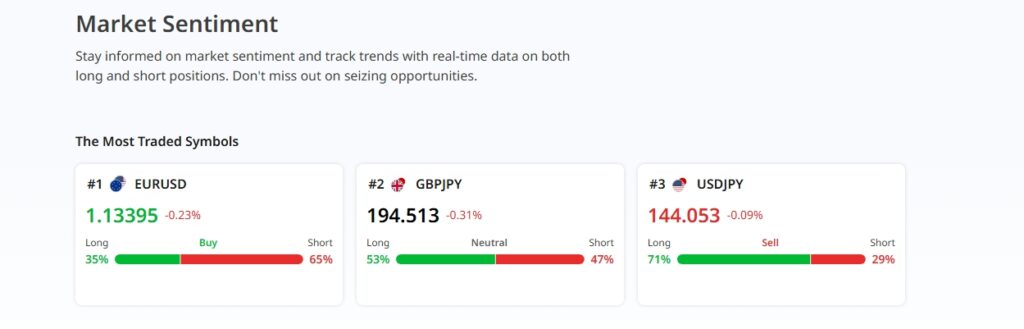
Even if you’re copying someone else, you are not absolved from understanding the broader market environment. Major economic news can trigger massive volatility that can impact even the best strategies.
A tool like the Finlogix economic calendar is your early warning system. It lists upcoming economic events, their scheduled release times, and their expected market impact (often rated as low, medium, or high).
How to use it:
- Plan Ahead: Before the week starts, check the calendar for high-impact events (like NFP reports, interest rate decisions, or CPI data) related to the assets your copied trader trades.
- Manage Risk Around News: If a major event is imminent, you might consider pausing your copy relationship or reducing your allocation temporarily to avoid unpredictable spikes.
- Assess Market Sentiment: Finlogix also offers sentiment tools that show the percentage of traders who are long (buying) or short (selling) on certain assets. Extreme sentiment in one direction can often be a contrarian indicator, signaling a potential reversal.
5. The Art of Selection: Who to Copy and How to Read Their Performance
Now, let’s put it all together. Selecting a trader is a process of elimination based on hard data, not a popularity contest.
Here’s a step-by-step guide using the TradingCup platform as an example:
- Filter, Don’t Follow: Ignore the main leaderboard. Go straight to the advanced filters.
- Set Your Non-Negotiables:
- Set a Maximum Drawdown you are comfortable with (e.g., under 25%).
- Set a minimum trading history (e.g., over 6 months).
- Filter for a minimum number of trades to ensure a reliable sample size.
- Set a Maximum Drawdown you are comfortable with (e.g., under 25%).
- Analyze the Survivors: From the filtered list, analyze each candidate:
- Look at their full performance graph. Is it a smooth, steady upward curve, or is it jagged and erratic?
- Review their monthly performance. Are they consistently profitable, or did one huge month skew their total ROI? Many platforms provide monthly reviews which are invaluable for this.
- Check their open trades. Are they holding onto large losing positions? This is a sign of poor discipline.
- Look at their full performance graph. Is it a smooth, steady upward curve, or is it jagged and erratic?
- Diversify: Never put all your eggs in one basket. It is crucial to diversify your copied strategies across several traders who use different approaches and trade different assets. This reduces your exposure to the risk of any single trader failing.
6. The Breakup: When Is It Time to Switch Traders?
Sticking with a strategy is important, but loyalty has its limits. You need predefined rules for when to stop copying a trader to avoid holding on emotionally while your capital dwindles.
- Breaching Your MDD Threshold: If you decided your maximum tolerable drawdown is 25%, and the trader hits that mark, it’s time to cut ties. Don’t wait and hope for a recovery.
- A Shift in Strategy: Does the trader suddenly start using much higher leverage? Are they trading different assets you’re not comfortable with? A change in their established pattern is a warning sign.
- Prolonged Underperformance: Every trader has losing months. But if they experience several consecutive losing months or a steady decline over a quarter, it may indicate their edge is gone or they are struggling emotionally.
7. The Finish Line: Know When to Stop Trading and Take Profits

Greed is a powerful and destructive emotion in trading. It’s what keeps people in the market long after they’ve met their goals, often leading them to give back all their profits and more.
Before you even start, you must define what success looks like for you.
- Set Clear Profit Targets: What is your goal? A 20% annual return? A specific dollar amount?
- Have an Exit Plan: When you reach your target, what will you do? Will you withdraw the profits? Will you stop trading for the month? Having a plan and sticking to it is the ultimate form of discipline. A process-oriented approach that prioritizes capital preservation is far more sustainable than a mindset focused only on immediate profits.
8. Telegram Signals Scams: How to Avoid Getting Burned

The promise of easy money attracts scammers. Be extremely wary of “guaranteed profit” signals, especially on platforms like Telegram for assets like XAU/USD (Gold). These are often pump-and-dump schemes or are run by individuals with no verifiable track record.
How to stay safe:
- Trust On-Platform Data Only: A trader’s verified performance on a regulated platform is the only track record that matters. Ignore screenshots of profits sent via social media.
- If It Sounds Too Good to Be True, It Is: No legitimate trader can guarantee profits. The market is inherently unpredictable.
- Understand the Risk: Forex is a volatile market. Signals that promise huge gains often involve massive leverage, putting your entire capital at risk.
9. Master Your Risk: Calculating P/L and Using the Multiplier
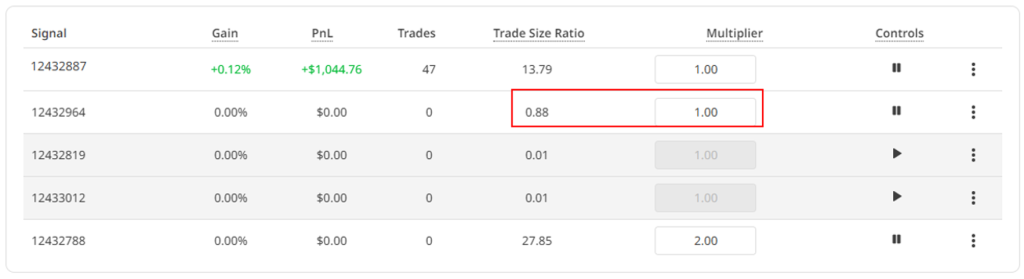
Platforms provide tools to help you manage how much risk you take on a per-trader basis. Two key concepts are the suggested minimum balance and the multiplier.
- Suggested Minimum Balance: This is the amount the platform recommends you have to copy a trader safely, based on their historical drawdown and trade size. Copying with less than the minimum is extremely risky.
- The Multiplier: This setting controls how your trades are sized relative to the trader you’re copying.
- A
1xmultiplier means if the trader risks 1% of their account on a trade, you risk 1% of your allocated capital. - A
2xmultiplier would mean you take on double their risk (and potential reward). - A
0.5xmultiplier means you take on half their risk.
- A
Unless you are an expert, it is almost always advisable to stick with a 1x multiplier or lower. Using a higher multiplier to chase profits is a form of greed that often leads to catastrophic losses.
The Elon Musk Mindset: Deconstructing Success with First-Principles Thinking

Elon Musk, the force behind SpaceX and Tesla, hasn’t spoken directly about copy trading. But his core philosophy for problem-solving—first-principles thinking—is directly applicable and incredibly powerful here.
Reasoning by analogy means doing something because it’s what other people are doing (e.g., “This trader is popular, so I’ll copy them”). This is the default mental model for most and a primary cause of copy trading errors.
Reasoning from first principles is the opposite. It’s the practice of boiling things down to their fundamental truths and reasoning up from there. When Musk wanted to build rockets, he didn’t just accept their astronomical price tag. He asked, “What are rockets made of?” He found they were made of aluminum alloys, titanium, copper, and carbon fiber. He then calculated the raw material cost and realized he could build rockets for a fraction of the price by bringing manufacturing in-house.
How to apply this to copy trading?
- Don’t just accept a high ROI as “good.” Break it down. What are the first principles of a good trading strategy? They include consistent profitability, managed risk, a high win rate, and resilience in different market conditions. A high ROI could be the result of a single lucky, high-leverage trade that will never be repeated.
- Deconstruct the trader’s success. Instead of just seeing their profit percentage, use tools to look at the raw materials of their strategy: their maximum drawdown, average trade duration, risk-to-reward ratio per trade, and the assets they trade.
- Build your decision from the ground up. Use the fundamental truths you uncover to decide if a trader’s strategy aligns with your specific risk tolerance and financial goals, rather than blindly accepting their popularity as a sign of quality.
By adopting a first-principles mindset, you shift from being a passive follower to an active analyst. You build your own conviction based on evidence, not hype.
10 Lessons from the “Way of the Turtle”
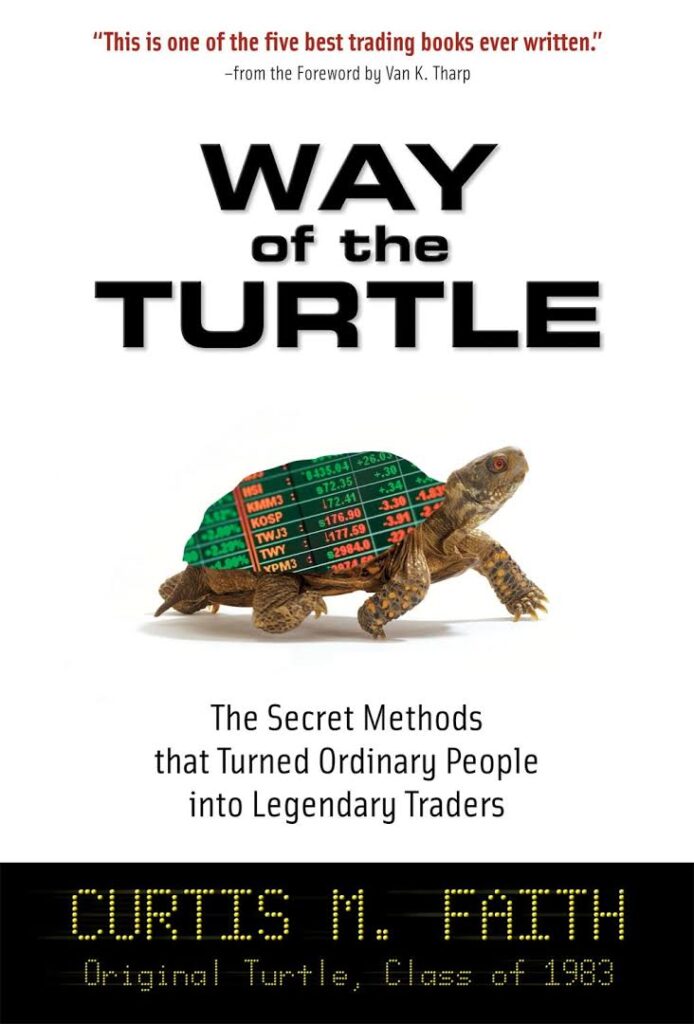
In the 1980s, famous commodity trader Richard Dennis made a bet with his partner, William Eckhardt. Dennis believed great traders could be made, not just born. He recruited a group of novices, called them the “Turtles,” taught them his exact mechanical trading rules, and gave them millions to trade. They went on to earn over $175 million in five years.
Curtis M. Faith, one of the most successful Turtles, detailed the experience in his book “Way of the Turtle.” Its lessons are timeless and directly combat the psychological mistakes outlined in the research.
- Trade with an Edge: The Turtles had a system that was proven to be profitable over the long run. Don’t copy a trader unless you, through your own analysis, can verify they have a quantifiable edge.
- Manage Risk Above All Else: The first job of a trader is not to make money, but to manage risk and stay in the game. Using tools like stop-losses and correct position sizing is paramount.
- Be Consistent: The Turtles had to follow the rules without deviation. If you’ve chosen a good trader, trust the process. Don’t jump in and out based on fear or impatience.
- Keep It Simple: The Turtle system was based on simple, clear rules. The most effective trading strategies are often the most straightforward. Avoid traders with overly complex or secretive methods.
- Think in Probabilities, Not Predictions: No one can predict the future. Good trading is about putting the odds in your favor over a large number of trades, not being right every single time.
- Don’t Get Attached to the Past: Don’t let past profits make you overconfident or past losses make you fearful. This is known as “anchoring” and it prevents you from adapting to current market conditions.
- Losses are the Cost of Business: Every trader has losing trades. View them as a business expense, not a personal failure. This mindset helps remove emotion.
- Know Thyself: The biggest enemy in trading is often yourself. The Turtle experiment proved that emotional and psychological strength are the most important ingredients for success.
- Ignore the Crowd: The Turtles often had to take positions that were contrary to popular opinion. The discipline to follow your system, even when it feels uncomfortable, is crucial. This is the direct antidote to the herding behavior seen in copy trading.
- Execute Flawlessly: A plan is useless if it’s not followed. The tools in this guide create your plan; your discipline is what ensures its execution.
Trade Smarter, Not Harder
Over the last decade, the story of copy trading has been one of immense opportunity shadowed by preventable mistakes. The errors of blindly following, managing risk poorly, and letting emotion dictate decisions are not new, but they are consistently damaging. They are fueled by psychological biases and amplified by platform designs that prioritize engagement over investor well-being.
But the future of your trading journey does not have to repeat the past. By adopting a data-driven approach, embracing the mindset of a first-principles thinker, and systematically using the tools outlined here, you can fundamentally change your odds.
Move beyond the leaderboards. Question the hype. Use the Sharpe Ratio to understand risk, master platform filters to find true quality, and use economic calendars to see what’s on the horizon. Learn from the disciplined, mechanical approach of the Turtles and build your strategy on a foundation of logic and evidence.
This is how you transform copy trading from a gamble into a calculated investment strategy. This is how you protect your capital, make smarter decisions, and finally begin to trade with the confidence that comes from being truly prepared.
Frequently Asked Questions (FAQ)
Q1: What is the most common mistake in copy trading?
The most common mistake is blindly following popular traders without conducting thorough due diligence. Many users are influenced by high rankings on leaderboards and prioritize short-term profitability over more critical, long-term metrics like risk-adjusted returns or maximum drawdown.
Q2: How do psychological biases like FOMO affect copy trading?
Fear of Missing Out (FOMO) causes impulsive decision-making, such as copying a trader who has just had a significant winning streak or investing in highly volatile assets that are trending on social media. This often leads to buying at the peak and suffering losses when the trend inevitably reverses.
Q3: Why is risk management so important in copy trading?
Even if you are copying an expert, their risk tolerance may not match yours. Failing to set your own risk management safeguards, like stop-loss orders or proper allocation limits, means you are completely exposed to their decisions. A single bad trade from the trader you’re copying could lead to substantial losses in your own account if you haven’t set up your own defenses.
Q4: Can platform design really lead me to make bad decisions?
Yes. Platforms often use “gamified” elements like leaderboards to incentivize high trading volumes, which benefits the platform via fees but may not align with safe investing. These features can encourage herding behavior and promote traders who take excessive risks to achieve high, but often unsustainable, returns.
Q5: What is the single most important metric to look at when choosing a trader to copy?
While no single metric tells the whole story, the Maximum Drawdown (MDD) is arguably the most crucial for risk assessment. It tells you the most an investor would have lost by following that trader. A low MDD is a strong indicator of a trader’s ability to manage risk effectively.
(Disclaimer: This article is for informational and educational purposes only. It should not be considered financial advice. Always conduct your own research and consult with a qualified financial advisor before making any investment decisions.)
For more detailed insights on developing daily trading routines, risk management, and effective position sizing strategies, explore additional articles on Trading Cup. Our trading experts at ACY and FinLogix are also great resources to guide your journey towards trading excellence.

Discover Our Best Trading Signals
At Tradingcup, you can browse through a selection of signals and review past performance before you decide to copy.
Become A Signal Provider
Share your expertise and become a signal provider so other traders can copy your trades.
Stay tuned to our blog for more trader spotlights and leaderboard updates.
Trading involves risks.
Visit the Tradingcup blog through the link below for more updates: https://www.tradingcup.com/learn
Related Copy Trading blogs:
- Understanding Market Liquidations: Liquidity Sweeps and Runs Explained
- 7 Essential Daily Habits of Successful Traders to Outperform Their Peers
- 10 Strategies You Can Copy off Our Best Copy Traders
- 5 Strategies Every Trader Can Master To Trade Better In A Trading Contest
- 2025 Copy Trading Scams Exposed: How to Spot Fraud
- A Swing Trading Strategy with an 83 Percent Win Rate and Low Drawdowns
- Forex Martingale Strategies Explained, The Good, The Bad and The Ugly
- Pyramiding Trading Tutorial – Pros & Cons & How to Use It