Last Updated: April 30, 2025
This article is reviewed annually to reflect the latest market regulations and trends.

TL;DR:
- Forex Day Trading: Buying & selling currencies within the same day to profit from small price movements, leveraging high market liquidity.
- High Failure Rate: Most fail due to poor risk management (especially with small accounts), emotional trading (fear/greed), and lack of a disciplined strategy.
- Path to Profitability: Requires immense discipline, consistent strategy application (often after trying many), emotional mastery, and significant time (months/years).
- Copy Trading Benefits: Allows beginners to potentially leverage expert day trader strategies, reduce emotional decision-making, learn by observing, and manage information overload.
- Informed Choices: Compare traders like SpaceX, Macpaul, and EUR Specialist based on performance, risk, and style before deciding who to copy trade.
Disclaimer: The information in this article is for educational purposes only and does not constitute financial, investment, or trading advice. Copy trading carries substantial risks, including the potential loss of your entire invested capital. Past performance of copied traders or strategies is not a reliable indicator of future results. You may be replicating high-risk trades, overleveraged positions, or strategies incompatible with your financial goals. Always conduct independent research into a trader’s historical performance, risk metrics, and strategy before copying them. Never invest funds you cannot afford to lose. Consult a licensed financial advisor to ensure copy trading aligns with your risk tolerance, financial objectives, and regulatory requirements in your jurisdiction. This article does not endorse specific traders, platforms, or strategies, and all trading decisions remain your sole responsibility.

“The game of speculation is the most uniformly fascinating game in the world. But it is not a game for the stupid, the mentally lazy, the person of inferior emotional balance, or the get-rich-quick adventurer. They will die poor.”
– Jesse Livermore
Paul Tudor Jones: How a Macro Maestro Picks His Trades
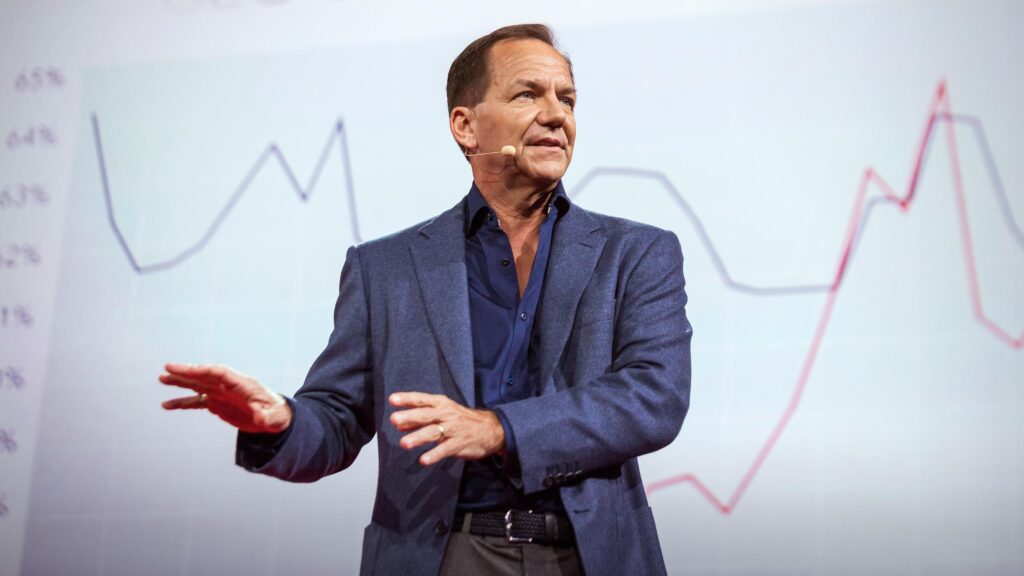
Paul Tudor Jones (PTJ), another hedge fund titan famous for his macro calls (like predicting the 1987 crash) and longevity, approaches trade selection with a blend of broad analysis and precise execution. While operating on a larger scale, his core principles offer vital lessons for Forex day traders navigating volatile intraday markets:
- Start with the Big Picture (Macro View): PTJ first analyzes the global macroeconomic landscape – interest rates, economic growth trends, inflation, political events. This forms his overall market bias or theme. Even for a day trader, understanding the underlying daily or weekly sentiment driven by macro factors can provide crucial context for intraday trends.
- Listen to the Market (Technical Analysis): He believes “prices move first and fundamentals come second.” He uses technical analysis – price action, chart patterns, and key indicators like the 200-day moving average – to confirm his macro view and time entries. A price move against the prevailing fundamental view is a crucial signal. This mirrors how successful day traders use shorter-term technicals to execute trades within the context of the immediate price action.
- Seek Asymmetry (The 5:1 Rule): This is a core filter. PTJ actively looks for trades where the potential reward is at least five times greater than the potential risk (a 5:1 risk/reward ratio). This allows profitability even if he’s wrong more often than right. For Forex day traders dealing with potentially lower win rates due to market noise, seeking setups with significantly higher reward potential than risk is crucial for long-term profitability and surviving inevitable losing streaks. If a setup doesn’t offer this asymmetry, he likely passes.
- Hunt for Turning Points (Contrarian Approach): While many preach trend following, PTJ believes the “best money is made at the market turns.” He looks for extremes in market sentiment and positioning to identify potential tops or bottoms where the risk/reward is skewed heavily in his favor. While risky for novices, understanding when intraday sentiment might be overextended can present high-reward opportunities for skilled day traders.
- Define Risk Before Entry (Play Defense): His obsession is risk control. “Play great defense, not great offense.” Before entering, he knows exactly where his stop-loss (his “uncle point”) will be to define the maximum potential loss on the idea. This strict risk definition filters out trades where risk cannot be tightly managed. This directly addresses the primary reason most day traders fail – poor risk management. Applying PTJ’s defensive mindset before every single trade is non-negotiable for survival.
- Be Flexible and Adapt: “Every day I assume every position I have is wrong.” If market action contradicts his thesis, he’s not afraid to cut the position quickly and reassess. Ego has no place; adaptability is key. The fast-paced nature of Forex day trading demands this level of flexibility; sticking rigidly to a losing intraday bias is a recipe for disaster.
- Information is Key: He maintains an “indefatigable thirst for information and knowledge” to constantly refine his macro view and anticipate market shifts. For day traders, this translates to staying informed about upcoming news events and understanding intraday market dynamics.
PTJ’s approach combines high-level strategic thinking with disciplined, risk-defined tactical execution, constantly seeking those rare opportunities offering outsized rewards for controlled risk. Mastering his emphasis on defense and asymmetry is fundamental for any Forex trader aiming to overcome the high failure rates discussed earlier.
10 Lessons from “Trade Your Way to Financial Freedom” by Van K. Tharp
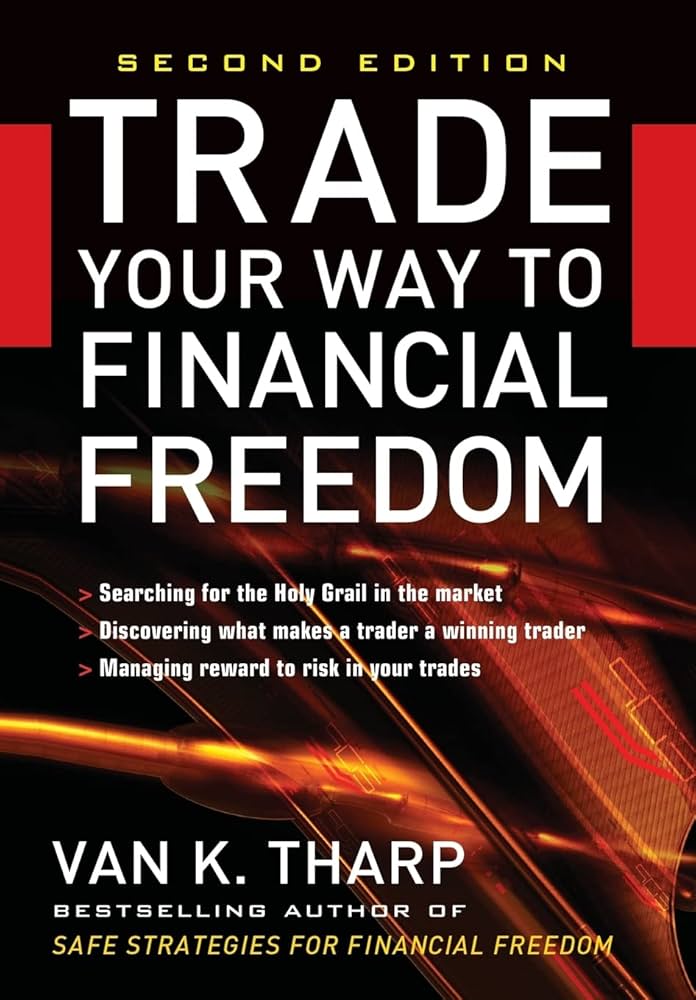
Dr. Van K. Tharp’s influential book shifts the focus from finding the “perfect entry” to building a complete trading system tailored to the individual, emphasizing psychology and risk control. His framework directly tackles the core reasons why aspiring Forex day traders often stumble and highlights what’s needed for sustainable success:
- The Holy Grail is Within You: Success isn’t about finding a magical indicator, but developing a trading system that aligns perfectly with your personal beliefs, objectives, risk tolerance, and personality. This is crucial for day traders who need a system they can execute consistently under pressure.
- Master Your Psychology: Trading results are a direct reflection of your mindset. Overcoming psychological biases (fear, greed, hope, confirmation bias) is more critical than refining entry signals. This directly addresses the “emotional rollercoaster” that causes many day traders to make costly mistakes.
- Define Clear Objectives: Why are you trading? What are your financial goals? Your trading system should be designed specifically to help you achieve these objectives. Without clear goals, day trading can devolve into directionless gambling.
- Think in Expectancy (R-Multiples): A system’s edge is measured by its expectancy – the average amount you win or lose per dollar risked (your ‘R’). A system must have a positive expectancy over many trades to be profitable long-term.
Expectancy = (Win% * Avg Win R-Multiple) - (Loss% * Avg Loss R-Multiple)where the average loss is typically 1R (your initial stop). Day traders must know if their frequent trading activity actually has a positive expectancy or if they are just churning commissions. - Build a Complete System: A system isn’t just entries. It needs:
1) Setup conditions (market state),
2) Entry trigger,
3) Initial Stop-Loss (to define R),
4) Exit strategy (profit taking), and
5) Position Sizing rules.
This combats the common failure point of trading without a well-defined plan. - Position Sizing is Paramount: Tharp argues this is the most critical component, yet the most neglected. How much capital you allocate per trade determines your survival and ability to meet objectives more than anything else. You can go broke with a winning system if position sizing is wrong. This is the antidote to the fatal mistake of risking too much, especially prevalent among day traders with smaller accounts and access to high leverage.
- Exits Determine Profitability: How and when you exit trades (both losses and wins) has a larger impact on your system’s expectancy than your entry points. Cutting losses is vital. Disciplined exits are essential for day traders who need to capture profits or cut losses quickly in fast-moving markets.
- Match Position Sizing to Your Goals: Use position sizing models (e.g., risking a fixed percentage of equity per trade) that control risk appropriately for your account size and help you meet your objectives. Proper sizing prevents the catastrophic losses that wipe out many new Forex traders.
- Consider Opportunity: How often does your system generate trades? A system with slightly lower expectancy but many opportunities might be more profitable overall than a high-expectancy system that rarely signals. This is relevant for day traders choosing between scalping (high frequency) and intraday swing strategies (lower frequency).
- Treat Trading Like a Business: Develop a plan, meticulously manage risk, track your performance (journaling!), learn from mistakes, and continuously refine your system and yourself. This mindset separates professional traders from gamblers.
Tharp’s work fundamentally shifts the focus from chasing signals to building robust, personalized systems with sound risk and money management principles. Applying this framework provides the structure needed to navigate the complexities of Forex day trading successfully. Furthermore, the appeal of copy trading lies in potentially leveraging traders who already operate with such disciplined, system-based approaches incorporating positive expectancy and robust position sizing – offering a structured path for beginners struggling to implement these crucial concepts themselves.
Forex Day Trading Unveiled: Strategies, Pitfalls & The Copy Trading Advantage
Flickering charts, the promise of quick profits, the dynamism of the world’s largest financial market – it paints a picture of excitement and opportunity. But beneath the surface lies a challenging landscape where fortunes can be made and lost in minutes. Is it a viable path to financial success, or a gambler’s paradise fraught with risk?
What Exactly is Forex Day Trading?
At its core, Forex day trading is the practice of buying and selling currency pairs within the same trading day. Unlike long-term investors or even swing traders who might hold positions for days or weeks, day traders aim to capitalize on small, short-term price fluctuations. They open and close multiple positions throughout the day, rarely holding anything overnight to avoid rollover fees and overnight market risk.
Think of it like being a high-frequency merchant in the bustling global currency bazaar. You’re not trying to predict year-long trends; you’re looking for momentary price discrepancies, brief surges in demand or supply for currencies like the EUR/USD, GBP/JPY, or AUD/USD.
Key characteristics include:
- Short Holding Periods: Trades last minutes or hours, rarely beyond the market close.
- High Volume: Often involves executing numerous trades daily.
- Leverage: Utilizes borrowed capital to control larger positions than the trader’s own funds would allow, amplifying both potential profits and losses.
- Focus on Liquidity: Concentrates on major currency pairs with high trading volume for easy entry and exit.
- Technical Analysis: Relies heavily on chart patterns, indicators, and price action to make quick decisions.
Why is Day Trading So Popular?
Despite the known risks, Forex day trading remains incredibly popular. Why?
- Unmatched Liquidity: The Forex market trades trillions of dollars daily, meaning you can almost always buy or sell major currencies instantly without significantly impacting the price. This is crucial for short-term strategies.
- 24/5 Market Access: The market follows the sun around the globe, open from Monday morning in Sydney to Friday afternoon in New York, offering trading opportunities across different time zones.
- Leverage (The Double-Edged Sword): The ability to control large positions with relatively small capital attracts many. A $1,000 account might control $30,000 or even $100,000 worth of currency (depending on leverage offered), meaning small price movements can translate into significant percentage gains (or losses).
- Lower Capital Requirements (Initially): Compared to other markets like stocks, you can often start day trading Forex with a smaller initial deposit.
- Volatility: Constant price fluctuations, driven by economic news, political events, and central bank policies, create opportunities for profit (and loss).
- Intellectual Challenge: For some, the fast-paced analysis and strategic thinking required are intrinsically appealing.
Many traders prefer day trading because it aligns with a desire for immediate results and avoids the uncertainty of overnight market gaps or events. Studies often show a significant portion of retail Forex traders engage in day trading or scalping strategies due to this perceived control and constant engagement.
Why Most Forex Day Traders Fail (The Brutal Truth)
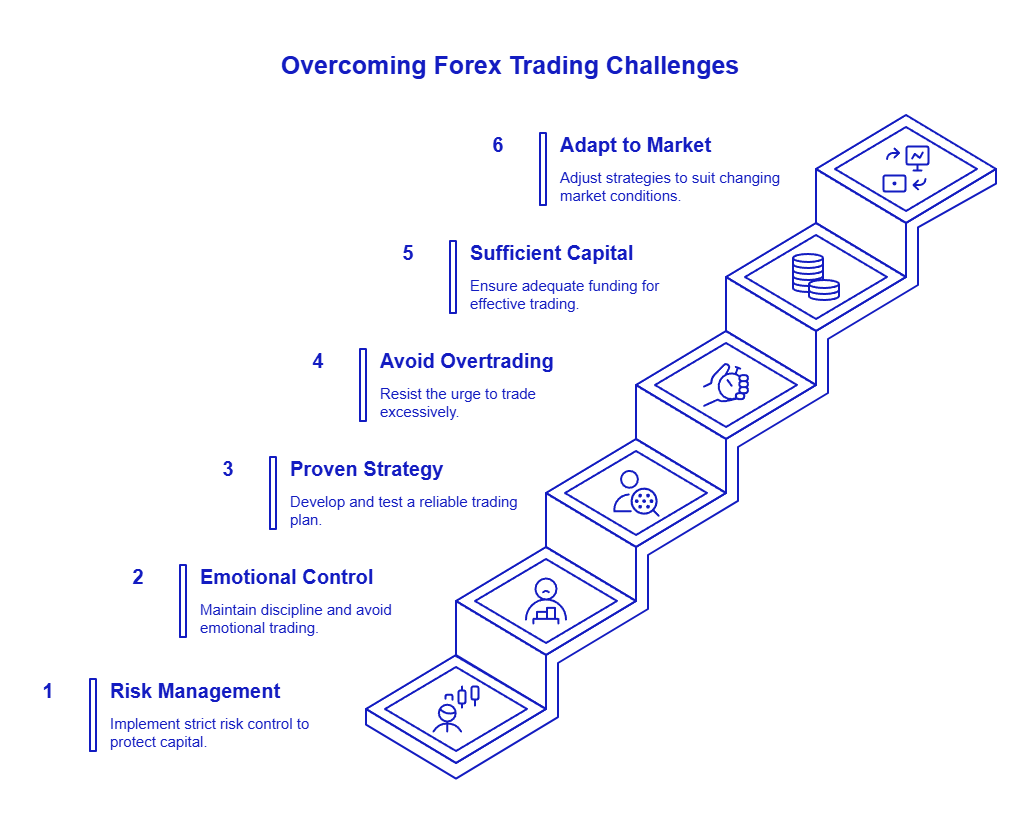
Now for the reality check. Statistics often cited suggest that upwards of 90% of aspiring Forex day traders lose money and eventually quit. This isn’t to discourage, but to emphasize the immense challenges involved. Failure usually boils down to a few critical factors:
- Catastrophic Risk Management (The #1 Killer): This is paramount. Many traders, especially those starting with small funded accounts, fall into the trap of risking too much per trade. A standard rule is to risk no more than 1-2% of your capital on any single trade.
However, a trader with a $500 account might feel risking $10 (2%) isn’t “worth it” and instead risk $50 or $100 (10-20%). A few consecutive losses at this level can wipe out their account entirely. They lack the capital cushion to withstand normal market drawdowns. Poor risk management is the express train to a blown account. - The Emotional Rollercoaster (Trading Like a Gambler): Successful trading requires discipline and emotional detachment. It should be methodical, even boring. However, the rapid price movements and leverage can trigger powerful emotions:
- Greed: Holding onto winners too long, hoping for more, only to see profits evaporate. Adding to losing positions.
- Fear: Cutting winners too short, afraid of losing small gains. Hesitating to enter valid setups (FOMO – Fear Of Missing Out).
- Revenge Trading: Jumping back into the market immediately after a loss, trying to “win it back” quickly, usually with larger size and less analysis.
- Euphoria: Feeling invincible after a winning streak, leading to overconfidence and breaking rules. For gamblers, the excitement is the draw. For successful traders, excitement is a warning sign that emotions are overriding the plan. Losing control of emotions turns calculated risk-taking into pure gambling.
- Greed: Holding onto winners too long, hoping for more, only to see profits evaporate. Adding to losing positions.
- Lack of a Proven Strategy (The Edge): Many jump in without a well-defined, backtested trading plan with a demonstrable edge. They chase indicators, follow random tips, or switch strategies every time they hit a losing streak.
- Overtrading: Driven by impatience or the need for action, traders take low-probability setups, deviate from their plan, and rack up commissions and spread costs.
- Insufficient Capital: While you can start with little, being undercapitalized makes proper risk management difficult and increases psychological pressure.
- Ignoring Market Conditions: A strategy that works in a trending market might fail miserably in a ranging market. Failure to adapt is costly.
The Long Road: Charting the Path to Profitability
So, can Forex day trading be profitable? Yes, but it’s a marathon, not a sprint.
- How Long Does It Take? There’s no fixed timeline, but consistent profitability typically takes months, often years, of dedicated effort, learning, and refinement. Anyone promising quick riches is likely selling snake oil. It involves screen time, analysis, journaling, and constant learning.
- Strategy Hopping vs. Mastery: Many aspiring traders try dozens of strategies before finding something that resonates with their personality and risk tolerance. The key isn’t finding a “holy grail” (it doesn’t exist) but mastering one or two strategies thoroughly. This involves understanding its nuances, when it works best, when to stay out, and how to manage risk within its framework. Constantly switching strategies prevents mastery of any single one.
- Finding What Works: This involves:
- Backtesting: Testing a strategy on historical data to see how it would have performed.
- Forward Testing (Demo): Trading the strategy in real-time with virtual money.
- Live Trading (Small Size): Graduating to real money but with minimal risk.
- Journaling: Recording every trade, the setup, the reasoning, the outcome, and the emotions involved. This is crucial for identifying patterns and improving.
- Backtesting: Testing a strategy on historical data to see how it would have performed.
A Day in the Life of a (Realistic) Forex Day Trader

Forget the Instagram images of Lamborghinis and laptops on beaches. A typical day for a disciplined day trader is structured and often intense:
- Pre-Market Prep (Before the main session): Reviewing overnight price action, checking economic calendars for major news releases (like NFP, interest rate decisions), identifying key support/resistance levels, defining potential trade setups based on their strategy, and setting daily goals/risk limits.
- Trading Session (e.g., London/New York overlap): Focused execution. Monitoring charts for entry signals based on the pre-defined plan. Entering trades with pre-calculated stop-losses and take-profit targets. Managing open positions. Avoiding impulsive trades not part of the plan. This requires intense concentration.
- Post-Market Review: Logging all trades in a journal. Analyzing wins and losses objectively. What went right? What went wrong? Did I follow my rules? What can I improve tomorrow?
- Continuous Learning: Reading market analysis, studying charts, refining strategies, reading trading psychology books. The learning never stops.
It’s less about constant adrenaline and more about disciplined routine, analysis, and execution.
Gearing Up: Essential Tools & Indicators for Day Traders

While strategy and psychology are king, certain tools help day traders analyze the market:
Charting Platform:
Essential for visualizing price action (e.g., MetaTrader 4/MetaTrader 5, TradingView).
Economic Calendar:
To be aware of high-impact news events that can cause volatility.
Technical Indicators (Use Sparingly!):
These help interpret price action but shouldn’t be used in isolation or cluttered on charts. Popular ones include:
Moving Averages (SMA/EMA):
Identify trends and potential support/resistance. EMAs react faster to recent price changes.
Relative Strength Index (RSI):
Measures momentum and potential overbought/oversold conditions.
MACD (Moving Average Convergence Divergence):
Shows the relationship between two EMAs, helps identify momentum shifts and trend changes.
Bollinger Bands:
Measure volatility and potential price breakouts or reversions.
Fibonacci Retracements:
Identify potential support/resistance levels based on mathematical ratios.
Pivot Points:
Calculated levels based on previous day’s high, low, and close, often acting as support/resistance.
ATR (Average True Range):
Measures market volatility, useful for setting stop-loss distances.
Warning: Relying solely on indicators is a trap. Price action itself is often the most reliable indicator. Use indicators to confirm potential setups derived from your core strategy and price analysis, not to generate signals blindly.
Navigating the Maze: Strategies & What to Look For
There’s no single “best” strategy, only what works best for you. Common Forex day trading approaches include:
Scalping:
Extremely short-term trades aiming for tiny profits (a few pips) multiple times a day. Requires intense focus, fast execution, and low spreads.
Trend Following:
Identifying an established trend (uptrend or downtrend) and entering trades in that direction during pullbacks.
Range Trading:
Identifying periods where price bounces between clear support and resistance levels, buying near support and selling near resistance.
Breakout Trading:
Entering a trade when price decisively breaks through a key level (support, resistance, trendline), anticipating continued momentum.
News Trading:
Trading around major economic announcements, attempting to capture the resulting volatility (very risky, requires expertise).
Mean Reversion:
Betting that price will return to its historical average after an extreme move.
What to look for when starting:
- Clear Rules: The strategy must have objective, non-negotiable rules for entry, exit (stop-loss), and position sizing.
- Defined Risk: How much are you risking per trade? Where is your stop-loss? This must be predetermined.
- Statistical Edge: Does the strategy show profitability over a large sample size in backtesting/forward testing?
- Market Context: Does the strategy define the market conditions under which it performs best (e.g., trending, ranging)?
- Your Personality: Does it suit your risk tolerance and available screen time? (e.g., Scalping requires constant attention, trend following might require more patience).
Copy Trading: A Smarter Shortcut for Forex Beginners?
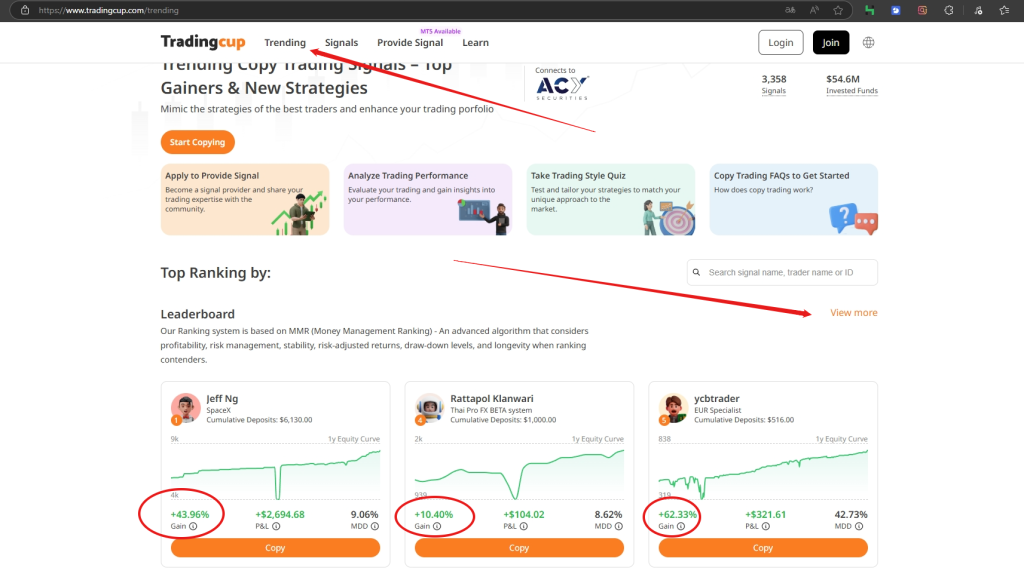
Given the steep learning curve and high failure rate of direct day trading, copy trading presents an intriguing alternative, especially for newcomers focused on smarter money protection.
What is Copy Trading? It allows you to automatically replicate the trades of experienced, vetted traders (often called Signal Providers or Master Traders) on a trading platform. When they buy or sell, your account does too, proportionally to the capital you allocate.
Benefits of Copying Tested Day Traders:
- Leverage Expertise: Gain immediate access to the strategies and market insights of potentially profitable traders.
- Save Time & Effort: Reduces the need for constant market analysis and chart watching, although monitoring is still essential.
- Learning Opportunity: Observe how experienced traders manage positions, handle different market conditions, and apply their strategies. This can significantly accelerate your learning curve.
- Reduce Emotional Strain: By automating trade execution based on someone else’s decisions, you bypass much of the fear, greed, and emotional decision-making that plagues novice traders. It combats decision fatigue and information overload.
- Potential for Passive Income (with risk): If you choose a consistently profitable trader, your account could potentially grow without your direct trading intervention (though losses are always possible).
- Diversification: You can potentially copy multiple traders with different styles or market focuses.
- Refine Your Own Strategy: Observing professionals can provide invaluable insights as you develop or refine your own trading approach, highlighting effective risk management or entry/exit techniques you might adopt.
Comparing Top Day Traders
Choosing the right trader to copy is crucial. Let’s analyze the data from the provided TradingCup screenshots for SpaceX, Macpaul, and EUR Specialist to help make an informed decision. (Note: Analysis is based solely on the visible data in the screenshots.)
| Metric | SpaceX | Macpaul | EUR Specialist | Observations & Considerations |
|---|---|---|---|---|
| Profit | +$3,308.01 (Overall P/L shown) | +€252.00 (Overall P/L shown) | +$352.66 (Overall P/L shown) | Macpaul shows significantly higher historical profit. Consider: Is this recent performance or over a long period? What was the risk taken? |
| Max Drawdown | 9.06% | 9.52% | 42.73% | Crucial Risk Metric: SpaceX has the lowest historical Max Drawdown (smallest peak-to-trough equity decline). EUR Specialist has the highest, indicating higher risk taken historically. |
| Win Rate | 73.75% | 69.16% | 66.73% | All show >50% win rates, with SpaceX highest. Note: High win rate doesn’t guarantee profitability if losses are much larger than wins. |
| Profit Factor | 1.92 | 3.13 | 1.16 | Key Metric: (Gross Profit / Gross Loss). >1 = Profitable. Macpaul has a very strong Profit Factor. EUR Specialist’s is low (close to 1), suggesting wins are only slightly larger than losses overall, or high win rate compensates for small wins/larger losses. |
| Trading Style (Inferred from Trade History) | Mix of Buy/Sell across various pairs (EURUSD, GBPUSD, XAUUSD, NAS100, US30 etc.). Variable holding times (minutes to hours/days). Appears active. | Primarily Buy trades shown across Indices (NAS100, US30, HK50), Metals (XAUUSD), and some FX (EURUSD). Holding times vary (minutes to hours/days). Seems position/swing focused. | Primarily trades EURUSD, both Buy & Sell. Very frequent trades, often held for minutes to a few hours. Classic day trading/scalping focus on one pair. | Strategy difference is key. SpaceX seems diversified. Macpaul focuses on buys, possibly trend/swing on indices/gold. EUR Specialist is a focused, high-frequency EURUSD day trader. |
| Risk Profile (Inferred) | Moderate risk (based on MDD, PF). Diversified instruments. | Lower risk (lowest MDD, highest PF). Possibly directional bias (mostly Buys shown). | Higher risk (highest MDD, lowest PF despite high WR). Concentrated on one pair, high frequency. Potential for quick wins but also larger drawdowns if EURUSD moves against positions. | Choose based on your risk tolerance. Macpaul appears lowest risk based on these metrics. EUR Specialist appears highest risk but specialized. SpaceX is in between. |
Who to Copy Trade? The Informed Decision:
- For Lower Risk Tolerance & Stronger Performance Metrics: SpaceX seems the statistically strongest choice based purely on the provided historical data (lowest Max Drawdown, highest Profit Factor). The focus on Buy trades might indicate a specific market view or strategy type to be aware of.
- For Moderate Risk & Diversification: SpaceX offers a balance with decent metrics and trades across various instruments, potentially smoothing equity curves.
- For High Frequency & EURUSD Focus: EUR Specialist might appeal if you specifically want exposure to rapid EURUSD movements, but be very aware of the significantly higher historical Max Drawdown and lower Profit Factor, indicating a potentially bumpier ride. Their high copier count suggests popularity despite the higher risk profile.
Disclaimer: Past performance is not indicative of future results. Always do your own due diligence beyond these snapshots. Consider recent performance, consistency over time (if available), and understand the trader’s strategy before allocating capital. Start small when copying any trader.
Starting with Copy Trading
For beginners overwhelmed by the complexities and risks of direct Forex day trading, copy trading offers a potentially safer and faster way to potentially earn and learn. Because Forex is the most traded market, successful strategies employed by top traders are often the most studied and refined.
Here’s a simple way to start:
- Choose a Reputable Platform: Select a well-regulated broker that offers copy trading features (like TradingCup, ZuluTrade, eToro, AvaTrade etc. – research required). Look for transparency in fees and trader statistics.
- Research Traders Thoroughly: Don’t just look at profits. Analyze Max Drawdown, Profit Factor, trade duration, instruments traded, consistency over time (months/years if possible), and read any strategy descriptions. Use the comparison method above.
- Start Small: Allocate only a small portion of your investment capital initially, even if copying a top performer.
- Diversify (Optional): Consider copying 2-3 traders with different strategies or risk profiles to potentially smooth returns.
- Monitor Performance: Regularly check how the copied trades are performing and ensure the trader remains consistent with their strategy and risk management. Be prepared to stop copying if performance deteriorates significantly or risk increases unexpectedly.
- Keep Learning: Use copy trading as a stepping stone. Study the trades being made, learn why they work (or don’t), and gradually build your own market knowledge.
Copy trading isn’t risk-free, but it allows you to leverage the hard-won experience of others while mitigating the steep learning curve and emotional pitfalls that cause most new day traders to fail. It’s about making smarter decisions to protect your capital while still participating in the Forex market.
Conclusion: Trade Smarter, Not Harder

Forex day trading offers immense potential but demands extraordinary discipline, robust risk management, and emotional fortitude – qualities most beginners struggle with initially. The high failure rate isn’t a myth; it’s a harsh reality driven primarily by inadequate risk control and emotional decision-making, especially with smaller accounts.
While mastering direct day trading is a long and arduous journey, copy trading proven Forex day traders provides a compelling alternative. It allows you to potentially benefit from expert strategies, bypass emotional trading traps, reduce decision fatigue, and learn invaluable lessons in a more controlled environment. By carefully selecting and monitoring traders like SpaceX, Macpaul, or EUR Specialist based on their verified performance and risk profiles, beginners can take a more calculated step into the world’s largest market.
Ultimately, success in Forex, whether trading directly or copying, hinges on smarter protection of your money. Understand the risks, manage them diligently, and choose the path that best aligns with your knowledge, resources, and risk tolerance.
Frequently Asked Questions
Q1: How does day trading Forex work?
A1: Forex day trading involves buying and selling currency pairs within the same day. Traders aim to profit from small price movements using strategies like scalping, trend following, or range trading. They typically use leverage to control larger positions and close all trades before the market closes to avoid overnight risk and fees. Success relies heavily on technical analysis, risk management, and emotional discipline.
Q2: How do you explain day trading?
A2: Day trading is a short-term trading style where financial instruments (like Forex pairs, stocks, or futures) are bought and sold within the same trading day. The goal is to make small but frequent profits from intraday price fluctuations, rather than holding positions overnight or longer-term. It requires active management, quick decision-making, and strict risk control.
Q3: What is the 90% rule in Forex? (Often referred to as 90/90/90)
A3: While not an official “rule,” the 90/90/90 guideline is a commonly cited statistic in trading circles suggesting that 90% of new Forex traders lose 90% of their capital within the first 90 days. It highlights the high failure rate and emphasizes the difficulty and risk involved, primarily due to poor risk management, lack of strategy, and emotional trading.
Q4: Why do 90% of day traders lose money?
A4: The high failure rate (often cited around 90%) is typically attributed to several factors:
Inadequate Risk Management: Risking too large a percentage of capital per trade, especially with small accounts.
Emotional Trading: Letting fear, greed, or impatience dictate decisions instead of a trading plan.
Lack of a Proven Strategy: Trading without a clear, tested edge in the market.
Insufficient Capital: Being underfunded makes proper risk management difficult and increases psychological pressure.
Over-Leveraging: Using too much leverage amplifies losses significantly.
Not Adapting: Failing to adjust strategies to changing market conditions.
Q5: Is day trading gambling?
A5: Day trading can become gambling if done without a proper strategy, risk management, and emotional control. Trading with a statistical edge, defined risk, and discipline is a calculated business activity. Trading impulsively, chasing losses, or risking too much without a plan is essentially gambling on price movements.
Q6: Is day trading hard?
A6: Yes, consistently profitable day trading is extremely hard. It requires significant knowledge, skill, discipline, emotional resilience, and time commitment. The learning curve is steep, the psychological pressure is intense, and the majority of participants fail to achieve long-term profitability.
Q7: How to start day trading?
A7: Starting day trading involves:
1. Education: Learn Forex basics, technical analysis, risk management, and trading psychology.
2. Develop a Plan: Create a specific trading strategy with clear entry/exit rules and risk parameters.
3. Backtest & Demo Trade: Test your strategy on historical data and then practice on a demo account with virtual money until consistently profitable.
4. Choose a Broker: Select a reputable broker with a suitable platform and good execution.
5. Fund Account (Start Small): Begin with capital you can afford to lose.
6. Manage Risk: Strictly adhere to your risk management rules (e.g., risk 1-2% per trade).
7. Keep Learning & Journaling: Continuously analyze your trades and improve. Alternatively, consider starting with copy trading for a potentially less demanding entry.
Q8: Can you be rich day trading?
A8: While it’s theoretically possible for highly skilled, well-capitalized, and disciplined traders to become rich through day trading over time, it’s extremely rare. Most traders do not achieve significant wealth, and many lose money. It should not be viewed as a get-rich-quick scheme. Consistent profitability is the primary, and difficult, goal.
Q9: Is Forex trading gambling?
A9: Similar to day trading, Forex trading becomes gambling when approached without knowledge, strategy, and risk management. Professional Forex trading involves analyzing probabilities, managing risk, and executing a plan. Trading randomly or based on emotion is gambling.
Q10: Which trading is best for beginners?
A10: Direct day trading is often not recommended for complete beginners due to its complexity and high failure rate. Beginners might consider:
Longer-Term Investing: Buying and holding assets like stocks or ETFs.
Swing Trading: Holding positions for days or weeks, requiring less constant attention than day trading.
Starting with a Demo Account: Practicing any trading style without real money risk.
Copy Trading: Replicating experienced traders’ actions, which can be a less demanding way to start participating in markets like Forex while learning.
Q11: Can I start day trading with $100?
A11: While some brokers allow accounts with $100 or less, starting day trading with such a small amount is extremely difficult and risky. Proper risk management (risking 1-2% per trade) means risking only $1-$2 per trade, which might not be feasible with minimum position sizes or offer meaningful returns. A small account is easily wiped out by a few losses or normal market fluctuations, and the psychological pressure is immense. Copy trading might allow participation with smaller amounts, but risk remains.
Q12: What is an example of day trading?
A12: An example of a Forex day trade: A trader analyzes the EUR/USD chart and identifies a short-term uptrend and a support level at 1.1250. When the price pulls back to 1.1255, they enter a buy order with a stop-loss at 1.1240 (15 pips risk) and a take-profit target at 1.1285 (30 pips potential reward). Later that day, the price reaches 1.1285, the take-profit order is triggered, and the trade is closed for a profit, all within the same day.
Example of a Losing Forex Day Trade:
A trader analyzes the EUR/USD chart and identifies a short-term downtrend with a resistance level at 1.1270. When the price retraces to 1.1265, they enter a sell order with a stop-loss at 1.1285 (20 pips above entry to account for volatility) and a take-profit target at 1.1235 (30 pips potential reward). Later that day, strong positive economic data from the Eurozone unexpectedly boosts the euro, pushing EUR/USD upward. The price hits the stop-loss at 1.1285, closing the trade for a 20-pip loss within the same day.
Key Takeaway: Even with a logical setup, unforeseen market events (like news surprises) can invalidate technical analysis and trigger stop-losses, leading to losses. Risk management (e.g., adhering to a 1:1.5 risk/reward ratio here) helps limit damage.
For more detailed insights on developing daily trading routines, risk management, and effective position sizing strategies, explore additional articles on Trading Cup. Our trading experts at ACY and FinLogix are also great resources to guide your journey towards trading excellence.

Discover Our Best Trading Signals
At Tradingcup, you can browse through a selection of signals and review past performance before you decide to copy.
Become A Signal Provider
Share your expertise and become a signal provider so other traders can copy your trades.
Stay tuned to our blog for more trader spotlights and leaderboard updates.
Trading involves risks.
Visit the Tradingcup blog through the link below for more updates: https://www.tradingcup.com/learn
Related Copy Trading blogs:
- Understanding Market Liquidations: Liquidity Sweeps and Runs Explained
- 7 Essential Daily Habits of Successful Traders to Outperform Their Peers
- 10 Strategies You Can Copy off Our Best Copy Traders
- 5 Strategies Every Trader Can Master To Trade Better In A Trading Contest
- 2025 Copy Trading Scams Exposed: How to Spot Fraud
- A Swing Trading Strategy with an 83 Percent Win Rate and Low Drawdowns
- Forex Martingale Strategies Explained, The Good, The Bad and The Ugly
- Pyramiding Trading Tutorial – Pros & Cons & How to Use It