Last Updated: February 25, 2026
This article is reviewed annually to reflect the latest market regulations and trends.
Copy Trading vs Index Funds: Which Strategy Best Protects and Grows Your Wealth in 2026?
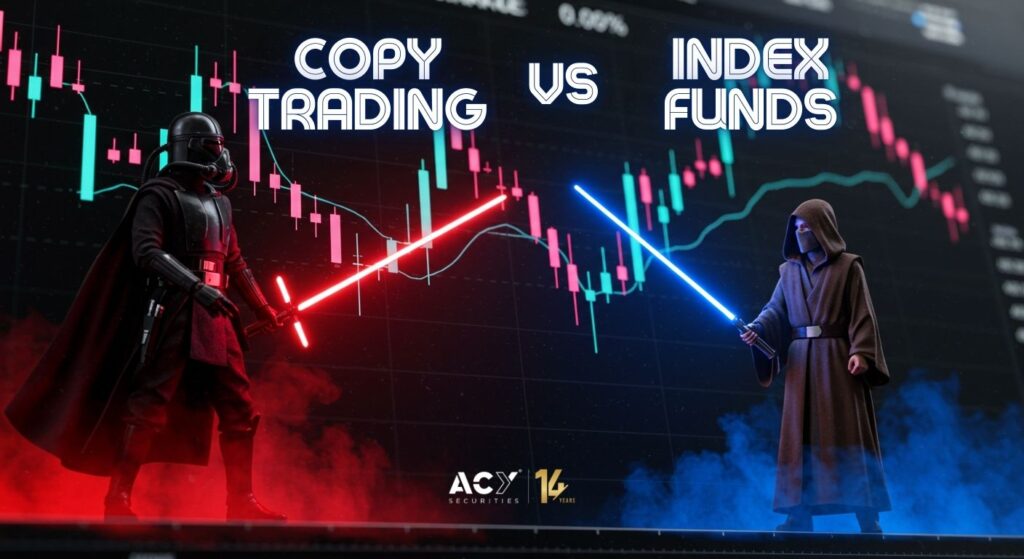
TL;DR: Copy Trading vs Index Funds
- Core Concept: Index Funds replicate market indexes (like the S&P 500), offering broad diversification. Copy Trading replicates trades of individual investors, concentrating risk on trader performance.
- Risk Profile: Index Funds carry market risk spread across many assets (lower concentration risk). Copy Trading involves trader risk (their strategy, errors, potential blow-ups) and often higher asset volatility (forex, crypto). Risk management is crucial for both, but critical in Copy Trading.
- Proven Track Record: Index Funds have decades of history showing consistent long-term growth (e.g., S&P 500 averaging ~10% annually historically, though past performance isn’t guaranteed). Copy Trading returns are highly variable, lack long-term proof for the average user, and depend heavily on selecting skilled (and often high-risk) traders.
- Ease & Psychology: Both simplify investing by removing direct decision-making. However, copy trading can tempt users into frequent trader-switching (action bias), while index funds encourage a ‘set-and-forget’ approach that better aligns with sound long-term investment strategies.
- Smarter Protection: For most investors seeking reliable, diversified, low-cost growth with a focus on capital protection, Index Funds offer a more robust and proven framework. Copy Trading requires significant due diligence, active monitoring, and acceptance of higher potential losses.
Introduction
In today’s dynamic financial landscape, the allure of passive investing is stronger than ever. Many seek ways to grow their wealth without dedicating countless hours to market analysis or complex trading strategies. Two popular contenders have emerged, offering seemingly hands-off approaches: Copy Trading and Index Funds.
But while both promise simplicity, they operate on vastly different principles and carry distinct risk profiles. Choosing the right path isn’t just about potential returns; it’s about smarter money protection, aligning your investments with your risk tolerance, and understanding the psychological currents that influence financial decisions.
Are you relying on the wisdom of crowds embodied by the market itself (Index Funds), or are you banking on the skill of individual traders (Copy Trading)? This comprehensive guide will dissect Copy Trading vs Index Funds, exploring their surprising similarities, proven track records (or lack thereof), risk landscapes, and potential long-term outcomes. Our goal? To equip you with the knowledge needed to make informed decisions that safeguard and grow your hard-earned capital.
“The chief task in life is simply this: to identify and separate matters so that I can say clearly to myself which are externals not under my control, and which have to do with the choices I actually control.” – Epictetus
This ancient wisdom resonates deeply in investing. We cannot control market movements or individual trader whims, but we can control our strategy, our diversification, our costs, and our emotional reactions. Choosing between Copy Trading and Index Funds is fundamentally about choosing where you place your trust and what risks you are willing to control and accept.
What is Copy Trading? Leveraging Expertise, Riding on Risk
Copy Trading is a portfolio management strategy where investors automatically replicate the trading positions opened and managed by another selected trader. Platforms like TradingCup, eToro, ZuluTrade, and others facilitate this by allowing users (copiers) to browse profiles of experienced traders (often called “signal providers” or “strategy managers”), view their performance history, risk scores, and trading styles, and allocate funds to mirror their trades in real-time automatically.
How it Works:
- Platform Selection: Choose a reputable broker offering copy trading features.
- Trader Selection: Research and select one or more traders whose strategies and risk levels align with your goals. Platforms often provide statistics, but tread carefully – past performance is not indicative of future results.
- Fund Allocation: Decide how much capital to allocate to copying each trader.
- Automation: The platform automatically executes the same trades (buys/sells) in your account as the chosen trader makes, proportionally to your allocated funds.
Potential Advantages of Copy Trading:
- Accessibility for Beginners: Lowers the barrier to entry for participating in potentially complex markets like Forex, CFDs, or cryptocurrencies without deep knowledge.
- Time-Saving: Eliminates the need for constant market analysis and trade execution.
- Access to Expertise: Leverages the perceived skills and strategies of experienced traders.
- Diversification (Potential): Allows diversification across different traders, strategies, and potentially asset classes (though often concentrated in high-volatility areas).
Significant Risks and Disadvantages:
- Trader Risk: Your performance is directly tied to the copied trader’s success and failures. They might change their strategy, make critical errors, succumb to emotional trading (FOMO, panic), or simply have a losing streak. One Reddit user aptly noted, “Forex copytrading is letting a lone individual decide your fate.”
- Market Risk & Volatility: Many popular copy traders operate in highly volatile markets (Forex, Crypto), where sharp movements can lead to rapid losses.
- Platform & Hidden Fees: Costs can include subscription fees, profit-sharing percentages, spreads, and transaction fees, which can significantly erode returns. Transparency varies between platforms.
- Lack of Control: You relinquish direct control over individual trading decisions.
- Slippage: Due to execution delays, the price you get might differ slightly from the trader’s execution price, impacting results, especially in fast markets.
- Misleading Statistics: Past performance can be misleading. A trader might have had one lucky streak or could be employing an extremely high-risk strategy not immediately apparent.
- Potential for Scams: The space can attract unscrupulous players; thorough platform and trader vetting is essential.
What are Index Funds? Riding the Market Wave Passively

An Index Fund is a type of mutual fund or exchange-traded fund (ETF) designed to track the performance of a specific financial market index, such as the S&P 500 (tracking 500 large US companies), the MSCI World (tracking global developed markets), or the PSEi (tracking the main Philippine stocks).
Instead of trying to beat the market through active stock picking, index funds aim to be the market (or a specific segment of it). They achieve this by holding all (or a representative sample) of the securities in the index, in the same proportions as the index itself.
How it Works:
- Fund Selection: Choose an index fund (often an ETF for ease of trading and lower costs) that tracks your desired market (e.g., US large-cap, global stocks, Philippine market). Reputable providers include Vanguard, BlackRock (iShares), Fidelity, and locally, banks like BPI offer index tracking funds.
- Purchase: Buy shares of the fund through a brokerage account, just like buying a stock.
- Passive Management: The fund manager’s job is simply to ensure the fund continues to mirror the index composition and performance, rebalancing occasionally as the index changes.
Advantages of Index Funds:
- Broad Diversification: Instantly invests you across hundreds or even thousands of securities, significantly reducing the risk associated with any single company failing.
- Low Costs: Passive management means significantly lower expense ratios (annual fees) compared to actively managed funds. Fees for major index ETFs can be as low as 0.03%.
- Proven Long-Term Performance: Historically, broad market indexes like the S&P 500 have delivered average annual returns around 10% over long periods (decades). While returns vary year-to-year and past performance isn’t a future guarantee, the long-term trend has been positive.
- Simplicity & Transparency: Easy to understand – you own a slice of the entire market. Holdings are typically disclosed regularly.
- Tax Efficiency: Lower portfolio turnover (less buying and selling within the fund) generally leads to fewer taxable capital gains distributions compared to active funds.
- Reduces Emotional Error: The strategy encourages a buy-and-hold approach, mitigating the common investor pitfalls of panic selling or chasing hot stocks (action bias).
Disadvantages of Index Funds:
- Market Risk: You are fully exposed to overall market downturns. If the index drops 20%, your fund value will drop similarly. There’s no active manager trying to mitigate losses.
- No Outperformance: By design, you will essentially match the market return, minus minimal fees. You won’t beat the market.
- Limited Flexibility: Performance is tied directly to the index; you can’t tilt towards specific sectors or stocks you believe will outperform unless you buy specialized sector index funds.
- Tracking Error: Minor discrepancies can occur between the fund’s performance and the index due to fees, cash drag, or sampling methods.
The Surprising Similarity: Aren’t Index Funds Just Copying the Market?

Here’s a perspective shift: Index funds are, in essence, a form of copy trading. But instead of copying an individual trader, they are systematically copying the entire market or a significant portion of it, as defined by an index like the S&P 500 or the MSCI World.
Think about it:
- Replication: Both strategies involve automatically replicating external decisions. Copy Trading replicates a trader’s buy/sell orders. Index Funds replicate the constituents and weighting of a market benchmark.
- Leveraging Intelligence: Copy Trading relies on the perceived intelligence and skill of a specific trader. Index Funds rely on the collective wisdom of the market (“wisdom of crowds”) reflected in the index’s composition, which weights companies based on factors like market capitalization.
- Passive Approach (for the end-user): Both offer a way to invest without making individual security selection decisions yourself. You choose the index (or the trader) and let the mechanism handle the rest.
The crucial difference lies in what is being copied. Copying a single trader is like betting on one specific chef’s menu for the night – it could be Michelin-star worthy, or it could be a disaster. Copying a broad market index is like choosing the entire, vast buffet – you get a bit of everything, ensuring you won’t starve even if the shrimp cocktail is off, and benefiting from the overall quality spread. Indexing copies the consensus, while copy trading copies an individual opinion.
The Proven Path: Why Index Funds Have History (and Banks) on Their Side
While Copy Trading is a relatively newer phenomenon, particularly in retail investing, Index Funds have a long and well-documented track record.
- Decades of Data: The first index fund was launched in the 1970s. We have nearly 50 years of performance data for major indexes like the S&P 500, showing consistent long-term growth despite numerous market crashes and recessions. While annual returns fluctuate (e.g., VOO, a popular S&P 500 ETF, saw returns ranging from +26% in 2023 to -18% in 2022), the long-term average remains compelling (around 12.5% annualized over the last 10 years for VOO as of early 2025, per Vanguard data).
- Endorsed by Experts: Legendary investors like Warren Buffett have repeatedly recommended low-cost S&P 500 index funds for the vast majority of investors. Academic research, like the famous SPIVA reports, consistently shows that most active fund managers fail to outperform their benchmark indexes over the long run.
- Institutional Adoption: It’s not just retail investors. Pension funds, endowments, and even banks utilize index funds extensively. Major financial institutions worldwide, including local banks like BPI in the Philippines, offer index funds (like their Philippine Equity Index Fund tracking the PSEi and US Equity Index Feeder Fund tracking the S&P 500) to their clients, signaling their acceptance as a core investment strategy. If institutions entrusted with large sums rely on indexing, it speaks volumes about its perceived reliability and role in a diversified portfolio.
Copy Trading, conversely, lacks this extensive track record for the average participant. While some individuals may achieve high returns, these are often anecdotal, difficult to verify consistently, and frequently involve taking substantial risks. There’s no broad, long-term data proving that the average person engaging in copy trading achieves superior (or even positive) risk-adjusted returns compared to simply investing in the market via an index fund.
Risk Assessment Deep Dive: Market Diversification vs. Trader Roulette
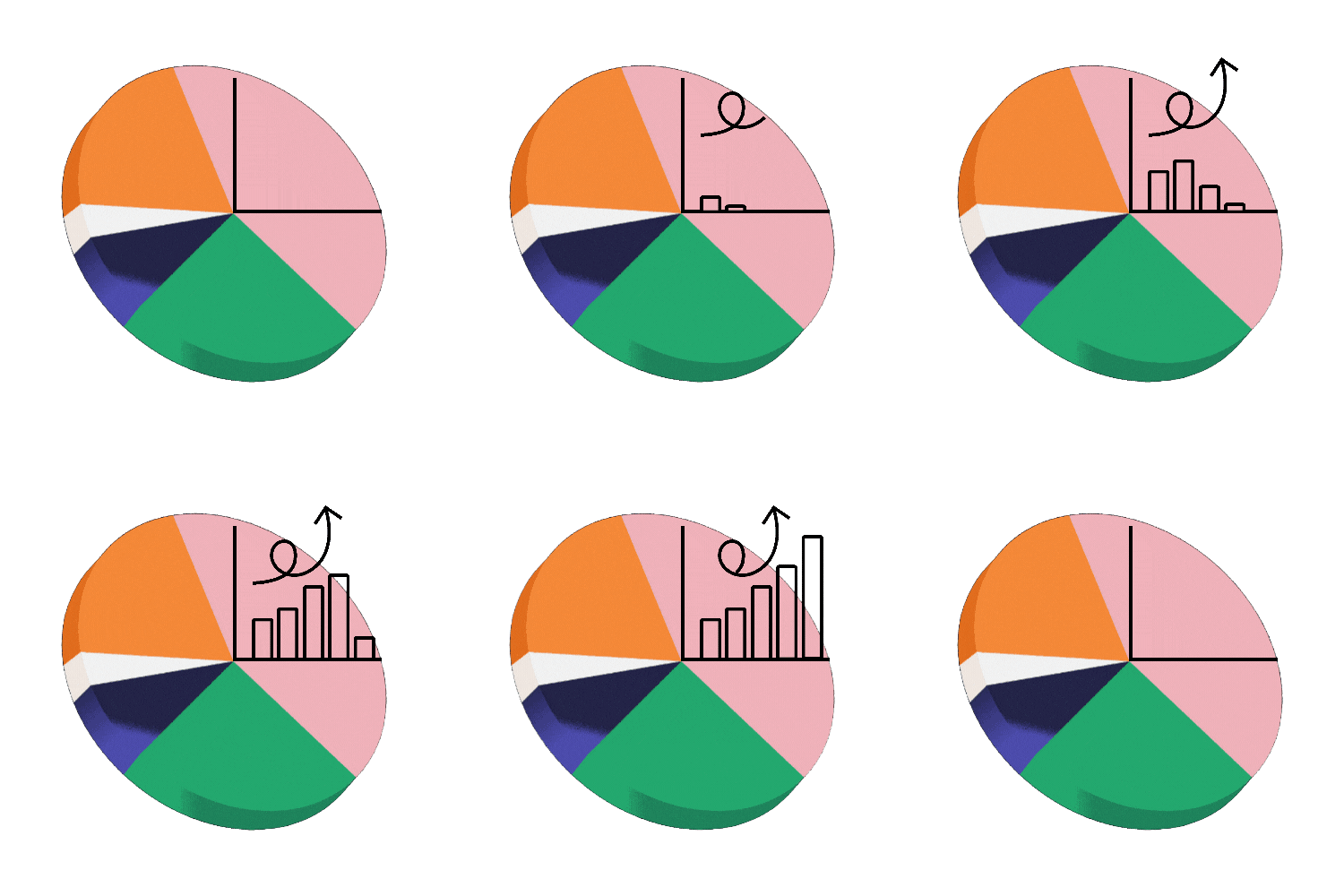
Understanding risk is paramount for smarter money protection. Let’s compare the risk landscapes:
- Index Funds – Systemic Market Risk:
- Primary Risk: Broad market downturns (recessions, crashes). Your investment value moves with the market.
- Diversification: Risk is spread across hundreds/thousands of companies and potentially multiple sectors/countries. The failure of one or even several companies has a minimal impact on the overall fund.
- Concentration Risk: Low, by definition.
- Counterparty Risk: Minimal when using large, reputable fund providers (Vanguard, BlackRock, etc.) and regulated brokers.
- Copy Trading – Concentrated Trader & Asset Risk:
- Primary Risks:
- Trader Failure: The trader you copy makes poor decisions, blows up their account, or changes strategy detrimentally.
- Asset Volatility: Often focused on high-volatility assets (Forex, Crypto, CFDs) where large, rapid losses are possible.
- Platform Risk: The platform could have technical issues, poor execution, or be fraudulent.
- Diversification: Relies on copying multiple traders with different strategies and potentially different asset focuses. Diversification is active and requires ongoing management by the copier. Simply copying one popular trader is highly concentrated risk.
- Concentration Risk: Can be very high, depending on the trader’s strategy and the number of traders copied.
- Counterparty Risk: Depends heavily on the reputation and regulation of the copy trading platform and the broker used.
- Primary Risks:
Analogy: Investing in an Index Fund is like owning a tiny piece of every apartment in a large, diverse city. If one building has issues, your overall investment is largely unaffected. Copy Trading one or two traders is like investing heavily in just one or two specific buildings managed by individual landlords – if they mismanage things or the building faces a unique disaster, your investment is significantly impacted.
The Investor’s Restaurant: Choosing Ease Without Emotional Eating

Imagine investing is like going out for dinner because you don’t have the time, expertise, or desire to cook a gourmet meal yourself.
- Index Funds are like choosing a reputable restaurant with a large, high-quality buffet. You don’t need to know the chef’s exact techniques or whether every ingredient was picked this morning. You trust the establishment’s reputation, you see the variety, you select a balanced plate (your asset allocation), and you enjoy a satisfying meal (market returns) with minimal fuss. It’s easy, predictable (within reason), and generally safe. You set your course and let it be.
- Copy Trading is like deciding to eat whatever a specific, highly-rated (but perhaps unpredictable) celebrity chef is eating tonight. You don’t cook, but you need to choose the chef wisely based on reviews (trader stats). You hope they choose something amazing (profitable trades), but they might have exotic tastes (high-risk strategies) or simply have an off night (losses). It requires more research upfront (choosing the trader) and potentially more anxiety (monitoring their choices).
Both abstract the ‘cooking’ (market analysis, trade execution). For investors lacking time or expertise, this is appealing. Index funds offer a simple, ‘set-and-forget’ path that aligns well with overcoming action bias – the harmful psychological impulse to constantly ‘do something’ in your portfolio. Copy Trading, while automating trades, can still trigger action bias if you feel compelled to constantly monitor traders, switch them based on short-term performance, or chase high returns, leading to emotionally driven (and often costly) decisions. The “set-it-and-forget-it” mentality can be particularly dangerous in copy trading if the chosen trader’s risk profile or performance deteriorates without the copier noticing.
Potential Returns: A 10-Year Horizon Comparison

Let’s project potential growth over 10 years, keeping smarter money protection in mind.
Scenario 1: The Index Fund Path (Based on Historical Averages)
- Investment: $10,000
- Strategy: Invested in a low-cost S&P 500 Index Fund ETF (like VOO or FXAIX).
- Historical Average Annual Return (Illustrative): Let’s use a conservative 10% average annual return (reflective of long-term S&P 500 history, though future returns are not guaranteed and will vary).
- Calculation: 10,000∗(1+0.10)10
- Potential Value after 10 Years: Approximately $25,937
This growth is based on decades of market history, driven by the broad economic growth reflected in hundreds of established companies. It involves market volatility but offers a proven path to wealth accumulation over the long term through diversification and compounding.
Scenario 2: The Copy Trading Path
Investment: $10,000
Strategy: Copying a trader claiming hypothetical 5% monthly returns, capped at 30% annual growth to reflect extreme market limitations.
Critical Disclaimer:
- A 5% monthly return implies an uncapped 79.6% annual return (1.05¹² = 1.796). This is unrealistically high and unsustainable.
- To reflect practical extremes, returns are capped at 30% annually. Even this threshold involves extreme leverage, volatile assets, and a high likelihood of catastrophic losses or account blow-ups.
- This calculation is purely theoretical to illustrate compounding under implausibly optimistic assumptions. It is not a realistic investment expectation.
Illustrative Calculation (Capped Compounding):
Annual growth limited to 30%:
Year 1: 10,000×1.30=13,000
Year 10: 10,000×(1.30)10≈137,858
Hypothetical Value After 10 Years (Capped, High-Risk): ~$137,858
Reality Check: While the compounding number looks astronomical, achieving it via copy trading is akin to winning the lottery multiple times. Most copied traders, especially those generating consistently high returns, employ high-risk strategies. Research and user reports (like those on Reddit) frequently highlight stories of significant losses and blown accounts. Market risk, trader error, platform issues, and fees all work against such ideal scenarios. The actual average return for copy traders is difficult to determine but is certainly far lower, and many lose money.
Conclusion on Returns: Index funds offer a path to substantial wealth growth based on historical precedent and diversification, albeit with market fluctuations. Copy trading might offer higher returns in short bursts for a select few copying the right (likely risky) trader at the right time, but it comes with significantly higher volatility, complexity, and the very real risk of substantial or total capital loss. For reliable long-term wealth protection and growth, the evidence heavily favors index funds.
Beyond the Basics: Smarter Investing & Protecting Your Capital
Whichever path you lean towards, prioritize protecting your money:
- Due Diligence (Especially for Copy Trading):
- Platform: Choose reputable, well-regulated platforms with transparent fees and reliable execution. Read reviews, understand the terms.
- Trader: Don’t just look at headline returns. Analyze their risk score, maximum drawdown (largest peak-to-trough loss), trade frequency, asset types, and strategy description. Do they align with your risk tolerance? Avoid traders with short track records or overly aggressive strategies unless you fully understand and accept the risks.
- Diversification:
- Index Funds: Already diversified. Consider diversifying further across asset classes (stocks/bonds) and geographies (US/international/emerging markets) using multiple index funds.
- Copy Trading: Crucial to diversify across multiple traders with different, ideally uncorrelated, strategies and risk levels. Don’t put all your eggs in one trader’s basket.
- Risk Management:
- Index Funds: Manage risk through asset allocation (your mix of stocks, bonds, cash) and time horizon (longer horizons can weather more volatility).
- Copy Trading: Utilize platform tools like stop-loss orders for copied trades (if available), allocate only a small percentage of your total investment capital to copy trading, and be prepared to lose your allocated capital. Never invest money you cannot afford to lose.
- Understand Fees: Factor in all costs (expense ratios for funds, subscription/performance fees/spreads for copy trading) as they directly impact your net returns.
- Long-Term Mindset: Avoid knee-jerk reactions to short-term market noise or trader performance dips. Successful investing is a marathon, not a sprint.
- Psychological Awareness: Recognize biases like FOMO, action bias, and illusion of control. Stick to your plan. Index funds inherently help combat these; with copy trading, you need extra discipline.
- Know When to Seek Help: If you’re unsure, consider consulting with a qualified, independent financial advisor who can understand your goals and risk tolerance to help you build a suitable portfolio.
Conclusion: Prioritize Protection, Invest Smartly
The choice between Copy Trading vs Index Funds boils down to your investment philosophy and risk appetite.
Index Funds offer a disciplined, evidence-based, low-cost path to participating in broad market growth. They are built on diversification and align with a long-term, wealth protection strategy, making them suitable for the core of most investors’ portfolios. They leverage the collective wisdom of the market.
Copy Trading offers the allure of leveraging individual expertise for potentially higher (but far riskier and less certain) returns, often in more volatile markets. It requires significant due diligence, ongoing monitoring, robust risk management, and the acceptance of potentially substantial losses. It leverages the skill (and luck) of individuals.
For the vast majority seeking to build wealth steadily and securely over time, the proven structure, diversification, and low costs of Index Funds make them the more prudent choice. They embody the wisdom of “not putting all your eggs in one basket” and encourage the patience needed for long-term success.
If you choose to explore Copy Trading, do so cautiously, with capital you can afford to lose, understand the risks implicitly, diversify heavily, and never stop learning.
Ultimately, smarter investing is about protecting your downside as much as chasing upside. Make choices that let you sleep at night, align with your financial goals, and stand the test of time.
Frequently Asked Questions (FAQ) – Copy Trading vs Index Funds
Is copy trading better than investing in index funds?
- “Better” depends on your goals, risk tolerance, and time horizon. For most investors seeking reliable, low-cost, diversified long-term growth with lower risk, Index Funds are generally considered a superior and more proven strategy. Copy Trading might offer higher potential returns but comes with significantly higher risks, complexity, and dependence on individual trader skill, making it more speculative.
Is copy trading profitable in the long run?
- While some individuals may profit, there’s no guarantee, and many copy traders lose money. Long-term profitability depends heavily on selecting consistently skilled traders, managing risk effectively, platform fees, and market conditions. Unlike index funds, there isn’t widespread, long-term data proving consistent profitability for the average copy trader. The risk of significant loss is substantial.
Are index funds truly passive?
- Yes, from the investor’s perspective, index funds are one of the most passive forms of investing. After the initial purchase, there’s generally no need for ongoing decisions or active management on your part. The fund automatically tracks the index. You simply buy, hold, and ideally, continue adding over time.
What are the main risks of copy trading?
- The main risks include:
- Trader Risk: The trader you copy performs poorly, makes mistakes, or uses excessive risk.
- Market Volatility: Especially in common copy trading markets like Forex and Crypto.
- Platform Risk: Technical issues, high fees, poor execution, or lack of regulation.
- Lack of Control & Transparency: Blindly following trades without full strategy understanding.
- Slippage: Getting a different execution price than the copied trader.
- Concentration Risk: Relying too heavily on one or a few traders/strategies.
Which index fund is best for beginners?
- A broad market index fund is often recommended for beginners. Examples include:
- S&P 500 Index Fund (ETF or Mutual Fund): Tracks 500 large US companies (e.g., VOO, IVV, FXAIX).
- Total Stock Market Index Fund: Tracks the entire US stock market (e.g., VTI).
- Global Stock Market Index Fund: Tracks companies across developed global markets (e.g., VT, ACWI).
- Choose one with a very low expense ratio from a reputable provider like Vanguard, iShares (BlackRock), or Fidelity.
Can you lose money in index funds?
- Yes. Index funds track market indexes, and markets go down as well as up. If the overall market declines, the value of your index fund will also decline. However, diversification within the index means you are protected from the failure of a single company, and historically, broad markets have recovered from downturns and trended upwards over the long term. Losses are typically temporary for long-term investors.
How much can you realistically make from copy trading?
- Returns are highly variable and unpredictable. While some platforms showcase traders with high percentage gains, these often involve significant risk. Realistically, consistent high returns are rare. Many users experience modest gains, flat performance, or losses. It’s crucial to have realistic expectations and understand that high advertised returns often correlate with high risk of loss. Focusing on single-digit monthly returns might be more achievable for some, but even that is not guaranteed and carries risk.
For more detailed insights on developing daily trading routines, risk management, and effective position sizing strategies, explore additional articles on Trading Cup. Our trading experts at ACY and FinLogix are also great resources to guide your journey towards trading excellence.

Discover Our Best Trading Signals
At Tradingcup, you can browse through a selection of signals and review past performance before you decide to copy.
Become A Signal Provider
Share your expertise and become a signal provider so other traders can copy your trades.
Stay tuned to our blog for more trader spotlights and leaderboard updates.
Trading involves risks.
Visit the Tradingcup blog through the link below for more updates: https://www.tradingcup.com/learnBest blogs top 8 code to use if needed.
Related Copy Trading blogs:
- Understanding Market Liquidations: Liquidity Sweeps and Runs Explained
- 7 Essential Daily Habits of Successful Traders to Outperform Their Peers
- 10 Strategies You Can Copy off Our Best Copy Traders
- 5 Strategies Every Trader Can Master To Trade Better In A Trading Contest
- 2025 Copy Trading Scams Exposed: How to Spot Fraud
- A Swing Trading Strategy with an 83 Percent Win Rate and Low Drawdowns
- Forex Martingale Strategies Explained, The Good, The Bad and The Ugly
- Pyramiding Trading Tutorial – Pros & Cons & How to Use It