Last Updated: February 25, 2026
This article is reviewed annually to reflect the latest market regulations and trends.
TL;DR
“In trading, patience isn’t a virtue—it’s a strategy.”
- Verify performance consistency (drawdowns, gain factor).
- Prioritize risk management over hype.
- Balance win rates with risk-reward math.
- Avoid fee structures that eat profits.
🚀 Ready to copy smarter? Analyze Top Traders on Tradingcup Now →
Disclaimer: The information in this article is for educational purposes only and does not constitute financial, investment, or trading advice. Copy trading carries substantial risks, including the potential loss of your entire invested capital. Past performance of copied traders or strategies is not a reliable indicator of future results. You may be replicating high-risk trades, overleveraged positions, or strategies incompatible with your financial goals. Always conduct independent research into a trader’s historical performance, risk metrics, and strategy before copying them. Never invest funds you cannot afford to lose. Consult a licensed financial advisor to ensure copy trading aligns with your risk tolerance, financial objectives, and regulatory requirements in your jurisdiction. This article does not endorse specific traders, platforms, or strategies, and all trading decisions remain your sole responsibility.
Copy Trading a Signal Provider
Copy trading can feel like navigating a minefield. While platforms like Tradingcup offer access to thousands of signal providers, blindly following “gurus” often leads to losses.
In 2026, the stakes are higher: markets are volatile, and sophisticated algorithms dominate. To survive, you need a systematic way to separate proven traders from gamblers. This guide reveals how to analyze signal providers, without playing roulette with your capital.
Step 1: Performance Metrics That Actually Matter
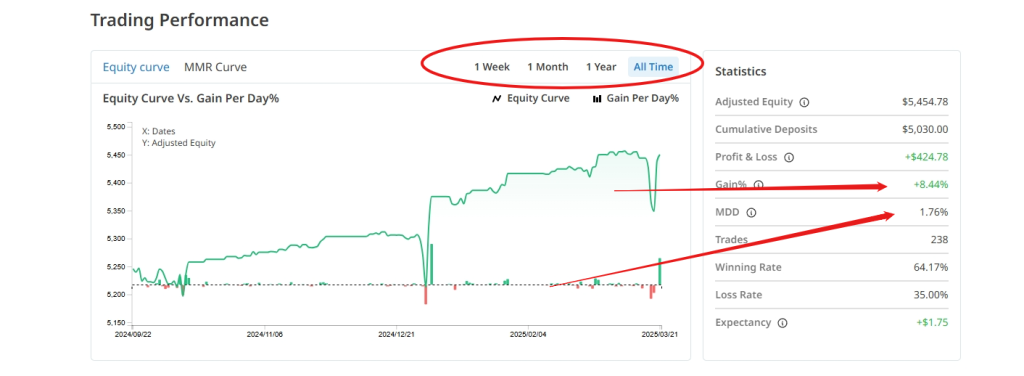
✅ Look Beyond Profit Numbers
A 300% annual return sounds impressive until you learn the trader uses 50x leverage and ignores stop-losses.
Prioritize metrics like:
- Profit Factor (ideally >1.5)
- Maximum Drawdown (avoid >20%)
- Consistency (6+ months of stable growth).
🔍 Pro Tip: Tradingcup’s tool visualizes trader’s historical wins/losses. Spot patterns: Do they thrive in volatile markets or crash during corrections?
Step 2: Risk Management—The Make-or-Break Factor
“Risk comes from not knowing what you’re doing.” – Warren Buffett
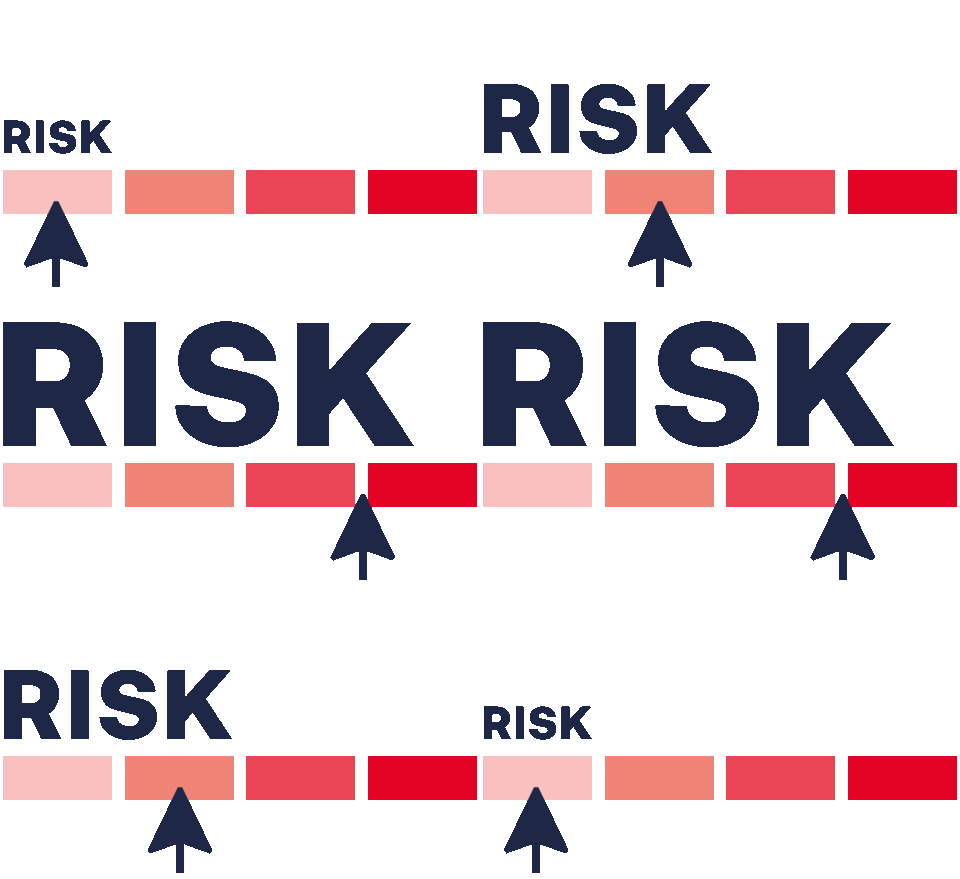
A trader’s risk strategy separates professionals from amateurs.
Red flags:
- High Leverage: >10x in forex or crypto.
- Revenge Trading: Emotional trades after losses.
- No Stop-Loss: 90% of blown accounts start here.
🛡️ Safe Bet: Favor traders who risk ≤2% per trade and share their risk management rules publicly.
Step 3: Win Rate vs. Risk-Reward—The Hidden Math
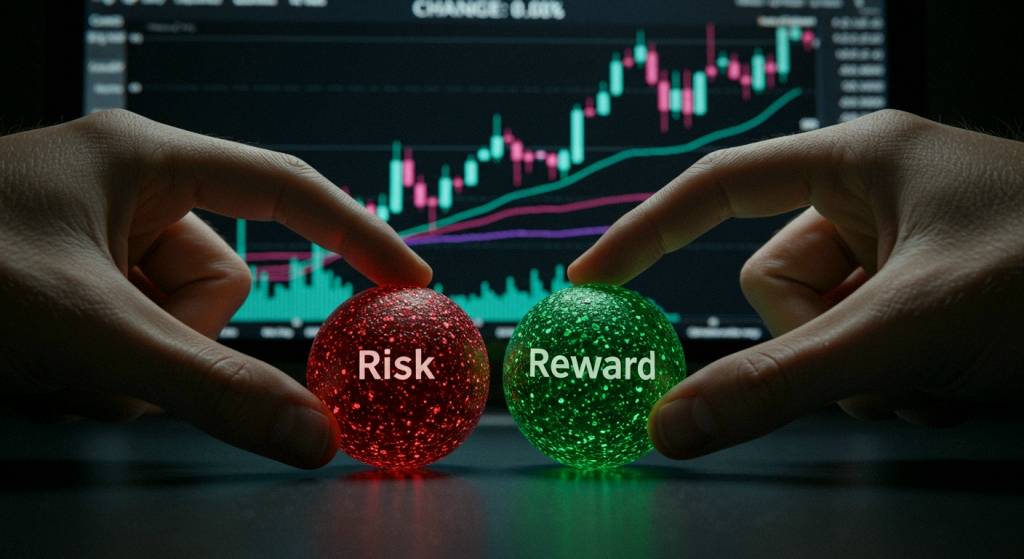
A 90% win rate means little if the 10% losing trades wipe out gains. Example:
- Trader A: 70% win rate, 1:1 risk-reward → Break-even after fees.
- Trader B: 40% win rate, 1:3 risk-reward → Profitable long-term.

Step 4: Fees – The Silent Profit Killer
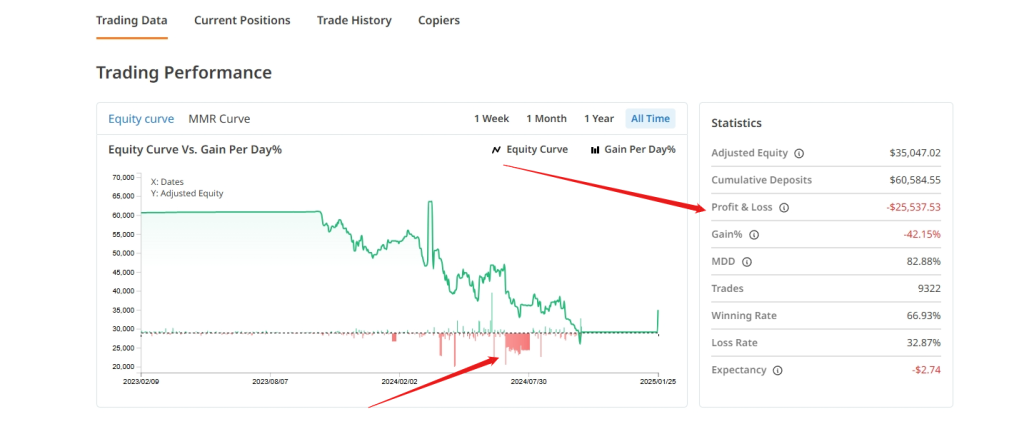
A trader charging 30% performance fees might seem worth it not until you realize their “high-water mark” resets monthly.
Key checks:
- Subscription Fees: Ideal for small accounts.
- Performance Fees: Ensure they only take a cut above your initial capital.
Hypothetical Example for Illustrative Purposes Only:
A novice investor, Sarah blindly copied a signal provider with flashy 80% monthly returns. Within weeks, a single reckless trade erased 60% of her portfolio. The provider had no risk controls, used 100x leverage, and ignored warnings. Fast-forward: Sarah switched strategies. She analyzed a new trader, who prioritized low drawdowns, and 1:3 risk-reward ratios. Before long, her portfolio grew steadily not explosively, but sustainably. Copy trading isn’t about chasing hype; it’s about verifying substance.

Common Questions About Analyzing Trading Signals
1. How Do You Analyze a Signal Provider?
Beyond performance metrics, assess their trading strategy alignment with your goals. For example:
- Do they use technical indicators (e.g., RSI, MACD) or fundamental analysis?
- Are their signals tailored to volatile markets like crypto, where leverage risks are higher?
2. How to Interpret Trading Signals?
Signals aren’t just “buy/sell” alerts. Look for:
- Context: Is the signal based on a breakout, trend reversal, or news event?
- Risk-Reward Clarity: A good signal specifies entry, stop-loss, and take-profit levels.
Example: A forex signal might target EUR/USD during ECB announcements but include a tight stop-loss to manage volatility.
3. Do Professional Traders Use Signals?
Yes, but cautiously. Pros combine signals with their analysis. When evaluating a provider:
- Check if they document their rationale for trades (e.g., “Shorted Bitcoin due to overbought RSI”).
- Avoid providers offering “guaranteed wins” even experts face losses.
4. Which Trading Indicator is Most Accurate?
No indicator is perfect. Reliable providers use a mix of tools:
- RSI (Relative Strength Index): Identifies overbought/oversold conditions.
- Moving Averages: Spot trends.
- Economic Calendars: For forex traders hedging news events.
Key Insight: A provider relying solely on one indicator is riskier than one using a balanced approach.
5. How to Analyze Forex Signals?
Forex requires extra vigilance:
- Leverage Warnings: Avoid providers using >10x leverage on major pairs.
- Currency Pair Specialization: Does the provider focus on GBP/USD or scatter trades across exotic pairs?
- Time Zone Alignment: Ensure their active hours match your market’s liquidity peaks.
For more detailed insights on developing daily trading routines, risk management, and effective position sizing strategies, explore additional articles on Trading Cup. Our trading experts at ACY and FinLogix are also great resources to guide your journey towards trading excellence.

Discover Our Best Trading Signals
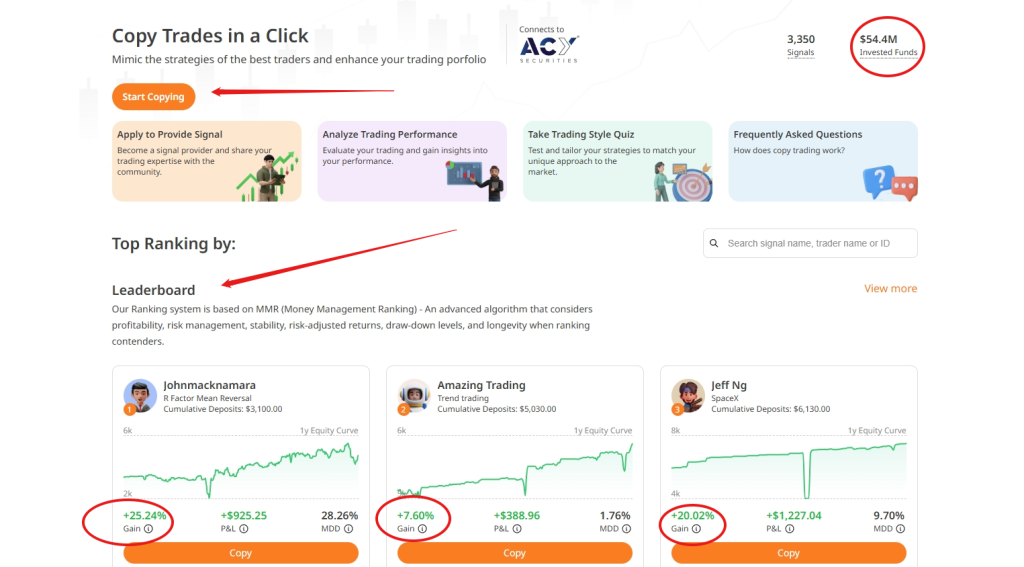
At Tradingcup, you can browse through a selection of signals and review past performance before you decide to copy.
Become A Signal Provider
Share your expertise and become a signal provider so other traders can copy your trades.
Stay tuned to our blog for more trader spotlights and leaderboard updates.
Trading involves risks.
Visit the Tradingcup blog through the link below for more updates: https://www.tradingcup.com/learn
For further reading, visit acy.com