Last Updated: February 25, 2026
This article is reviewed annually to reflect the latest market regulations and trends.
TL;DR: The Copy Trader’s Guide
- To start your trading quest, find what fits you best.
- Binance is vast, with crypto moving fast.
- TradingCup’s great feat makes risk management sweet.
- Check all costs with care to avoid a hidden snare.
- With knowledge and a guide, you’ll take the markets in stride.
Disclaimer: The information in this article is for educational purposes only and does not constitute financial, investment, or trading advice. Copy trading carries substantial risks, including the potential loss of your entire invested capital. Past performance of copied traders or strategies is not a reliable indicator of future results. You may be replicating high-risk trades, overleveraged positions, or strategies incompatible with your financial goals. Always conduct independent research into a trader’s historical performance, risk metrics, and strategy before copying them. Never invest funds you cannot afford to lose. Consult a licensed financial advisor to ensure copy trading aligns with your risk tolerance, financial objectives, and regulatory requirements in your jurisdiction. This article does not endorse specific traders, platforms, or strategies, and all trading decisions remain your sole responsibility.
“The rich invest in time, the poor invest in money.” – Warren Buffett
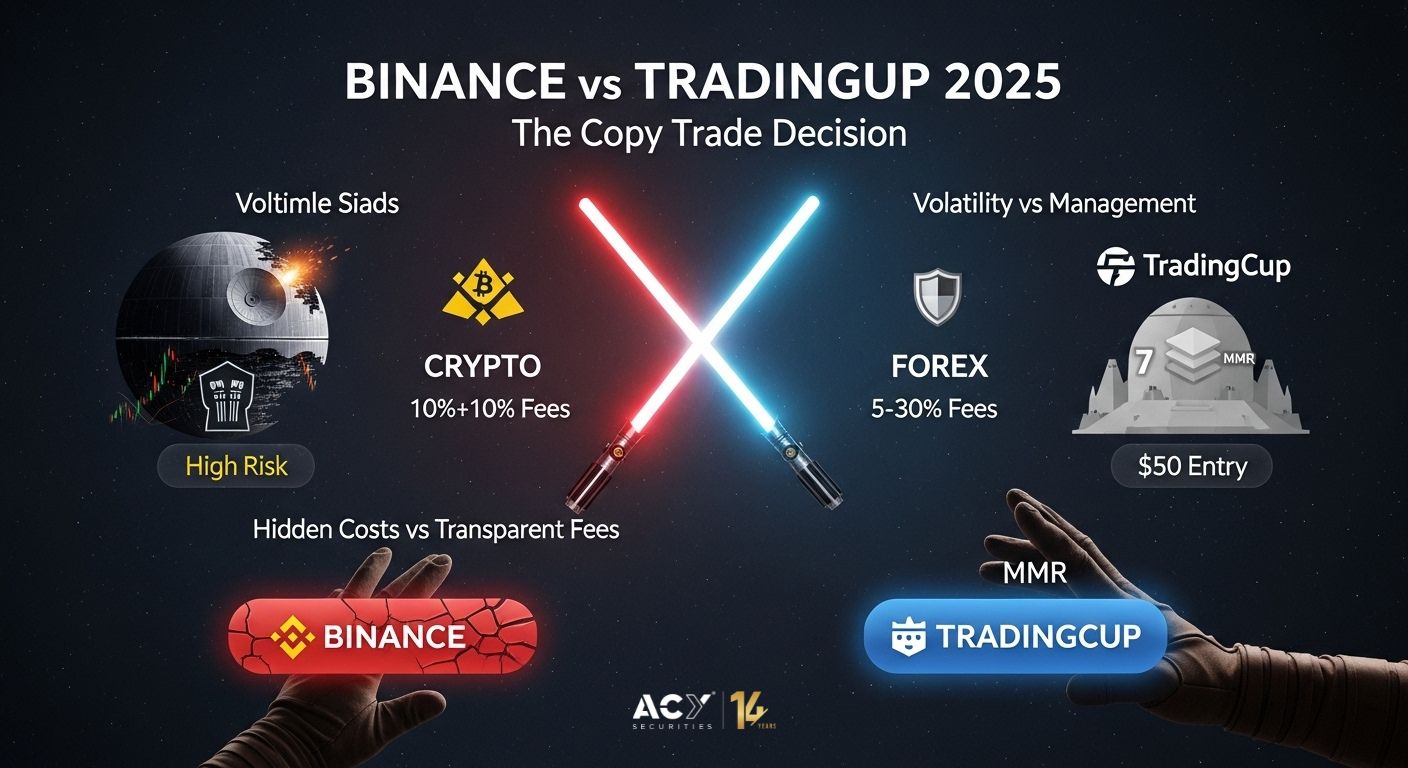
Binance vs. TradingCup: Which Copy Trading Platform Should You Use in 2026?
You’ve decided to take control of your financial future. You’ve heard the buzz about trading, whether in the volatile world of cryptocurrencies or the established realm of forex. You open a chart, and it looks like a foreign language, candlesticks, indicators, and jargon everywhere. It feels overwhelming. Then, you discover a beacon of hope: copy trading. The idea is simple and brilliant: find a successful trader and automatically copy their moves. But this opens a new Pandora’s box of questions. Where do you start? Who do you trust? Which platform is right for you?
This guide is your map. We will navigate the intricate worlds of two major players, Binance and TradingCup, to help you understand which platform aligns with your goals, risk tolerance, and learning style.
What is Copy Trading, and Whose Lead Should a Beginner Follow?
Copy trading is a portfolio management strategy that allows traders to automatically replicate the trades of other, more experienced traders. When the experienced trader (often called a “Lead Trader” or “Signal Provider“) opens or closes a position, the same action is executed in the follower’s account in proportion to the funds they’ve allocated. This lowers the barrier to entry, allowing beginners to participate in the markets without needing deep technical expertise from day one.
The two most popular arenas for copy trading are cryptocurrency and forex.
- Crypto Copy Trading: This involves replicating trades in digital assets like Bitcoin and Ethereum on crypto exchanges. The market is known for its high volatility and operates 24/7.
- Forex Copy Trading: This involves trading currency pairs (e.g., EUR/USD) in the foreign exchange market, the largest financial market in the world. It also offers opportunities in commodities and indices.
For a beginner, the choice depends heavily on risk appetite and desired focus. The crypto market can offer dramatic gains but also carries the risk of amplified losses due to its volatility. The forex market, while still risky, is often considered more stable and is subject to more established regulatory frameworks. For beginners, a platform that emphasizes risk management above all else is crucial, regardless of the market.
Diving Deep: What Are the Real Benefits and Risks of Binance Copy Trading?
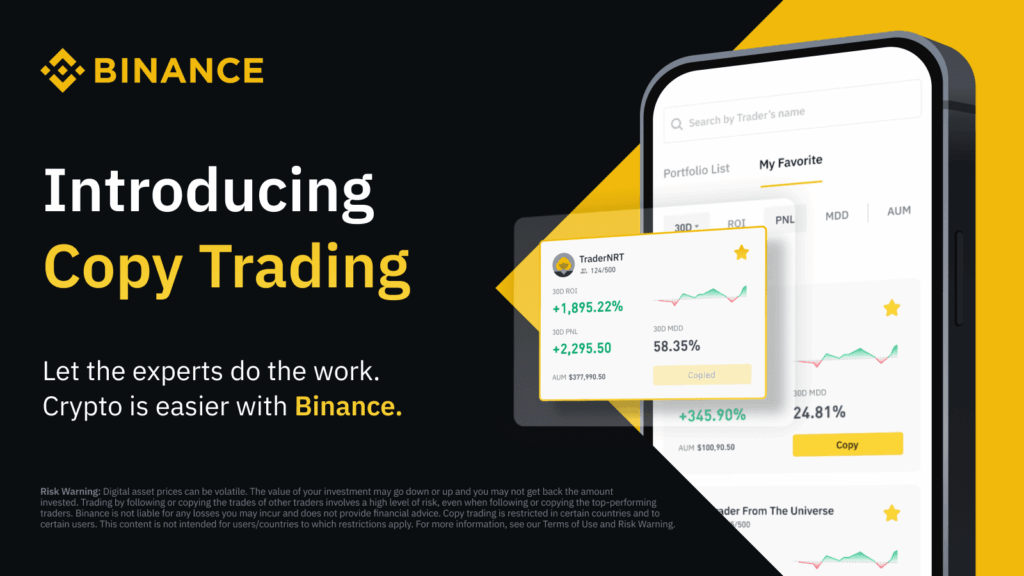
Binance is a giant in the cryptocurrency world, and its copy trading feature allows users to mimic the strategies of “Lead Traders” in both spot and futures markets.
The Bright Side: Binance’s Benefits
- Accessibility and Learning: Binance lowers the barrier to entry for crypto trading. It acts as an educational tool, allowing new users to observe professional trading decisions in real time.
- Automation and Efficiency: The system is fully automated, providing 24/7 market coverage that is essential in the non-stop crypto world. This automation also helps remove emotional decision-making from the process.
- Transparency and Choice: The platform provides detailed analytics on Lead Traders, showing their return on investment (ROI), profit and loss (PnL), and win rates. Users can copy up to 10 traders at once, allowing for portfolio diversification.
- Constant Innovation: Binance regularly rolls out new features, such as mock copy trading for risk-free practice and improved transparency tools.
The Hidden Dangers: Binance’s Risks
- Inherited Losses: Even the best traders have losing streaks, and as a copy trader, you automatically inherit their losses. Past performance is never a guarantee of future results.
- User Sentiment is Mixed: Social media reviews reveal polarized experiences. One Reddit user reported losing a significant portion of their investment, describing many lead traders as “degens that don’t have a strategy” who use dangerously high leverage.
- Hidden Costs and Technical Glitches: A major hidden cost is “slippage,” where the price at which your trade executes differs from the lead trader’s, especially during high volatility. Technical issues like “copy lag” can also materially alter returns.
- Regulatory Scrutiny: Binance has faced significant regulatory challenges globally. For instance, it disabled copy trading for EU users ahead of the MiCA regulation implementation in June 2024. Such regulatory actions can disrupt services overnight.
Why is TradingCup Gaining Attention?
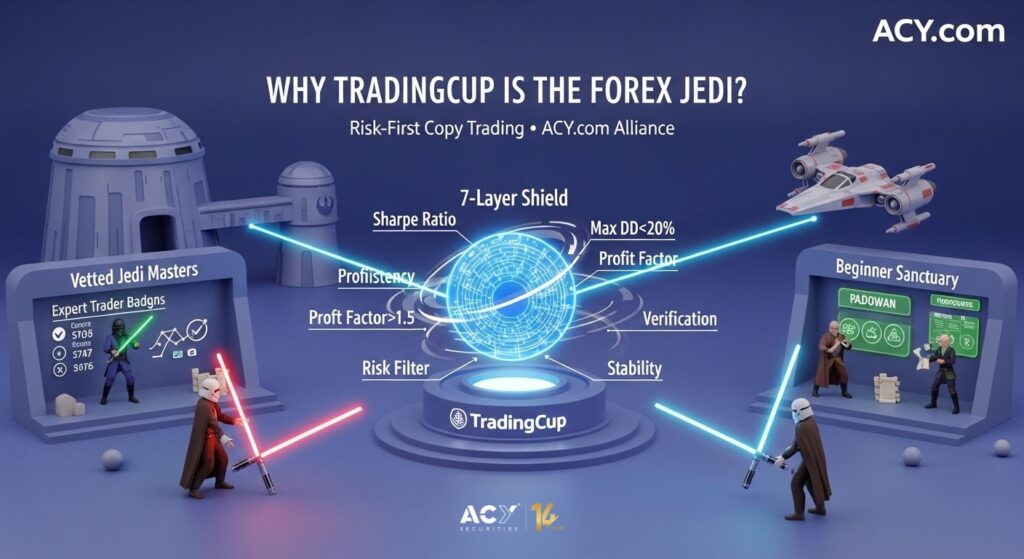
TradingCup, through its strategic partnership with the brokerage ACY.com, has emerged as a formidable forex copy trading platform, positioning itself with a strong emphasis on risk management, transparency, and user-friendliness.
- Advanced, Risk-First Filtering: TradingCup’s standout feature is its multi-layered Money Management Ranking (MMR) system. Instead of just ranking traders by their ROI, it uses a seven-layer filtering mechanism that prioritizes risk-adjusted metrics like the Sharpe Ratio, maximum drawdown (MDD), and long-term consistency. It actively seeks to identify traders with a maximum drawdown below 20% and a profit factor greater than 1.5, which is a more reliable indicator of sustainable success.
- Curated and Vetted Traders: The platform gains credibility from its history of hosting trading contests, which serve as a proving ground to identify consistent, skilled traders.
- Beginner-Focused Experience: TradingCup is designed to be intuitive and accessible. It offers detailed guides, articles from experts, and interviews with top traders to educate its users. The ability to filter for “Conservative Signals” allows newcomers to start with low-risk strategies that focus on capital preservation. For example, one such trader achieved a +5.92% gain with a mere 1.76% drawdown.
- Affordability and Transparency: The platform offers a clear subscription model and allows users to start with as little as a $50 deposit via its partnership with ACY.com. This focus on transparent, predictable pricing helps build user trust.
How Do They Compare Head-to-Head?
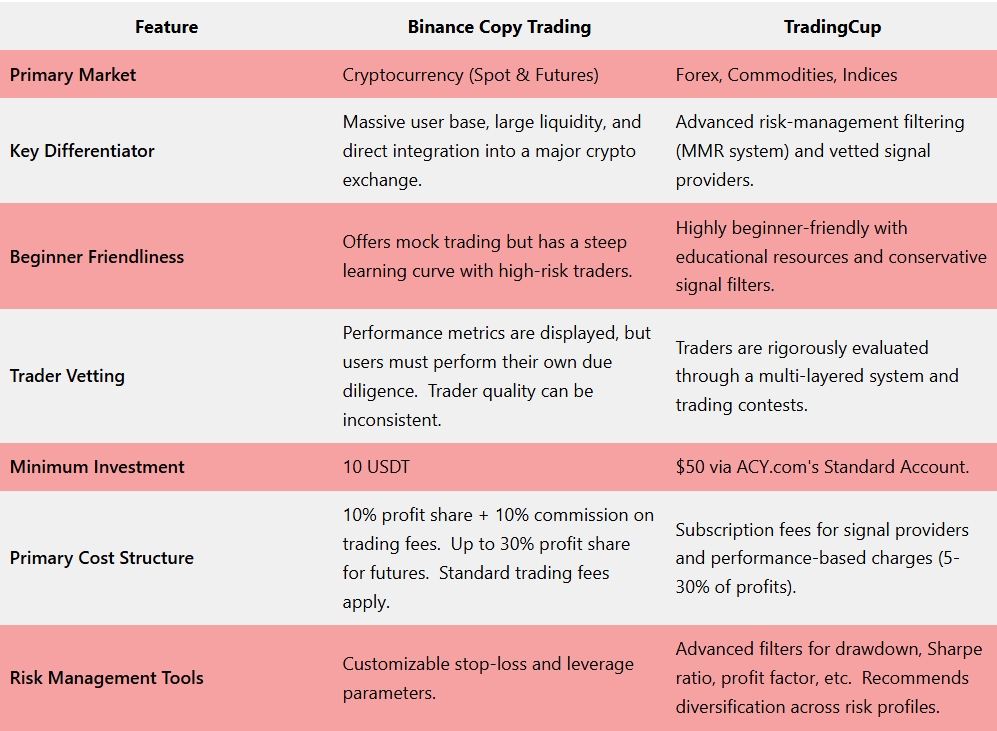
Why is Cost a Critical Factor Most Beginners Overlook?
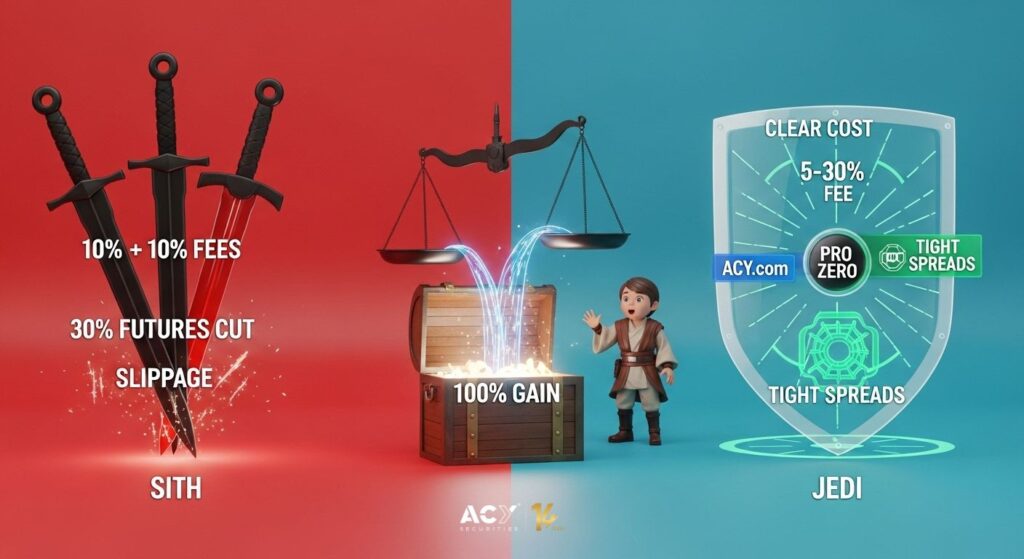
For a new trader, a 100% gain can feel exhilarating, but hidden costs can quickly turn a profitable strategy into a losing one.
- Binance’s Costs: While Binance doesn’t charge a specific fee for the copy trading service itself, the costs are multifaceted. You pay the standard trading fees, a 10% profit share to the lead trader, and another 10% of your trading fees as commission. For futures, this profit share can jump to 30%. The biggest hidden cost, however, is slippage, which is the difference between the expected price of a trade and the price at which the trade is actually executed. In volatile crypto markets, slippage can significantly eat into your profits.
- TradingCup’s Costs: TradingCup’s model is generally more transparent. It involves subscription fees for certain signal providers and performance-based charges that range from 5% to 30%. While performance fees exist, the platform’s emphasis on tight spreads and low transaction costs through ACY.com’s ‘Pro Zero’ account is designed to be cost-effective. The upfront nature of the costs helps traders better anticipate their expenses.
For a beginner, predictable costs are better than variable and hidden ones. A platform that prioritizes transparent pricing demonstrates respect for its users’ capital.
Learning from a Master: How Would Leonardo da Vinci Approach Copy Trading?

Leonardo da Vinci, the ultimate Renaissance man, was a master of observation and interdisciplinary thinking. His motto was Saper Vedere, or “knowing how to see.” He wouldn’t just blindly copy a master painter; he would deconstruct their techniques, understand the play of light and shadow, and learn the underlying principles of anatomy.
If da Vinci were to approach copy trading, he would:
- Observe Meticulously: He wouldn’t be swayed by a trader’s flashy 500% ROI. He would study their entire history, looking for consistency, drawdowns, and how they performed during market turmoil, much like how TradingCup’s MMR system encourages users to look beyond raw profitability.
- Deconstruct the Strategy: He would want to understand why the trader takes certain trades. Is it a mean-reversion strategy? A trend-following system? Blindly copying without understanding is just imitation; learning the principles behind the strategy is true knowledge.
- Experiment with Low Stakes: Just as he sketched countless designs before painting, he would start small. He’d use a platform’s mock trading feature or invest a minimal amount he could afford to lose to test multiple traders and strategies.
- Diversify His “Portfolio” of Masters: Da Vinci learned from various fields, from anatomy to engineering. Similarly, he would diversify by following several traders with different strategies to mitigate risk, a best practice recommended by both Binance and TradingCup.
Da Vinci would see copy trading not as a shortcut to riches, but as a powerful apprenticeship, a way to learn from modern-day masters while actively managing risk through scientific scrutiny.
10 Lessons from “Naked Forex” for the Aspiring Copy Trader
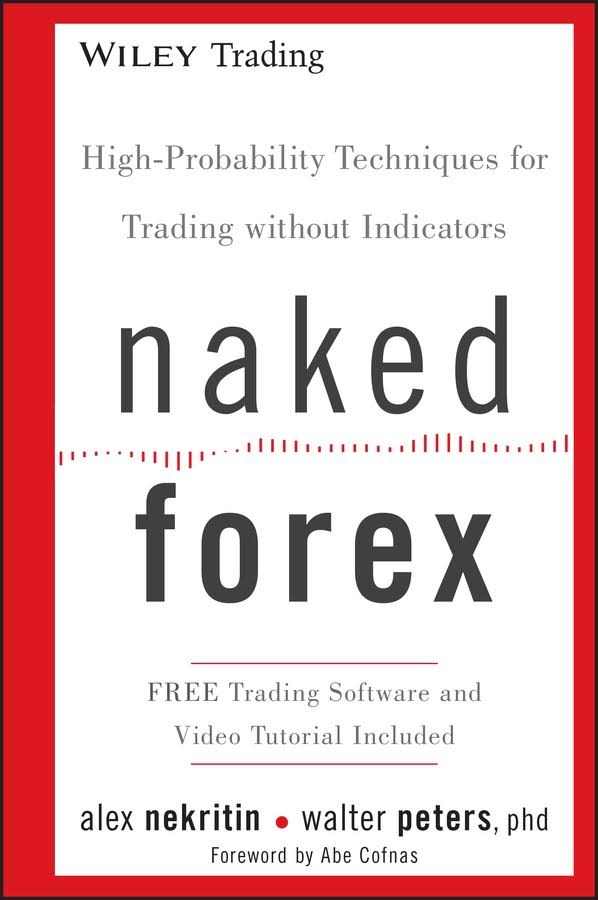
The book Naked Forex by Alex Nekritin and Walter Peters champions trading based on price action, free from the clutter of lagging indicators. Its principles are surprisingly relevant for choosing a copy trader.
- Understand Market Conditions: The book teaches that no single strategy works forever. A copy trader must know if their chosen expert excels in trending, ranging, or volatile markets and not follow them blindly when conditions change.
- Patience is a Virtue: Top traders often wait for long periods for the perfect setup. Don’t get anxious and jump to a trader who trades constantly; focus on the quality, not the quantity, of trades.
- Manage Risk Above All Else: This is the golden rule. A trader with huge wins but even bigger drawdowns is a gambler. Prioritize traders with a proven record of small, controlled losses. This aligns perfectly with TradingCup’s emphasis on low MDD.
- Let Winners Run, Cut Losers Short: Observe if the lead trader follows this principle. A common complaint on Binance is traders who “hold losing positions,” hoping they’ll turn around.
- Don’t Be Emotional: The best thing about copy trading is that it can remove your own emotional decisions. However, you must also be disciplined enough not to interfere with the system based on fear or greed.
- Have a Plan: Your plan isn’t to find trades, but to find traders. Define your criteria: maximum acceptable drawdown, minimum track record, and desired return. Stick to it.
- Keep it Simple: “Naked Forex” is about simplicity. Don’t overcomplicate your copy trading portfolio. Choose a few high-quality, vetted traders rather than trying to copy dozens.
- Review Your Performance: Regularly review the performance of the traders you are copying. Are they still meeting your criteria? Don’t fall into the trap of “set it and forget it.”
- Look at the Big Picture: Use longer timeframes to judge a trader’s performance. A bad week or even a bad month might just be a blip in an otherwise solid long-term strategy.
- It’s a Business, Not a Hobby: Treat your copy trading capital as a business investment. This means doing your due diligence, managing costs, and having realistic expectations for profit.
So, Why is TradingCup Arguably the Better Choice for Beginners?
While Binance offers a gateway to the exciting world of crypto copy trading, its environment can be a minefield for the uninitiated, with high-leverage “degen” traders and significant regulatory risks.
TradingCup emerges as the superior platform for beginners because it is fundamentally built on a philosophy of risk mitigation and transparency.
- You’re Less Likely to Get Burned: The MMR system is designed to filter out gamblers. By prioritizing traders with low drawdowns and proven consistency, it protects beginners from catastrophic losses that can end a trading career before it even starts.
- The Focus is on Education and Informed Decisions: TradingCup provides the tools and data to make an intelligent choice, moving beyond misleading ROI figures. It encourages a Da Vinci-like approach: Saper Vedere, knowing how to see the real risk-adjusted performance.
- A More Stable, Regulated Environment: By focusing on the forex market and partnering with a regulated broker like ACY.com, TradingCup offers a more stable and predictable environment compared to the regulatory turmoil surrounding crypto exchanges.
Tradingcup’s Edge: The ACY Securities Partnership & The Gauntlet of Championships
What makes Tradingcup’s engine hum? A significant part is its strategic partnership with ACY Securities and its unique approach to fostering talent through trading championships.
The ACY Securities Synergy:

Tradingcup’s collaboration with ACY Securities, a globally recognized broker regulated by ASIC and VFSC, is a cornerstone of its offering. This partnership brings several advantages:
- Tight Spreads & Fast Execution: Access to ACY’s ProZero accounts means spreads from 0.0 pips on major pairs (like EUR/USD, GBP/USD) and ultra-fast execution (under 30 milliseconds). This reduces trading costs and minimizes slippage – crucial for copy trading precision.
- Secure Transactions & Regulatory Oversight: ACY’s regulation provides a degree of security and trust. Their infrastructure supports secure and transparent trading environments. ACY also has Professional Indemnity insurance.
- Technological Integration: Trades are copied rapidly, typically within 500 milliseconds to one second, ensuring synchronization. Lot sizes are often calculated proportionally, aiding scalability.
- Expanded Platform Access: As of early 2025, ACY Securities expanded its copy trading solution on Tradingcup to the MT5 platform, opening doors for more sophisticated algo-based strategies.
Trading Championships: Forging Elite Traders
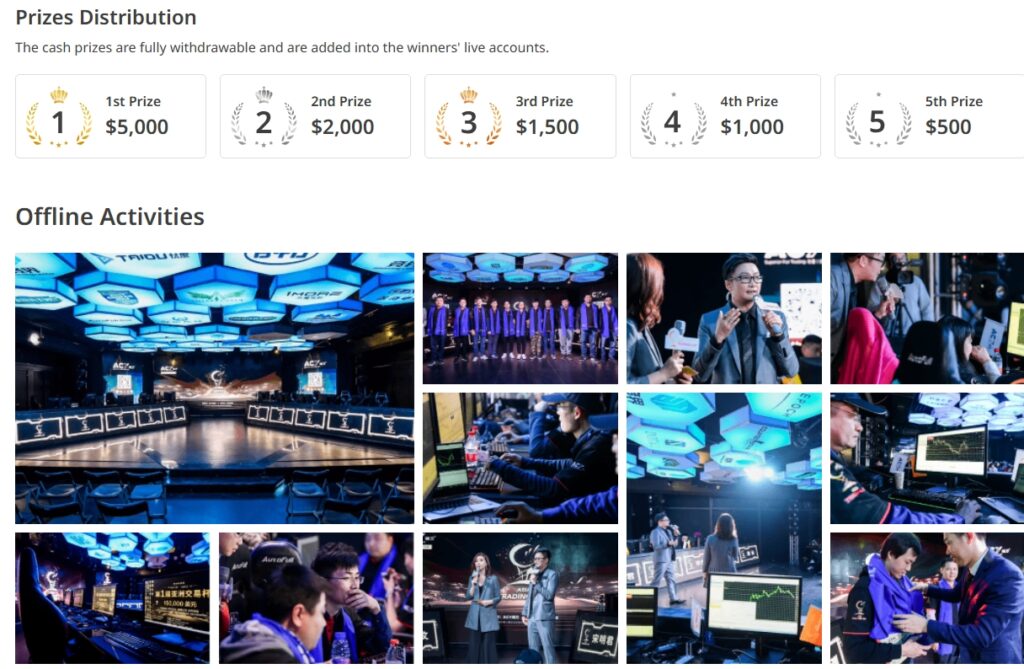
Tradingcup distinguishes itself by hosting prestigious trading competitions, such as the World Cup Championship of Futures Trading® and various Forex Trading Championships.
- A Test of Skill & Strategy: These aren’t just for show. They rigorously test traders’ abilities to generate returns while managing risk effectively. Metrics like Sharpe ratio and maximum drawdown are often key evaluation criteria.
- Validation of Top Performers: Winners of these championships, like Marci Silfrain (256.8% net return in a Futures Trading Championship) or Pavlos Georgiades (166.7% net return in a Forex Trading Championship), demonstrate that Tradingcup’s platform can identify and showcase genuine trading talent. Serghey Magala also achieved a 224.2% net return in the 2024-2025 Global Cup Championship of Forex Trading.
- Building Trust & Credibility: These public competitions and their transparent results reinforce trust in Tradingcup’s ranking systems and the quality of its signal providers.
- Historical Context: The World Cup Trading Championships® have a long history, running since 1983, lending further prestige. Tradingcup has consistently used these events to find and highlight top talent. (Examples: 2018 Champions, 2019 Champions, 2020 Qualifiers).
This combination of a robust brokerage partner and a competitive environment for identifying talent gives Tradingcup a unique edge in the copy trading landscape.
How Do Traders Climb the Ranks on Tradingcup? Beyond Just Profit.
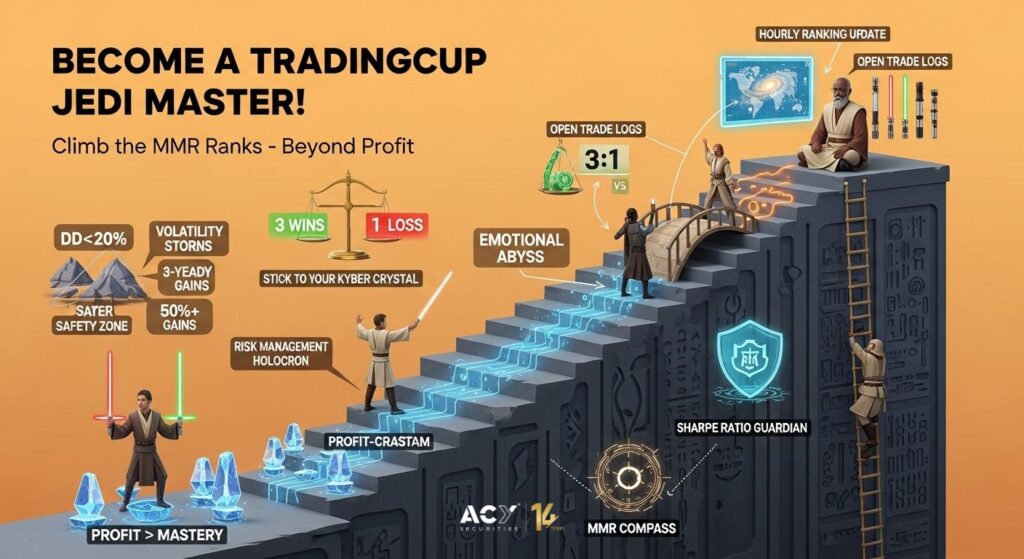
So you want to copy someone on Tradingcup. How do you know who’s truly skilled versus who just got lucky? Tradingcup’s ranking system, primarily the Money Manager Ranking (MMR), is designed to give you a more holistic view than just looking at the highest ROI.
Here’s a glimpse into the key factors:
- Profitability (but not in isolation): Yes, returns matter, but it’s not the only metric.
- Risk Management: This is crucial. The system analyzes how traders manage their risk.
- Maximum Drawdown (MDD): How much has the trader’s account fallen from its peak? A lower MDD is generally preferred, indicating better capital preservation. TradingCup’s analysis suggests an MDD below 20% is safer, while over 50% is a red flag.
- Sharpe Ratio: As mentioned, this evaluates return against risk. A higher Sharpe Ratio suggests better risk-adjusted performance.
- Maximum Drawdown (MDD): How much has the trader’s account fallen from its peak? A lower MDD is generally preferred, indicating better capital preservation. TradingCup’s analysis suggests an MDD below 20% is safer, while over 50% is a red flag.
- Consistency of Performance: Are the profits steady over time, or do they come in erratic bursts followed by big losses? The MMR favors consistency.
- Adherence to Predefined Trading Strategies: Does the trader stick to a clear strategy? This helps in understanding their approach.
- Win Rate vs. Risk/Reward: A high win rate is appealing, but not if the few losses are huge. Tradingcup allows digging into historical trades to see if winning trades significantly outweigh losing ones (e.g., a 3:1 reward-to-risk).
- Strategy Notes & Transparency: Top performers often share insights into their methods.
- Most Traded Products & Lot Sizing: Understanding if a trader concentrates on one asset or diversifies, and if their trade sizing is consistent, provides further clues.
- Hourly Ranking Updates: The MMR system updates frequently, ensuring users see fresh data.
Essentially, Tradingcup tries to identify traders who are not just profitable, but who are sustainably profitable by managing risk effectively. This multi-layered approach is what differentiates it and aims to provide a safer environment for copiers, especially beginners who might be swayed by high ROI figures alone.
Your Final Checklist Before You Start to Copy Trade
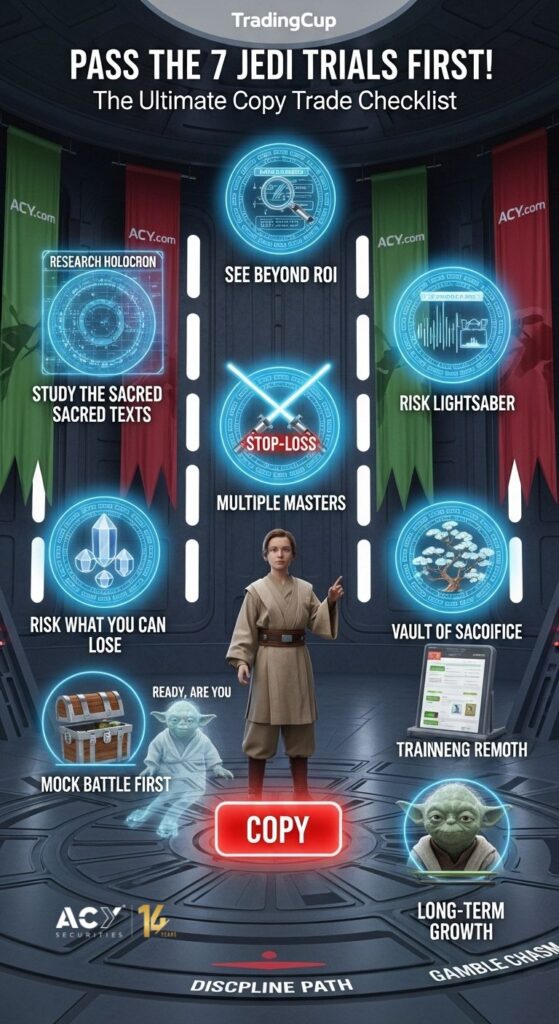
Ready to begin? Don’t click that “copy” button just yet. Go through this final checklist.
- Have I Done My Own Research? Read reviews, understand the platform’s fee structure, and never rely solely on a platform’s leaderboard.
- Have I Vetted My Trader? Look beyond ROI. Check their maximum drawdown, profit factor, average trade duration, and performance history over at least one year.
- Have I Set My Risk Limits? Set your own stop-loss for each copy trading portfolio. Decide on the maximum percentage of your capital you’ll allocate to a single trader.
- Am I Diversifying? Don’t put all your eggs in one basket. Copy 2-3 traders with different, non-correlated strategies.
- Am I Investing Money I Can Afford to Lose? This is non-negotiable. Never invest capital that you need for daily life or emergencies.
- Have I Tried Mock Trading? Use the platform’s demo or mock trading feature first to understand the mechanics without risking real money.
- Do I Have Realistic Expectations? Copy trading is not a get-rich-quick scheme. It’s a tool for steady, long-term growth.
By choosing the right platform and adopting a disciplined, research-driven approach, you can turn copy trading from a gamble into a powerful strategy for your financial journey.
Frequently Asked Questions (FAQ)
1. Is copy trading legal and safe for beginners?
Copy trading is legal in many parts of the world but is often highly regulated. In the US, it’s overseen by the SEC and CFTC, while in Europe, it falls under MiFID II regulations. It can be safe for beginners if they use a reputable platform, conduct thorough research on traders, and implement strict risk management strategies like setting stop-losses and diversifying. However, it always carries substantial risks, and past performance does not guarantee future results.
2. What are the main costs I should be aware of in copy trading?
The main costs include profit-sharing fees paid to lead traders (often 10-30%), commissions on trading fees, standard trading spreads, and potential hidden costs like slippage, where your trade executes at a different price than intended due to market volatility. Some platforms may also have subscription or inactivity fees.
3. Can I lose more money than I invest in copy trading?
Generally, on reputable platforms, you cannot lose more than the capital you have in your account. However, if you use leverage, your losses can be significantly amplified and can wipe out your entire investment quickly. This is why it’s crucial to understand and manage leverage settings.
4. What is a “good” ROI for a copy trader?
A “good” ROI is misleading if not viewed in context. A trader with a 30% monthly ROI but a 40% maximum drawdown (MDD) is far riskier than a trader with a 10% ROI and a 5% MDD. Beginners should focus on risk-adjusted returns, looking for traders with high Sharpe ratios, low drawdowns, and consistent performance over a long period.
5. What happens if the lead trader/Signal Provider I am copying makes a lot of failed trades?
On some platforms like Binance, a copy trading portfolio may be automatically closed after a certain number of consecutive failed orders (e.g., five). Regardless of platform-specific rules, if a trader is consistently failing, it is the user’s responsibility to stop copying them to prevent further losses.
(Disclaimer: This article is for informational and educational purposes only. It should not be considered financial advice. Always conduct your own research and consult with a qualified financial advisor before making any investment decisions.)
For more detailed insights on developing daily trading routines, risk management, and effective position sizing strategies, explore additional articles on Trading Cup. Our trading experts at ACY and FinLogix are also great resources to guide your journey towards trading excellence.

Discover Our Best Trading Signals
At Tradingcup, you can browse through a selection of signals and review past performance before you decide to copy.
Become A Signal Provider
Share your expertise and become a signal provider so other traders can copy your trades.
Stay tuned to our blog for more trader spotlights and leaderboard updates.
Trading involves risks.
Visit the Tradingcup blog through the link below for more updates: https://www.tradingcup.com/learn
Related Copy Trading blogs:
- Understanding Market Liquidations: Liquidity Sweeps and Runs Explained
- 7 Essential Daily Habits of Successful Traders to Outperform Their Peers
- 10 Strategies You Can Copy off Our Best Copy Traders
- 5 Strategies Every Trader Can Master To Trade Better In A Trading Contest
- 2025 Copy Trading Scams Exposed: How to Spot Fraud
- A Swing Trading Strategy with an 83 Percent Win Rate and Low Drawdowns
- Forex Martingale Strategies Explained, The Good, The Bad and The Ugly
- Pyramiding Trading Tutorial – Pros & Cons & How to Use It