Last Updated: February 25, 2026
This article is reviewed annually to reflect the latest market regulations and trends.
TL;DR: Your Guide to Copy Trading Choices
- New to trading? Don’t just guess, see who to press!
- eToro’s social, Tradingcup’s keen, pick the best for your green.
- Costs and filters, a vital scene, choose wisely, stay serene.
- Risk matters greatly, it’s always been, trade smart, not just mean.
- From Livermore’s wisdom to Turtles so lean, learn lessons, be the queen (or king!)
Disclaimer: The information in this article is for educational purposes only and does not constitute financial, investment, or trading advice. Copy trading carries substantial risks, including the potential loss of your entire invested capital. Past performance of copied traders or strategies is not a reliable indicator of future results. You may be replicating high-risk trades, overleveraged positions, or strategies incompatible with your financial goals. Always conduct independent research into a trader’s historical performance, risk metrics, and strategy before copying them. Never invest funds you cannot afford to lose. Consult a licensed financial advisor to ensure copy trading aligns with your risk tolerance, financial objectives, and regulatory requirements in your jurisdiction. This article does not endorse specific traders, platforms, or strategies, and all trading decisions remain your sole responsibility.
“The chief task in life is simply this: to identify and separate matters so that I can say clearly to myself which are externals not under my control, and which have to do with the choices I actually control. Where then do I look for good and evil? Not to uncontrollable externals, but within myself to the choices that are my own…” – Epictetus
eToro vs. Tradingcup: Which Forex Copy Trading Platform is Perfect for Beginners in 2026?
Copy trading has emerged as a popular lighthouse, guiding newcomers by allowing them to mimic the trades of experienced “signal providers.” But which platform offers the clearest path: the socially-driven eToro or the analytics-focused Tradingcup? This comprehensive analysis will dissect both, helping you, the aspiring trader, to make a smarter investment decision.
What is Forex Copy Trading?
Imagine learning to swim by watching and mimicking an Olympic swimmer. That’s the essence of copy trading in the forex world. You, the “copier,” choose an experienced trader (the “signal provider“) and automatically replicate their trades in your own account. This means when they buy or sell a currency pair, your account does too, proportionally to the funds you’ve allocated.
So, is this a good starting point for beginners?
Potentially, yes. Here’s why:
- Reduced Learning Curve: You can start participating in the market without needing to master complex technical analysis from day one.
- Learn by Observing: By following seasoned traders, you can gain insights into strategies and market behavior.
- Timesaving: It can be less time-intensive than actively managing your own trades, especially if you have other commitments.
- Access to Expertise: You tap into the knowledge and experience of traders who have dedicated significant time to honing their skills.
- Emotional Detachment: Since trades are automated, it can help reduce emotionally driven decisions, a common pitfall for new traders.
However, it’s not a risk-free panacea. The primary risk is that if the trader you copy makes a mistake or hits a losing streak, you lose money too. Approximately 61% of retail investor accounts incur losses when trading CFDs on platforms like eToro, a statistic that underscores the inherent risks. Success heavily relies on choosing the right trader and understanding that past performance doesn’t guarantee future results. Blindly copying without any understanding is a recipe for potential disappointment.
Is Copy Trading Perfect For Beginners?
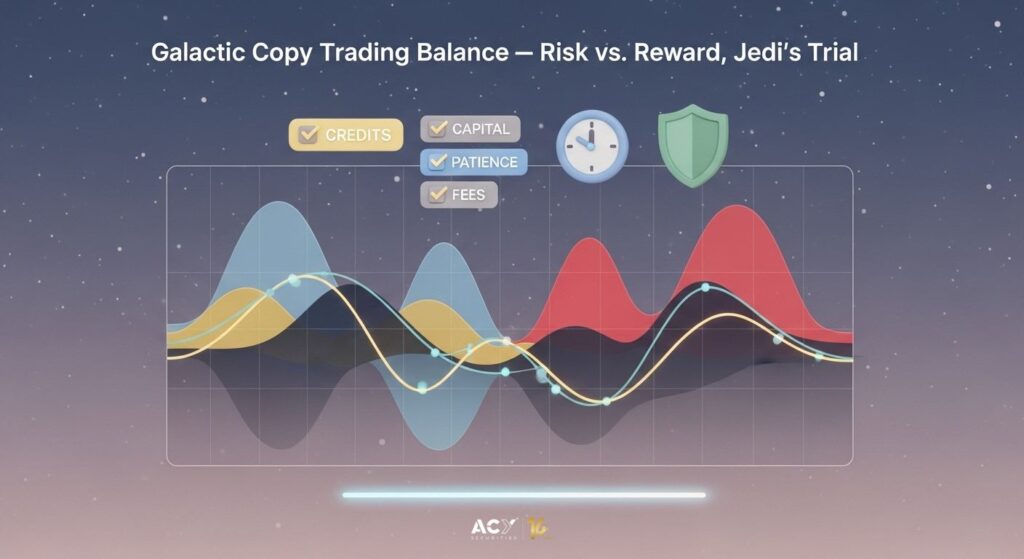
Copy trading isn’t for everyone. Before you jump in, consider this checklist (inspired by guidance from platforms like TradingCup):
- Are you comfortable with risk? All trading involves risk, and past performance is not indicative of future results. Even the best traders have losing streaks.
- Do you have capital you can afford to lose? Never invest money you can’t afford to part with.
- Are you looking for a passive investment? While copy trading is less hands-on, it still requires initial research and ongoing monitoring.
- Do you understand the fee structures? Subscription fees and performance fees can eat into profits.
- Are you patient? Quick riches are rare. Successful trading, even copying, often requires a long-term perspective.
- Are you willing to do your due diligence? Selecting a trader requires careful analysis of their history, strategy, and risk management.
- Do you have realistic expectations? Don’t expect to double your money overnight.
- Are you emotionally prepared for drawdowns? Seeing your account balance dip, even temporarily, can be stressful. Maximum Drawdown (MDD) is a key metric to understand.
If you’ve nodded along to these points with a clear understanding, then XAUUSD copy trading might be a suitable avenue for you to explore.
Diving Deep: eToro’s CopyTrader – Riding the Social Wave?

eToro has made a significant name for itself, largely through its innovative CopyTrader™ functionality, which aims to democratize trading. It’s built on a vibrant social trading ecosystem where users can interact, share insights, and, of course, copy others.
Key Aspects of eToro for Beginners:
- Accessibility: eToro is known for its “slick platform” design and intuitive interface, making it relatively easy for novices to navigate.
- Low Entry Point: You can start an account with a minimum deposit of $100, though a minimum of $200 is required to specifically allocate to copying a trader.
- Diverse Asset Classes: Beyond forex, eToro offers stocks, ETFs, options, futures, commodities, and cryptocurrencies. U.S. stocks and ETFs even come with commission-free trading.
- Social Feed & Community: The platform fosters a collaborative environment where users can learn from each other.
- Educational Resources: eToro provides educational materials and demo accounts to help users practice without financial risk.
But are there currents to be wary of?
- Cost Concerns: While the entry is low, watch out for a 1% spread on cryptocurrency trades (effectively 2% round-trip), a $5 withdrawal fee, and inactivity charges of $10 per month after 12 months of no logins. Currency conversion fees can also add up.
- Advanced Tools Gap: If you’re looking for sophisticated charting tools and in-depth technical analysis capabilities, eToro might feel lacking compared to platforms like Webull.
- Reliance on Automation: Some critics argue that over-reliance on automated systems like CopyTrader might reduce manual oversight, potentially exposing users to unforeseen risks if they don’t understand the underlying market dynamics.
- Trader Selection Metrics: While eToro ranks traders, the emphasis is often on Return on Investment (ROI), which might not paint a full picture of risk management.
TradingCup: The Analytical Challenger – Safety First in Choppy Waters?
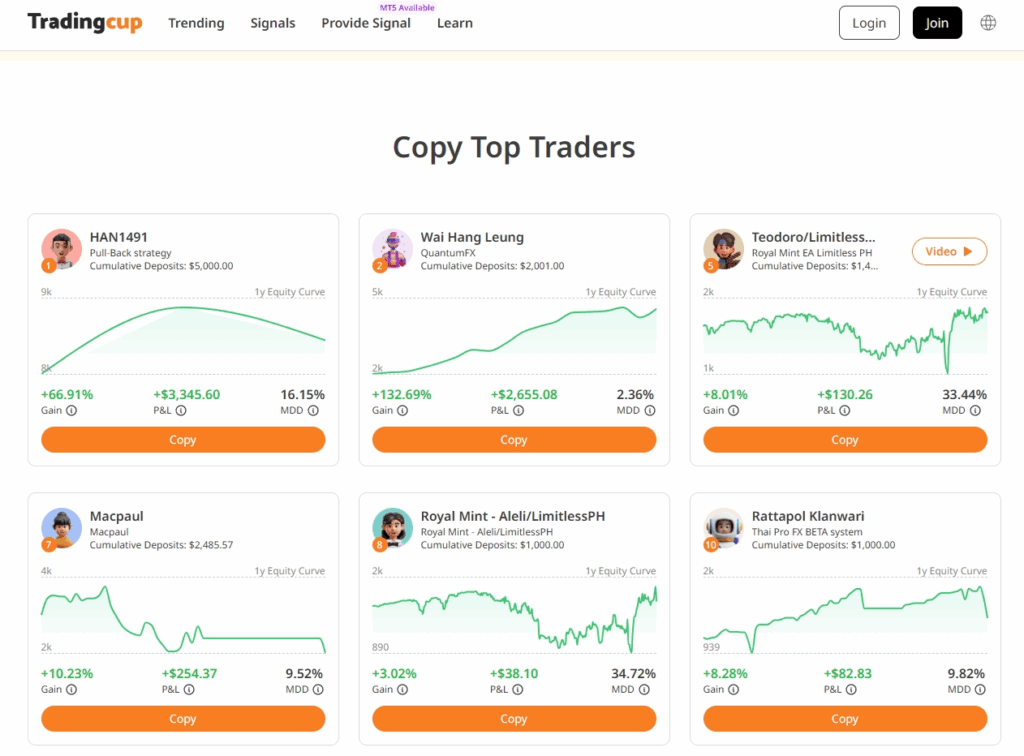
Tradingcup presents itself as a more sophisticated platform, particularly emphasizing trader safety and the optimal selection of reliable signal providers through its multi-layer filter system. This approach contrasts with platforms that might lean more heavily on basic ROI metrics.
Why Tradingcup Might Appeal to Prudent Beginners:
- Advanced Filtering Mechanisms: Tradingcup’s standout feature is its advanced analytical tools, including the Sharpe ratio filter and Money Manager Ranking (MMR) leaderboards.
- The Sharpe Ratio measures risk-adjusted returns, helping users identify traders who achieve profits through skill rather than excessive risk-taking. This is crucial in volatile markets like forex.
- The MMR system evaluates traders on criteria beyond just profitability, including risk management practices, consistency, and adherence to strategies. This offers a more nuanced assessment of a signal provider’s reliability.
- The Sharpe Ratio measures risk-adjusted returns, helping users identify traders who achieve profits through skill rather than excessive risk-taking. This is crucial in volatile markets like forex.
- Focus on Risk Management: The platform is designed for users who prioritize risk management over chasing high-risk gains, positioning it as a potentially safer alternative.
- Transparency and Detailed Metrics: User feedback indicates an appreciation for Tradingcup’s transparency through detailed performance metrics and leaderboards. The platform aims to show how a trader achieves results.
- Mobile-First Design for Novices: Tradingcup has adopted a mobile-first approach, aiming for a streamlined interface that’s accessible even to those unfamiliar with coding or deep technical analysis.
- Real-Time Alerts: Subscribers can receive real-time alerts via SMS, email, or push notifications, keeping them informed of market developments and trade executions.
Potential Trade-offs with Tradingcup:
- Subscription Model: Tradingcup operates on a subscription-based model for accessing signal providers, with fees ranging from $30 to $500 per month, depending on the provider. This is in addition to the minimum deposit requirements for an ACY Securities account (e.g., $200 for ProZero).
- Advanced Customization: While strong on analysis, some reviews suggest it might lack the advanced customization options that highly seasoned professionals might seek. However, the website also notes its ability to cater to “seasoned professionals leveraging advanced algorithms,” suggesting a nuanced capability.
Head-to-Head: eToro vs. Tradingcup – A Platform Comparison
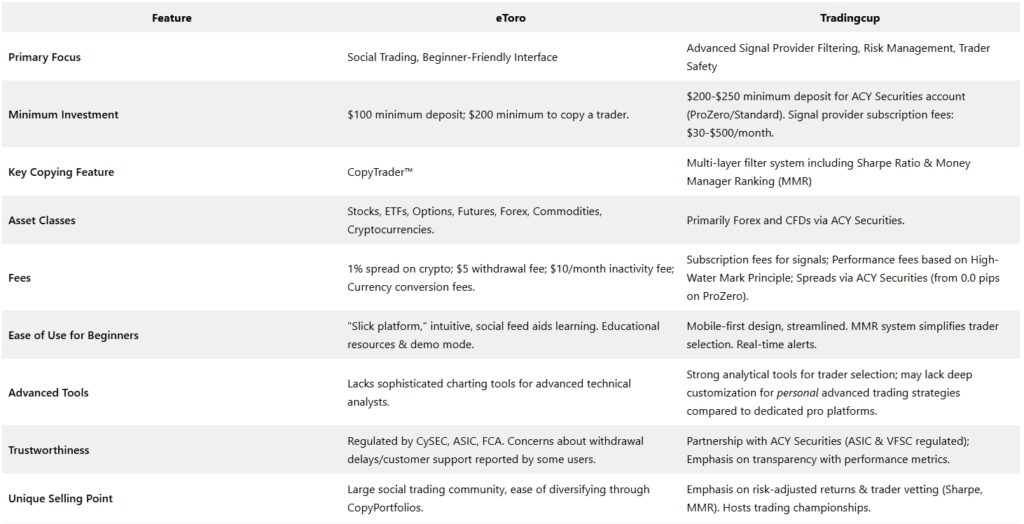
Why Do Costs Cast Such a Long Shadow? eToro vs. Tradingcup
Are you just dipping your toes, or planning a deeper dive? Costs are paramount because they directly eat into your potential profits. A seemingly small fee can compound significantly over time, especially for active traders.
eToro’s Cost Landscape:
eToro appeals to beginners with a low initial deposit of $100 and no commission on U.S. stock and ETF trading. However, the costs can creep in:
- CopyTrader Minimum: You need at least $200 per trader you copy. Copying multiple traders to diversify can escalate this initial outlay.
- Crypto Spreads: A 1% spread on crypto trades essentially means a 2% round-trip cost.
- Withdrawal Fees: A $5 fee for USD withdrawals.
- Inactivity Fees: $10 per month after 12 months of no login activity.
- Currency Conversion Fees: Can go up to 1.5%. These position eToro as beginner-friendly for entry, but potentially more expensive for active or crypto-focused traders.
Tradingcup’s Cost Structure:
Tradingcup uses a subscription model, which means upfront costs for accessing signals, ranging from $30 to $500 monthly.
- ACY Account: You’ll need an ACY Securities account, with minimum deposits like $200 for a ProZero or $250 for a Standard account.
- High-Water Mark Principle: A significant plus is that performance fees are often charged based on the High-Water Mark principle. This means you only pay performance fees on new profits, not if a trader is just recovering previous losses. This aligns the provider’s interest with yours.
- ACY Spreads: The partnership with ACY Securities can offer competitive spreads, starting from 0.0 pips for major forex pairs on ProZero accounts, plus commissions. This is attractive for frequent traders.
- Transparency: Tradingcup, via ACY, is often lauded for clearer fee structures without hidden deposit fees.
The Bottom Line on Costs for Beginners: If your priority is the absolute lowest initial cash outlay to start and you’re exploring U.S. stocks alongside copy trading, eToro looks appealing. If you are serious about forex copy trading, are willing to invest in quality signals, and appreciate transparent, potentially lower trading costs (spreads/commissions) over time, Tradingcup’s model, despite initial subscription fees, could be more cost-effective, especially if you choose a provider wisely.
User Experience & Navigation
Can you find your way around, or is the platform a bewildering maze?
eToro: The “Slick” Social Butterfly eToro is widely praised for its beginner-friendly and “slick” interface. Navigation is generally intuitive, and finding the CopyTrader function is straightforward.
- Pros for Beginners: The social feed and community aspects can make learning feel less isolating and more engaging. Demo accounts are invaluable.
- Cons for Advancing Traders: The simplicity that appeals to beginners can become a limitation. The lack of advanced charting tools and sophisticated analytical features can frustrate more experienced traders or those wanting to do deeper independent analysis.
Tradingcup: Mobile-First and Data-Driven Clarity Tradingcup aims for a mobile-first approach, designed for accessibility even for novices without a technical background.
- Pros for Beginners: The streamlined interface prioritizes simplicity. The MMR system and other filters are designed to simplify the complex task of choosing a reliable signal provider, which is a huge boon for usability from a decision-making perspective. Real-time alerts keep users informed.
- Potential Considerations: While it has strong analytical tools for vetting traders, if a user is looking for extensive customization of their own trading setup (beyond copy trading), they might find it less flexible than some dedicated pro platforms. However, for its core purpose – finding and copying reliable traders – the usability is high.
The Verdict on Usability: Both platforms cater well to beginners in different ways. eToro excels with its general ease of use and social integration. Tradingcup shines in making the selection of traders more user-friendly through its advanced, yet clearly presented, filtering tools.
Why Might Tradingcup Be Your Best eToro Copy Trading Alternative? Charting a Safer Course.
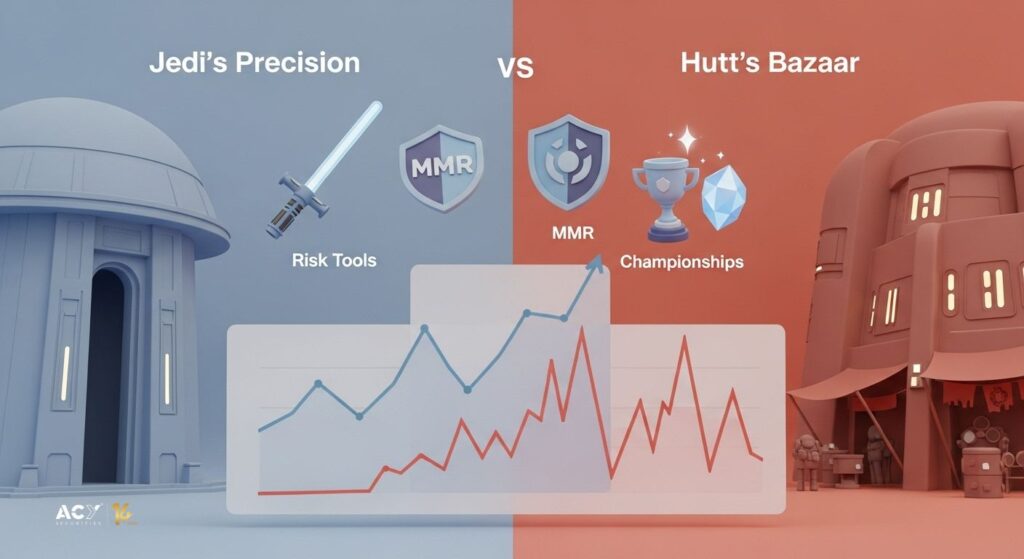
If eToro is the bustling social hub, Tradingcup is the analytical observatory, focused on precision and safety. For a beginner who prioritizes minimizing risk and making informed choices based on robust data, Tradingcup emerges as a compelling alternative.
Here’s why:
- Superior Risk Management Tools: The Sharpe Ratio and MMR system go far beyond simple ROI. They provide a deeper understanding of a trader’s risk-adjusted performance and consistency. This focus on how results are achieved, not just the headline profit number, is critical for long-term success and avoiding traders who take excessive risks.
- Emphasis on Trader Quality & Reliability: Tradingcup’s multi-layer filtering is designed to weed out inconsistent or overly risky signal providers. This can save beginners from the costly mistake of “blind copying” traders based purely on recent high returns.
- Transparency in Performance: Detailed metrics and leaderboards offer a clearer view of a trader’s history and strategy. This fosters trust and allows for more informed choices.
- Potentially Lower Trading Costs for Active Forex Traders: Through ACY Securities, especially with ProZero accounts, active forex traders can access tight spreads (from 0.0 pips + commission), which can be more cost-effective than wider spreads on other platforms.
- High-Water Mark Principle: Paying performance fees only on new profits is fairer and aligns the interests of the signal provider and the copier.
- Validation Through Competition: Tradingcup hosts trading championships, which not only showcase talent but also act as a real-world test of the strategies and risk management of its top traders. This adds a layer of credibility.
While eToro’s social features are attractive, Tradingcup’s rigorous approach to vetting traders and emphasis on risk-adjusted returns makes it a strong contender for beginners who are serious about learning to copy trade safely and effectively.
Tradingcup’s Edge: The ACY Securities Partnership & The Gauntlet of Championships
What makes Tradingcup’s engine hum? A significant part is its strategic partnership with ACY Securities and its unique approach to fostering talent through trading championships.
The ACY Securities Synergy:

Tradingcup’s collaboration with ACY Securities, a globally recognized broker regulated by ASIC and VFSC, is a cornerstone of its offering. This partnership brings several advantages:
- Tight Spreads & Fast Execution: Access to ACY’s ProZero accounts means spreads from 0.0 pips on major pairs (like EUR/USD, GBP/USD) and ultra-fast execution (under 30 milliseconds). This reduces trading costs and minimizes slippage – crucial for copy trading precision.
- Secure Transactions & Regulatory Oversight: ACY’s regulation provides a degree of security and trust. Their infrastructure supports secure and transparent trading environments. ACY also has Professional Indemnity insurance.
- Technological Integration: Trades are copied rapidly, typically within 500 milliseconds to one second, ensuring synchronization. Lot sizes are often calculated proportionally, aiding scalability.
- Expanded Platform Access: As of early 2025, ACY Securities expanded its copy trading solution on Tradingcup to the MT5 platform, opening doors for more sophisticated algo-based strategies.
Trading Championships: Forging Elite Traders

Tradingcup distinguishes itself by hosting prestigious trading competitions, such as the World Cup Championship of Futures Trading® and various Forex Trading Championships.
- A Test of Skill & Strategy: These aren’t just for show. They rigorously test traders’ abilities to generate returns while managing risk effectively. Metrics like Sharpe ratio and maximum drawdown are often key evaluation criteria.
- Validation of Top Performers: Winners of these championships, like Marci Silfrain (256.8% net return in a Futures Trading Championship) or Pavlos Georgiades (166.7% net return in a Forex Trading Championship), demonstrate that Tradingcup’s platform can identify and showcase genuine trading talent. Serghey Magala also achieved a 224.2% net return in the 2024-2025 Global Cup Championship of Forex Trading.
- Building Trust & Credibility: These public competitions and their transparent results reinforce trust in Tradingcup’s ranking systems and the quality of its signal providers.
- Historical Context: The World Cup Trading Championships® have a long history, running since 1983, lending further prestige. Tradingcup has consistently used these events to find and highlight top talent. (Examples: 2018 Champions, 2019 Champions, 2020 Qualifiers).
This combination of a robust brokerage partner and a competitive environment for identifying talent gives Tradingcup a unique edge in the copy trading landscape.
How Do Traders Climb the Ranks on Tradingcup? Beyond Just Profit.
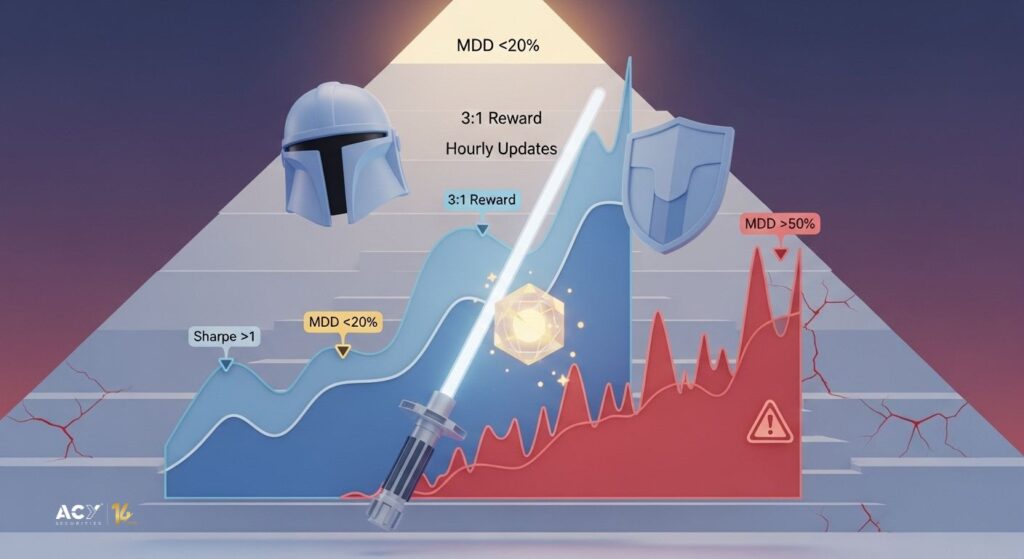
So you want to copy someone on Tradingcup. How do you know who’s truly skilled versus who just got lucky? Tradingcup’s ranking system, primarily the Money Manager Ranking (MMR), is designed to give you a more holistic view than just looking at the highest ROI.
Here’s a glimpse into the key factors:
- Profitability (but not in isolation): Yes, returns matter, but it’s not the only metric.
- Risk Management: This is crucial. The system analyzes how traders manage their risk.
- Maximum Drawdown (MDD): How much has the trader’s account fallen from its peak? A lower MDD is generally preferred, indicating better capital preservation. TradingCup’s analysis suggests an MDD below 20% is safer, while over 50% is a red flag.
- Sharpe Ratio: As mentioned, this evaluates return against risk. A higher Sharpe Ratio suggests better risk-adjusted performance.
- Maximum Drawdown (MDD): How much has the trader’s account fallen from its peak? A lower MDD is generally preferred, indicating better capital preservation. TradingCup’s analysis suggests an MDD below 20% is safer, while over 50% is a red flag.
- Consistency of Performance: Are the profits steady over time, or do they come in erratic bursts followed by big losses? The MMR favors consistency.
- Adherence to Predefined Trading Strategies: Does the trader stick to a clear strategy? This helps in understanding their approach.
- Win Rate vs. Risk/Reward: A high win rate is appealing, but not if the few losses are huge. Tradingcup allows digging into historical trades to see if winning trades significantly outweigh losing ones (e.g., a 3:1 reward-to-risk).
- Strategy Notes & Transparency: Top performers often share insights into their methods.
- Most Traded Products & Lot Sizing: Understanding if a trader concentrates on one asset or diversifies, and if their trade sizing is consistent, provides further clues.
- Hourly Ranking Updates: The MMR system updates frequently, ensuring users see fresh data.
Essentially, Tradingcup tries to identify traders who are not just profitable, but who are sustainably profitable by managing risk effectively. This multi-layered approach is what differentiates it and aims to provide a safer environment for copiers, especially beginners who might be swayed by high ROI figures alone.
If Jesse Livermore Walked into a Copy Trading Forum: eToro or Tradingcup?

The legendary speculator Jesse Livermore, author of “Reminiscences of a Stock Operator,” was a master of market dynamics, crowd psychology, and, crucially, self-discipline. What would he think of modern copy trading, and which platform might pique his interest more?
Livermore famously said, “The game of speculation is the most uniformly fascinating game in the world. But it is not a game for the stupid, the mentally lazy, the person of inferior emotional balance, or the get-rich-quick adventurer. They will die poor.”
Considering this, here’s a speculative take:
- Skepticism of “Blind” Following: Livermore emphasized independent thought and painstaking analysis. He’d likely be wary of the “blind copy” mentality that can pervade any copy trading platform if users don’t do their due diligence. He believed in understanding why a trade was being made.
- eToro’s Social Aspect – A Double-Edged Sword?: Livermore was acutely aware of “crowd madness.” While he might see the information-sharing potential of eToro’s social feed, he’d also be cautious of “tips” and the emotional contagion that can spread in such environments. He always stressed, “A prudent speculator never argues with the tape. Markets are never wrong, opinions often are.”
- Tradingcup’s Analytical Rigor – An Appeal to Logic?: Given Livermore’s meticulous approach to studying market conditions and his own trading patterns, he might appreciate Tradingcup’s emphasis on:
- Risk-Adjusted Returns (Sharpe Ratio): Livermore learned the hard way about overextending and managing risk. A metric that highlights traders who balance profit with risk would likely resonate.
- Detailed Performance Metrics (MMR): He believed in understanding the “character” of a stock’s movement and, by extension, a trader’s strategy. The MMR’s multi-faceted evaluation could provide deeper insights than just ROI.
- Consistency Over Erratic Wins: Livermore valued consistent application of sound principles. Tradingcup’s focus on consistency would align with his belief that big money was made by “sittin’ and waitin’” for the right conditions, not constant, frenetic trading.
- Risk-Adjusted Returns (Sharpe Ratio): Livermore learned the hard way about overextending and managing risk. A metric that highlights traders who balance profit with risk would likely resonate.
- Focus on the “Signal Provider” as a Market Entity: Livermore studied pivotal points and the behavior of stocks. He might view the signal providers themselves as entities whose “tape” (performance record) needs to be read and understood. Tradingcup’s tools arguably offer a better “tape” to read than platforms focused primarily on social sentiment or basic ROI.
Which would he “choose”? It’s unlikely Livermore would blindly copy anyone. However, if forced to pick a platform to identify potentially skilled operators whose methods he could then independently verify and perhaps learn from, Tradingcup’s analytical framework and focus on risk management would likely appeal more to his disciplined, analytical nature than eToro’s more socially-driven, potentially less filtered environment. He’d want to see the numbers, understand the risk, and ensure the trader wasn’t just on a lucky streak. He’d look for the operator who “works for their money” by anticipating probabilities, not just gambling.
Lessons from the “Way of the Turtle”: Applying Timeless Principles to Modern Copy Trading
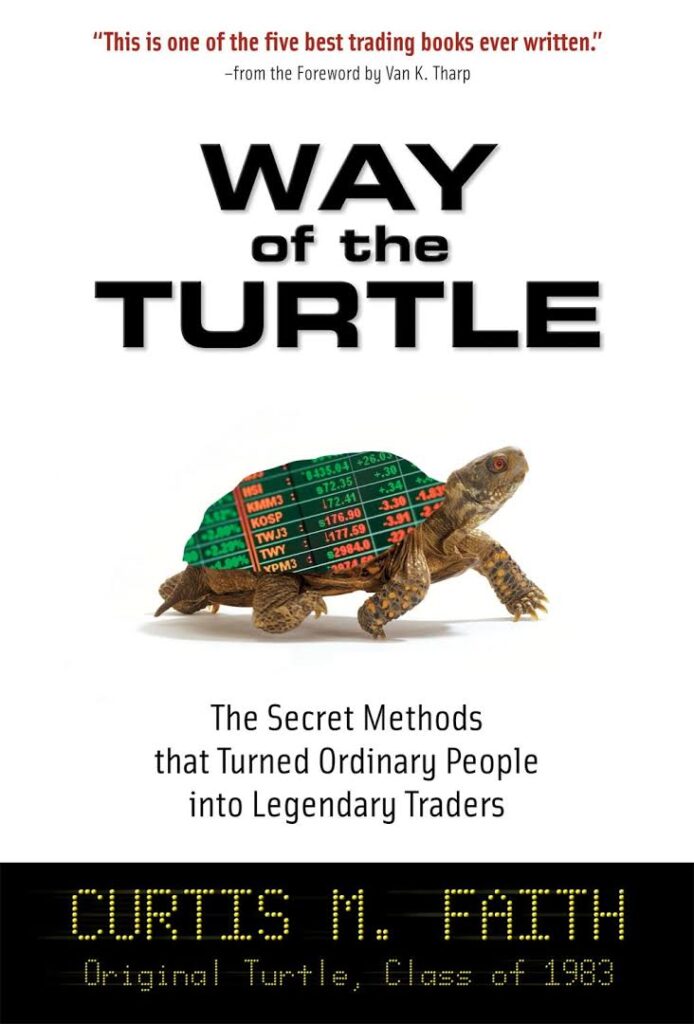
Curtis M. Faith’s “Way of the Turtle” chronicles the famous experiment where ordinary people were taught a specific set of trading rules and became highly successful traders. Many of its lessons are profoundly relevant to navigating copy trading platforms like eToro and Tradingcup.
Here are 10 lessons and their application:
- Trade with an Edge – Don’t Gamble: The Turtles were taught a system with a positive expectancy.
- Copy Trading Application: Don’t just pick a trader with high recent returns. Use platforms like Tradingcup to find traders whose metrics (Sharpe ratio, consistent MMR) suggest a sustainable edge, not just a lucky streak. Understand why their strategy might have an edge.
- Copy Trading Application: Don’t just pick a trader with high recent returns. Use platforms like Tradingcup to find traders whose metrics (Sharpe ratio, consistent MMR) suggest a sustainable edge, not just a lucky streak. Understand why their strategy might have an edge.
- Manage Risk – It’s Paramount: The Turtles had strict risk management rules.
- Copy Trading Application: Pay close attention to a signal provider’s Maximum Drawdown (MDD) and their overall risk profile. Diversify by copying multiple traders with different, uncorrelated strategies if possible. Don’t allocate too much capital to a single provider.
- Copy Trading Application: Pay close attention to a signal provider’s Maximum Drawdown (MDD) and their overall risk profile. Diversify by copying multiple traders with different, uncorrelated strategies if possible. Don’t allocate too much capital to a single provider.
- Be Consistent – Stick to the Plan: Discipline in following the rules was key.
- Copy Trading Application: Once you’ve chosen a signal provider after careful research, give their strategy time to work. Avoid jumping ship at the first sign of a drawdown if their long-term metrics are sound. Resist the urge to manually interfere with copied trades based on emotion.
- Copy Trading Application: Once you’ve chosen a signal provider after careful research, give their strategy time to work. Avoid jumping ship at the first sign of a drawdown if their long-term metrics are sound. Resist the urge to manually interfere with copied trades based on emotion.
- Keep it Simple – Complexity Isn’t Always Better: The Turtle system was relatively straightforward.
- Copy Trading Application: While analyzing signal providers on Tradingcup involves data, your actual copying process should be straightforward. Don’t overcomplicate your selection criteria to the point of paralysis.
- Copy Trading Application: While analyzing signal providers on Tradingcup involves data, your actual copying process should be straightforward. Don’t overcomplicate your selection criteria to the point of paralysis.
- Know When to Cut Losses: A core tenet for the Turtles.
- Copy Trading Application: While you trust the signal provider, have your own overall stop-loss for your copy trading portfolio. Platforms allow you to set stop-loss levels for your copied trades. eToro’s CopyTrader allows for this, and while not explicitly detailed for copiers in the analysis for Tradingcup, risk management is a core platform principle.
- Copy Trading Application: While you trust the signal provider, have your own overall stop-loss for your copy trading portfolio. Platforms allow you to set stop-loss levels for your copied trades. eToro’s CopyTrader allows for this, and while not explicitly detailed for copiers in the analysis for Tradingcup, risk management is a core platform principle.
- Let Profits Run: Turtles were taught not to exit winning trades prematurely.
- Copy Trading Application: Trust the provider’s system to manage profitable trades. Avoid the temptation to take small profits too early if the provider’s strategy aims for larger moves.
- Copy Trading Application: Trust the provider’s system to manage profitable trades. Avoid the temptation to take small profits too early if the provider’s strategy aims for larger moves.
- Think in Probabilities, Not Predictions: Focus on the long-term statistical advantage, not trying to be right on every trade.
- Copy Trading Application: Understand that even the best signal providers will have losing trades. Look at their overall win rate, risk/reward ratio, and long-term equity curve rather than fixating on individual losses.
- Copy Trading Application: Understand that even the best signal providers will have losing trades. Look at their overall win rate, risk/reward ratio, and long-term equity curve rather than fixating on individual losses.
- Measure Your Results: The Turtles meticulously tracked their performance.
- Copy Trading Application: Regularly review the performance of the traders you are copying and your overall copy trading portfolio. Both eToro and Tradingcup provide performance data.
- Copy Trading Application: Regularly review the performance of the traders you are copying and your overall copy trading portfolio. Both eToro and Tradingcup provide performance data.
- Past Performance is Not a Guarantee of Future Results (but it’s all we have to analyze): While true, analyzing historical data is essential for finding an edge.
- Copy Trading Application: This is the crux of selecting a signal provider. Use the historical data and analytical tools on Tradingcup (MMR, Sharpe, drawdown) or eToro’s leaderboards to make the most informed probabilistic bet you can.
- Copy Trading Application: This is the crux of selecting a signal provider. Use the historical data and analytical tools on Tradingcup (MMR, Sharpe, drawdown) or eToro’s leaderboards to make the most informed probabilistic bet you can.
- Emotional Control is Key: Fear and greed are a trader’s worst enemies.
- Copy Trading Application: While copy trading automates execution, emotions can still influence your decisions about which trader to copy, when to start/stop copying, and how much to allocate. Sticking to your research and plan helps mitigate emotional interference.
- Copy Trading Application: While copy trading automates execution, emotions can still influence your decisions about which trader to copy, when to start/stop copying, and how much to allocate. Sticking to your research and plan helps mitigate emotional interference.
By applying these Turtle lessons, beginners can approach copy trading on any platform with a more professional and potentially more successful mindset. Tradingcup’s emphasis on detailed metrics and risk management aligns particularly well with the disciplined, data-driven approach championed by the Turtles.
Conclusion: Charting Your Course – Smarter Decisions for Forex Copy Trading Beginners
Choosing between eToro and Tradingcup in 2026 isn’t about finding a “perfect” platform, but the right fit for your individual needs as a beginner in the forex copy trading world.
- eToro shines with its exceptionally user-friendly interface, vibrant social community, and low initial deposit, making it an accessible entry point for those curious about trading and wanting to learn in a socially interactive environment. Its commission-free offering for U.S. stocks and ETFs is also a plus if you’re looking beyond forex. However, its limitations in advanced charting tools, potentially higher non-trading fees, and a trader ranking system that historically leaned heavily on ROI might be drawbacks for those seeking deeper analytical capabilities and cost efficiency in the long run.
- Tradingcup, on the other hand, carves its niche by prioritizing trader safety and informed decision-making through its sophisticated filtering mechanisms like the Sharpe ratio and Money Manager Ranking (MMR) system. This resonates with beginners who are serious about risk management and want to understand the quality of returns, not just the quantity. Its partnership with ACY Securities offers access to tight spreads and a transparent fee structure, which can be highly beneficial for dedicated forex traders. The validation from its trading championships further boosts its credibility. While it involves subscription costs for signals, the High-Water Mark principle for performance fees is a fair approach.
For the beginner primarily seeking:
- Simplicity, social interaction, and the lowest possible initial outlay to explore various assets: eToro is a strong contender.
- A safer, more analytical approach to forex copy trading, with a focus on risk-adjusted returns and vetted signal providers: Tradingcup emerges as the preferred option, especially if you’re willing to invest in quality signals for potentially better long-term outcomes.
Ultimately, the best platform empowers you to make smarter investment decisions. Consider your risk tolerance, learning style, the capital you’re willing to commit, and your long-term trading goals. As technology evolves, with AI and machine learning poised to further refine these platforms, the journey of the copy trader will only become more dynamic. Choose wisely, and may your trades be well-informed.
Frequently Asked Questions (FAQs) for Forex Copy Trading Beginners:
What exactly is copy trading?
Copy trading allows you to automatically replicate the trades of experienced traders (signal providers) in your own account. When they execute a trade, the same trade is executed for you proportionally.
Is copy trading a good way for beginners to start in forex?
It can be, as it lowers the initial learning curve and provides access to expert strategies. However, it’s not without risk; if the trader you copy loses, you lose too. Understanding these risks is vital.
How much money do I need to start copy trading on eToro?
eToro requires a minimum deposit of $100 to open an account, but you need to allocate at least $200 to copy a specific trader.
How much does it cost to copy trade on Tradingcup?
On Tradingcup, you’ll need to open an account with their partner broker, ACY Securities (e.g., $200 minimum for a ProZero account). Then, signal providers on Tradingcup charge subscription fees, typically ranging from $30 to $500 per month. Some may also have performance fees based on profits, often using the High-Water Mark principle.
What are the main differences in how eToro and Tradingcup rank traders to copy?
eToro has historically focused more on Return on Investment (ROI) and social popularity. Tradingcup uses a more comprehensive Money Manager Ranking (MMR) system that includes risk management metrics like maximum drawdown, consistency, and the Sharpe ratio, aiming for a more holistic view of a trader’s skill and safety.
Is Tradingcup safer than eToro for copy trading?
Tradingcup positions itself as a safer alternative due to its advanced filtering systems (Sharpe Ratio, MMR) that emphasize risk-adjusted returns and consistent performance over just high profits. This helps in identifying more reliable and less risky signal providers.
What is the Sharpe Ratio, and why is it important on Tradingcup?
The Sharpe ratio measures an investment’s performance compared to a risk-free asset, after adjusting for its risk. A higher Sharpe ratio generally indicates better performance for the amount of risk taken. Tradingcup uses it to help users find traders who are skilled, not just lucky or taking excessive risks.
Can I lose all my money copy trading?
Yes, it is possible to lose all your invested capital in copy trading, as it involves trading real financial markets which carry inherent risks. Losses can occur if the traders you copy make unsuccessful trades. It’s crucial to only invest money you can afford to lose and implement risk management strategies.
What is the “High-Water Mark Principle” on Tradingcup?
The High-Water Mark principle means that performance fees are only charged on new net profits that exceed the previous highest value of your investment with that signal provider. This ensures you’re not paying fees if the trader is merely recovering past losses.
Why are trading championships, like those hosted by Tradingcup, relevant for copiers?
Trading championships showcase traders performing under real market conditions and scrutiny. Successful participants, often evaluated on risk-adjusted returns, can lend credibility to Tradingcup’s filtering mechanisms and help identify genuinely skilled traders.
(Disclaimer: This article is for informational and educational purposes only. It should not be considered financial advice. Always conduct your own research and consult with a qualified financial advisor before making any investment decisions.)
For more detailed insights on developing daily trading routines, risk management, and effective position sizing strategies, explore additional articles on Trading Cup. Our trading experts at ACY and FinLogix are also great resources to guide your journey towards trading excellence.

Discover Our Best Trading Signals
At Tradingcup, you can browse through a selection of signals and review past performance before you decide to copy.
Become A Signal Provider
Share your expertise and become a signal provider so other traders can copy your trades.
Stay tuned to our blog for more trader spotlights and leaderboard updates.
Trading involves risks.
Visit the Tradingcup blog through the link below for more updates: https://www.tradingcup.com/learn
Related Copy Trading blogs:
- Understanding Market Liquidations: Liquidity Sweeps and Runs Explained
- 7 Essential Daily Habits of Successful Traders to Outperform Their Peers
- 10 Strategies You Can Copy off Our Best Copy Traders
- 5 Strategies Every Trader Can Master To Trade Better In A Trading Contest
- 2025 Copy Trading Scams Exposed: How to Spot Fraud
- A Swing Trading Strategy with an 83 Percent Win Rate and Low Drawdowns
- Forex Martingale Strategies Explained, The Good, The Bad and The Ugly
- Pyramiding Trading Tutorial – Pros & Cons & How to Use It