
Last Updated: May 27, 2025
This article is reviewed annually to reflect the latest market regulations and trends.

TL;DR – Guide to GBP/JPY Fame!
- The Dragon’s Sway: GBP/JPY’s wild ride, where big risks and rewards reside.
- Copy the Best’s Art: Follow experts, play it smart.
- Factors in the Game: News and rates can change its name.
- Charts and Lines You’ll See: Tools to help your profits be.
- Risk Control is Key: Trade with wisdom, trade with glee!
Disclaimer: The information in this article is for educational purposes only and does not constitute financial, investment, or trading advice. Copy trading carries substantial risks, including the potential loss of your entire invested capital. Past performance of copied traders or strategies is not a reliable indicator of future results. You may be replicating high-risk trades, overleveraged positions, or strategies incompatible with your financial goals. Always conduct independent research into a trader’s historical performance, risk metrics, and strategy before copying them. Never invest funds you cannot afford to lose. Consult a licensed financial advisor to ensure copy trading aligns with your risk tolerance, financial objectives, and regulatory requirements in your jurisdiction. This article does not endorse specific traders, platforms, or strategies, and all trading decisions remain your sole responsibility.

“The chief task in life is simply this: to identify and separate matters so that I can say clearly to myself which are externals not under my control, and which have to do with the choices I actually control. Where then do I look for good and evil? Not to uncontrollable externals, but within myself to the choices that are my own…” – Epictetus
Your Comprehensive Guide to Trading GBP/JPY and Leveraging Expert Copy Trading
The foreign exchange market is a colossal arena, and within it, certain currency pairs shimmer with a unique allure. The GBP/JPY, the British Pound versus the Japanese Yen, is one such pair. Known for its breathtaking volatility and the substantial profit (or loss) potential it offers, it’s a favorite among seasoned traders and an object of fascination for newcomers.
But how do you approach such a dynamic beast? And if you’re new or looking to diversify your strategies, could copy trading a GBP/JPY expert be your golden ticket?
This updated article will delve into:
- What exactly is the GBP/JPY currency pair?
- The myriad factors that pull its strings.
- Why it’s a magnet for traders globally.
- Popular strategies to trade it effectively.
- A deep dive into a successful GBP/JPY trader you could consider copying.
- The wisdom of trading legends and how it applies here.
- Practical checklists and FAQs to guide your journey.
First Things First: What Exactly is the GBP/JPY?
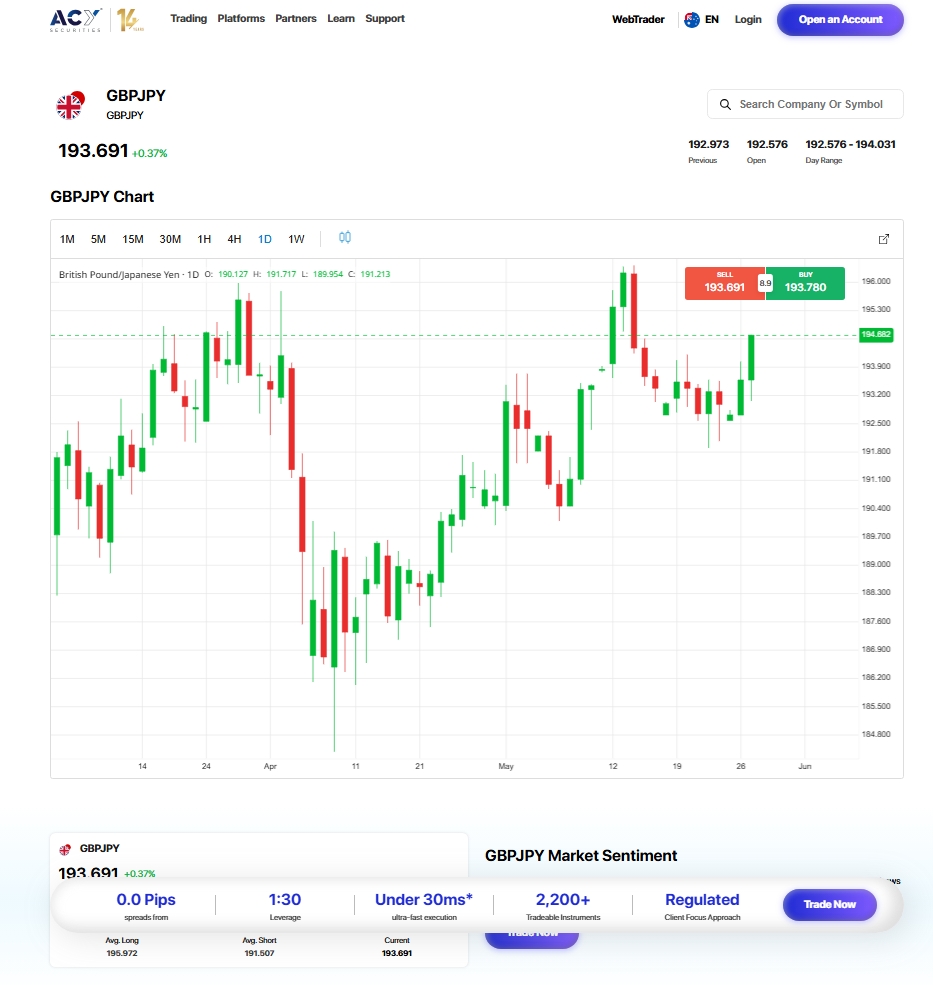
The GBP/JPY is a currency pair quotation that represents the exchange rate between the British Pound (GBP) and the Japanese Yen (JPY). In simple terms, it tells you how many Japanese Yen are needed to purchase one British Pound.
- GBP (British Pound): The base currency. Its value is influenced by the UK’s economic health, Bank of England’s monetary policy, political stability (think Brexit), and inflation rates.
- JPY (Japanese Yen): The quote currency. It’s affected by Japan’s economic performance, the Bank of Japan’s policies (often involving very low or negative interest rates), and its status as a “safe-haven” currency. This means during times of global uncertainty, investors often flock to the Yen, strengthening it.
This pair is a “cross currency” pair because it doesn’t involve the US Dollar as one of its components, though the USD’s global movements can indirectly influence it.
What Factors Influencing GBP/JPY?

The GBP/JPY is notoriously volatile because the economic and monetary policies of the UK and Japan are often starkly different, creating a dynamic tug-of-war.
- Monetary Policy Divergence: This is a HUGE one.
- Bank of England (BoE): Its decisions on interest rates and quantitative easing directly impact GBP. Hawkish stances (raising rates or hinting at it) tend to strengthen the Pound. Dovish stances (cutting rates) weaken it. For instance, a BoE rate cut to 4.5% in early February 2025 led to a GBP/JPY decline.
- Bank of Japan (BoJ): Historically, the BoJ has maintained ultra-low or even negative interest rates to combat deflation and stimulate growth. Any shift away from this policy, or even hints of it (like a member advocating for rate hikes to 1% from 0.5%), can cause significant Yen strengthening and thus a GBP/JPY drop.
- Interest Rate Differentials: When UK interest rates are significantly higher than Japan’s, it can attract “carry traders” who borrow Yen (low interest) to buy Pounds (higher interest), pocketing the difference. This generally supports GBP/JPY.
- Bank of England (BoE): Its decisions on interest rates and quantitative easing directly impact GBP. Hawkish stances (raising rates or hinting at it) tend to strengthen the Pound. Dovish stances (cutting rates) weaken it. For instance, a BoE rate cut to 4.5% in early February 2025 led to a GBP/JPY decline.
- Economic Data Releases: Think of these as the pair’s vital signs.
- GDP Growth: Stronger UK GDP growth relative to Japan often boosts GBP/JPY, and vice-versa. News of a UK-EU agreement on May 20, 2025, positively impacted GBP/JPY, causing a rebound.
- Inflation Rates (CPI): Higher inflation typically pressures central banks to raise interest rates. Thus, rising UK inflation can lift GBP, while unexpected Japanese inflation could strengthen JPY.
- Employment Data: Strong job numbers signal economic health.
- Retail Sales & Manufacturing Data (PMI): These indicate consumer and business confidence.
- GDP Growth: Stronger UK GDP growth relative to Japan often boosts GBP/JPY, and vice-versa. News of a UK-EU agreement on May 20, 2025, positively impacted GBP/JPY, causing a rebound.
- Geopolitical Events & Risk Sentiment: The “Dragon” is sensitive!
- Global Risk Appetite: GBP is often considered a “risk-on” currency, while JPY is a “safe-haven.” When global markets are optimistic, investors might sell JPY to buy riskier assets like GBP, pushing GBP/JPY up. In times of fear, JPY strengthens, pulling GBP/JPY down.
- Brexit: The UK’s departure from the EU has had profound and ongoing impacts. The 2016 referendum caused a massive GBP/JPY plummet. Brexit weakened GBP-EUR correlations but didn’t significantly affect GBP-JPY correlations, highlighting the Yen’s distinct safe-haven status. Ongoing UK-EU relations and trade deals (like the UK-Japan CEPA) continue to influence the pair. The CEPA’s underwhelming initial results, with declines in UK services exports to Japan, showcased challenges.
- Natural Disasters & Political Instability: Events in either country can cause sharp movements.
- US Tariff Announcements: Unexpected US tariff announcements, like those on April 2, 2025, can tighten financial conditions and increase volatility globally, affecting pairs like GBP/JPY through shifts in risk appetite and safe-haven flows.
- Global Risk Appetite: GBP is often considered a “risk-on” currency, while JPY is a “safe-haven.” When global markets are optimistic, investors might sell JPY to buy riskier assets like GBP, pushing GBP/JPY up. In times of fear, JPY strengthens, pulling GBP/JPY down.
- Trade Dynamics:
- The UK-Japan Comprehensive Economic Partnership Agreement (CEPA), implemented in January 2021, aimed to bolster trade. However, early data showed declines in UK services exports to Japan, partly due to Brexit-related challenges. Such structural changes can weaken economic ties and influence GBP/JPY valuation.
- The UK-Japan Comprehensive Economic Partnership Agreement (CEPA), implemented in January 2021, aimed to bolster trade. However, early data showed declines in UK services exports to Japan, partly due to Brexit-related challenges. Such structural changes can weaken economic ties and influence GBP/JPY valuation.
- Market Sentiment and Technical Levels:
- Sometimes, the market moves based on collective feeling or because key technical levels (support/resistance) are breached. The breach of support at 145.00 and retesting of 133.00 post-Brexit provided actionable chart patterns.
Why Do So Many Traders Embrace the GBP/JPY Challenge?

The allure of GBP/JPY for traders over the past decade is multifaceted, largely stemming from its unique risk/reward profile and the opportunities it presents.
- High Volatility = High Opportunity: This is the main draw. GBP/JPY is one of the most volatile major currency pairs. Daily ranges can be extensive, offering skilled traders numerous chances to profit from significant price swings. The aftermath of the Brexit referendum, where GBP/JPY fell from around 152.00 to 133.00 in days, is a stark example of this volatility offering lucrative chances for those who anticipate market reactions correctly.
- Potential for Large Profits: With big swings come the potential for substantial gains (though, importantly, also substantial losses if not managed correctly).
- Responsiveness to News: The pair reacts significantly to economic news and geopolitical events, providing clear trading catalysts for those who stay informed.
- Suitability for Various Trading Styles:
- Day Traders & Scalpers: Thrive on its intraday fluctuations.
- Swing Traders: Can capture larger trends that unfold over days or weeks.
- Trend Followers: GBP/JPY often exhibits strong, sustained trends.
- Day Traders & Scalpers: Thrive on its intraday fluctuations.
- Clear Technical Patterns: Despite its volatility, or perhaps because of it, GBP/JPY often respects key technical levels and patterns, making it a favorite for technical analysts.
- Interest Rate Differential Plays (Carry Trade): Historically, the interest rate gap between the UK and Japan has made it attractive for carry trades, although this depends on prevailing central bank policies.
What Are Popular GBP/JPY Trading Strategies?
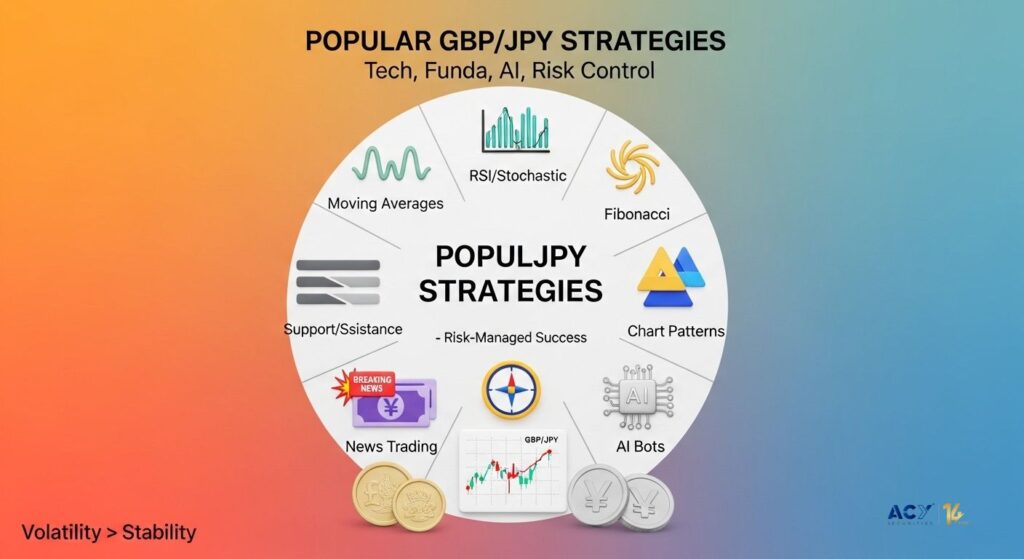
Trading GBP/JPY successfully requires a blend of sound analysis, robust risk management, and often, nerves of steel. Here are some popular approaches:
- Technical Analysis Focused Strategies:
- Moving Averages (MAs): Used to identify trend direction and dynamic support/resistance. The 50-day Exponential Moving Average (EMA) is often watched. Recent analyses showed GBP/JPY stable above the MA 55 at 192.25, suggesting a bullish outlook.
- Relative Strength Index (RSI): A momentum oscillator to identify overbought (typically >70) or oversold (<30) conditions. However, RSI thresholds may need dynamic adjustment based on market trends.
- Stochastic Oscillators: Similar to RSI, these help pinpoint overbought/oversold levels and potential turning points. Crucial for identifying such conditions.
- Fibonacci Retracements & Extensions: Used to identify potential support and resistance levels based on prior price swings. Key levels like 38.2%, 50%, and 61.8% often act as psychological barriers.
- Chart Patterns: Recognizing patterns like head-and-shoulders, double tops/bottoms, triangles, and channels can signal potential reversals or continuations. For example, bearish channels on the daily chart with support at 187.80 and resistance at 190.25 were noted.
- Support and Resistance Levels: Identifying horizontal price zones where buying or selling pressure has historically been strong.
- Trendline Analysis: Drawing lines along swing highs or lows to define the trend and spot potential breakouts or breakdowns.
- Moving Averages (MAs): Used to identify trend direction and dynamic support/resistance. The 50-day Exponential Moving Average (EMA) is often watched. Recent analyses showed GBP/JPY stable above the MA 55 at 192.25, suggesting a bullish outlook.
- Fundamental Analysis Strategies:
- News Trading: Trading based on the outcome of major economic data releases or geopolitical events. This requires speed and a good understanding of market expectations.
- Carry Trade: Exploiting the interest rate differential. This is a longer-term strategy and sensitive to changes in monetary policy.
- News Trading: Trading based on the outcome of major economic data releases or geopolitical events. This requires speed and a good understanding of market expectations.
- Combined Approach (Techno-Fundamental): Many successful traders integrate both technical and fundamental analysis, using fundamentals to determine the broader market direction and technicals to time entries and exits.
- Risk Management is Non-Negotiable: Given GBP/JPY’s volatility, this is paramount.
- Stop-Loss Orders: Essential to cap potential losses on any single trade. For instance, maintaining a stop-loss below a critical support like 191.30 can safeguard against adverse moves.
- Position Sizing: Never risk more than a small percentage (e.g., 1-2%) of your trading capital on a single trade.
- Risk-Reward Ratio: Aim for trades where the potential profit is significantly greater than the potential loss (e.g., 2:1 or 3:1).
- Stop-Loss Orders: Essential to cap potential losses on any single trade. For instance, maintaining a stop-loss below a critical support like 191.30 can safeguard against adverse moves.
- Algorithmic and Automated Trading:
- Bots can execute trades based on pre-set technical parameters, removing emotion.
- AI-powered bots like Algobot and PerceptTrader AI use advanced forecasting.
- Strategies combining RSI and RVI on H4 timeframes have shown promise for swing trades.
- Backtesting strategies on historical data is crucial.
- Bots can execute trades based on pre-set technical parameters, removing emotion.
Why Do Most Traders Brave the GBP/JPY Volatility?
Beyond the potential for profit, traders are drawn to GBP/JPY for reasons rooted in its character:
- A “Trader’s Pair”: It moves enough to create opportunities. Less volatile pairs can be stagnant, frustrating active traders.
- Clear Catalysts: Its sensitivity to news provides understandable reasons for its movements.
- Technical Purity (Often): While news can override technicals, GBP/JPY often shows good respect for well-defined technical structures, which technical traders appreciate.
- Psychological Challenge: For some, mastering such a volatile pair is a badge of honor, a test of skill, discipline, and emotional control.
What Are the Tangible Benefits of Trading GBP/JPY?
- Significant Profit Potential: Directly linked to its high volatility.
- Abundant Trading Opportunities: Frequent price swings mean more potential entry and exit points.
- Good for Diverse Strategies: Scalping, day trading, swing trading can all be applied.
- High Liquidity: Being a major cross pair, there’s generally enough liquidity, though it can thin out during off-peak hours or extreme events.
- Availability of Information: Ample news, analysis, and educational resources are available.
However, always remember: higher potential reward inherently comes with higher risk.
Could Jesse Livermore’s Ghost Trade GBP/JPY via Copy Trading? A Thought Experiment

Jesse Livermore, the legendary speculator chronicled in “Reminiscences of a Stock Operator,” was a titan of market intuition, tape reading, and understanding mass psychology. How might he view trading GBP/JPY, especially through the lens of copy trading?
Livermore believed in:
- Identifying the Line of Least Resistance: He’d meticulously analyze GBP/JPY’s trend, looking for the dominant direction. He wouldn’t fight the tape.
- Patience and Pivotal Points: He waited for markets to confirm his hypotheses, often at critical price levels (pivotal points). He’d observe GBP/JPY’s reaction to key support/resistance and news.
- Controlling Emotions: Fear and greed were anathema. He’d likely be wary of the emotional rollercoaster GBP/JPY can induce.
- Taking Big Bets When Right: Once confident, he wasn’t afraid to commit significant capital.
- Cutting Losses Quickly: If a trade went against him, he exited. No hoping, no praying.
Livermore on GBP/JPY: He’d be drawn to its volatility and trending nature. He would spend immense effort understanding its fundamental drivers and charting its price action meticulously.
Livermore on Copy Trading: This is trickier. Livermore was fiercely independent, relying on his own profound market understanding.
- Skepticism: He might be skeptical of blindly following another. He’d want to know why the copied trader was making their moves.
- Due Diligence: If forced to copy, he would perform incredibly deep due diligence on the trader, their strategy, their risk management, and their psychological fortitude. He wouldn’t just look at a profit curve.
- The “Why”: He’d probably want to understand the copied trader’s system so well that he could almost anticipate their trades, ensuring it aligned with his own market philosophy.
Essentially, Livermore might use a top trader’s signals as a confirmation or a point of interest within his own broader market analysis, rather than a blind substitute for it. He’d want to ensure the copied trader wasn’t just lucky but possessed a sound, repeatable methodology.
Unlocking Wisdom: 10 Lessons from Van Tharp’s “Trade Your Way to Financial Freedom” for GBP/JPY Traders

Van Tharp’s work is a cornerstone of trading psychology and system development. Here are 10 lessons from “Trade Your Way to Financial Freedom” applied to trading GBP/JPY, whether independently or via copy trading:
- The “Holy Grail” is Within You (Not a System): Success comes from finding a system that fits your psychological makeup, beliefs, and objectives. When copy trading GBP/JPY, select a trader whose style and risk tolerance you’re comfortable with.
- Expectancy is Key: Understand the mathematical edge of your system. A system with positive expectancy makes money over time, even with losses. For a copied trader, this means looking beyond win rate to average profit per trade versus average loss.
- Position Sizing is Paramount: How much you bet on a trade is often more important than entry/exit. Tharp stresses risking a small percentage of capital. This is vital for volatile GBP/JPY. When copying, ensure the trader’s (or your own allocation to them) aligns with your risk limits.
- Thoroughly Understand Your System (or the Copied Trader’s): Know its rules, its performance in different market conditions, its typical drawdown, etc. For copy trading, this means deep research into the trader’s methodology.
- Multiple Objectives (Beyond Just Making Money): Consider capital preservation, steady growth, etc. GBP/JPY can offer growth, but risk management is key to preservation.
- Discipline is Crucial: Stick to your system’s rules (or your rules for copying and managing the copied trader). Emotional decisions are costly with GBP/JPY.
- Mistakes are Different from Losing Trades: A losing trade can be part of a good system. A mistake is breaking your rules. Monitor if the copied trader adheres to their stated strategy.
- Low-Risk Ideas: Tharp emphasizes seeking “low-risk” entries – points where the potential reward significantly outweighs the risk. This applies even to a volatile pair like GBP/JPY. A good copied trader should demonstrate this.
- Focus on “R-Multiples”: Think of trades in terms of risk/reward units (R). If you risk $100 (1R), aim to make $200 (2R) or $300 (3R). Assess if a copied trader achieves good R-multiples.
- Self-Assessment and Continuous Improvement: Regularly review your trading (or copy trading performance) and make adjustments. Markets change, and so must traders.
Applying Tharp’s wisdom to GBP/JPY means approaching it with a professional mindset, emphasizing risk control, system understanding, and psychological mastery – even if you’re leveraging someone else’s expertise.
Spotlight on a Top GBP/JPY Trader: Analysis of Trader Wai Hang Leung (“QuantumFX“)
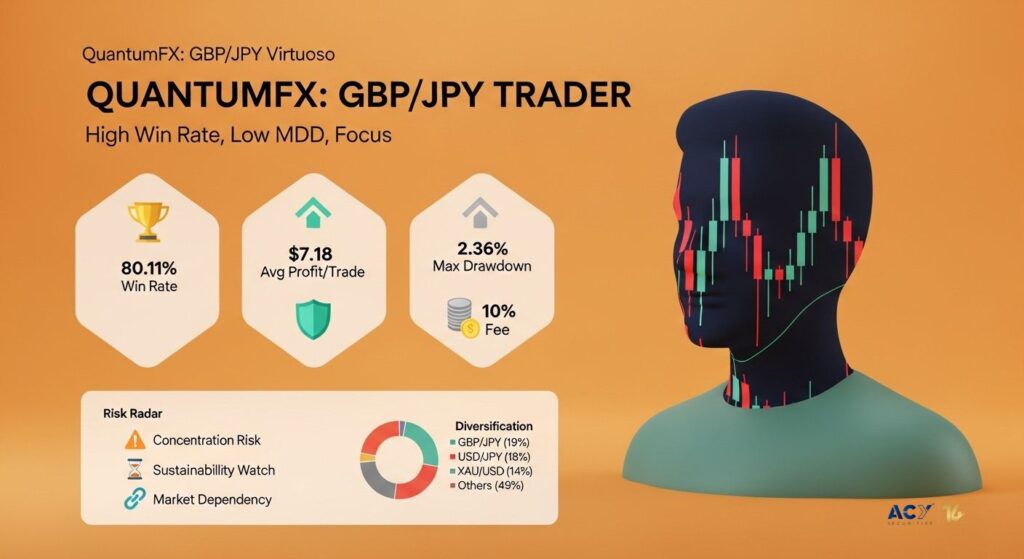
When considering copy trading, the selection process is everything. Let’s break down the provided analysis of Wai Hang Leung, also known as “QuantumFX,” to see if this trader aligns with a prudent investment approach for GBP/JPY.
Key Metrics & Strategy (May-June 2025):
- Trading Activity:
- 367 trades in 2 months (averaging 6-7 trades/day). This indicates an active, likely intraday or scalping strategy.
- Diversification: GBPJPY (19.35%), USDJPY (18.53%), XAUUSD (Gold, 14.17%), EURUSD (10.08%), and others. While GBP/JPY is prominent, there’s diversification, which is good for risk mitigation.
- 367 trades in 2 months (averaging 6-7 trades/day). This indicates an active, likely intraday or scalping strategy.
- Profit Expectancy:
- +$7.18 average profit per trade. This is a very strong figure and significantly higher than a previous benchmark (+ $0.65/trade), suggesting a robust edge.
- +$7.18 average profit per trade. This is a very strong figure and significantly higher than a previous benchmark (+ $0.65/trade), suggesting a robust edge.
- Risk Management:
- Maximum Drawdown (MDD): 2.36%. This is exceptionally low for two months of active trading, especially with pairs like GBP/JPY and Gold involved. It signals excellent risk control.
- Winning Rate: 80.11%. An impressive consistency, though one should be mindful if this is sustainable long-term.
- Maximum Drawdown (MDD): 2.36%. This is exceptionally low for two months of active trading, especially with pairs like GBP/JPY and Gold involved. It signals excellent risk control.
- Costs:
- 10% monthly performance fee on profits. Standard for many platforms. For example, a $1,000 profit means $100 fee, leaving $900.
- 10% monthly performance fee on profits. Standard for many platforms. For example, a $1,000 profit means $100 fee, leaving $900.
- Strategy & Market Behavior (Inferred):
- Precision Scalping/Intraday: The high trade frequency and likely focus on tight stop-losses (implied by low MDD) point to this. Partial profit-taking (closing positions in stages) is a sophisticated technique.
- Adaptability: Mix of long/short trades across forex and commodities suggests an ability to capitalize on various market conditions and volatility spikes (e.g., Gold during uncertainty).
- Timeframe: Likely trades on 1H–4H charts for overall direction, with shorter timeframes for execution, aiming for rapid exits.
- Precision Scalping/Intraday: The high trade frequency and likely focus on tight stop-losses (implied by low MDD) point to this. Partial profit-taking (closing positions in stages) is a sophisticated technique.
Risk Factors to Consider:
- Pair Concentration: While diversified, a combined ~38% in GBPJPY and USDJPY is significant. A sharp, unexpected move in the Yen could impact returns.
- Sustainability of Win Rate: An 80.11% win rate is outstanding but can be hard to maintain. Monitor for regression to the mean.
- Performance Fee Impact: The 10% fee will reduce net returns. The high expectancy currently justifies it, but this needs ongoing assessment.
Recommendations for Potential Copiers:
- Test with Virtual Funds: Always simulate performance on a demo account first to see if the rhythm and results align with your expectations before committing real capital.
- Monitor Pair Exposure: If copying, be mindful of the concentration in JPY pairs. You might adjust your overall portfolio allocation accordingly.
- Assess Stop-Loss Discipline (if visible): Ensure trades consistently have predefined exits. The low MDD suggests this is happening.
- Review Fees: Track how the 10% fee impacts cumulative returns. Ensure the net profit remains attractive.
Final Decision Checklist for Copying QuantumFX:
- High Expectancy: +$7.18/trade with an 80% win rate is excellent.
- Low Drawdown: Only 2.36% MDD in 2 months signals strong risk control.
- Concentration Risk: Significant exposure to GBPJPY and USDJPY. Manage overall portfolio risk.
- Fee Sensitivity: The 10% monthly fee requires consistent high performance to remain attractive.
- Market Dependency: Performance is tied to liquidity and trends in these specific pairs and commodities.
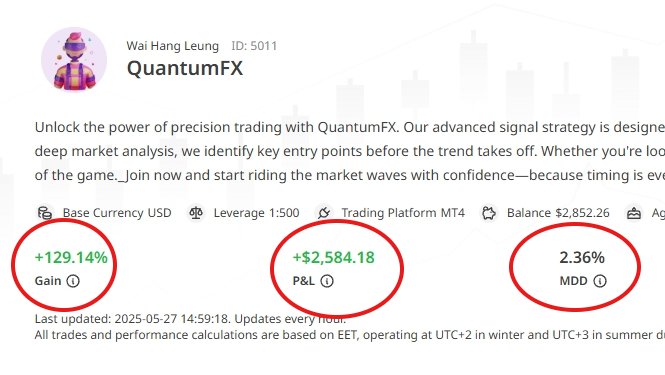
Conclusion on QuantumFX: This trader demonstrates a disciplined, high-probability approach with exceptional risk management metrics over the observed period. They could be suitable for investors seeking aggressive growth with a moderate level of diversification, provided the concentration risk is understood and managed. Close monitoring during different market phases (low volatility, sudden trend shifts) is advised.
Why Should You Consider Copy Trading Top GBP/JPY Traders?
Copy trading allows you to replicate the trades of experienced and (hopefully) successful traders automatically in your own account. For a pair like GBP/JPY, this offers several compelling advantages:
- Access to Expertise: You can leverage the skills, research, and strategies of traders who have dedicated years to mastering GBP/JPY.
- Time-Saving: Not everyone has the hours to dedicate to analyzing charts and news. Copy trading automates the execution.
- Learning Opportunity: By observing the trades and (if provided) the rationale of successful traders, you can learn a lot about GBP/JPY dynamics.
- Emotionless Execution: It removes your own emotional biases (fear, greed) from the trading process, as trades are copied automatically based on the chosen trader’s actions.
- Diversification of Strategies: You might follow multiple traders with different approaches to GBP/JPY, diversifying your risk.
- Potential for Passive Income: While not guaranteed, it offers a more hands-off approach to potentially profiting from forex.
Is Copy Trading GBP/JPY Perfect for Most Beginners?
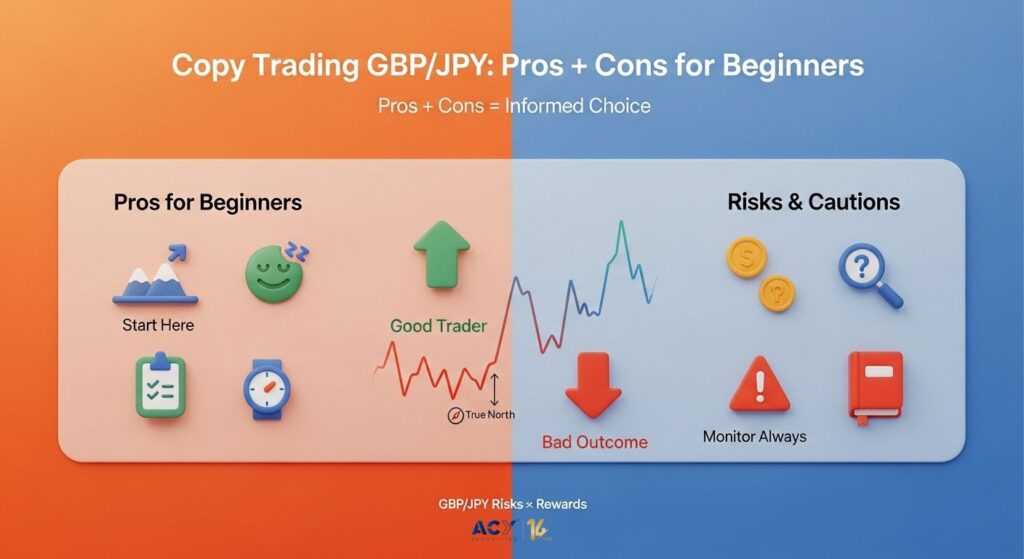
Copy trading can be an attractive entry point for beginners, but “perfect” requires careful qualification:
Why it can be good for beginners:
- Lower Learning Curve (Initially): You don’t need to be an expert chartist or economist from day one.
- Reduced Emotional Stress: Less direct involvement in making trading decisions can mean less stress.
- Practical Market Experience: You get to see real trading in action in your account.
- Focus on Selection, Not Execution: Your primary task shifts to researching and selecting good traders to copy, which is a skill in itself.
Why it’s not a “set and forget” solution and requires caution:
- Risk of Capital Loss: If the trader you copy loses, you lose. Past performance is not indicative of future results.
- Due Diligence is Crucial: Selecting the right trader is hard work. You need to analyze their stats, strategy, risk management, and consistency. The “QuantumFX” analysis above is an example of the depth required.
- Understanding the Risks: Even if copying, you must understand the inherent risks of GBP/JPY (volatility) and forex trading in general.
- No Skill Development (if passive): If you just copy blindly without trying to understand why trades are made, you’re not developing your own trading skills.
- Platform and Fee Considerations: Different platforms have different fee structures and trader availability.
Verdict for Beginners: Copy trading GBP/JPY can be a better starting point than diving in solo without experience, provided the beginner invests significant time in:
- Educating themselves about GBP/JPY and forex risks.
- Learning how to thoroughly vet and select traders to copy.
- Starting with a small capital amount they can afford to lose.
- Continuously monitoring performance and not being afraid to stop copying a trader if their strategy or risk management falters.
Checklist for Copy Trading GBP/JPY
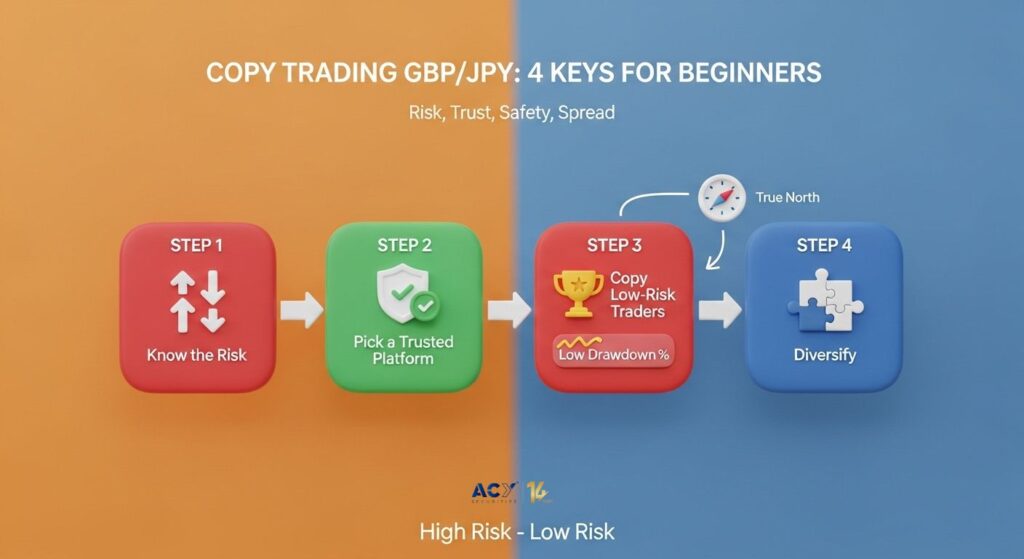
Before you hit that “copy” button, run through this checklist:
Understand GBP/JPY Basics:
- [ ] Do I understand what influences GBP/JPY? (Interest rates, news, risk sentiment)
- [ ] Am I aware of its high volatility and the associated risks?
Platform Selection:
- [ ] Is the copy trading platform reputable and regulated?
- [ ] What are the fees (commission, performance fees, spreads)?
Trader Due Diligence (The MOST Critical Part):
- [ ] Performance History: How long have they been trading? Is performance consistent over time (not just a lucky streak)?
- [ ] Risk Management: What’s their maximum drawdown? (Lower is generally better, like QuantumFX’s 2.36%).
Do they use stop-losses consistently? (If visible).
What’s their average risk-reward ratio per trade? - [ ] Strategy: What is their trading style (scalping, swing, etc.)? Does it suit GBP/JPY?
How many trades do they make? (Frequency).
What pairs do they trade? (Concentration risk, like QuantumFX with JPY pairs). - [ ] Transparency: Does the trader explain their strategy? Are they communicative?
- [ ] Number of Copiers & Assets Under Management (AUM): High numbers can be a sign of trust, but also investigate if performance changes with AUM.
- [ ] Win Rate vs. Average Profit/Loss: A high win rate is nice, but not if average losses wipe out many wins. Look for positive expectancy (like QuantumFX’s +$7.18/trade).
Your Own Setup:
- [ ] Capital Allocation: How much will you allocate to this trader? Is it money you can afford to lose?
- [ ] Risk Settings (if platform allows): Can you set your own stop-loss for the overall copied amount or a drawdown limit?
- [ ] Diversification: Will you copy multiple traders to spread risk?
Monitoring and Review:
- [ ] How often will you review the trader’s performance and your results?
- [ ] What are your criteria for stopping copying a trader?
This checklist isn’t exhaustive but covers the main bases for making a more informed decision and aligns with the principle of smarter money protection.
Conclusion: Trading GBP/JPY with Wisdom and Strategy
The GBP/JPY currency pair, with its characteristic high volatility, indeed offers a thrilling landscape for traders. Its appeal lies in the significant profit potential born from sharp price movements, often driven by clear macroeconomic and geopolitical catalysts. Whether you’re employing sophisticated technical analysis, algorithmic strategies, or leveraging the expertise of seasoned professionals through copy trading, the core principles of success remain consistent:
- Understand the Beast: Deeply comprehend the factors driving GBP/JPY.
- Master Risk Management: This is non-negotiable. Position sizing, stop-losses, and a clear understanding of your risk tolerance are your shields.
- Discipline and Patience: Stick to your strategy, whether it’s your own or the one you’re copying. Avoid emotional decisions.
- Continuous Learning & Adaptation: Markets evolve, and so must your approach.
For those exploring copy trading, particularly with a trader like “QuantumFX” who demonstrates strong metrics, the path involves diligent research, careful selection, and ongoing monitoring. It’s not a shortcut to riches but a tool that, used wisely, can be part of a diversified and potentially rewarding investment strategy.
Ultimately, trading GBP/JPY, like any market endeavor, is about balancing opportunity with prudence. By arming yourself with knowledge, employing robust strategies, and maintaining a disciplined mindset, you can navigate the “Dragon’s” currents and work towards smarter protection and growth of your capital.
Frequently Asked Questions (FAQs) About Trading GBP/JPY

Q1: What are the main reasons traders favor trading GBP/JPY?
A: Traders are often drawn to GBP/JPY due to its high volatility, which can lead to significant profit opportunities. It’s also responsive to macroeconomic news and geopolitical events, providing clear trading signals. The pair is suitable for various trading styles, from scalping to swing trading.
Q2: How do macroeconomic factors like interest rates and GDP affect GBP/JPY?
A: Divergent monetary policies between the Bank of England (BoE) and Bank of Japan (BoJ) heavily influence GBP/JPY. For instance, if the BoE raises interest rates (or signals it might) while the BoJ keeps rates low, GBP/JPY tends to rise. Stronger GDP growth in the UK compared to Japan can also boost the pair. Inflation data (CPI) is another critical factor, as it can pressure central banks to adjust policy.
Q3: What are some common technical analysis tools used for GBP/JPY?
A: Popular tools include moving averages (e.g., 50-day EMA) to identify trends, RSI and stochastic oscillators to spot overbought/oversold conditions, Fibonacci retracement levels for potential support/resistance, and chart patterns like channels or double tops/bottoms to predict future movements.
Q4: How did Brexit impact the GBP/JPY pair?
A: Brexit triggered massive volatility in GBP/JPY. The referendum in 2016 caused a sharp depreciation of the Sterling against the Yen as investors sought the Yen’s safe-haven quality. It also led to structural changes, affecting trade dynamics like the UK-Japan CEPA, where initial results were underwhelming due to Brexit-related disruptions.
Q5: What risk management techniques are crucial for trading GBP/JPY?
A: Given its volatility, robust risk management is essential. Key techniques include: * Setting stop-loss orders to limit potential losses on each trade. * Appropriate position sizing, typically risking only 1-2% of total capital per trade. * Algorithmic systems with built-in failsafe mechanisms. * Understanding and preparing for the impact of unexpected geopolitical events.
Q6: Can algorithmic trading be effective for GBP/JPY?
A: Yes, algorithmic trading can be effective for GBP/JPY. AI-powered bots and systems using technical indicators like RSI and RVI can automate strategies, execute trades with speed, and remove emotional decision-making. Backtesting these strategies is crucial for validation.
Q7: What is “copy trading,” and how can it apply to GBP/JPY?
A: Copy trading allows you to automatically replicate the trades of experienced traders in your own account. For GBP/JPY, this means you could copy a trader who has a proven strategy for this volatile pair. This can save time, provide access to expertise, and offer a learning opportunity. However, thorough due diligence on the trader is vital.
Q8: What should I look for when choosing a GBP/JPY trader to copy, like “QuantumFX”?
A: Analyze their key metrics: trading activity (frequency, pairs traded), profit expectancy (average profit per trade), risk management (maximum drawdown, win rate), and their overall strategy. For “QuantumFX,” the +$7.18 average profit, 2.36% MDD, and 80.11% win rate are strong points. Also consider costs (performance fees) and risk factors like pair concentration.
Q9: Is GBP/JPY suitable for beginners?
A: GBP/JPY can be challenging for beginners due to its high volatility. However, beginners can approach it via copy trading, provided they educate themselves thoroughly on the risks, learn how to select traders carefully, and start with a small capital. It’s not a risk-free option.
Q10: How does global risk sentiment affect GBP/JPY?
A: The Japanese Yen (JPY) is considered a “safe-haven” currency, while the British Pound (GBP) is often seen as a “risk-on” currency. During periods of global economic uncertainty or fear, investors tend to buy JPY, causing GBP/JPY to fall. Conversely, when risk appetite is high, GBP/JPY may rise.
(Disclaimer: This article is for informational and educational purposes only. It should not be considered financial advice. Always conduct your own research and consult with a qualified financial advisor before making any investment decisions.)
For more detailed insights on developing daily trading routines, risk management, and effective position sizing strategies, explore additional articles on Trading Cup. Our trading experts at ACY and FinLogix are also great resources to guide your journey towards trading excellence.

Discover Our Best Trading Signals
At Tradingcup, you can browse through a selection of signals and review past performance before you decide to copy.
Become A Signal Provider
Share your expertise and become a signal provider so other traders can copy your trades.
Stay tuned to our blog for more trader spotlights and leaderboard updates.
Trading involves risks.
Visit the Tradingcup blog through the link below for more updates: https://www.tradingcup.com/learn
Related Copy Trading blogs:
- Understanding Market Liquidations: Liquidity Sweeps and Runs Explained
- 7 Essential Daily Habits of Successful Traders to Outperform Their Peers
- 10 Strategies You Can Copy off Our Best Copy Traders
- 5 Strategies Every Trader Can Master To Trade Better In A Trading Contest
- 2025 Copy Trading Scams Exposed: How to Spot Fraud
- A Swing Trading Strategy with an 83 Percent Win Rate and Low Drawdowns
- Forex Martingale Strategies Explained, The Good, The Bad and The Ugly
- Pyramiding Trading Tutorial – Pros & Cons & How to Use It