
Last Updated: May 07, 2025
This article is reviewed annually to reflect the latest market regulations and trends.

TL; DR: Master Gold Copy Trading Seasonality
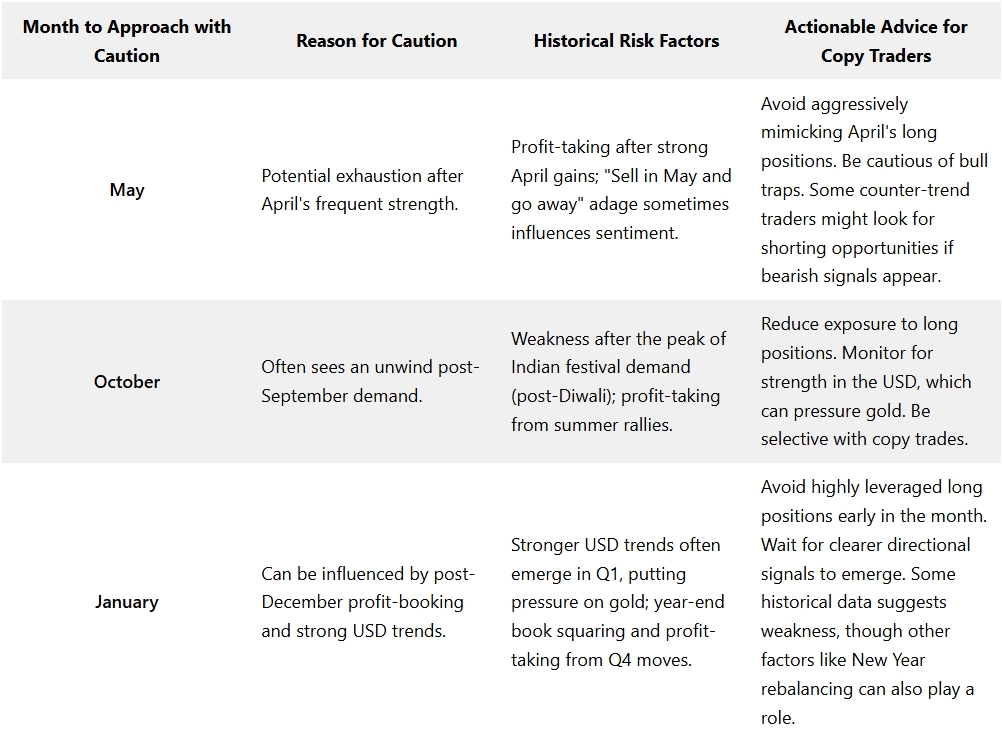
- Seasonal Peaks & Troughs: Gold (XAUUSD) historically shows strength in April, August, and September, while March can offer dip-buying opportunities. May, October, and January often signal caution.
- Strategic Copy Trading: Align your copy trading with months of historically strong gold performance and mirror traders who excel in these specific seasonal conditions (e.g., breakout strategies in April).
- Evaluate Like a Pro: Don’t just copy blindly. Assess trader performance metrics (win rate, risk-reward, drawdown) and combine this with favorable seasonal XAUUSD trends for an informed edge.
- Market Rhythms Matter: Just like the weather, markets have seasons. Understanding and respecting these XAUUSD cycles, knowing when to invest and when to secure profits, is crucial for protecting your money.
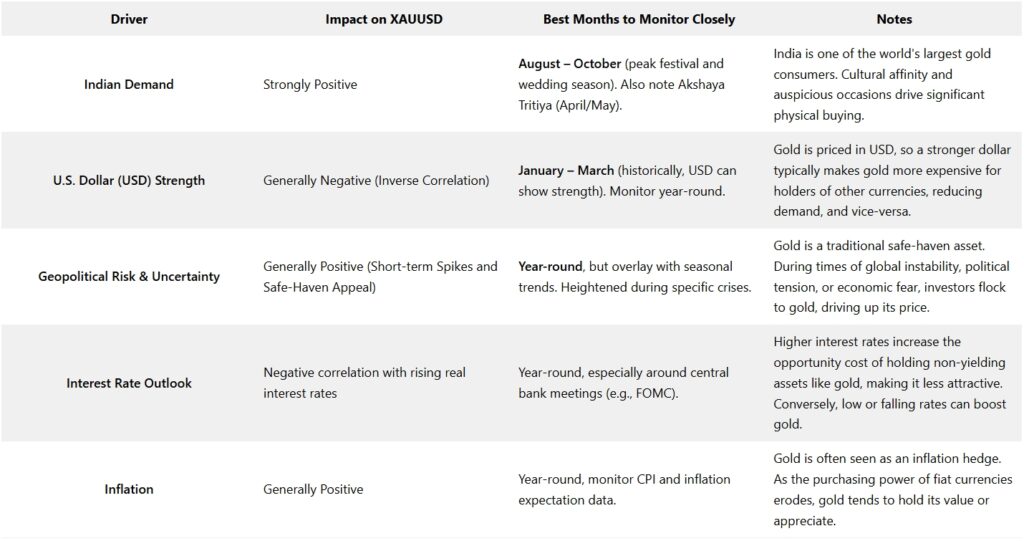
- Key Influencers: Stay vigilant of Indian demand (Aug-Oct), U.S. Dollar strength (inverse correlation, especially Jan-Mar), and geopolitical events, as these significantly drive gold’s price alongside seasonal patterns.
Disclaimer: The information in this article is for educational purposes only and does not constitute financial, investment, or trading advice. Copy trading carries substantial risks, including the potential loss of your entire invested capital. Past performance of copied traders or strategies is not a reliable indicator of future results. You may be replicating high-risk trades, overleveraged positions, or strategies incompatible with your financial goals. Always conduct independent research into a trader’s historical performance, risk metrics, and strategy before copying them. Never invest funds you cannot afford to lose. Consult a licensed financial advisor to ensure copy trading aligns with your risk tolerance, financial objectives, and regulatory requirements in your jurisdiction. This article does not endorse specific traders, platforms, or strategies, and all trading decisions remain your sole responsibility.

“There is a time for everything, and a season for every activity under the heavens.” – Ecclesiastes 3:1
The Michael Burry Approach: Contrarian Thinking and Deep Value in Gold Markets

Michael Burry, famed for his “Big Short” against the subprime mortgage market, is a proponent of deep fundamental analysis, value investing, and often, a contrarian stance. While he doesn’t exclusively trade gold, his philosophy offers valuable lessons for any investor, including those copy trading XAUUSD:
- Intensive Research & Independent Thinking: Burry dives deep into data, looking for mispriced assets or overlooked risks. For gold traders, this means not just following seasonal trends blindly but understanding the underlying drivers (inflation, currency dynamics, central bank policy). Don’t just follow the herd; understand why the herd is moving.
- Identifying Bubbles and Overvaluations: Burry excels at spotting bubbles. In gold, while seasonal factors can drive prices, it’s crucial to be aware if a rally seems overextended beyond historical norms or fundamental support. A $3000/oz surge in April 2025, as per the data, might indeed warrant caution for May profit-taking, aligning with Burry’s skepticism of parabolic moves.
- Focus on Margin of Safety: Burry seeks investments where the potential downside is limited, and the upside is significant. When copy trading gold based on seasonality, this translates to entering trades where seasonal factors are strongly aligned, and risk management (like appropriate stop-losses suggested by the trader you copy) is robust.
- Patience and Long-Term Perspective (when applicable): While copy trading can be short-term, Burry’s success often comes from holding positions through volatility until his thesis plays out. For seasonal gold trading, this might mean weathering some intra-month volatility if the broader seasonal outlook remains favorable.
- Willingness to Go Against the Crowd: If seasonal data strongly suggests a pattern, but popular sentiment is contrary, a Burry-like approach might involve trusting the data (after thorough verification) over the noise.
Applying a Burry-esque mindset to gold copy trading means being diligent, analytical, and not afraid to deviate from popular opinion if your research (including seasonal and historical analysis) supports a different view. It means questioning if “this time it’s different” when historical patterns suggest otherwise.
Lessons from “The Psychology of Money”: Managing Your Mind for Gold Trading Success

Morgan Housel’s “The Psychology of Money” offers timeless wisdom on how our biases and emotions impact financial decisions. These lessons are incredibly pertinent when navigating the often-emotional rollercoaster of gold trading, even when copying others.
- No One is Crazy: People make financial decisions based on their unique experiences. The trader you’re copying has their own rationale. Understand their broad strategy, but also be aware that your financial goals and risk tolerance might differ.
- Luck and Risk are Siblings: Success in trading involves skill, but also elements of luck (right place, right time) and risk (unforeseen events). A good seasonal setup can be derailed by unexpected news. Diversify your copied traders if possible.
- Never Enough – The Danger of Greed: Chasing ever-higher profits, especially during strong seasonal gold rallies, can lead to over-leveraging or ignoring profit-taking signals. Define your financial goals and stick to your plan.
- The Power of Compounding (and Avoiding Setbacks): Protecting your capital during unfavorable gold seasons allows it to compound more effectively when favorable seasons return. Avoiding large losses is paramount.
- Getting Wealthy vs. Staying Wealthy: Getting wealthy might involve taking calculated risks during strong XAUUSD seasons. Staying wealthy requires discipline, risk management, and avoiding ruin, especially during uncertain seasonal periods.
- Tails, You Win – Extreme Events Drive Results: A few very successful trades (or successfully navigating a few key seasonal periods) can often account for a disproportionate amount of overall profit.
- Freedom – Control Over Your Time: Successful trading, even copy trading, should lead to greater financial freedom, not constant stress. Using seasonal analysis can help reduce anxiety by providing a framework.
- Man in the Car Paradox – Humility: Don’t assume a trader with flashy results will always win. Past performance (even seasonally strong) isn’t a guarantee. Maintain humility and do your due diligence.
- Wealth is What You Don’t See: True wealth is often in unspent assets, not just trading profits. Focus on building a solid financial foundation.
- Save Money – Building a Buffer: Having savings provides a cushion, reducing the pressure to take undue risks in your gold trading, especially if a seasonal trend doesn’t play out as expected.
Applying these psychological principles helps maintain a rational, disciplined approach to copy trading gold, regardless of the season.
When To Copy Trade Gold Traders: Mastering Seasonal XAUUSD Trends and Historical Insights for Smarter Investing

For centuries, it has been a symbol of wealth, stability, and a safe haven during turbulent times. In the modern financial world, trading gold, particularly the XAUUSD pair (Gold vs. US Dollar), remains a popular pursuit for investors and traders alike. With the rise of copy trading, many are looking to leverage the expertise of seasoned gold traders. However, success in this arena isn’t just about picking a profitable trader; it’s about timing – understanding the seasonal rhythms and historical patterns that can significantly impact XAUUSD movements.
The Golden Compass: Why Seasonal Trends and Historical Data Matter in XAUUSD Trading
Imagine trying to sail a vast ocean without a compass or knowledge of the prevailing winds and currents. That’s akin to trading XAUUSD without understanding its seasonal tendencies and historical behavior. While past performance is not an absolute predictor of future results, historical data provides invaluable clues about potential market behavior.
Gold prices are influenced by a confluence of factors, including economic data, geopolitical events, currency fluctuations, and, importantly, recurring seasonal demand and supply patterns. By studying these patterns, traders can identify periods that have historically favored bullish or bearish movements, thereby making more informed decisions when copy trading. This isn’t about a crystal ball; it’s about probability and aligning your strategies with historically favorable conditions.
Unveiling Gold’s Calendar: Key Seasonal XAUUSD Trends & Historical Performance
Certain months have consistently shown distinct patterns in XAUUSD price action. Understanding these can be a game-changer for your copy trading strategy. Let’s break down the months that have historically been significant for gold traders.
Key Months for Gold (XAUUSD) Trading:
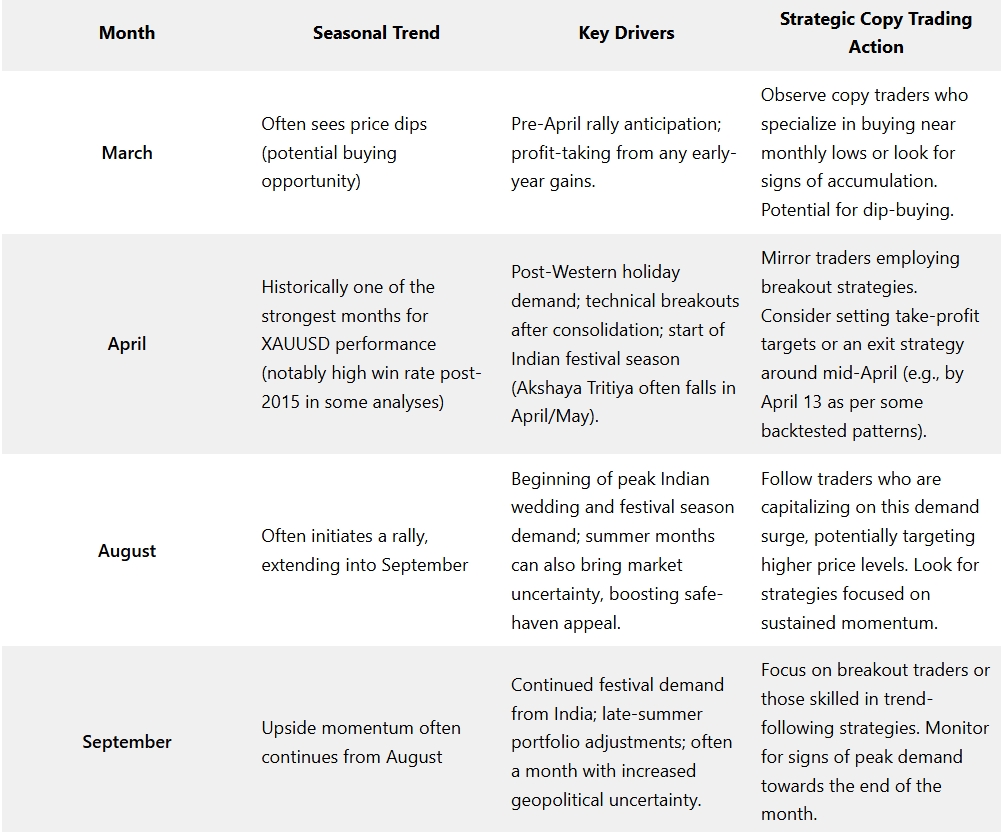
Disclaimer: Historical performance is not indicative of future results. Market conditions can change.
Volatility Peaks and Candlestick Timing:
- Volatility Peaks: The London session (approximately 8:00 AM – 5:00 PM GMT) and the overlap with the New York session (approximately 1:00 PM – 5:00 PM GMT) are generally when XAUUSD experiences its highest volatility and liquidity. This is when most significant price movements occur, offering opportunities but also increased risk.
- Candlestick Timing: Some traders focusing on daily strategies pay close attention to daily candle closes around UTC 00:00 (Coordinated Universal Time) to make trading decisions for the next day. This is often when daily support and resistance levels are re-evaluated.
Navigating Choppy Waters: Months to Approach with Caution for XAUUSD Copy Trading
Just as there are favorable seasons, some months have historically presented challenges or heightened risks for gold traders. Being aware of these can help you protect your capital.
Months to Potentially Avoid or Reduce Exposure for XAUUSD Copy Trading:
The Alchemist’s Secrets: Unpacking Seasonal Drivers of XAUUSD
Understanding why these seasonal trends occur can add another layer to your analysis. Several key drivers contribute to gold’s cyclical price movements:
Beyond the Season: How to Evaluate Trader Performance Metrics and Combine with Seasonal Trends
Copy trading isn’t a “set it and forget it” strategy, especially with an asset like gold. While seasonal trends provide a favorable tailwind, the skill of the trader you’re copying is paramount. Here’s how to evaluate them and blend that with seasonal insights:
- Win Rate & Profit Factor:
- Win Rate: The percentage of trades that are profitable. A high win rate is attractive, but not in isolation.
- Profit Factor: Gross profit divided by gross loss. A profit factor above 1 means the strategy is profitable; above 1.5 or 2 is generally considered good.
- Seasonal Context: Does the trader’s win rate improve during historically strong gold months like April or September? Do they struggle during May or October? Look for consistency within favorable seasons.
- Win Rate: The percentage of trades that are profitable. A high win rate is attractive, but not in isolation.
- Risk-Reward Ratio:
- The potential profit of a trade versus its potential loss. A common target is 1:2 or higher (e.g., risking $100 to potentially make $200).
- Seasonal Context: A trader might employ a tighter risk-reward during choppy seasonal periods and a wider one during strong trending months. Ensure their approach aligns with the seasonal outlook.
- The potential profit of a trade versus its potential loss. A common target is 1:2 or higher (e.g., risking $100 to potentially make $200).
- Average Win vs. Average Loss:
- Related to risk-reward. Ideally, average wins should be significantly larger than average losses.
- Seasonal Context: If a trader’s average win shrinks dramatically during traditionally weak gold months, it might indicate they are struggling against the prevailing seasonal tide.
- Related to risk-reward. Ideally, average wins should be significantly larger than average losses.
- Maximum Drawdown:
- The largest peak-to-trough decline in portfolio value. This indicates the potential loss you could experience.
- Seasonal Context: Did the trader experience their maximum drawdown during a historically challenging month for gold? This might be understandable. However, large drawdowns during favorable seasons warrant caution.
- The largest peak-to-trough decline in portfolio value. This indicates the potential loss you could experience.
- Trade Duration & Frequency:
- Are they a scalper, day trader, or swing trader?
- Seasonal Context: Scalpers might thrive on volatility during the London/NY overlap regardless of the broader season, while swing traders will be more attuned to monthly trends. Ensure their style matches the current seasonal opportunity. For instance, a swing trader looking for longs might be more active in April or August.
- Are they a scalper, day trader, or swing trader?
- Consistency and Track Record Length:
- A longer track record provides more data. Look for consistency in performance across different market conditions, including various gold seasons.
- Seasonal Context: Check their performance over several years to see if they consistently capitalize on strong gold months and navigate weak ones effectively.
- A longer track record provides more data. Look for consistency in performance across different market conditions, including various gold seasons.
Combining Trader Metrics with Seasonal Trends:
The sweet spot is finding a trader whose strategy and historical performance metrics align with the prevailing XAUUSD seasonal outlook. For example:
- During a strong seasonal month (e.g., April, September): Look for traders with a good win rate on breakout or trend-following strategies for XAUUSD, who manage risk well but allow profits to run.
- During a potentially weak seasonal month (e.g., May, October): You might prefer traders who are highly selective, employ tight stop-losses, are skilled at range trading, or even sit out if conditions aren’t favorable. Alternatively, advanced copy traders might seek out those skilled in counter-trend strategies.
- During a dip-buying opportunity (e.g., potentially March): Identify traders who have a history of successfully buying at support levels and have good risk management for catching reversals.
This dual-layered analysis, strong trader and favorable season, is key to smarter gold copy trading.
Riding the Tides: Embracing Market Seasons for Smarter Investing
The adage “Don’t go against the tide” is profoundly relevant in investing. Just as nature has its four distinct seasons, financial markets, including XAUUSD, exhibit their own cyclical patterns or “seasons.” Trying to force a summer strategy (aggressive buying) during a market winter (bearish or corrective phase) is often a recipe for disappointment and capital erosion.
- Spring (Accumulation/Recovery): This phase often follows a market bottom. Prices start a gradual ascent. For gold, this could be a period like March, where savvy investors might look for dip-buying opportunities in anticipation of a stronger season.
- Summer (Markup/Bull Market): Characterized by strong upward trends and investor optimism. For XAUUSD, months like April, August, and September can often feel like market summer, where long positions and breakout strategies tend to perform well.
- Autumn (Distribution/Peak): The market momentum starts to wane. Prices might still hit new highs, but smart money begins to take profits. For gold, the end of a strong seasonal rally (e.g., late September/early October, or late April/early May) can represent this phase.
- Winter (Decline/Bear Market): Prices trend downwards. Sentiment is typically bearish. For XAUUSD, months like May (after a strong April), October, or January have historically shown characteristics of a tougher “winter” period for bulls.
The Wisdom of Seasonal Investing:
- Capital Preservation: Recognizing market winter and reducing exposure or adopting defensive strategies is crucial for protecting your capital.
- Profit Taking: Understanding market autumn means knowing when to harvest profits from summer’s growth, rather than riding the market all the way down.
- Patience: Waiting for the right season (e.g., market spring or summer for your chosen strategy) requires patience but can significantly improve outcomes.
When copy trading gold, align your expectations and strategy selection with the prevailing “market season” for XAUUSD. Don’t expect a trader specializing in long breakout trades to thrive if gold is in a clear seasonal “winter.”
Final Recommendations: Weaving It All Together for Smarter Gold Copy Trading
Mastering when to copy trade gold traders is an art and a science. It involves a blend of historical analysis, astute trader selection, and disciplined risk management.
- Combine Seasonality with Copy Trading:
- Prioritize copy trading during XAUUSD’s historically high-probability months (e.g., April for longs, August/September for continued rallies).
- Mirror traders whose strategies excel in these specific seasonal conditions
- Prioritize copy trading during XAUUSD’s historically high-probability months (e.g., April for longs, August/September for continued rallies).
- Monitor USD (DXY) Trends Religiously:
- The US Dollar Index (DXY) is a crucial overlay. A strongly trending dollar (up or down) can significantly impact XAUUSD, sometimes overriding seasonal tendencies.
- Use DXY movements to validate or potentially cancel XAUUSD trades, especially during strong dollar phases which typically pressure gold.
- The US Dollar Index (DXY) is a crucial overlay. A strongly trending dollar (up or down) can significantly impact XAUUSD, sometimes overriding seasonal tendencies.
- Contextualize Extreme Moves (e.g., “Avoid May 2025” Example):
- The prompt’s specific advice to “Avoid May 2025” due to a hypothetical “$3,000/oz surge in April 2025 triggering profit-taking” is an excellent example of dynamic, context-aware decision-making.
- If a strong seasonal month (like April) sees an unusually parabolic or overextended move, the subsequent month (like May) could indeed face a higher risk of sharp corrections due to profit-taking, even if May isn’t always the weakest month. This requires real-time assessment.
- The prompt’s specific advice to “Avoid May 2025” due to a hypothetical “$3,000/oz surge in April 2025 triggering profit-taking” is an excellent example of dynamic, context-aware decision-making.
- Focus on Deeper Analysis:
- Continuously analyze historical patterns and the performance of your copied traders, especially how they fare during seasonally strong and weak months.
- Adapt your copy trading activity – you might increase allocation to a gold trader during their best seasonal months and reduce it during high-risk periods like May and October, or when major counter-seasonal drivers emerge.
- Continuously analyze historical patterns and the performance of your copied traders, especially how they fare during seasonally strong and weak months.
Your Journey to Smarter Gold Investing:
Navigating the XAUUSD market through copy trading offers exciting potential, but it demands more than just picking a trader with high past returns. By understanding and respecting gold’s seasonal trends, evaluating traders through a seasonal lens, applying sound risk management, and drawing on timeless investment wisdom, you can significantly enhance your chances of success and, most importantly, achieve smarter protection of your hard-earned money.
FAQs:
Q1: What are the best months to trade XAUUSD based on seasonal trends?
A: Historically, April, August, and September have often shown strength for XAUUSD. March can present dip-buying opportunities. However, past performance isn’t a guarantee, and other market factors are always at play.
Q2: Which months should I be cautious about when trading gold (XAUUSD)?
A: May (following potential April strength), October (after summer/early autumn rallies), and January (due to potential USD strength and profit-taking) are months where traders often exercise more caution with XAUUSD.
Q3: How does the US Dollar (USD) affect XAUUSD prices?
A: XAUUSD and the US Dollar generally have an inverse relationship. When the USD strengthens, gold often weakens, and vice-versa. This is a critical factor to monitor alongside seasonal trends.
Q4: What are key drivers for XAUUSD seasonal trends?
A: Major drivers include Indian festival and wedding demand (especially Aug-Oct), global geopolitical uncertainty (year-round safe-haven appeal), inflation expectations, and movements in the U.S. Dollar and interest rates.
Q5: How can I evaluate a gold trader to copy, considering seasonal trends?
A: Look at their win rate, profit factor, risk-reward ratio, max drawdown, and strategy. Crucially, analyze their performance during XAUUSD’s historically strong and weak months to see if their approach aligns with seasonal opportunities and risks.
Q6: Is copy trading gold profitable?
A: Copy trading gold can be profitable, but it depends on the skill of the trader you copy, your risk management, the platform’s fees, and market conditions, including seasonal factors. There are no guarantees.
Q7: What time of day is best for trading XAUUSD?
A: XAUUSD typically sees the highest volatility and liquidity during the London trading session and the overlap between the London and New York sessions. This period can offer more trading opportunities but also carries increased risk.
Q8: How can Michael Burry’s investment philosophy apply to XAUUSD trading?
A: Burry’s emphasis on deep research, identifying mispriced value (or risk), contrarian thinking, and margin of safety can be applied by thoroughly analyzing gold’s fundamentals and seasonal patterns, rather than just following trends blindly.
Q9: What is the ‘sell in May and go away’ effect for gold?
A: While “sell in May and go away” is a general stock market adage, gold can sometimes experience profit-taking or consolidation in May, especially if April has been a particularly strong month. This aligns with the idea of seasonal caution for XAUUSD in May.
Q10: How do lessons from “The Psychology of Money” help in gold copy trading?
A: Understanding your own emotional biases, the role of luck and risk, avoiding greed, focusing on long-term capital preservation, and maintaining discipline are crucial psychological aspects that can help you make more rational decisions when copy trading gold, especially when dealing with seasonal highs and lows.
For more detailed insights on developing daily trading routines, risk management, and effective position sizing strategies, explore additional articles on Trading Cup. Our trading experts at ACY and FinLogix are also great resources to guide your journey towards trading excellence.

Discover Our Best Trading Signals
At Tradingcup, you can browse through a selection of signals and review past performance before you decide to copy.
Become A Signal Provider
Share your expertise and become a signal provider so other traders can copy your trades.
Stay tuned to our blog for more trader spotlights and leaderboard updates.
Trading involves risks.
Visit the Tradingcup blog through the link below for more updates: https://www.tradingcup.com/learn
Related Copy Trading blogs:
- Understanding Market Liquidations: Liquidity Sweeps and Runs Explained
- 7 Essential Daily Habits of Successful Traders to Outperform Their Peers
- 10 Strategies You Can Copy off Our Best Copy Traders
- 5 Strategies Every Trader Can Master To Trade Better In A Trading Contest
- 2025 Copy Trading Scams Exposed: How to Spot Fraud
- A Swing Trading Strategy with an 83 Percent Win Rate and Low Drawdowns
- Forex Martingale Strategies Explained, The Good, The Bad and The Ugly
- Pyramiding Trading Tutorial – Pros & Cons & How to Use It