Last Updated: February 25, 2026
This article is reviewed annually to reflect the latest market regulations and trends.

TL; DR
- Scalping Strategy: High-frequency trading aiming for small, quick profits; requires discipline and robust risk management.
- Best Indicators: Moving Averages (EMA/SMA), MACD, Stochastic Oscillator, and RSI are crucial for identifying scalping opportunities.
- Jesse Livermore & Discipline: Apply Livermore’s market trend analysis and Mark Douglas’s psychological discipline for scalping success.
- Copy Trade Scalpers: Leverage platforms like TradingCup to copy experienced scalpers, reducing emotional trading and accelerating learning.
- Top Scalpers Compared: Analyze traders like ‘thai pro fx beta’ (low risk, ~10.3% net monthly return) and ‘trade horizons’ (high risk, ~10.4% net monthly return) based on performance, risk (MMR), and fees.
Disclaimer: The information in this article is for educational purposes only and does not constitute financial, investment, or trading advice. Copy trading carries substantial risks, including the potential loss of your entire invested capital. Past performance of copied traders or strategies is not a reliable indicator of future results. You may be replicating high-risk trades, overleveraged positions, or strategies incompatible with your financial goals. Always conduct independent research into a trader’s historical performance, risk metrics, and strategy before copying them. Never invest funds you cannot afford to lose. Consult a licensed financial advisor to ensure copy trading aligns with your risk tolerance, financial objectives, and regulatory requirements in your jurisdiction. This article does not endorse specific traders, platforms, or strategies, and all trading decisions remain your sole responsibility.

“The speculator’s chief enemies are always boring from within. It is inseparable from human nature to hope and to fear. In speculation, when the market goes against you, you hope that every day will be the last day – and you lose more than you should had you not listened to hope… And when the market goes your way, you become fearful that the next day will take away your profit, and you get out – too soon.” – Jesse Livermore
Applying Jesse Livermore’s Wisdom to Scalping

Jesse Livermore, a titan of early 20th-century trading, wasn’t a scalper in the modern sense. He focused on capturing major market swings. However, his core principles offer invaluable wisdom even for high-frequency traders:
- Trade with the Trend: Livermore stressed identifying the market’s primary direction (the “line of least resistance”). Even scalpers benefit from aligning their micro-trades with the prevailing short-term trend seen on slightly higher timeframes (e.g., 15-min or 1-hour). Don’t just trade noise; scalp in the direction the tide is flowing.
- Pivotal Points: Livermore looked for key price levels where momentum shifted. Scalpers use support and resistance on micro-charts, which are essentially short-term pivotal points. Recognizing these levels is crucial for entries and exits.
- Patience and Discipline (Yes, Even in Scalping): While trades are fast, patience is needed to wait for high-probability setups according to your strategy. Discipline is required to execute the plan flawlessly – taking profits at targets and cutting losses immediately. Livermore warned against hope and fear dictating actions; scalping demands robotic adherence to rules.
- Money Management: Livermore learned the hard way about risking too much. Scalpers must use strict risk management, typically risking only a tiny fraction (e.g., 0.5% – 1%) of their capital per trade due to the high frequency.
Even in the fastest game, understanding the underlying market structure and applying timeless principles separates gambling from strategic trading.
Mastering the Inner Game: 10 Lessons from “The Disciplined Trader” for Scalpers
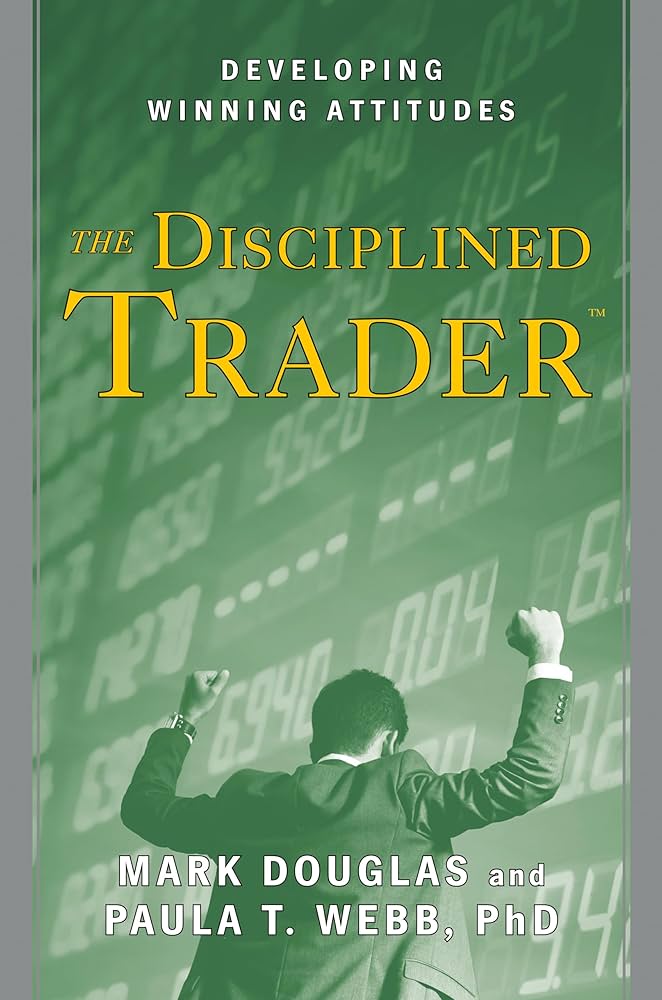
Mark Douglas’s seminal work, “The Disciplined Trader,” focuses on the psychology of trading, which is paramount in the high-pressure world of scalping. Here are 10 key lessons adapted for scalpers:
- Accept the Risk: Understand that any single trade can be a loser. Risk is inherent; accept it fully before entering any scalp.
- Think in Probabilities: Don’t view trades as “right” or “wrong.” See your strategy as having a statistical edge over many trades. Focus on consistent execution, not the outcome of one scalp.
- Define Your Edge: Objectively know what your scalping strategy is and why it should work. If you can’t define it, you don’t have one.
- Act on Your Edge Without Reservation: Once your setup appears, execute immediately. Hesitation in scalping means missed opportunities or worse entries.
- Cut Losses Without Hesitation: Your stop-loss is sacred. Emotional attachment to a losing scalp is deadly. Cut it instantly when your predefined level is hit.
- Take Profits When Your Rules Dictate: Don’t get greedy. Scalping relies on taking small, predefined profits consistently. Stick to your targets.
- Objectively Monitor Your Susceptibility to Errors: Are you deviating from your plan due to fear or greed? Keep a journal and be honest about mistakes.
- Understand the Illusion of Control: You control your entries, exits, and risk, but not the market. Don’t get frustrated by unpredictable moves; focus on what you can control.
- Never Stop Learning (About Yourself): The market constantly provides feedback about your discipline and emotional control. Learn from every trade, win or lose.
- Create Rules and Follow Them: Develop a concrete trading plan with entry rules, exit rules (both profit and loss), and risk management rules. Then, follow it religiously.
Scalping success is arguably 80% psychology and 20% strategy. Mastering your mind is non-negotiable.
The Ultimate Guide to Scalping Strategies & Finding the Best Scalper to Copy Trade (Updated 2026)
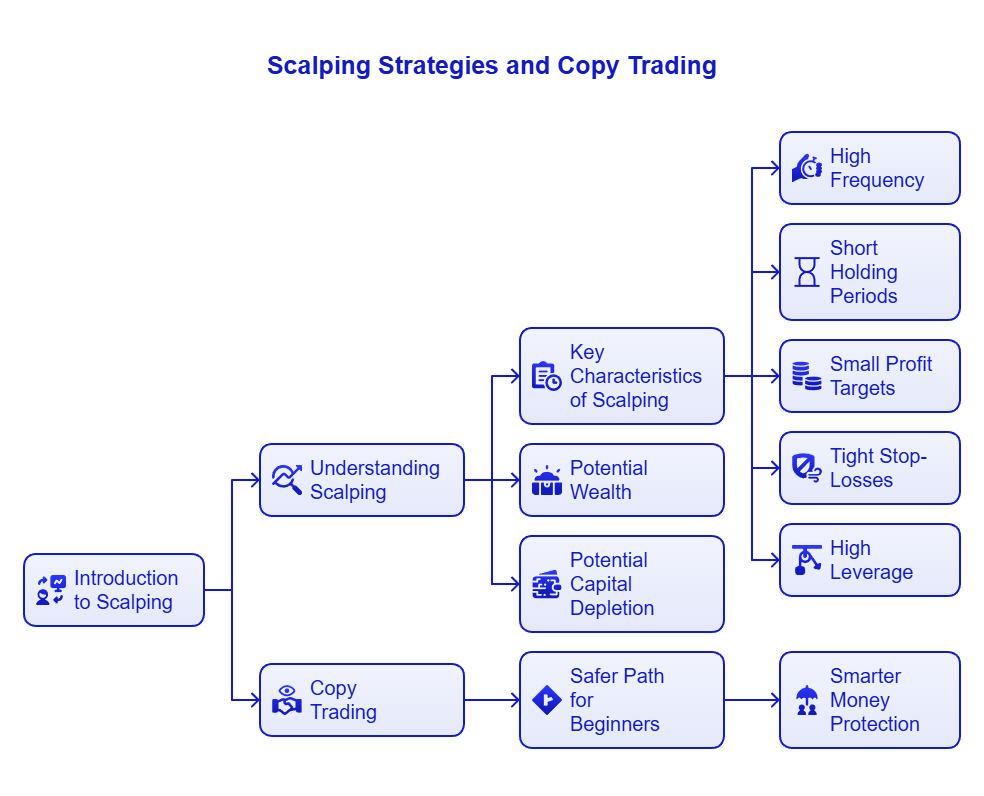
The financial markets pulse with opportunity, a vast digital ocean teeming with potential gains. For many traders, scalping represents the thrilling sprint across these waters – quick bursts of speed aiming for small, frequent wins. But is it the best strategy? And for those seeking guidance, who are the best scalper traders to copy trade?
This comprehensive guide dives deep into the world of scalping strategies in 2026. We’ll explore its allure, the essential tools, the mindset required, and critically, how copy trading can offer a smarter, potentially safer path, especially for beginners navigating the volatile Forex market. We aim to equip you not just with tactics, but with the wisdom for smarter money protection in your investment journey.
As the legendary trader Jesse Livermore alluded to, our internal battles with hope and fear are often our biggest hurdles. Scalping, with its rapid-fire nature, magnifies these challenges. Let’s learn to navigate them.
What is Scalping? The Double-Edged Sword of High-Frequency Trading
Imagine a hummingbird darting from flower to flower, taking tiny sips of nectar. That’s the essence of scalping. Scalpers aren’t looking to ride massive trends for days or weeks; they aim to capture minuscule price movements, often holding positions for mere seconds or minutes. The goal is to accumulate numerous small profits that add up over the trading session.
Key Characteristics of Scalping:
- High Frequency: Scalpers execute dozens, sometimes hundreds, of trades daily.
- Short Holding Periods: Positions are opened and closed very quickly.
- Small Profit Targets: Aiming for a few pips (percentage in point) per trade.
- Tight Stop-Losses: Essential for cutting losses immediately if a trade moves unfavorably.
- High Leverage (Often): Used to amplify the potential profit from small price changes (but also amplifies risk).
This high-octane approach requires intense focus, quick decision-making, and unwavering discipline. It’s often touted as the fastest way to potential wealth, but the blade cuts both ways – it can equally be the fastest way to deplete your capital if not managed correctly.
Why Do Traders Choose Scalping?
Despite its demanding nature, scalping remains one of the most popular trading strategies, particularly in the highly liquid Forex market. Why?
- Reduced Exposure Risk: By holding positions for short durations, scalpers minimize the risk of being caught offside by major news events or overnight market shifts.
- Frequent Opportunities: Scalpers believe minor price fluctuations are more frequent and easier to capture than large trends. Volatility is their playground.
- The Thrill Factor: The fast pace and constant action appeal to certain personalities seeking excitement and immediate feedback.
- Compounding Potential: Small, consistent gains, when compounded, can theoretically lead to significant account growth (though consistency is the challenge).
- Focus on Technicals: Scalping heavily relies on short-term technical analysis, charts, and indicators, appealing to traders who prefer objective signals over fundamental analysis.
However, a crucial caveat exists: many traders jump into scalping seeking instant results, often without adequate intuition or preparation, fueled more by emotion (greed and fear) than strategy. This is a recipe for disaster. True scalping success requires rigorous backtesting, practice, and emotional control.
Mastering the Micro-Movements: Common Scalping Strategies & What to Look For

There isn’t one single “best” scalping strategy; effectiveness depends on the trader, market conditions, and the asset being traded. However, several common approaches exist:
Range Trading:
Identifying a price channel (support and resistance levels) on short timeframes (e.g., 1-minute or 5-minute charts) and buying near support, selling near resistance.
Breakout Scalping:
Entering a trade as soon as the price breaks decisively through a key level (support, resistance, trendline), anticipating continuation in that direction for a small profit.
Indicator-Based Scalping:
Using specific technical indicators to generate buy/sell signals. Popular combinations include:
Moving Averages (EMA Crossovers):
Entering when a faster EMA crosses above a slower EMA (buy) or below (sell).
Stochastic Oscillator/RSI:
Using these momentum oscillators to identify overbought/oversold conditions on very short timeframes for potential reversals.
MACD (Moving Average Convergence Divergence):
Using MACD crossovers or histogram divergences for entry signals.
Bollinger Bands:
Trading bounces off the bands or breakouts beyond them.
What to Look For When Starting Scalping:
- Low Spreads: The spread (difference between bid and ask price) is the scalper’s primary cost. Choose brokers and assets with consistently tight spreads.
- High Liquidity: Trade major Forex pairs (like EUR/USD, GBP/USD), popular indices, or highly traded commodities (like Gold – XAU/USD) that offer enough volume for easy entry and exit.
- Fast Execution: Your broker’s platform must execute orders instantly without significant slippage.
- Reliable Platform: A stable platform that doesn’t freeze during volatile periods is non-negotiable.
- Disciplined Mindset: Can you stick to your plan, cut losses quickly, and avoid revenge trading?
Essential Tools of the Trade: Best Indicators for Scalpers

While strategy varies, most scalpers rely on a core set of technical indicators tailored for short timeframes:
Moving Averages (MAs):
Especially Exponential Moving Averages (EMAs) like the 9-EMA, 20-EMA, and 50-EMA on 1-min or 5-min charts. They help identify short-term trend direction and potential entry/exit points on crossovers or bounces. Simple Moving Averages (SMAs) are also used.
MACD (Moving Average Convergence Divergence):
Useful for spotting changes in momentum and generating crossover signals. The histogram can indicate weakening or strengthening momentum.
Stochastic Oscillator:
Helps identify overbought (>80) and oversold (<20) conditions, suggesting potential short-term reversals. Crossovers of the %K and %D lines are key signals.
RSI (Relative Strength Index):
Similar to the Stochastic, RSI measures the speed and change of price movements to identify overbought (>70) and oversold (<30) levels. Divergences between RSI and price can also signal entries.
Bollinger Bands:
These consist of a middle band (SMA) and two outer bands (standard deviations away). Scalpers might trade reversals when price touches an outer band or look for “squeezes” (low volatility) preceding potential breakouts.
Key Tip: Avoid cluttering your charts. Choose 2-3 indicators that complement each other and master their signals on your chosen timeframe.
The Scalping Arena: Practice Makes Proficient
Before risking real capital, practice trading as a scalper. Open a demo account with a reputable broker and focus on specific instruments to understand their unique behaviour:
- Stocks: Highly liquid large-cap stocks can be suitable, but watch out for commission costs.
- Gold (XAU/USD): A popular instrument for scalpers due to its volatility and relatively tight spreads on major brokers.
- EUR/USD: The most traded Forex pair, offering high liquidity and typically the tightest spreads, making it ideal for scalping practice.
Familiarize yourself with the market’s rhythm, test your chosen strategy and indicators, and hone your execution speed and discipline in a risk-free environment.
The Smarter Shortcut? The Copy Trading Advantage for Scalpers
Let’s be realistic: becoming a consistently profitable scalper requires immense screen time, discipline, and navigating a steep learning curve fraught with potential losses. This is where copy trading emerges as a compelling alternative, particularly for beginners or those with limited time.
Copy trading allows you to automatically replicate the trades of experienced, vetted traders directly in your own account. When applied to scalping, it offers significant benefits:
- Learn from the Pros: Observe how successful scalpers manage trades, identify setups, and handle risk in real-time. It’s like having a mentor.
- Refine Your Own Strategy: By watching experts, you can gain insights to improve your own day trading or even swing trading approaches, learning nuances you might otherwise miss.
- Overcome Emotional Hurdles: Copying removes your emotional decision-making from the equation. You avoid panic-selling or greed-driven mistakes, letting the chosen trader’s strategy play out.
- Reduce Decision Fatigue & Information Overload: Scalping demands constant analysis. Copy trading delegates this intense workload, freeing up your mental capital.
- Potential for Faster Gains (with caveats): By leveraging the expertise of a proven scalper, you potentially access profits sooner than learning from scratch, especially in the complex Forex market.
Copy trading isn’t a magic bullet – you still need to choose the right trader to copy – but it offers a structured way to participate in scalping strategies while mitigating some of the steepest challenges.
Finding Your Scalping Mentor: Comparing Top Traders (TradingCup MMR Analysis – April 2025 Data)
Choosing who to copy is crucial. Platforms like TradingCup rank traders using various metrics, including the MMR (Minimum Margin Requirement), which can be an indicator related to risk management and stability. Let’s analyze three traders based on the provided data (as of April 30, 2025) to illustrate the selection process:
Comparing Top Scalper Traders:
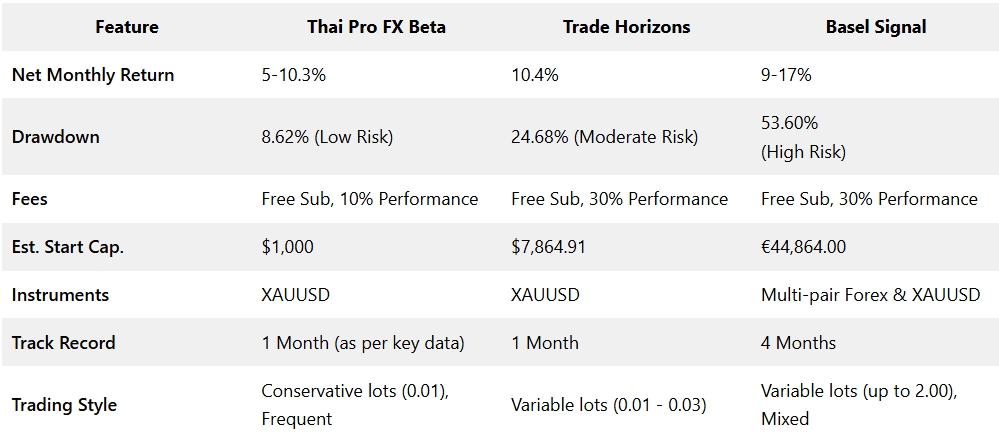
We’ll evaluate “thai pro fx beta,” “trade horizons,” and “Basel Signal” based on net returns (after fees), risk (drawdown), fees, strategy, and track record. The goal is to match a trader’s profile with your risk tolerance.
Trader Overview & Key Points:
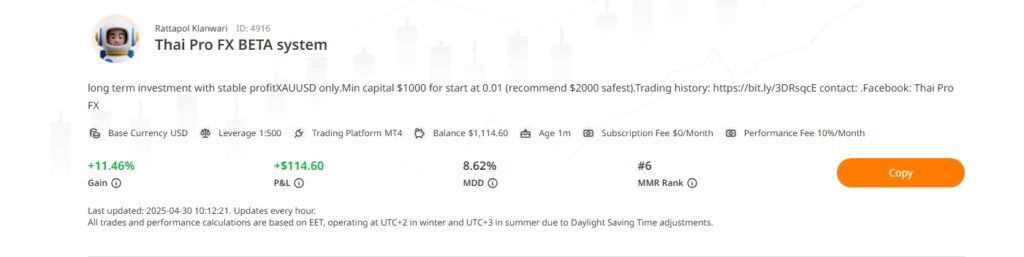
Thai Pro FX Beta: Offers a moderate net return with low risk (8.62% drawdown). Focuses on Gold (XAUUSD) with small, frequent trades. Suitable for conservative investors.
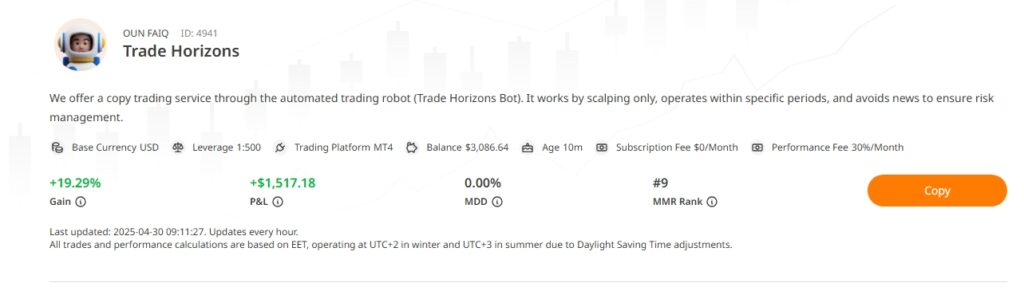
Trade Horizons: Provides a slightly higher net return but with high risk (53.60% drawdown). Trades multiple Forex pairs with varying, sometimes large, lot sizes. Ideal for aggressive investors comfortable with volatility.
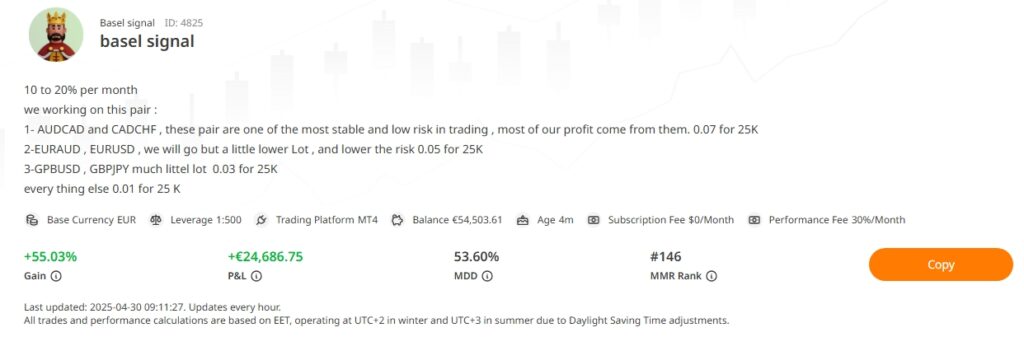
Basel Signal: Performance (30%) fees, despite decent gross gains. Less attractive due to cost structure.
Detailed Performance Metrics Breakdown:
Analysis & Recommendation:
- Return vs. Risk: Thai Pro fx beta and Trade Horizons offer very similar net monthly returns. The critical difference is risk. thai pro fx beta achieves its returns with significantly less volatility and capital fluctuation (drawdown) compared to trade horizons.
- Fees Impact: Even if a trader shows gross gains, hefty subscription and performance fees can lead to a net loss for the copier.
- Strategy Fit: Do you prefer a focus on one instrument like Gold (thai pro fx beta, Trade Horizon) or diversification across multiple pairs (Basel Signal)? Does the trader’s use of leverage (implied by lot size vs. capital) align with your comfort level?
- Track Record: While thai pro fx beta and Trade Horizons shows promising recent performance, Basel Signal have a longer 4-month history, offering more data points (though past performance never guarantees future results).
Recommendation Based on Risk Tolerance:
- Conservative Approach (Prioritize Capital Protection): thai pro fx beta is the clear choice. The low drawdown suggests better risk management, providing comparable returns to the high-risk option but with much less volatility. Ideal for steady growth seekers.
- Aggressive Approach (Seeking Higher Potential Gains, Accepting High Risk): trade horizons It provides a high net return of ~10.4% per month
- Basel Signal could be considered. You accept the significant risk (53.60% drawdown – meaning at one point the account was down this much from its peak) for potentially high returns. Ensure you fully understand and can stomach this level of volatility.
Important Note: This analysis is based solely on the provided data snapshot. Always conduct further due diligence. Check the trader’s profile on the platform (e.g., TradingCup), look for consistency over longer periods if available, understand their strategy description, and consider starting with a smaller allocation.
The Safest Path? An Easy Way to Copy Trade Scalpers for Beginners

For newcomers, especially in the dynamic Forex market (the most traded, hence most studied market), directly jumping into scalping can feel like swimming with sharks. Copy trading offers a structured, potentially safer and faster way to potentially earn.
Here’s how to approach it smartly:
- Choose a Reputable Platform: Look for platforms like TradingCup, ZuluTrade, eToro, etc., that offer transparency, detailed trader statistics (including risk metrics like drawdown and MMR), and user reviews.
- Filter performance: Most platforms allow filtering traders by strategy or average trade duration. Look for those explicitly identifying as scalpers or having very short holding times.
- Analyze Beyond Returns: Don’t just pick the trader with the highest profit percentage. Scrutinize:
- Drawdown: Lower is generally safer.
- Consistency: Look for steady growth over erratic spikes.
- Risk Score/MMR: Understand the platform’s risk rating.
- Fees: Calculate the net return you’d receive after all fees.
- Trader’s Strategy Description: Does it make sense to you?
- Diversify (Optional but Recommended): Consider copying 2-3 different scalpers with slightly varying styles or market focuses to spread risk.
- Start Small: Allocate only a portion of your investment capital you are comfortable risking. Test the waters before committing significant funds.
- Monitor Performance: Regularly review the performance of the traders you are copying and your overall results. Don’t hesitate to stop copying a trader if their performance deteriorates significantly or their risk profile changes.
Copy trading scalpers isn’t risk-free, but by carefully selecting and monitoring experienced traders, beginners can gain exposure to scalping strategies while benefiting from expert execution and potentially mitigating the emotional pitfalls and steep learning curve of going solo. It’s about leveraging expertise for smarter money protection and potential growth.
Conclusion: Scalping – High Speed, High Stakes, High Discipline
Scalping offers the allure of rapid-fire profits, tapping into the constant micro-movements of the financial markets. However, it demands exceptional discipline, robust risk management, lightning-fast execution, and mastery over trading psychology, echoing the timeless wisdom of traders like Jesse Livermore and the psychological insights of Mark Douglas.
While some thrive in this high-octane environment, many find the pressure and learning curve overwhelming. For them, copy trading proven scalpers presents a viable, potentially safer alternative. By analyzing traders based on performance, risk (drawdown, MMR), fees, and strategy – as illustrated with “thai pro fx beta” and “trade horizons” – you can make informed decisions aligned with your risk tolerance.
Whether you choose to scalp directly or leverage the expertise of others through copy trading, remember the ultimate goal: smart investing and the protection of your hard-earned capital. Success lies not just in the strategy, but in the discipline, preparation, and continuous learning applied to navigate the exciting, yet challenging, world of scalping.
Frequently Asked Questions (FAQs)
Q1: Is scalping profitable for beginners?
A1: Scalping can be profitable, but it’s extremely challenging for beginners due to the high speed, required discipline, emotional control, and transaction costs (spreads/commissions). Many beginners lose money initially. Starting with a demo account or considering copy trading is highly recommended.
Q2: What is the best scalping strategy?
A2: There’s no single “best” strategy. Success depends on the trader’s personality, the market conditions, and the asset traded. Popular strategies involve range trading, breakouts, and using indicators like EMAs, MACD, and Stochastic on very short timeframes (1-min, 5-min). The key is finding a strategy you can execute consistently and managing risk tightly.
Q3: How much capital do I need for scalping?
A3: While some brokers allow starting with small amounts ($100-$200), effective scalping often requires more capital ($1,000+) to absorb transaction costs, manage risk properly (risking only a tiny % per trade), and handle potential drawdowns without margin calls, especially if using leverage.
Q4: Can you get rich by scalping?
A4: While theoretically possible through consistent small gains and compounding, getting rich quickly via scalping is highly unlikely and extremely risky. It requires exceptional skill, discipline, and significant starting capital. Focusing on consistent profitability and robust risk management is more realistic than aiming for rapid wealth. Remember, it can also lead to rapid losses.
Q5: Is copy trading scalpers a safe way to invest?
A5: Copy trading reduces some risks (like your own emotional errors) but introduces others (reliance on the copied trader). It’s generally considered safer than a beginner scalping directly if you choose reputable platforms and experienced traders with proven track records and good risk management (like low drawdowns). However, all trading involves risk, and past performance doesn’t guarantee future results. Thorough research and starting small are crucial.
Q6: What are the best indicators for a 1-minute scalping strategy?
A6: For a 1-minute chart, traders often use fast-reacting indicators: * Short-term EMAs: e.g., 9-EMA and 20-EMA crossovers. * Stochastic Oscillator: Settings like (5, 3, 3) or similar to quickly identify overbought/oversold levels. * Volume: To confirm the strength of breakouts or reversals. * Support/Resistance Levels: Drawn manually or using pivot points. Keep charts clean and focus on 1-2 confirmation indicators.
For more detailed insights on developing daily trading routines, risk management, and effective position sizing strategies, explore additional articles on Trading Cup. Our trading experts at ACY and FinLogix are also great resources to guide your journey towards trading excellence.

Discover Our Best Trading Signals
At Tradingcup, you can browse through a selection of signals and review past performance before you decide to copy.
Become A Signal Provider
Share your expertise and become a signal provider so other traders can copy your trades.
Stay tuned to our blog for more trader spotlights and leaderboard updates.
Trading involves risks.
Visit the Tradingcup blog through the link below for more updates: https://www.tradingcup.com/learn
Related Copy Trading blogs:
- Understanding Market Liquidations: Liquidity Sweeps and Runs Explained
- 7 Essential Daily Habits of Successful Traders to Outperform Their Peers
- 10 Strategies You Can Copy off Our Best Copy Traders
- 5 Strategies Every Trader Can Master To Trade Better In A Trading Contest
- 2025 Copy Trading Scams Exposed: How to Spot Fraud
- A Swing Trading Strategy with an 83 Percent Win Rate and Low Drawdowns
- Forex Martingale Strategies Explained, The Good, The Bad and The Ugly
- Pyramiding Trading Tutorial – Pros & Cons & How to Use It