Last Updated: April 04, 2025
This article is reviewed annually to reflect the latest market regulations and trends.
TL;DR:
- Cost-Aligned Profits: Copy trading blends subscriptions (0−30−500/month) + performance fees (5-30% of new gains only), rewarding real success unlike ETF investment’s fixed fees or stock picking’s hidden slippage/taxes.
- Forex Edge: Skilled forex trading via copy trading strategy outperforms volatile crypto trading, leveraging institutional-level forex strategy without manual chart grinding.
- High Water Mark Wins: Pay fees only when your portfolio hits fresh peaks (e.g., copy trading gains after losses), unlike investing funds that drain returns via annual MER drag.
- Beat Inflation & Fees
- Hybrid Strategy: Combine copy trading (20% portfolio) with stocks/ETFs (80%) for growth + stability, ideal for forex volatility and long-term investing funds.
🔗 Related Reads:
Copy trading and traditional investing represent two distinct approaches to wealth-building in financial markets. While copy trading leverages automation and social insights, traditional methods like mutual funds emphasize long-term ownership. This analysis combines market data, expert insights, and emerging trends to help investors make informed decisions.
Disclaimer: The information in this article is for educational purposes only and does not constitute financial, investment, or trading advice. Copy trading carries substantial risks, including the potential loss of your entire invested capital. Past performance of copied traders or strategies is not a reliable indicator of future results. You may be replicating high-risk trades, overleveraged positions, or strategies incompatible with your financial goals. Always conduct independent research into a trader’s historical performance, risk metrics, and strategy before copying them. Never invest funds you cannot afford to lose. Consult a licensed financial advisor to ensure copy trading aligns with your risk tolerance, financial objectives, and regulatory requirements in your jurisdiction. This article does not endorse specific traders, platforms, or strategies, and all trading decisions remain your sole responsibility.

“Markets are constantly in a state of uncertainty and flux, and money is made by discounting the obvious and betting on the unexpected.”
— George Soros
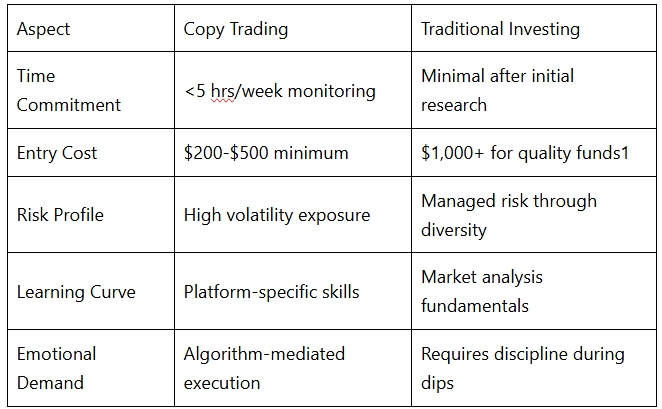
Copy Trading VS Traditional Investing
Congressional Copycats: Following Institutional Money
Reddit’s r/wallstreetbets shows 23% of active traders now track congressional stock disclosures. Platforms like Autopilot enable automatic replication of:
- Nancy Pelosi’s tech stock moves (47% annualized returns 2019-2023)
- Berkshire Hathaway’s value plays (31% CAGR since 1965)
- SEC filings show 14.7% of copy traders now follow institutional whale accounts
Cost Equation for Informed Decision
1. Copy Trading Fee Structure
Copy trading blends two costs:
- Subscription Fees: 0–30–500/month for elite trader access (free tiers lack profit potential).
- Performance Fees: 5–30% of new peaks only (high water mark model).
Example:
- Pay $50/month + 20% on fresh gains.
- Trader grows 10K→12.5K. You keep $1,400 net profit after fees.
ETF Comparison:
- A 0.07% fee on the same gain leaves $2,493 if the ETF matches the 25% return (most don’t).
2. Real Cost Breakdown
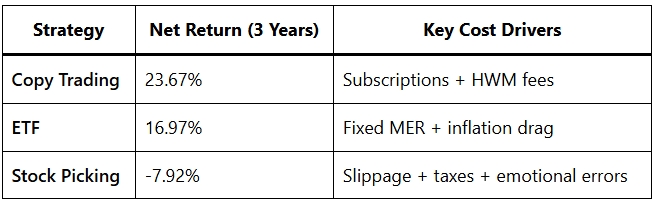
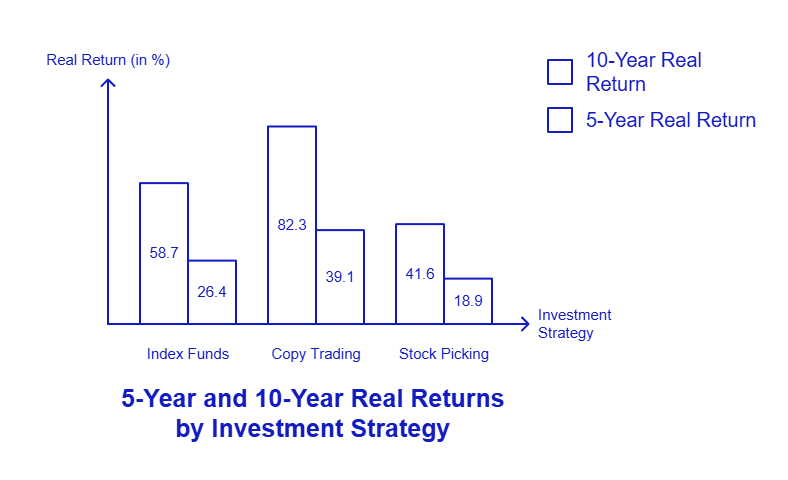
Total Effective Cost = Management Fees + Slippage + Inflation Drag
Example Calculation
To illustrate how this works, let’s use some hypothetical numbers:
- Management Fees (Fm): 0.75% or $75 per $10,000
- Slippage (Sp×Tv): Assume 0.2% slippage on a $5,000 trade volume, which is $10
- Inflation Drag (P(1−1(1+i)t): With $10,000 principal, 3% inflation, and a 5-year horizon, the inflation drag can be calculated as follows:
P (1−1(1+0.03)5) ≈10,000 × (1−11.159274) ≈10,000 × (1−0.863838) ≈1,363.62
Total Effective Cost Calculation
Now, let’s calculate the Total Effective Cost using these numbers:
C=Fm(100Sp×Tv)+P(1−(1+i)t1)
C=75+10+1,363.62=1,448.62C=75+10+1,363.62=1,448.62
This means the total effective cost for your investment over the specified period would be approximately $1,448.62.
Where:
- Fm = Annual management fees (0.75% avg for funds vs 0% copy platforms)
- Sp = Spread percentage per trade
- Tv = Total trade volume
- i = Inflation rate (3.18% 2024 est)
- t = Investment horizon in years
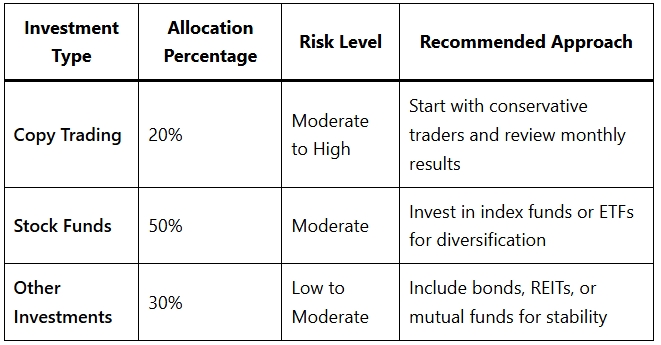
Hypothetical Suggested Allocation: 20% Copy Trading, 80% Stock Funds or Other Investments
When building a diversified portfolio, balancing risk and reward is crucial. A hypothetical allocation strategy that combines copy trading with traditional investments can help mitigate risks while leveraging the potential of innovative financial tools. Below is a suggested allocation model designed for both novice and experienced investors.
Why Start with 20% in Copy Trading?
Copy trading offers a unique opportunity to learn from experienced traders while automating your portfolio. However, it carries higher risks due to market volatility and reliance on individual trader performance. By allocating only 20%, you limit exposure to these risks while still benefiting from the strategy.
Key Steps for Copy Trading:
- Start with Conservative Traders:
- Choose traders with a proven track record of consistent returns over at least 12 months.
- Look for those who prioritize risk management (e.g., low drawdowns).
- Review Results Monthly:
- Analyze the performance of copied trades every month.
- Look for patterns in profitability, risk-taking behavior, and responsiveness to market news.
- Adjust your copied portfolio by removing underperforming traders or reallocating funds to better-performing ones.
- Diversify Within Copy Trading:
- Copy multiple traders across different asset classes (e.g., forex, stocks, crypto).
- Avoid over-concentration in high-risk markets like cryptocurrencies or leveraged forex trades.
80% Allocation to Stock Funds and Other Investments
The remaining 80% of your portfolio should focus on stable, long-term investments that provide consistent returns and protect against inflation.
Stock Funds (50%):
- Invest in index funds or ETFs that track major indices like the S&P 500, MSCI World Index, or Nasdaq-100. These funds offer broad diversification and lower fees compared to actively managed funds.
- Consider dividend-paying stocks for passive income generation.
Other Investments (30%):
- Bonds: Government and corporate bonds provide steady returns and act as a hedge against stock market volatility.
- REITs (Real Estate Investment Trusts): These offer exposure to real estate markets without the need for direct property ownership.
- Mutual Funds: Choose funds managed by reputable firms with solid historical performance.
Monthly Review Strategy
Regardless of your allocation strategy, regular reviews are essential for optimizing performance:
- Track the monthly performance of both copy trading and stock funds using portfolio management tools like Personal Capital or Morningstar Direct.
- Rebalance your portfolio quarterly based on market conditions and individual asset performance.
Benefits of This Allocation Model
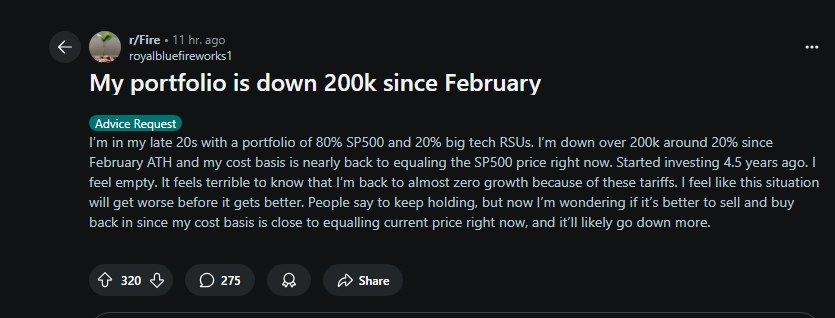
- Risk Mitigation: Allocating only 20% to copy trading minimizes exposure to high-risk strategies while maintaining potential upside from successful trades.
- Learning Opportunity: Copy trading allows you to observe how professional traders react to market news, helping you develop smarter investment strategies over time.
- Stable Growth: The majority allocation to stock funds and other investments ensures steady growth while protecting against inflation.
Example Scenario: Conservative Copy Trading Strategy
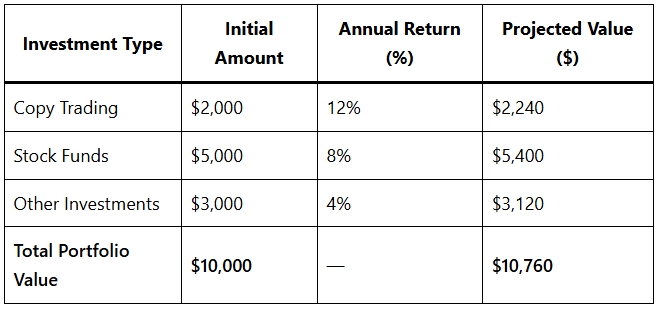
Imagine you allocate $10,000 as follows:
- $2,000 (20%) in copy trading across three conservative traders specializing in forex and stocks with average annual returns of 12%.
- $5,000 (50%) in an S&P 500 index fund with historical annual returns of ~8%.
- $3,000 (30%) in government bonds yielding ~4% annually.
Projected Returns After One Year:
Smarter Protection of Money in Investing
This allocation model strikes a balance between innovation (copy trading) and stability (traditional investments). By starting conservatively with copy trading and reviewing results monthly, investors can gradually increase their exposure as they gain confidence in the strategy’s effectiveness.
Additionally:
- Combine copy trading with AI tools for refined insights into market trends and trader behavior.
- Use inflation-adjusted projections to set realistic financial goals over time.
Remember that patience is key, low-risk investments require time to compound effectively but offer reliable protection against market downturns.
For more detailed insights on developing daily trading routines, risk management, and effective position sizing strategies, explore additional articles on Trading Cup. Our trading experts at ACY and FinLogix are also great resources to guide your journey towards trading excellence.

Discover Our Best Trading Signals
At Tradingcup, you can browse through a selection of signals and review past performance before you decide to copy.
Become A Signal Provider
Share your expertise and become a signal provider so other traders can copy your trades.
Stay tuned to our blog for more trader spotlights and leaderboard updates.
Trading involves risks.
Visit the Tradingcup blog through the link below for more updates: https://www.tradingcup.com/learn
For further reading, visit acy.com