
Last Updated: March 17, 2025
This article is reviewed annually to reflect the latest market regulations and trends.

“Success in investing doesn’t correlate with IQ once you’re above the level of 25. Once you have ordinary intelligence, what you need is the temperament to control the urges that get other people into trouble in investing.”
— Warren Buffett
The Power and Pitfalls of Copy Trading Psychology
Copy trading has transformed how traders engage with financial markets. By enabling replication of strategies used by experienced investors, it offers a compelling opportunity to leverage their expertise. For beginners, it simplifies market entry; for seasoned traders, it provides a way to diversify.
However, success in copy trading depends not only on the traders you follow but also on your ability to manage the psychological factors that influence your decisions.
The appeal of mirroring top performers is clear: potential profits with less effort. Yet, this promise comes with pitfalls. Overconfidence can lead you to overestimate your chosen trader’s infallibility.
Herd mentality might push you to follow the crowd without question. Fear of missing out (FOMO) could drive impulsive choices, while loss aversion might trap you in losing positions. These emotional and cognitive biases can derail even the most promising strategies.
To help you succeed, this article explores four key psychological categories that influence copy trading:
- Optimism and Confidence
- Caution and Risk Awareness
- Uncertainty and Indecision
- Emotional Strain and Stress
Through practical strategies and insights, we’ll show you how to manage these psychological drivers, protect your capital, and build a disciplined mindset for consistent results. Whether you’re new to copy trading or refining your approach, mastering your psychology is the key to unlocking its full potential.
Fundamentals of Copy Trading Psychology
What is Copy Trading Psychology?
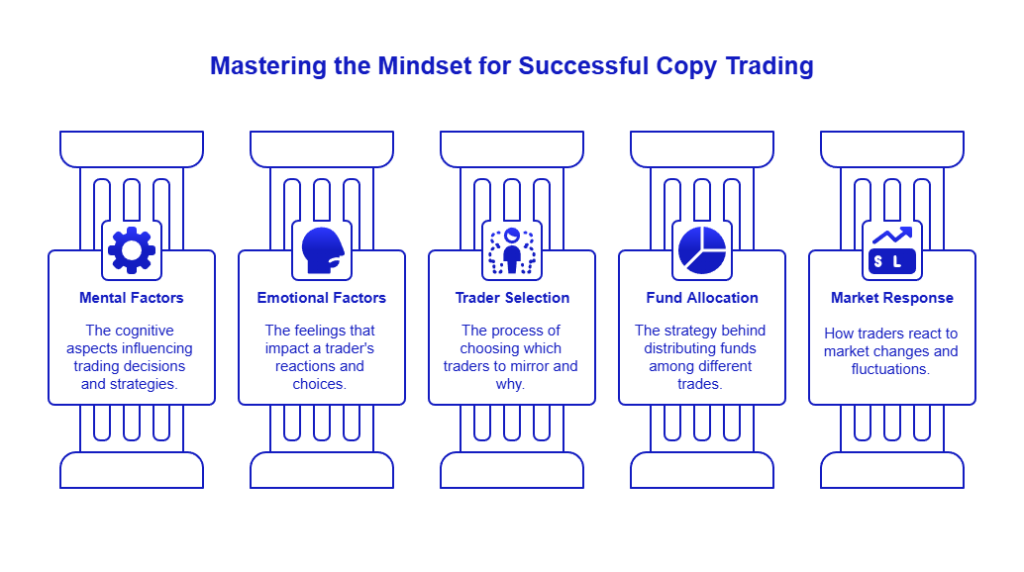
Copy trading psychology refers to the mental and emotional factors that affect your decisions when mirroring the trades of others. It’s about understanding how your mindset influences the way you select traders, allocate funds, and respond to market fluctuations. Success in copy trading isn’t just about picking winners; it’s about managing your own reactions to wins, losses, and uncertainty.
Why Does it Matter?
For novice traders, copy trading can feel like a shortcut to profits, but without a grasp of psychology, it’s easy to fall into traps like overreliance or panic selling. Experienced traders, meanwhile, might overestimate their ability to filter out noise or stick to a plan. In both cases, psychological awareness separates those who thrive from those who falter.
Behavioural Biases in Trading
Several common biases can disrupt your copy trading journey:
- Herd Mentality: Following the majority without independent analysis, often leading to overcrowded trades that collapse under pressure.
- Overconfidence: Believing you’ve mastered trader selection or market timing, ignoring risks or red flags.
- Loss Aversion: Clinging to losing positions out of fear, or avoiding risks that could yield rewards.
These biases distort rational thinking. Overcoming them requires financial literacy, knowing the markets and the tools at your disposal, and self-awareness to recognise when emotions are steering you off course.
Psychological Drivers Behind Copy Trading

Optimism and Confidence
The allure of copy trading lies in its promise: mirror a successful trader, and profits will follow. This optimism draws many in, but unchecked, it can spiral into greed or FOMO, pushing you to make hasty, reckless choices.
Real-World Example:
A beginner spots a trader with a 90% win rate over three months. Enthused, they invest heavily, ignoring the trader’s high-risk approach. When a market downturn hits, the trader’s losses wipe out half the beginner’s capital, leaving them rattled and regretful.
Actionable Strategies:
- Research Thoroughly: Look beyond win rates. Analyse a trader’s history, risk levels, and consistency. Check their maximum drawdown and recovery periods.
- Plan with Discipline: Define your goals and risk tolerance upfront. Set rules for when to start or stop copying a trader, and stick to them.

Caution and Risk Awareness
Caution is a trader’s ally until it becomes excessive. Fear of loss can paralyse you, causing you to miss opportunities or second-guess sound decisions. Loss aversion often amplifies this, making losses feel twice as painful as gains feel rewarding.
Finding Balance:
Rely on data, not just gut feelings. Use stop-loss strategies to cap losses while staying open to calculated risks. For instance, if a trader’s past performance shows resilience, a dip might be a chance to hold, not exit.

Uncertainty and Indecision
With endless data, forums, and opinions at your fingertips, it’s easy to drown in information overload. Groupthink echoing the loudest voices can worsen this, leading to analysis paralysis where no decision feels safe.
Simplifying Choices:
Cut through the noise by focusing on key metrics: win rate, average return, risk-to-reward ratio. Stick to trusted sources like platform analytics or educational webinars from acy.com. Clear criteria keep you grounded.

Emotional Strain and Stress
Volatile markets test your nerves. Watching gains evaporate or losses mount can spark anxiety, impatience, or rash moves. Constant monitoring only heightens the strain.
Managing the Toll:
- Tap Support Resources: Join trading communities or seek mentorship via finlogix.com to share insights and ease isolation.
- Practise Stress Relief: Step away for a walk, meditate, or exercise to reset your mind.
- Stick to Your Plan: A pre-set strategy like limiting daily screen time curbs impulsive reactions.
Trader Profiles and Emotional Aspects
- Novice Traders:
- Seek guidance due to lack of experience.
- Often rely heavily on influencers without assessing risks.
- Experienced Traders:
- Use copy trading for diversification.
- Leverage expertise by selectively copying high-performing peers.
- Risk Tolerance:
- Aggressive traders may take leveraged positions, increasing potential gains but also risks.
- Conservative traders focus on stable returns with minimal exposure.
Building a Disciplined Trader Mindset
- Patience: Avoid impulsive copying; evaluate long-term performance metrics.
- Discipline: Stick to predetermined rules for position sizing and risk management.
Effective Copytrading Strategies
- Position Sizing: Allocate funds based on risk tolerance and trader performance history.
- Risk Management: Regularly review copied trades for consistency and volatility concerns.
- Trade Mirroring Options:
- Automated copying ensures real-time replication but requires monitoring.
- Partial copying allows customization based on individual preferences.
Risks and Limitations
- Overreliance on Copiers: Blind trust in influencers can lead to significant losses.
- Performance Consistency: Temporary outperformance doesn’t guarantee sustained success.
- Lack of Due Diligence: Failing to research copied traders increases risk exposure.
Traders Takeaway
- Conduct thorough research before copying a trader, focusing on their long-term performance metrics.
- Diversify by copying multiple traders with varied strategies to mitigate risks.
- Regularly reassess copied trades and adjust strategies based on market conditions.
- Engage with social trading networks actively; seek advice but avoid herd mentality.

Best Practices in Copy Trading Psychology
Building a resilient trader mindset takes effort, but it pays off. Here’s how to strengthen your approach:
- Set Realistic Expectations: No trader wins every time. Aim for steady growth, not overnight riches, and accept losses as learning opportunities.
- Diversify Copied Traders: Spread your funds across traders with varied styles and markets.
- Master Risk Management: Cap exposure with position sizing and stop-losses to safeguard your portfolio.
Practical Steps for Success
- Test with Demo Accounts: Practise copying traders risk-free to hone your instincts and build confidence.
- Keep a Trading Journal: Log your decisions, emotions, and results. Reviewing this reveals patterns like chasing trends and helps you adjust.
- Review Regularly: Assess your copied traders’ performance monthly. Drop underperformers and refine your criteria.
Tips to Tame Emotional Triggers
- Check your mood before acting stress or euphoria can skew judgment.
- Schedule breaks to avoid burnout, especially during volatile periods.
- Build a routine that balances trading with rest to stay sharp.
Tools and Techniques to Enhance Trading Psychology
Modern platforms offer features to bolster your psychological edge:
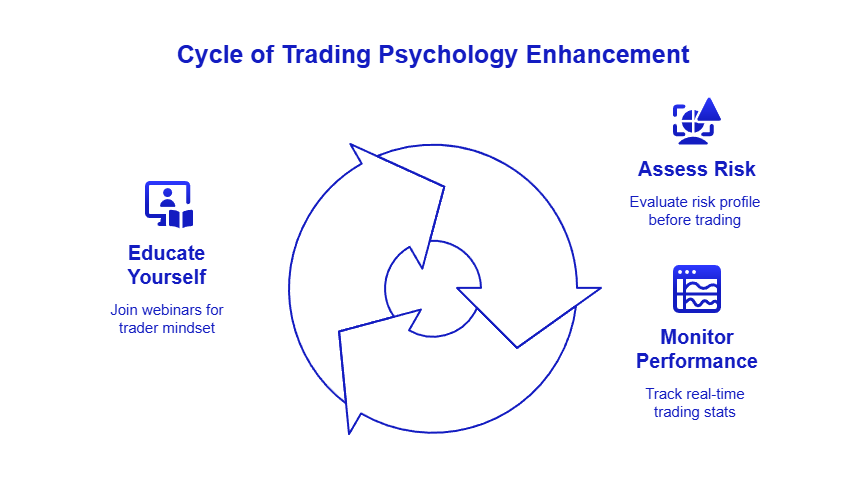
- Risk Assessment Tools: Evaluate a trader’s risk profile before copying, factoring in volatility and drawdowns.
- Performance Dashboards: Monitor real-time stats to spot trends and adjust your portfolio proactively.
- Educational Webinars: Platforms like ACY host sessions on trader mindset and discipline, join them.
Data-driven insights from these tools cut through emotional noise. For example, if a dashboard flags a trader’s rising risk, you can pivot before losses hit, overriding panic or hope with facts.

Mastering Copy Trading Psychology for Success
Copy trading offers a powerful way to leverage others’ expertise, but your psychology determines whether it works for you. By tackling overconfidence, herd mentality, FOMO, and loss aversion, you can protect your capital and pursue consistent gains.
The strategies here, research, planning, diversification, and tool use equip you to handle optimism, caution, uncertainty, and stress with confidence.
Trading is a journey of growth. Commit to ongoing education, reflect on your choices, and refine your mindset. With discipline and awareness, you’ll turn copy trading into a sustainable path to success.
For more detailed insights on developing daily trading routines, risk management, and effective position sizing strategies, explore additional articles on Trading Cup. Our trading experts at ACY and FinLogix are also great resources to guide your journey towards trading excellence.

Discover Our Best Trading Signals
At Tradingcup, you can browse through a selection of signals and review past performance before you decide to copy.
Become A Signal Provider
Share your expertise and become a signal provider so other traders can copy your trades.
Stay tuned to our blog for more trader spotlights and leaderboard updates.
Trading involves risks.
Visit the Tradingcup blog through the link below for more updates: https://www.tradingcup.com/learn
For further reading, visit acy.com