
High-frequency trading has transformed financial markets, enabling traders to execute hundreds of trades within seconds. With Expert Advisors (EAs), or trading robots, automation eliminates emotional biases, allowing for rapid, data-driven decision-making.
The Unpredictable World of Trading—Can Automation Give You an Edge?
Imagine placing 578 trades in just two days, navigating extreme market volatility, and still emerging with a 28.31% gain. This is the reality of high-frequency trading using Expert Advisors (EAs), as demonstrated by TradingCup participant Wisam Faisal. His case study highlights the true potential of algorithmic trading when combined with discipline and strategic execution.
What is EA High-Frequency Trading?
Expert Advisors (EAs) are automated trading programs designed to execute trades based on pre-programmed rules. They eliminate human emotions, ensuring consistency in strategy execution.
EAs, also known as trading robots, automate trade execution by following pre-programmed strategies without human intervention.
High-frequency trading (HFT) EAs, like the one used by Wisam, place a large number of trades within a short period—sometimes within seconds—capitalising on small market fluctuations.
Wisam’s case provides an excellent insight into the risk-reward mechanics of EA trading and how sticking to a structured plan can yield strong outcomes.
Case Study: Wisam’s 578 Trades in 48 Hours
Trading Statistics
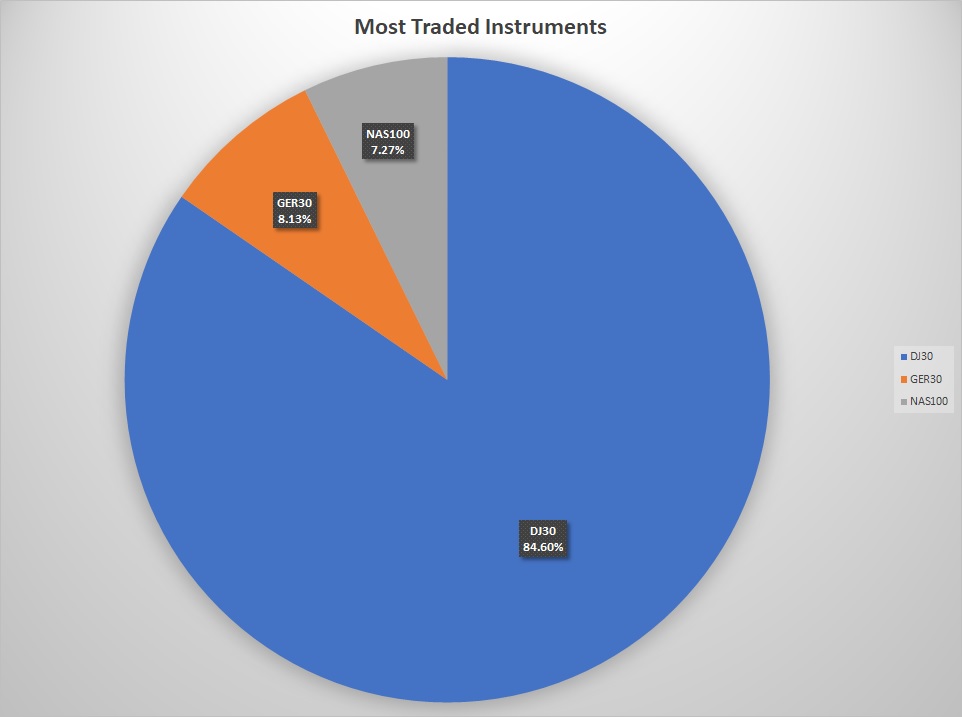
Wisam has performed a total of 578 trades across 3 different instruments including:
Total Trades: 578
Won trades: 248
Loss trades: 299
Break Even trades: 31
Win rate: 42.91%
Average gain on wins: $1.05
Average loss on losses: -$0.40
Biggest Win: $17.59 (GER30)
Biggest Loss: -$3.30 (GER30)
Trade Direction: 185 Buys/Longs & 393 Sells/Shorts (67.99% of all his traders are Sells/Shorts)
Best Performing Instrument: DJ30 ($109.46 Total Gross/Unrealized PnL)
Worst Performing Instrument: NAS100 (-$2.24 Total Gross/Unrealized PnL)
Fastest Trade: Less than a Minute (DJ30)
Longest Trade: Approximately 11 Minutes (DJ30)
Average Trading Volume: 0.12 Lot Size
Smallest Trading Volume: 0.01 Lot Size
Largest Trading Volume: 1.00 Lot Size
Average Win to Loss PnL Ratio: 262.50% or 1.05:0.40 risk/reward ratio
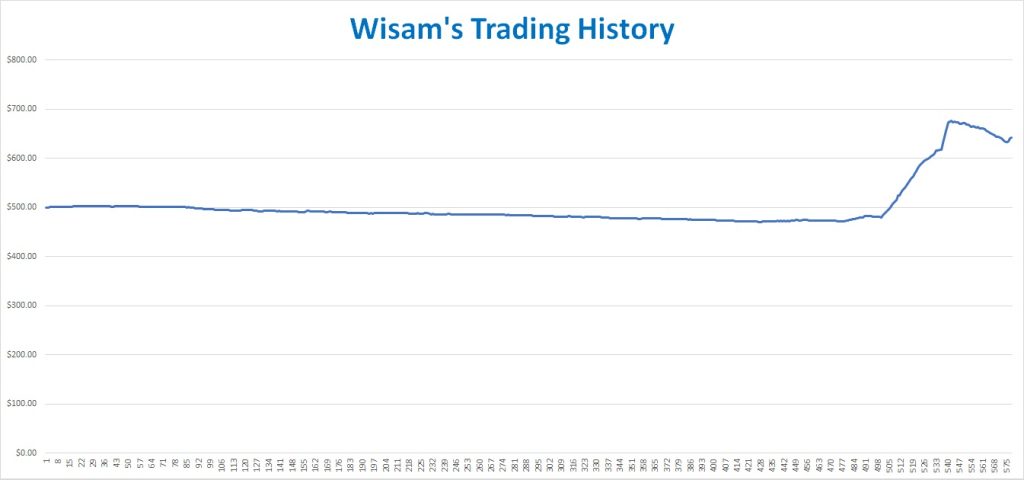
Wisam’s journey with EA trading wasn’t smooth from the start. In fact, his first 487 trades did not result in gains. His lowest drawdown point was at trade number 428. However, by sticking to the plan, his account took a sharp turnaround after his 489th trade, ultimately delivering a total gain of 28.31% before he exited.
Here are the key takeaways from his trading performance:
1. Strict Risk-Reward Management Matters
- Wisam’s EA adhered to a well-defined risk-reward ratio of 1.05:0.40.
- His average win-to-loss profit and loss (PnL) ratio was 262.50%.
- Despite significant drawdowns, the strategy remained intact.
2. No Human Intervention, No Emotional Disruptions
- The EA continued executing trades despite straight losses.
- No manual adjustments or panic-based exits occurred.
- The turnaround came naturally, aligning with the programmed strategy.
3. A Low Winning Rate Doesn’t Mean Underperformance
- The EA achieved only a 42.91% winning rate (248 wins, 299 losses, 31 breakeven trades).
- The biggest loss recorded was -$3.30, while the biggest win was $17.59.
- Keeping losses small while allowing larger wins was key.
4. The Power of High Trade Frequency
- Wisam’s EA executed 578 trades in 48 hours.
- The average holding time was less than a minute per trade.
- The longest trade duration was approximately 11 minutes.
The Advantages of Using EAs in High-Frequency Trading
Why do traders use EAs? Here’s why automated trading is gaining traction:
No Emotional Trading – Trades are executed based on logic, not fear or greed.
Speed and Precision – EAs can react instantly to market movements.
Strict Risk Management – Ensures pre-set stop-loss and take-profit levels are followed.
24/7 Trading – EAs work around the clock, even when traders sleep.
Scalability – Multiple strategies can be deployed across different markets.
The Drawbacks of EA Trading—Is It Really Foolproof?
While EA trading has clear benefits, it is not without risks:
Paid Software Costs – Many high-performance EAs require hefty upfront investments.
Not 100% Reliable – Market conditions change, and no EA can ensure specific outcomes.
Needs Supervision – Although automated, EAs still require periodic monitoring to ensure proper execution.
Over-Optimisation Risks – Some EAs perform well in backtests but fail in real-market conditions.
Potential Software Malfunctions – EAs may encounter issues such as slippage, missed orders, or stop losses not triggering as intended.
What to Look for in an EA?
There is no “holy grail” EA that ensures a particular result. However, here’s what you should consider:
Backtesting Performance – Historical data should demonstrate the EA’s ability to handle different market conditions.
Robust Risk Management Features – Adjustable stop-loss and risk-reward ratios.
Adaptability – The EA should work across multiple markets, including forex, stocks, and cryptocurrencies.
Transparency – Reliable EAs come with clear performance reports and live trade verifications.
Wisam’s case suggests that EA trading can be effective when paired with the right strategy and patience. His EA focused on scalping, which involves taking advantage of tiny price movements multiple times a day. This approach works well for traders who prefer short-term market exposure while leveraging high trade volumes.
Final Thoughts: Should You Rely on EA Trading?
EA high-frequency trading is not for everyone. It requires trust in automation, discipline to avoid manual interventions, and a deep understanding of how different EAs operate. Wisam’s case study highlights the power of strict risk management, emotional detachment, and high-frequency execution in navigating market fluctuations.
For those looking to explore algorithmic trading, choosing the right EA and understanding its strengths and limitations is crucial. While there are no assurances, the right balance of strategy, discipline, and automation can contribute to a structured trading approach.
Will EA trading shape the future of financial markets? The evidence suggests it just might.
Have you tried using EAs for trading? Share your experiences in the comments!
Although Wisam currently ranks 184th according to TradingCup’s MMR system and has traded only for approximately 2 days on May 1-2, 2023, his brief trading journey offers valuable insights into how EAs can be utilised effectively.
Hoping to see him back in action on the Tradingcup leaderboard ladder.
You can subscribe to his trading signals by clicking the copy button on his profile:

You can check his profile for more trading statistics through the link below:
https://www.tradingcup.com/signals/610034787?server=6&login=610034787
Are you a skilled and talented trader or a fund manager looking to join the ongoing leaderboard competition, and provide or copy trading signals?
Join by visiting the Tradingcup website now.
Discover Profitable Signals
At Tradingcup, you can browse through a selection of signals and review past performance before you decide to copy.
Become A Signal Provider
Share your expertise and become a signal provider so other traders can copy your trades.
Stay tuned to our blog for more trader spotlights and leaderboard updates.
Trading involves risks.
Visit the Tradingcup blog through the link below for more updates: