Last Updated: July 23, 2026
This article is reviewed annually to reflect the latest market regulations and trends
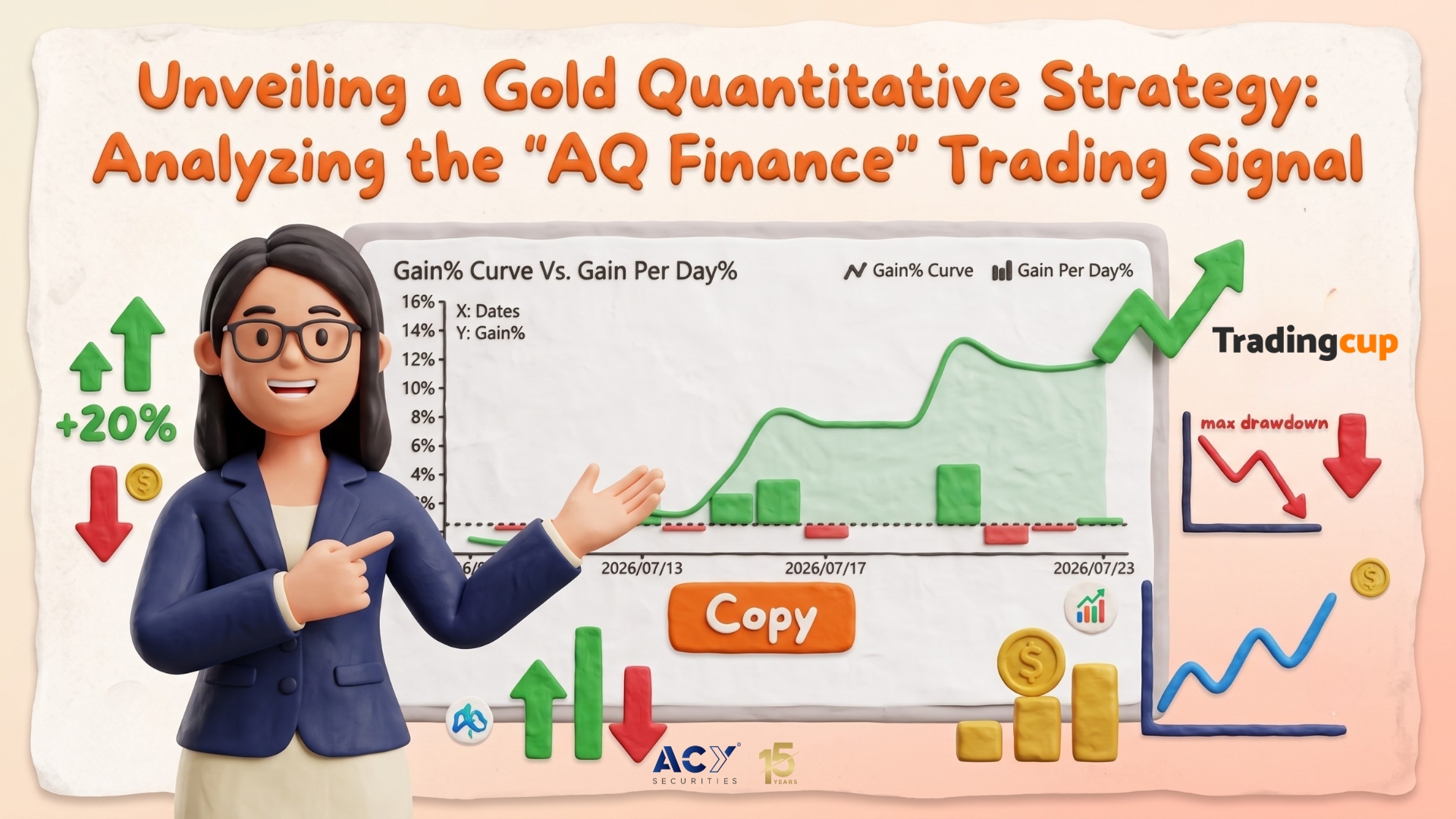
AQ Finance is a disciplined, multi-strategy gold (XAUUSD) trading portfolio operated by signal provider Arquinho on Trading Cup. The system uses four algorithmic modules to capture market movements while capping single-trade risk under 4%.
TL;DR: AQ Finance Strategy Analysis
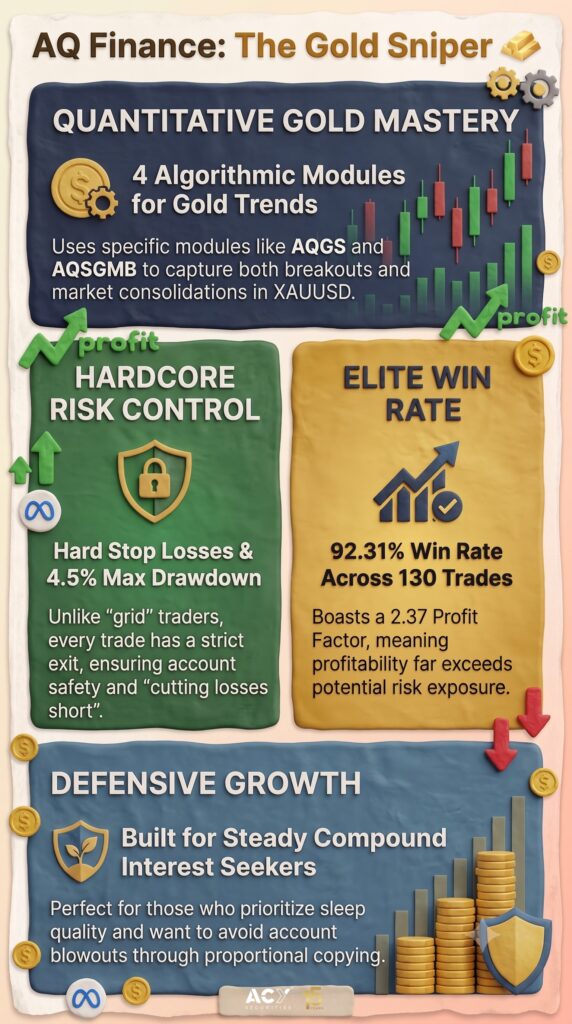
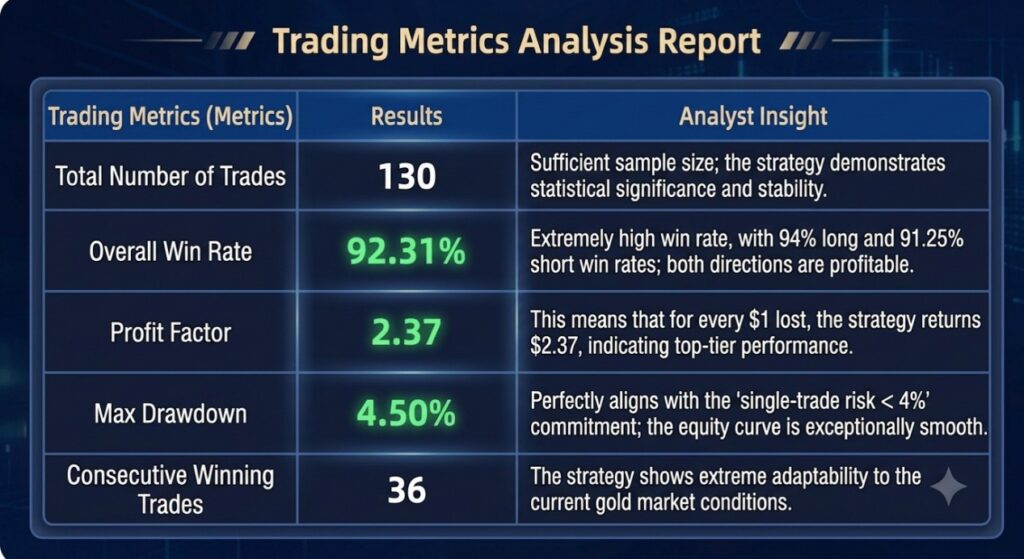
- Core Performance: Achieved a 92.31% win rate and a 2.37 Profit Factor across 130 real trading records.
- Strict Risk Controls: Employs mandatory hard stop losses on every trade, maintaining a low max drawdown of 4.50%.
- No High-Risk Recovery: Strictly avoids Martingale, grid trading, or holding onto losing positions.
- Balanced Market Coverage: Delivers consistent results on both buy (94.00% win rate) and sell (91.25% win rate) setups.
- Execution Mechanics: Pairs micro-lot probing entries with dynamic scaling, requiring followers to use proportional copying for accurate risk alignment.
What Is the “AQ Finance” Gold Quantitative Strategy?
AQ Finance is a multi-strategy gold (XAUUSD) trading portfolio that operates without Martingale, grid, or cost-averaging techniques. The strategy utilizes four independent algorithmic modules (such as Gold Buy/Sell Setup, AQGS, AQSGHB, etc.). to capture trend and consolidation movements while capping single-trade risk at 4%.
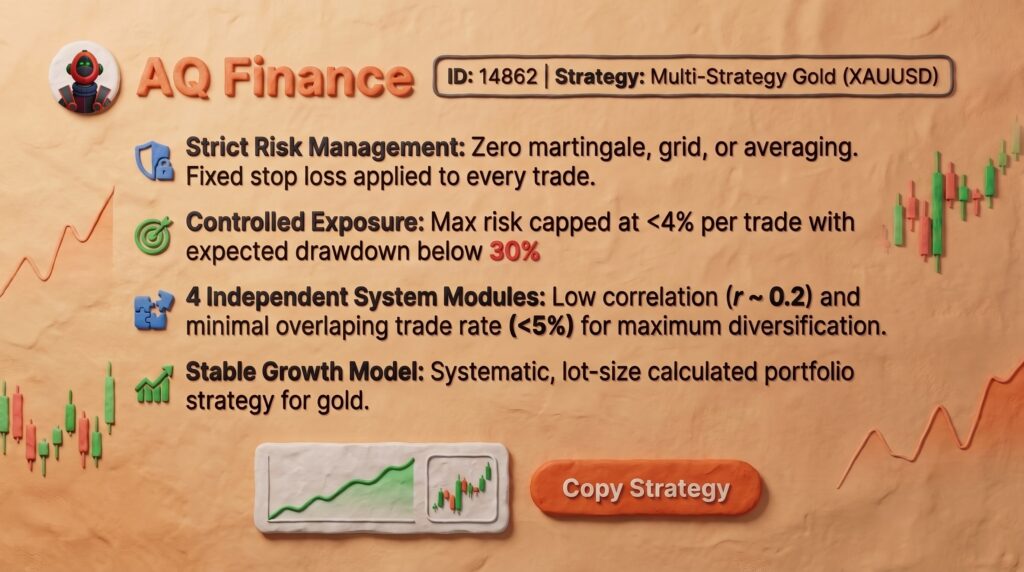
In the volatile Gold (XAUUSD) market, many trading systems succumb to human emotion or high-risk recovery mechanisms. An analysis of 130 recent real trading records from signal provider Arquinho (Signal: AQ Finance) on Trading Cup reveals an approach focused on systematic risk discipline.
Performance Overview: Core Metrics Analysis
How Does the AQ Finance Trading Signal Perform?
An analysis of 130 real trading records shows an overall win rate of 92.31% alongside a Profit Factor of 2.37. During this sample period, the account recorded a maximum historical drawdown of 4.50% and a peak streak of 36 consecutive winning trades.
Key Strengths of the AQ Finance Strategy
1. Hard Stop-Loss Risk Management
Why Is a Hard Stop Loss Important in Copy Trading?
A hard stop loss automatically closes a losing trade at a predetermined price to prevent severe equity drawdowns. In the AQ Finance account, every entry order includes a hard stop, resulting in a maximum single loss of -$77.85 and a max drawdown of 4.50%.
Unlike high-risk automated strategies that hold losing positions indefinitely, this system enforces predefined risk parameters. This strict execution helps shield the account from catastrophic losses during sudden one-sided market rallies or drops.
2. Single-Trade Risk Cap
How Does AQ Finance Control Account Risk per Trade?
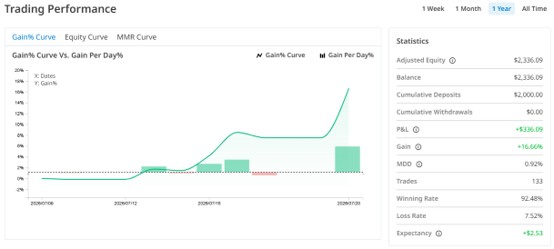
The AQ Finance strategy dynamically calculates position sizing so that maximum risk does not exceed 4% of total account balance per trade. Real account data confirms this risk control, maintaining a peak drawdown of 4.50% during high-frequency trading periods.
This consistent risk capping ensures that account equity experiences low volatility. Followers benefit from predictable drawdown parameters rather than sharp, unexpected balance drops.
3. Multi-Module Market Coverage
How Do the Four Algorithmic Modules Work Together?
AQ Finance combines four distinct trading modules that execute both trend-following breakout orders and multi-directional swing trades. Out of 130 trades, the strategy executed 80 short positions (91.25% win rate) and 50 long positions (94.00% win rate).
By utilizing pending orders (Buy Stop and Sell Stop), the system waits for key support or resistance breaks before committing capital. The low correlation between modules allows the strategy to capture market movements regardless of whether gold is trending up or down.
4. Capital Efficiency and Equity Growth
What Does a 2.37 Profit Factor Indicate?
A Profit Factor of 2.37 indicates that the strategy’s gross gains substantially outweigh its total realized losses. Coupled with a 92.31% win rate, this performance metric produces a steady, upward-sloping equity curve.
While a Profit Factor above 1.50 is generally considered strong in quantitative trading, reaching 2.37 demonstrates efficient capital utilization relative to the downside risk taken.
Potential Risk Considerations for Signal Followers
1. Risk-Reward Profile Characteristics
What Is the Risk-Reward Profile of AQ Finance?
AQ Finance operates on a high-win-rate, low-risk-reward structure, averaging $5.01 per winning trade against an average loss of -$25.35. The strategy relies on maintaining an elevated win rate to offset larger individual stop-loss events.
- Operational Mechanics: High historical win rates (above 90%) absorb periodic losses.
- Market Exposure: If choppy or unpredictable consolidation causes the win rate to dip significantly, net profitability will compress. However, hard stop losses prevent total account blowouts.
2. Variable Position Sizing Mechanics
How Does Lot Sizing Vary Across Trades in AQ Finance?
The strategy uses micro-lots (0.01) for initial probing trades but scales position sizes up to 0.14 or 0.21 lots when specific high-probability module setups trigger. While individual trade risk remains capped below 4%, execution volume varies based on setup confidence.
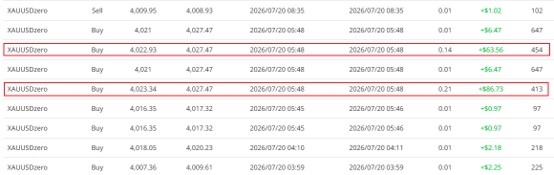
Followers should utilize proportional copy setting rather than fixed lot sizes. Proportional allocation guarantees that the follower’s account scales trade sizes correctly relative to their own account balance.
Conclusion: Strategy Summary
The AQ Finance trading signal presents a structured, quantitative approach to trading XAUUSD. By pairing four independent algorithmic logic modules with mandatory stop-loss controls, the signal focuses on disciplined execution over speculative gain. For market participants seeking systematic gold exposure with predefined risk boundaries, AQ Finance represents a practical signal model to monitor.
Looking for the Best Copy Trading Strategy?
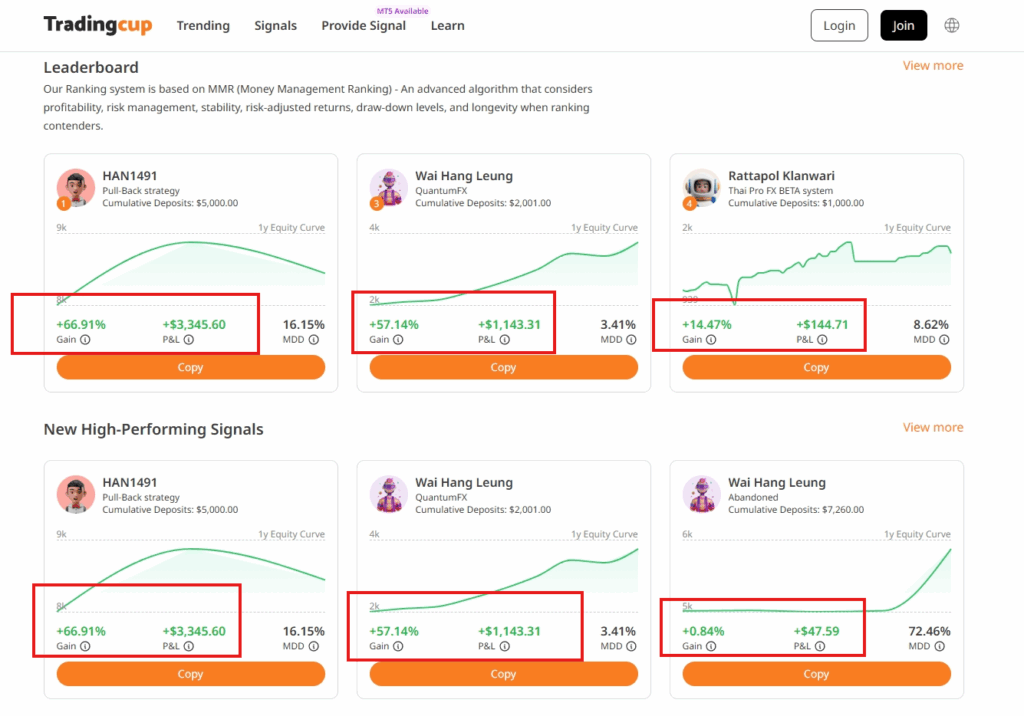
We’ve compiled a leaderboard of the most outstanding traders with excellent drawdown control and clear trading styles. This way, you’ll never feel lost when choosing who to follow and won’t blindly chase trends. Click to view the latest trader rankings and find out who is truly worth copying! Choose the right person, copy the right strategy, and from today, let copy trading truly create value for you.
Bonus Guide
What Makes an Effective Trading Portfolio?
- Diversification: Spread funds across various asset types (e.g., stocks, bonds, real estate, cash, precious metals) and industries/regions to reduce exposure to single-market volatility.
- Asset Allocation: Tailor allocations based on your risk tolerance, goals, and time horizon. Conservative portfolios emphasize fixed income, while aggressive ones lean into equities.
- Risk-Reward Balance: Each asset has different risk/return profiles. Ensure your portfolio avoids excessive exposure to high-risk or low-return assets.
- Low Correlation: Combine assets with correlations below 0.3 to enhance stability and provide a cushioning effect during market swings.
- Dynamic Rebalancing: Review and adjust your portfolio regularly as markets or personal goals change to stay aligned with your risk-return expectations.
- Clear Objectives: Define your financial goals (retirement, housing, education) before designing your strategy and time horizon.
- Discipline & Logic: Stick to your trading plan without emotional decision-making. Regularly reassess assumptions and market conditions.
(Disclaimer: This article is for informational and educational purposes only. It should not be considered financial advice. Always conduct your own research and consult with a qualified financial advisor before making any trading decisions.
For more detailed insights on developing daily trading routines, risk management, and effective position sizing strategies, explore additional articles on Trading Cup. Our trading experts at ACY and FinLogix are also great resources to guide your journey towards trading excellence.

Discover Our Best Trading Signals
At Tradingcup, you can browse through a selection of signals and review past performance before you decide to copy.
Become A Signal Provider
Share your expertise and become a signal provider so other traders can copy your trades.
Stay tuned to our blog for more trader spotlights and leaderboard updates.
Trading involves risks.
Visit the Tradingcup blog through the link below for more updates: https://www.tradingcup.com/learn
Related Copy Trading blogs:
- Understanding Market Liquidations: Liquidity Sweeps and Runs Explained
- 7 Essential Daily Habits of Successful Traders to Outperform Their Peers
- 10 Strategies You Can Copy off Our Best Copy Traders
- 5 Strategies Every Trader Can Master To Trade Better In A Trading Contest
- 2026 Copy Trading Scams Exposed: How to Spot Fraud
- A Swing Trading Strategy with an 83 Percent Win Rate and Low Drawdowns
- Forex Martingale Strategies Explained, The Good, The Bad and The Ugly
- Pyramiding Trading Tutorial – Pros & Cons & How to Use It
