
The lack of progress in the Russia/Ukraine war has resulted in thin trading over the European and American trading session on Monday, with investors waiting for significant news to make a move after a positive week.
Here is the key data from Monday’s session:
- CAC 40 = -0.56%
- DAX 40 = -0,60%
- Euro Stoxx 50 = -0,53%
- Dow Jones = -0.6%
- Nasdaq = -0.40%
- S&P 500 = -0.04%
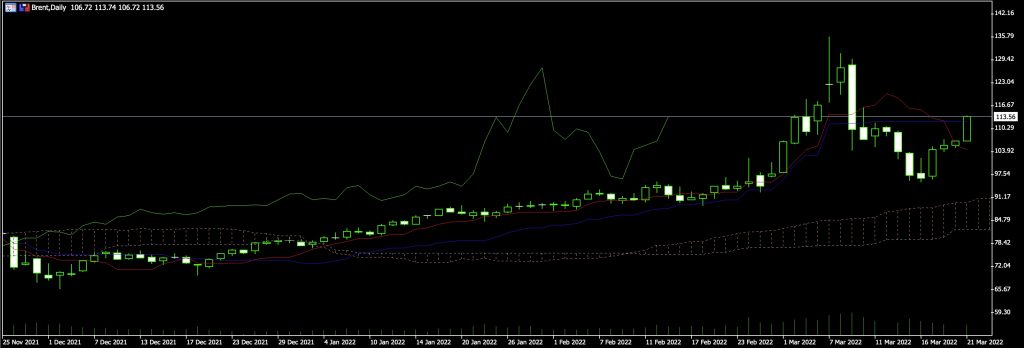
- Oil = around $135 a barrel
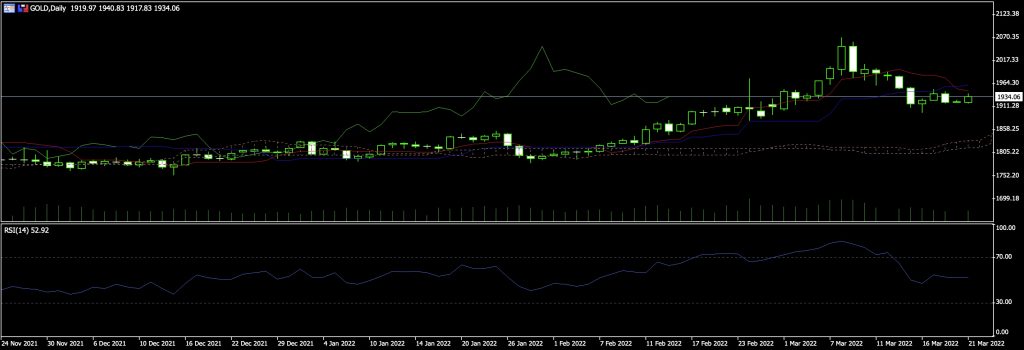
- Gold = around $1,935 the ounce
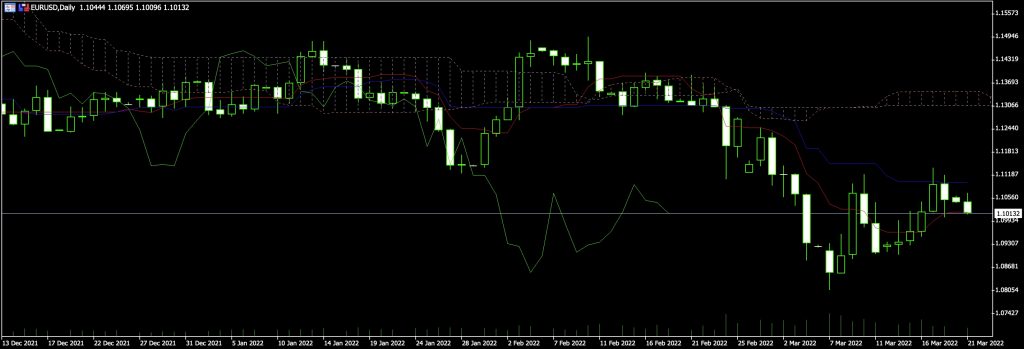
- EUR/USD = around 1.1013
- GBP/USD = around 1.3160
- AUD/USD = around 0.7393
- USD/JPY = above 119.47
Fear of new sanctions against Russia has supported Oil and Gold prices
The European Union’s foreign ministers were discussing news sanctions against Russia on Monday and whether or not they should start an embargo on Russian oil to impact the country’s lucrative energy sector. However, they are currently in disagreement, as European countries would not be impacted in the same way by this embargo.
While Poland and Baltic countries call for the embargo, Germany advises to be more cautious, as Germany is one of the most dependent European countries on Russian energy supplies – more than 52% of the natural gas coal, as well as 34% of mineral oil used in Germany comes from Russia.
This potential fifth round of EU sanctions against Russia in three weeks could impact Oil prices if Europe follows the US and the UK in an embargo, at a time where the Oil supply from the largest oil-producer country, Saudi Arabia, is impacted by attacks from Yemen’s Iran-backed Houthi rebels. Oil prices increased above the $113 mark towards its previous record above $135.
Gold prices also rebounded to around $1,935 at the time of writing, as uncertainties about the war and new sanctions against Russia intensified, adding more pressure on global inflation. The risk of stagflation, which describes a situation of slower economic growth and high inflation, is boosting the demand for safer assets.
The bearish EUR/USD fluctuating along with US/EUR monetary policies divergences
Yesterday, the President of the European Central Bank (ECB), Christine Lagarde, declared that monetary policies between the US and Europe will diverge in 2022, as the impact of the Russian/Ukrainian war is not the same in Europe as it is in the United States. But even before the war, both economies were at different stages of the economic and business cycle.
While the Fed began to tighten its monetary policy last week by raising its key interest rate for the first time in 3 years to a range of 0.25%-0.50% (and predicting at least 6 rate hikes in 2022), the ECB decided to wind down its stimulus program sooner than expected (its bond-buying program should be stopped during the 3rd quarter of 2022).
However, it has “extra space” before the first hike and is in no hurry to raise interest rates, as the institution would not raise them until some time after it has stopped its bond buying program.